
How Do Flashcards Work Best: Recognition vs Recall
Key takeaways
- Flashcards only work when they force recall: students who tested themselves remembered 61% of a passage after one week, versus 40% for rereaders.
- Recognition formats like multiple choice feel easier but build only familiarity; free recall builds the retrieval routes that survive until exam day.
- The strongest cards test one atomic fact, demand a produced answer, and get repeated at expanding intervals with immediate feedback.
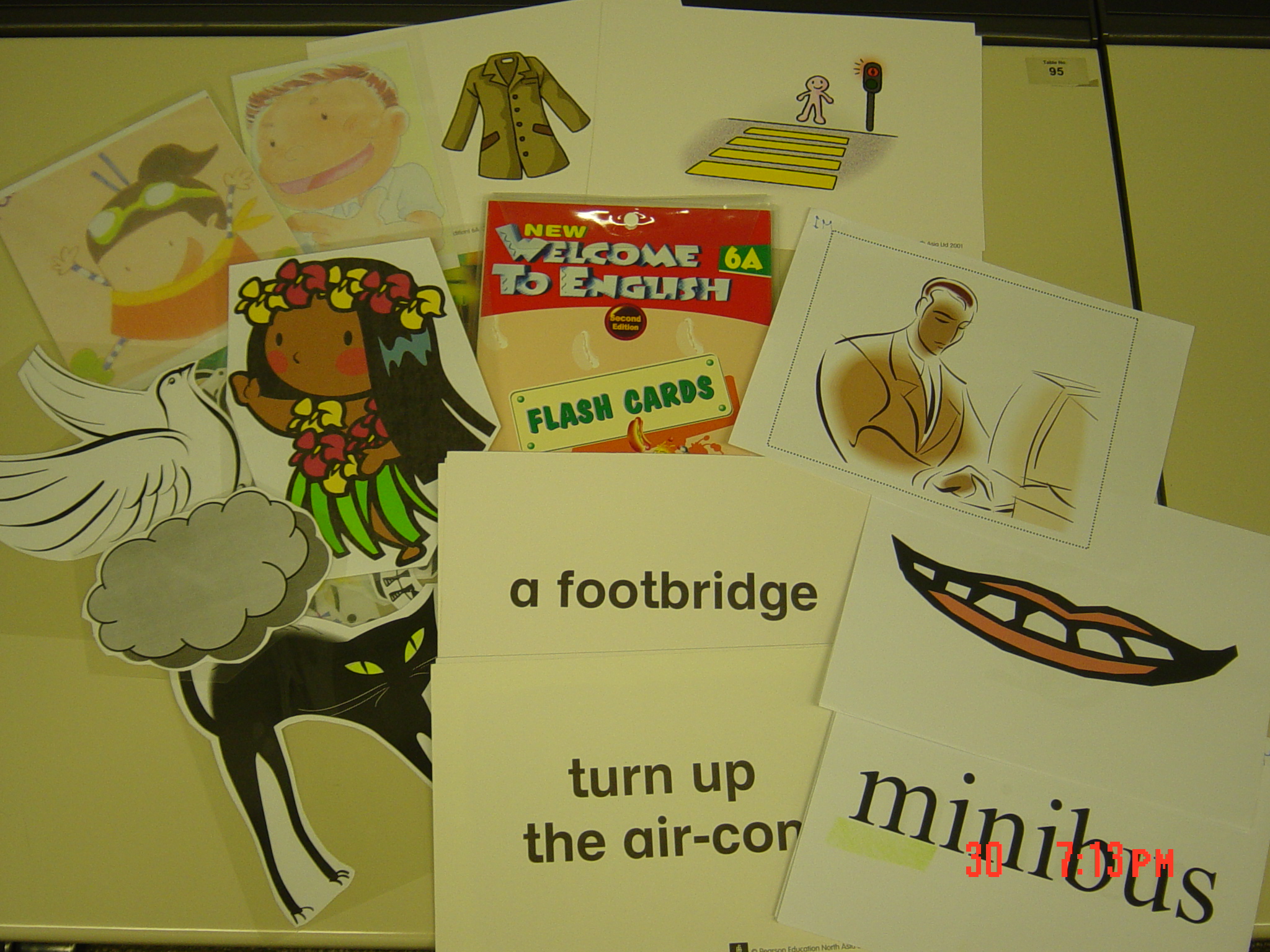
A flashcard looks like the simplest study tool in existence. Read the front, flip, check the back. Yet two students using the same deck can get wildly different results, and the difference comes down to one distinction: recognition versus recall.
Recognition asks your brain to identify something it has seen before. Recall asks your brain to produce something from nothing. Everything about how flashcards work best flows from that difference.
This article explains how flashcards work, including what recognition and recall do differently, why recall beats rereading, and how to build cards that actually stick.
What is the difference between recognition and recall?
Recognition is matching. When you see the answer printed on a card or pick it from four options, your brain checks the options against a sense of familiarity. That check feels smooth and confident.
Recall is reconstruction. When you close the book and try to write down everything you remember, your brain must rebuild the memory from its own traces. That effort feels harder and slower, but the rebuilding is what strengthens the memory.
The learning scientist Jeffrey Karpicke has shown that retrieval practice, the act of pulling knowledge out of memory, strengthens the memory itself. Researchers call the resulting advantage the testing effect: a test improves later memory more than spending the same time restudying.
Why recall beats rereading, with numbers
In 2006, Henry Roediger and Jeffrey Karpicke at Washington University in St. Louis ran an experiment that still defines the field. College students learned short science passages under three schedules: reading four times, reading three times plus one recall attempt, or reading once plus three recall attempts.
Five minutes later, the rereaders looked like the winners: 83% recall against 71% for the heaviest retrievers. The rereaders also predicted they would remember more in a week. One week later, the ranking had inverted.
The four-time rereaders produced 40% of the passage. The group that had spent most of its time testing produced 61%.
A 2008 follow-up published in Science made the point sharper. Students learned 40 Swahili-English word pairs through alternating study and test cycles. Once a student successfully recalled a pair, it was either dropped, kept in study, kept in testing, or kept in both.
A week later, students who kept retrieving learned pairs recalled about 80% of them. Students who only kept re-studying them recalled roughly a third. Repeated studying after the first successful recall added almost nothing.
Repeated retrieval after the first successful recall was nearly the whole game.
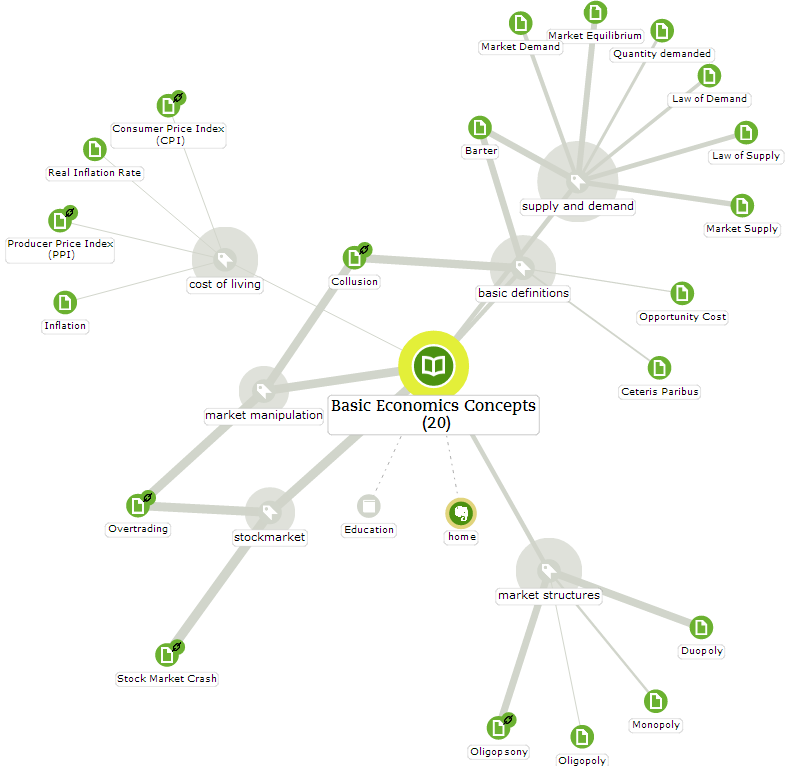
The effect survives the jump from word pairs to real understanding. In a 2011 Science paper, Karpicke and Jeffrey Blunt had students learn science texts either through elaborative concept mapping, with the text in front of them, or through retrieval practice with the text closed.
A week later, the retrieval group won on verbatim questions and on inference questions requiring connected ideas. They even won when the final test itself required drawing a concept map, beating the students who had practiced concept mapping at concept mapping.
Two meta-analyses put the overall advantage in perspective. Rowland's 2014 review of 61 studies found a mean advantage for testing over restudying of g = 0.50, a large effect by the standards of applied psychology. Adesope, Trevisan, and Sundararajan's 2017 review of 217 studies landed at g = 0.61 against restudying.
Why recognition tricks your brain
Recognition and recall sit on a hierarchy of effort. Free recall, producing an answer with no cues, promotes both item-specific and relational processing. Cued recall, answering a pointed prompt, promotes mainly item-specific processing.
Recognition, picking the familiar option, promotes only familiarity.
That hierarchy explains a common study failure. Flipping through a deck and nodding at the answers feels productive because recognition is fluent. Fluency masquerades as mastery.
On exam day, when no options are printed and no back of the card exists, the memory that was never rebuilt is not there.
This is also why so many digital quizzes are weaker than they look. If the answer is visible anywhere on screen, the learner is pattern-matching rather than retrieving, and most of the memory benefit evaporates.
How to build flashcards that force recall
The research points to a clear recipe. Follow it and the same deck does far more work.
Make each card atomic. SuperMemo creator Piotr Wozniak's minimum information principle holds that every card should test exactly one fact, one mechanism, or one decision rule. A card that asks for a definition and an example and an exception is three cards pretending to be one.
Produce the answer before you see it. Typed-answer or spoken-answer cards beat multiple-choice cards for the same material. The attempt is the learning event, even when the attempt is wrong, as long as you check the correct answer immediately afterward.
Use feedback every time. A wrong retrieval corrected on the spot becomes a strong memory instead of a reinforced error, a result established directly by Butler and Roediger. Never skip the check step.
Schedule repeats at expanding intervals. Retrieval practice is the engine; spacing is the schedule. Tools like Anki combine both, resurfacing cards at growing gaps near the edge of forgetting.
Reviewing a card you already know, by contrast, is approximately worthless, which is why good systems retire mastered cards.
Keep the stakes low. In a survey of 1,408 middle and high school students in classrooms using frequent low-stakes quizzing, 72% reported that retrieval practice made them less anxious about major exams, according to Yu-kai Chou's analysis. Practiced recall turns the high-stakes moment into a rerun instead of an ambush.
This pairs naturally with the technique of why does teaching someone else help you learn, which uses the same retrieval engine in a different form. Cards also combine well with desirable difficulty principles, and they solve the familiarity trap behind why you remember song lyrics but not textbook pages.
Frequently asked questions
Are digital flashcards better than paper ones?
The research cares about format, not medium. A paper deck that forces typed or spoken answers beats an app that shows you the answer. What apps add is spacing: scheduling algorithms that surface cards right before you forget them.
How long should a flashcard session be?
Short and frequent beats long and rare. Twenty to thirty minutes of retrieval, repeated at expanding intervals, does more than a single marathon session. Stop a deck when accuracy gets consistently high and let the schedule bring cards back later.
Should I make cards for concepts or just facts?
Both, but format matters more for concepts. A free-recall prompt like "explain the mechanism of X" works far better than a recognition prompt like "is X caused by A or B?" The harder format produces better retention, provided you check the answer after.
What if I get most cards wrong at first?
That is normal and even useful. An unsuccessful retrieval attempt followed by the correct answer still builds a stronger memory than being handed the answer from the start. The attempt opens a mental slot; the correction fills it.
The bottom line
Flashcards are not a memory trick. They are a retrieval machine, and they work in direct proportion to how hard they make your brain work. Recall formats beat recognition formats, feedback turns mistakes into memories, and spacing keeps the gains alive.
Flip your deck with the answer hidden, produce every answer before you peek, keep each card to one idea, and let a scheduler handle the timing. That is the entire formula behind the 61-to-40 gap.
Latest in Education
- Why does teaching someone else help you learn
- What is desirable difficulty in learning
- Why do you remember song lyrics but not textbook pages
- How does exercise improve memory and learning
Subscribe for one research-backed study technique in your inbox every morning.
Related stories

Why Do I Blank Out During Tests Despite Studying: Test Anxiety and Retrieval Failure
Blanking out in exams is retrieval failure, not missing knowledge. Anxiety drains working memory; rereading builds false confidence. Here

How to Study for Exams Without Burning Out
Sleep 7-8 hours, study in 25-50 minute blocks, and exercise daily. The science-backed way to study for exams without burning out, and what

Why Do I Forget What I Just Read? Science Has an Answer
You forget what you just read because of the forgetting curve, mapped by Ebbinghaus in 1885. Science explains why memory fades fast and how