
Why Getting a Question Wrong Still Helps You Learn It
Key takeaways
- Guessing before seeing the answer improves later memory, even when the guess is always wrong.
- Potts and Shanks' 2014 experiments showed error generation beats studying intact pairs for novel vocabulary.
- The mechanism: a failed attempt creates curiosity and primes the brain to absorb the correction that follows.
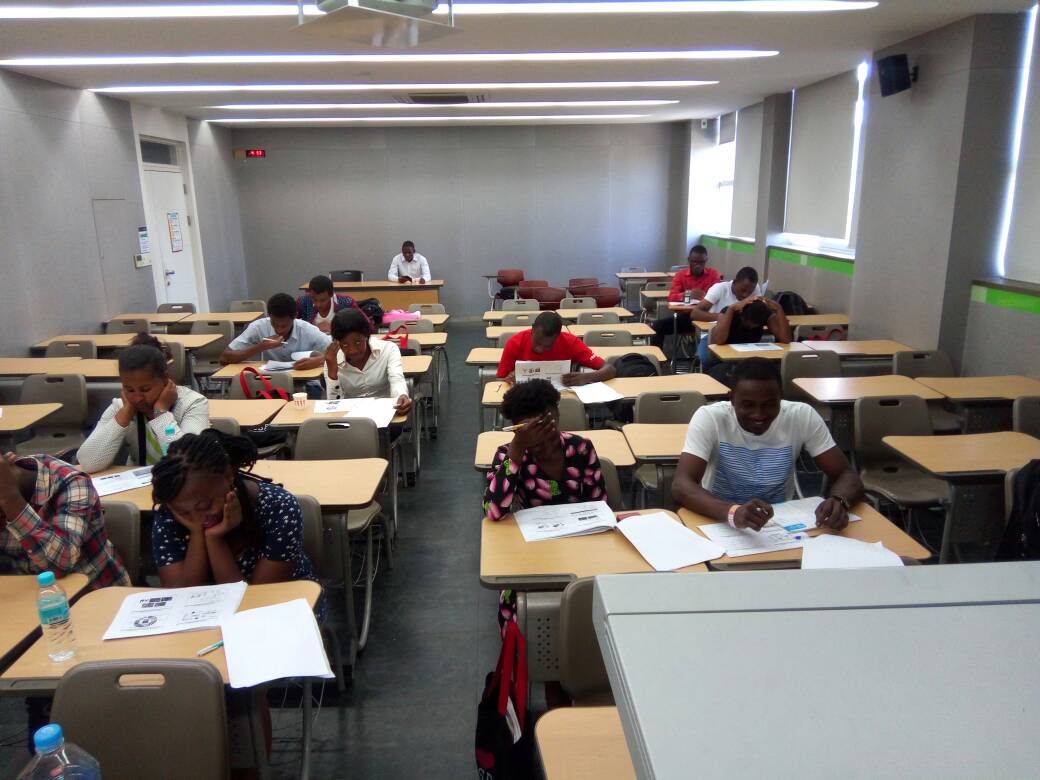
Image Credits: Wikimedia Commons / Excelz
Getting a question wrong feels like failure. Every wrong answer on a practice quiz stings, and the instinct is to avoid the sting by studying more before ever attempting a question. Schools reinforce the instinct: errors are marked in red, scores go down, wrong answers are something to prevent.
Cognitive science disagrees. Across a decade of experiments, researchers have found that attempting a question and failing, then seeing the correct answer, produces better long-term memory than studying the correct answer from the start. The error is not wasted time.
It is preparation. The brain that has just failed at something is primed, curious, and neurologically ready to absorb the correction.
This article explains error-driven learning, including the pretesting effect discovered by Kornell and colleagues, the Potts and Shanks experiments that proved even always-wrong guesses help, the curiosity mechanism behind it, the limits researchers found, and how to use errors deliberately when you study.
The pretesting effect: Kornell, Hays, and Bjork (2009)
The first clear demonstration of the benefits of pretesting came from Nate Kornell, Matthew Hays, and Robert Bjork in 2009. Their procedure was simple. Participants studied 60 weakly related word pairs, such as grow paired with shrink, using two study methods.
In the pretest condition, participants saw the cue and had to guess the missing target (grow, then a question mark) before the complete pair was presented for study. Because the pairs were only weakly related and participants had not seen them before, their guesses were rarely correct. In the read-only condition, participants simply studied the complete word pair for the full trial duration, without guessing.
The pretest group remembered more on the final test. This was the first clean proof that unsuccessful retrieval, attempting and failing, improves learning.
The wrong guess did not interfere with learning the right answer. It enhanced it.
The finding was counterintuitive enough that it needed replication with harder material. Researchers moved from weakly related pairs to definitions of rare English words and foreign word translations, domains where participants could not possibly guess correctly.
The effect survived. The more the guess felt like a shot in the dark, the more surprising it was that failing helped.
The Potts and Shanks experiments
Rosalind Potts and David Shanks took the phenomenon further. In their 2014 paper in the Journal of Experimental Psychology: General, "The benefit of generating errors during learning," participants guessed translations of foreign words before viewing corrective feedback. A participant might see "hodei?
" and guess wildly, then see the feedback "hodei: cloud. "
The result: guessing before viewing feedback led to better subsequent memory for the correct translations than studying intact pairs, even when guesses were always incorrect. Always wrong still beat never trying. The study spent less time with the correct answer and endured more interference from the wrong guesses, yet memory improved anyway.
Potts, Davies, and Shanks followed up in 2019 with six experiments to find the mechanism. Their abstract states it plainly: in Experiments 3 and 4, participants rated their curiosity to learn correct answers higher when ratings were given after generating than before, suggesting that the act of generation increases curiosity to learn the answers. The findings imply that enhanced processing of feedback is a key consequence of errorful generation.
In other words, the wrong guess does two things. First, it activates a network of related concepts, creating extra retrieval cues that can serve as stepping stones to the target later.
Second, it creates a gap the brain wants to close: curiosity. When the correct answer arrives, attention is already heightened, and the feedback gets encoded more deeply than it would in a passive study session.
A 2022 paper in PLOS ONE extended the finding to false memories for pragmatic inferences: guessing a wrong answer before being provided with corrective feedback enhanced learning on a final memory test compared with conditions where the question and answer were presented simultaneously. The researchers concluded that after retrieval, memory becomes more amenable to change, promoting memory updating. The failed attempt literally opens the memory for editing.
The limits: when errors do not help
The effect is real but bounded, and the boundaries matter for how you use it. Seabrooke, Hollins, Kent, Wills, and Mitchell (2019) replicated Potts and Shanks' benefit but found it applied to item memory, not associations.
In five experiments, generating errors led to better recognition of the individual words, but tests of cued recall and associative recognition showed no significant benefit over studying. When the materials had no pre-existing semantic connection, errorful generation strengthened the cues and targets in isolation but not the links between them.
Recent work on the "derring effect," the benefit of deliberately generating errors, found a similar boundary: in four preregistered experiments, deliberate errors only enhanced memory when they were semantically related to the study materials. Consistent with a semantic-elaboration account, the wrong guess helps when it is in the right neighborhood. A random, unrelated error contributes little.
There is also one absolute requirement: feedback. The 2022 PLOS ONE paper is explicit that without corrective feedback, retrieval led to a higher proportion of false memories compared with restudy.
Guessing without checking the answer is not studying; it is practicing being wrong. The error helps only when the correction follows promptly.
How to use errors on purpose
The practical method is called pretesting, and it slots directly into normal study. Before reading a chapter, attempt its end-of-chapter questions cold. Before a lecture, try to answer what you think will be covered.
Before learning vocabulary, guess the meanings. Then check every answer against the source. The guesses will be wrong, and that is the point.
This pairs naturally with the testing effect: retrieval practice after learning and pretesting before learning are the same principle applied at different times. Attempt first, fail, get feedback, and the memory sticks. Students who take practice exams even when they feel harder than real ones are already exploiting a version of this effect.
One more application: teaching someone else forces generation under uncertainty, and the mistakes you make while explaining are exactly the errors that prime you to absorb the corrections. The students in the 2014 Potts and Shanks experiments were not trying to be right.
They were trying, period. Trying is the mechanism.
For students reorganizing their whole approach, breaking bad study habits covers the identity shift from error-avoidance to error-use. The goal is not to make mistakes for their own sake. It is to stop paying the tax of studying every fact before daring to attempt it.
FAQ
Should I guess on practice questions I have not studied for?
Yes, then check the answers immediately. The pretesting effect works specifically on unstudied material: the failed guess primes curiosity and attention for the feedback. Guessing without checking is useless, so always close the loop.
Does this mean making mistakes on real exams helps?
Not directly. The benefit comes from attempting, failing, and receiving immediate corrective feedback during study. Real exams usually give delayed or no feedback, so use low-stakes practice quizzes for error-driven learning.
What if my guesses are completely random?
Random guesses help less. The derring-effect research found deliberate errors only boost memory when semantically related to the material. Guess in the right neighborhood: use context, roots, and related knowledge rather than pure chance.
How is this different from the testing effect?
The testing effect is about retrieving after learning; pretesting is about attempting before learning. Both rely on the same principle: effortful generation followed by feedback strengthens memory more than passive restudy.
The bottom line
A wrong answer is not a wasted attempt. Kornell's 2009 pretesting experiments, Potts and Shanks' 2014 always-wrong-guess experiments, and the 2019 curiosity-mechanism work all point the same way: attempting and failing, then seeing the correction, builds stronger memories than studying the answer passively. The rules are simple: guess first, check immediately, and keep the guesses in the right neighborhood.
Latest in Education & Study
- Testing effect: why quizzing beats rereading
- Why practice exams feel harder than real exams
- Why teaching someone else helps you learn
- How to break bad study habits
Want one evidence-based study tip in your inbox each week? Subscribe to the Rive News newsletter.
Related stories

Why Do I Blank Out During Tests Despite Studying: Test Anxiety and Retrieval Failure
Blanking out in exams is retrieval failure, not missing knowledge. Anxiety drains working memory; rereading builds false confidence. Here

How to Study for Exams Without Burning Out
Sleep 7-8 hours, study in 25-50 minute blocks, and exercise daily. The science-backed way to study for exams without burning out, and what
Why Do I Forget What I Just Read? Science Has an Answer
You forget what you just read because of the forgetting curve, mapped by Ebbinghaus in 1885. Science explains why memory fades fast and how