
How to Read a Textbook Faster Without Missing Key Ideas
Key takeaways
- Speed comes from reading with questions, not from moving your eyes faster across the page.
- SQ3R stands for Survey, Question, Read, Recite, Review, and the last two steps do most of the learning.
- Work in 20 to 30 minute blocks, test yourself after each section, and review again days later.
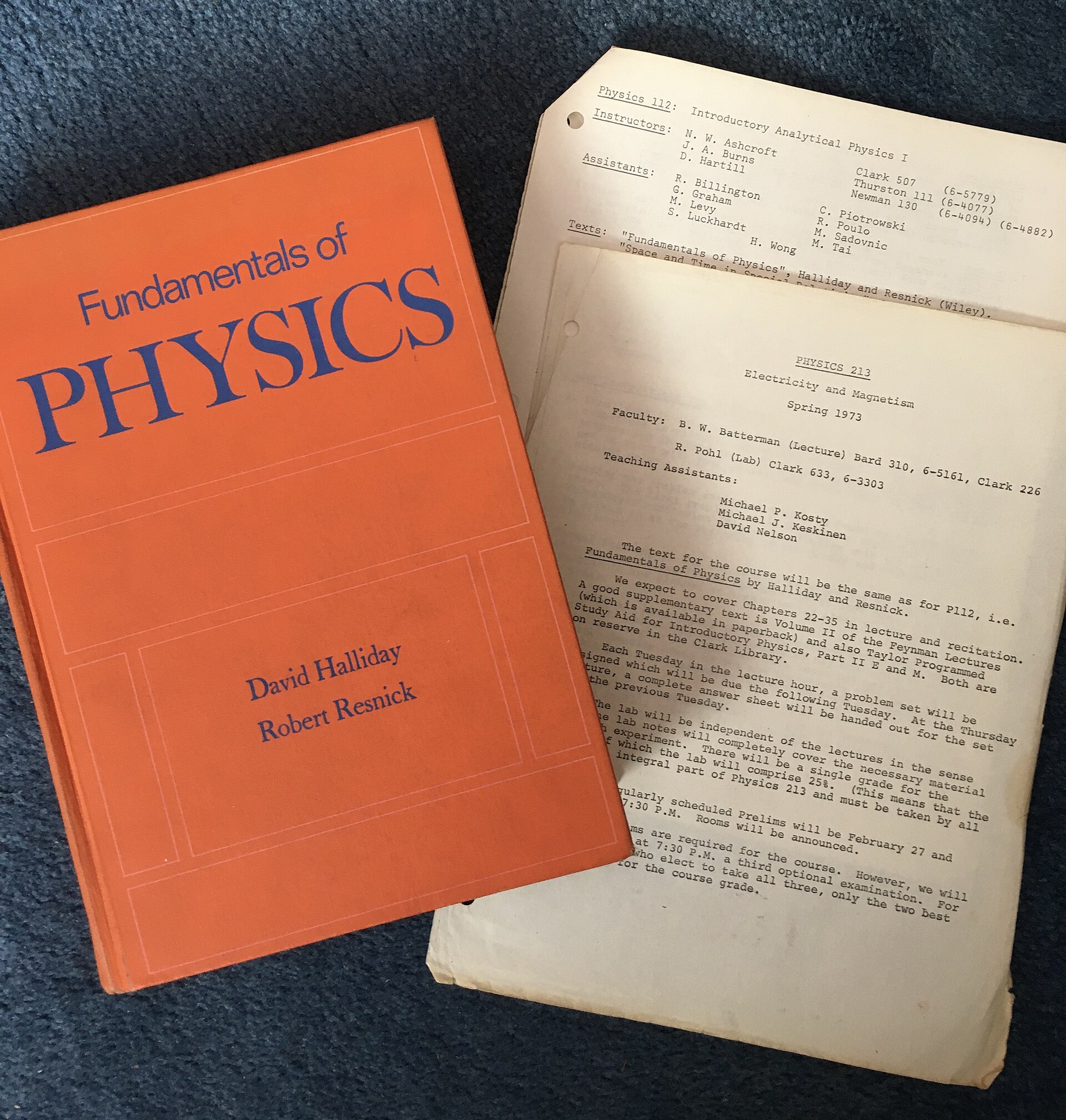
Reading a textbook faster does not mean reading every word at top speed. Textbooks are idea dense. The University of Maine's Office of Student Academic Success notes that college textbooks pack in many ideas, facts, terms, and diagrams, and that students have less time to digest them than in high school.
The readers who finish fast and remember the material do not skim harder. They read with a plan, test themselves as they go, and review on a schedule.
This article explains how to read a textbook faster without missing key ideas, including the SQ3R method, the focus blocks that keep attention sharp, and the note taking habits that save rereading later.
Why plain rereading is slow
Rereading feels productive. The words look familiar, the pages turn, and the chapter ends. Familiarity is not learning.
Glasp's guide to SQ3R puts the difference in one line: passive reading asks "Have I seen this before? " while active reading asks "Can I produce this from memory? " Only the second skill predicts whether you will remember the material next week.
The evidence backs this up. In 2013, John Dunlosky and colleagues published a review in Psychological Science in the Public Interest that graded ten common learning techniques. Two came out as high utility: practice testing and distributed practice.
Rereading, summarization, and highlighting were rated low utility. Glasp's analysis of SQ3R maps the method onto those ratings: the Recite step is practice testing, rated high, and the Review step is distributed practice, rated high. The Read step alone is low utility by itself.
That finding explains why skimming fails. Skimming keeps the weakest part of reading and drops the strongest parts. A faster method keeps the testing and drops the dead weight: the second and third full rereads, the over highlighting, and the long sessions where attention fades.
SQ3R: the five steps
SQ3R stands for Survey, Question, Read, Recite, Review. Francis P. Robinson, an educational psychologist at Ohio State University, introduced it in his 1946 book Effective Study, according to Glasp.
He developed it during the Second World War to help soldiers in the Army Specialized Training Program get through dense technical material and retain it under pressure.
The University of Maine teaches the same method, noting that the steps are performed on each section rather than at the end of a chapter, and that the process gives a great deal of interaction and repetition with the content. Here is how each step works.
1. Survey: 2 to 5 minutes
Before reading a word of the body text, skim the whole chapter. Read the title, the introduction, every heading and subheading, bold terms, images and captions, and the summary or review questions at the end. Glasp recommends 2 to 5 minutes for this step.
You are building a mental map, so that when you read, you know where each idea fits. Surveying is like looking at the picture on a jigsaw box before dumping out the pieces.
The University of Maine gives a similar preview window of 15 to 20 minutes for a full chapter in its P2R method, covering headings, bold print, pictures, tables, graphs, chapter summaries, and end of chapter questions.
2. Question
Turn each heading into a question before you read that section. A heading that says "The Causes of Inflation" becomes "What causes inflation? " This is the step almost everyone drops, and Glasp calls it one of the two steps that make SQ3R work.
Questions give your reading a target, and a target turns skimming into searching.
Write the questions down. One question per section is enough for most chapters. Three questions for a chapter with three main headings is a realistic load, and it keeps the reading focused.
3. Read
Now read the section to answer the question you wrote. Go one section at a time. When you hit the answer, slow down.
When you hit filler, speed up. Mark the sentences that answer your questions so you can find them again.
Read in blocks of 20 to 30 minutes. The University of Maine advises reading for 20 to 30 minutes at a time, since reading longer makes it difficult to focus, and taking short breaks of no more than 5 to 10 minutes.
4. Recite
Close the book and answer the question in your own words, out loud or in writing. Glasp is firm on this: out loud is better than silent, and written is better than thought. This is the retrieval step, and it is the single most important part of the method.
If you cannot recite it, you did not learn it, and you found out while it is still cheap to fix. Reread only the parts you could not reproduce.
Do not skip this step by thinking "yeah, I know this." Thinking you know it is recognition wearing a disguise, according to Glasp. Saying it or writing it is the test.
5. Review
After the chapter, and again days later, go back over your questions and try to answer them from memory without looking. Review is not rereading the chapter. It is retesting yourself on it.
Glasp notes that this spacing moves information from "I knew it yesterday" to "I know it. "
The University of Maine gives the same advice in its review step: summarize the main point in your own words, make a list of terms and definitions, and use headings as questions to answer as if they were test questions. A five minute review three days later is worth more than rereading the chapter the night before the exam.
SQ3R on a real chapter
Theory is easy. Here is SQ3R on a chapter titled "The Nervous System," following the worked example in Glasp's guide.
Survey for 3 minutes. You see the intro, headings such as "Neurons," "The Synapse," and "The Central Nervous System," a diagram of a neuron, and eight review questions at the end. You now know the chapter's shape before reading a sentence.
Question. You write: "What is a neuron made of? How does a synapse transmit a signal?
What is the difference between the central and peripheral nervous systems? " Three headings, three questions.
Read. You read the "Neurons" section only, looking for what a neuron is made of. When you find the parts, you mark those sentences and keep moving.
Recite. You look away and say, "A neuron has dendrites that receive signals, a cell body, and an axon that sends them. " You could not remember the myelin sheath, so you glance back, find it, and recite again.
Then you move to the next section and repeat.
Review. After the chapter, you cover your notes and answer all three questions from memory. Two days later, you do it again.
Anything you miss goes back into the next review.
The first time, this feels slower than reading. It is slower on the first pass. But you finish having tested yourself three times instead of having read something you will reread the night before the exam anyway.

Reading faster inside each section
SQ3R sets the structure. Inside the Read step, four habits add speed without losing ideas.
First, read the first and last sentence of each paragraph before the middle. Textbook paragraphs usually open with the main idea and close with its consequence. If the paragraph is familiar, the frame is enough.
If it is new, read the whole thing.
Second, slow down for definitions, laws, theorems, equations, and processes. The University of Maine lists these as the focus points for active reading. Speed up through examples you already understand and anecdotes that illustrate a point you already grasp.
Speed is selective, not uniform.
Third, turn headings into test questions as you go. The University of Maine advises using end of chapter summaries and questions to check understanding, and turning headings into questions to answer as if they were test questions. A chapter's own review questions are free practice tests.
Use them before the exam does.
Fourth, mark sparingly. The University of Maine warns against over highlighting, and advises waiting until a second read through, then highlighting only after you have read a paragraph. Highlight the sentence that answers your question, not the whole page.
A page of yellow teaches nothing. One marked sentence is a retrieval cue.
Notes that prevent rereading
Notes exist so you never have to reread the chapter. The best note format is the one you will actually review: a question on one side and the answer on the other. Write your heading questions on cards or in a doc, and write each answer in your own words after the Recite step.
Review means answering the cards, not rereading the chapter.
The University of Maine suggests several note formats: a review sheet for each section or major concept, flashcards for difficult concepts or processes, and concept maps that draw out each step of a process. Pick one format and keep it consistent across a course. Consistency makes review fast, because you always know where the answer lives.

Keep notes short. A review sheet that is longer than the chapter is a second textbook. Aim for one page of questions and answers per chapter, plus a separate list of terms and definitions.
What to skip, and what never to skip
Skip the second and third full rereads. Skip highlighting on the first pass. Skip reading every example when you already grasp the rule.
Skip the chapter summary before you have read the chapter, since a summary you cannot yet place in context is just words.
Never skip the Question step. Without questions, Read has no target and Recite has nothing to answer. Glasp calls this the most common failure, and says it quietly collapses the whole method back into ordinary reading.
Never skip Recite. It is the step that converts exposure into memory. LumenRead gives a practical test for whether SQ3R is working: measure your pace and quiz result on typical material, use SQ3R for a week including Recite and Review, then retest a few days later.
If delayed recall improves while speed holds steady, keep the method.
FAQ
The bottom line
Reading a textbook faster is not about moving your eyes faster. It is about reading with questions, testing yourself after each section, and reviewing on a schedule. Survey the chapter, turn headings into questions, read to answer them, recite from memory, and review days later.
Work in 20 to 30 minute blocks, highlight sparingly, and keep notes in question and answer form. The first pass feels slower, but the total time drops, and the ideas stay.
Tags: textbooks, study methods, reading, SQ3R
Latest in Education
- How to remember what you read a month later
- How to prepare for a maths exam step by step
- How to write an essay introduction people actually read
- How to give a class presentation without freezing up
Subscribe to the Rive News newsletter for one practical study guide each week.
Related stories

Why Do I Blank Out During Tests Despite Studying: Test Anxiety and Retrieval Failure
Blanking out in exams is retrieval failure, not missing knowledge. Anxiety drains working memory; rereading builds false confidence. Here

How to Study for Exams Without Burning Out
Sleep 7-8 hours, study in 25-50 minute blocks, and exercise daily. The science-backed way to study for exams without burning out, and what

Why Do I Forget What I Just Read? Science Has an Answer
You forget what you just read because of the forgetting curve, mapped by Ebbinghaus in 1885. Science explains why memory fades fast and how