
How to Remember What You Read a Month Later
Key takeaways
- Test yourself on what you read instead of rereading it.
- Review after 1, 3, 7, and 30 days to fight forgetting.
- Write a short summary from memory after each reading session.
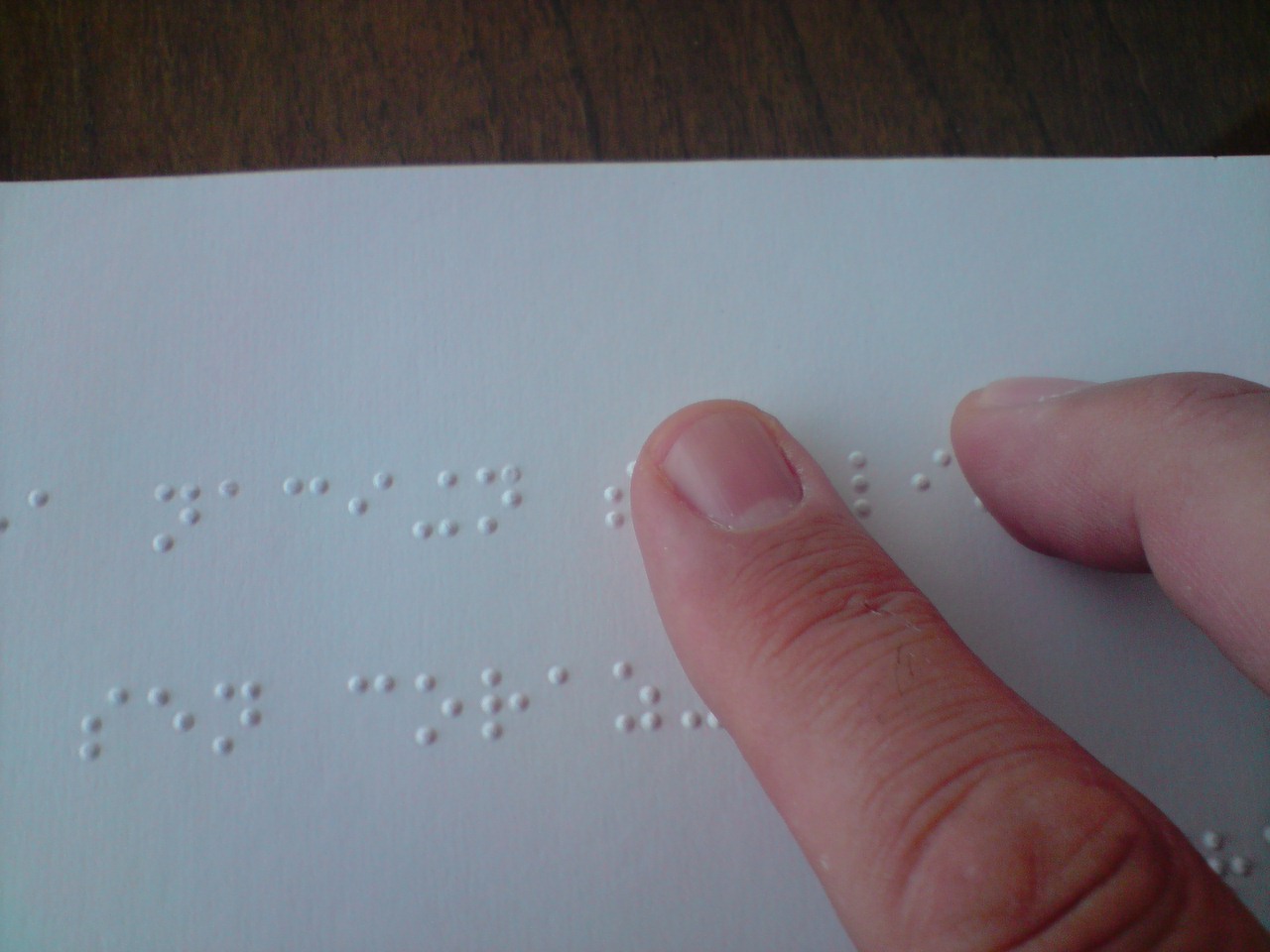
You finish a book feeling like you know it. A month later, the details are gone. You remember the cover, a scene or two, and a vague sense that it was good.
The rest has faded.
This is not a personal failing. It is how memory works. In 1885, German psychologist Hermann Ebbinghaus ran the first systematic experiments on forgetting, memorizing lists of nonsense syllables and measuring how fast they slipped away.
His finding, now called the forgetting curve, still holds: most forgetting happens fast, in the first hours and days, then levels off.
The good news is that a small change in how you read can slow that curve sharply. Stop rereading. Start testing yourself.
Then space your reviews across days and weeks. This article shows how, with a schedule you can use for any book or article.
Why rereading feels useful but fails
Rereading feels productive because the words look familiar on the second pass. Psychologists call this the fluency illusion: mistaking recognition for recall. Seeing a sentence and thinking "I know this" is not the same as producing the idea from memory when you need it.
The research is blunt. In 2013, Dunlosky and colleagues reviewed ten common learning techniques and published the results in Psychological Science in the Public Interest. Practice testing and distributed practice earned the only "high utility" ratings.
Highlighting, rereading, and summarization earned "low utility" ratings.
That finding holds across ages, materials, and testing conditions. It also explains a familiar frustration. Students who reread a chapter three times often score worse than students who read it once and then tested themselves.
The rereaders feel confident. The testers remember more.
Rereading has one fair use. A second pass can help you catch a passage you missed. But as a memory strategy, it is weak.
Once you have understood a passage, further passes add little. Testing yourself adds a lot.
Retrieval practice: the core habit
Retrieval practice means pulling information out of memory instead of putting it back in. Close the book. Write down what you remember.
Check what you missed. Repeat.
The landmark study came in 2006, when Henry Roediger and Jeffrey Karpicke at Washington University tested students on prose passages. One group restudied the material. The other took a recall test.
Five minutes later, the restudiers did slightly better. Two days later, the picture flipped.
Students who only restudied forgot 56 percent of what they had originally recalled within two days. Students who practiced retrieval forgot just 13 percent over the same period. The restudying group also reported feeling more confident, even though they performed worse on the delayed test.
Confidence misled them.
A 2011 study by Karpicke and Blunt, published in Science, pushed the point further. Students who practiced free recall beat students who spent the same time building detailed concept maps. The retrieval advantage held even when the final test asked students to create concept maps, the very skill the mapping group had practiced.
Pulling ideas from memory beat organizing them on paper.
Retrieval works because effort strengthens the memory trace. A hard recall, made just before you would forget, builds a stronger trace than an easy review. That effort feels unpleasant.
It is also the mechanism.
Spacing: when you review matters as much as how
Retrieval practice tells you what to do. Spaced repetition tells you when to do it. Spreading reviews across days beats massing them into one session, and the evidence is large.
A 2006 quantitative review by Cepeda and colleagues covered 254 studies with more than 14,000 observations and found that distributed practice consistently beat massed practice.
The gap between reviews should grow with the time you want the memory to last. A 2008 study by Cepeda and colleagues suggested a rough rule: the gap between reviews should be about 10 to 20 percent of the time you want the memory to last. To remember something for a month, review it after a few days, then after a week or two.
A classic vocabulary experiment shows the payoff. In a 2008 Science study, Karpicke and Roediger taught students Swahili-English word pairs. Once a pair could be recalled, it was either repeatedly restudied or repeatedly retested.
A week later, words that had been repeatedly retrieved showed about 80 percent retention, against roughly 35 percent for words that had merely been restudied. Re-exposure did almost nothing. Recall did the work.
A 30-day reading schedule
Here is a simple schedule that turns these findings into a habit. It works for books, long articles, and textbooks.
Day 0: read with a pen nearby. Read actively, but do not try to memorize. Mark passages you find important. At the end of each chapter or section, close the book and write three to five sentences about what it said, from memory. Check the book for what you missed. This first recall is the most important step in the whole system.
Day 1: first retrieval. Without opening the book, write down everything you remember from yesterday's reading. Aim for the main argument, two or three supporting points, and one example. Then open the book and check. Fill the gaps in a different color so you can see what faded first.
Day 3: second retrieval. Repeat the recall from memory, this time in your own words. If you can explain the idea to a friend without notes, you have it. If you can only repeat the author's sentences, keep going. Explaining in your own words forces real understanding. Improving memory for names and dates uses the same trick: recall, then check.
Day 7: teach it. Write a short summary as if you were explaining the book to someone who has not read it. Keep it under 200 words. Teaching forces you to organize ideas, and gaps in your summary show gaps in your memory. If you use flashcards, this is the day to run through them once.
Day 30: final check. One month after reading, test yourself one more time. Write the book's core argument and its best evidence from memory. Anything you still miss goes onto a short list for a second look. Anything you remember at day 30 tends to stay.
Each review takes 10 to 20 minutes. The day-0 recall adds a few minutes to the reading itself.

Better notes for better recall
Notes help most when they serve retrieval. A short set of questions beats a long transcript.
Try the question-note method. As you read, turn each section heading into a question. "Why does spacing beat cramming?
" Then, after reading, answer the question from memory. Your notes become a quiz you wrote yourself.
Keep notes short. One page of questions per chapter is plenty. When review day comes, cover the answers and work through the questions.
Check your answers after each one, not at the end, so errors get corrected fast.
For textbooks, the same method applies. Reading a textbook faster without missing key ideas pairs well with retrieval, since speed without recall is wasted effort. Margin notes that ask "What is the claim here?
" beat margin notes that copy the claim.
Avoid highlighting as your main tool. The Dunlosky review rated highlighting low utility. If you highlight, use it to mark passages to turn into questions later, not as the study method itself.
The same recall habit helps when writing an essay introduction that readers keep reading.
What to do with books you already finished
You can rescue a book you read weeks ago. The method is the same, with one change: expect a weaker first recall, and do not let that discourage you.
First, write down everything you remember without opening the book. Then skim the table of contents to jog the structure. Then reread only the passages your recall missed.
Then run the schedule from day 1, with reviews at 1, 3, 7, and 30 days from now.
Skimming the whole book again feels tempting. Resist it. A full reread costs hours and rebuilds familiarity, not memory.
Targeted rereading of the gaps costs minutes and rebuilds the weak spots.
For a book you want to keep for years, add two more reviews at 90 and 180 days. Each review gets shorter as the memory hardens. By the third review, you will often find that a quick skim of your question notes is enough.
Common mistakes
Reviewing too soon. If you review five minutes after reading, recall is too easy to help. Let some forgetting happen first. The first review after a day is harder, and that difficulty is the point.
Checking answers too late. Test yourself, then check right away. Practicing a wrong answer without correction can cement the error. Immediate feedback fixes it.
Turning every review into a reread. If your "review" means reading the chapter again, you have slipped back to the weak method. Keep the book closed during recall. Open it only to check.
Trying to memorize everything. Not every detail deserves a review. Pick the argument, the evidence, and one example per chapter. Quotations and fine details can be looked up later. Memory is for the structure.
Quitting after one success. One good recall does not mean permanent memory. The day-30 check exists because memories that feel solid at day 7 can still fade. Finish the schedule.
Frequently asked questions
Does this work for fiction too?
Yes, with a lighter touch. Fiction readers can recall the plot, the characters' motives, and one scene that mattered. A short journal entry after each reading session does the job.
The goal is to remember the story, not to pass a test on it.
What if I have a bad memory?
The research does not support the idea of a fixed "bad memory" for this kind of task. Retrieval practice improved retention across ages and materials in the studies above. People differ in speed, but the method helps nearly everyone who uses it.
Consistency matters more than talent.
Are flashcard apps worth it?
They can be, because they automate spacing. A simple app that schedules cards at growing intervals handles the timing for you. But cards only help if you retrieve the answer before flipping.
How much time does this take per book?
About 10 to 20 minutes per review, with four reviews in the first month. A 300-page book might cost an extra hour of review time in total. That hour is what turns a forgotten book into a remembered one.
The bottom line
Reading is not remembering. Memory comes from what you do after the reading ends. Close the book, write down what you remember, and check what you missed.
Then test yourself again after 1, 3, 7, and 30 days. The reviews are short, the effort feels harder than rereading, and the results last. A month from now, the book will still be yours.
Tags: memory, reading, study skills, spaced repetition
Latest in Education
- Improving memory for names and dates
- Reading a textbook faster without missing key ideas
- Preparing for a maths exam step by step
- Giving a class presentation without freezing up
Subscribe for one practical education explainer each week.
Related stories

Why Do I Blank Out During Tests Despite Studying: Test Anxiety and Retrieval Failure
Blanking out in exams is retrieval failure, not missing knowledge. Anxiety drains working memory; rereading builds false confidence. Here

How to Study for Exams Without Burning Out
Sleep 7-8 hours, study in 25-50 minute blocks, and exercise daily. The science-backed way to study for exams without burning out, and what

Why Do I Forget What I Just Read? Science Has an Answer
You forget what you just read because of the forgetting curve, mapped by Ebbinghaus in 1885. Science explains why memory fades fast and how