
How to stay motivated during a long course
By Rive News / Research desk | Rive News / Published October 25, 2026 at 9:00 AM PKT
Key takeaways
- Motivation follows action, not the other way round, so start small on low-energy days.
- One clear weekly win plus planned rest beats a grand plan that collapses by week three.
- Autonomy, competence, and connection keep motivation alive across months, not willpower alone.
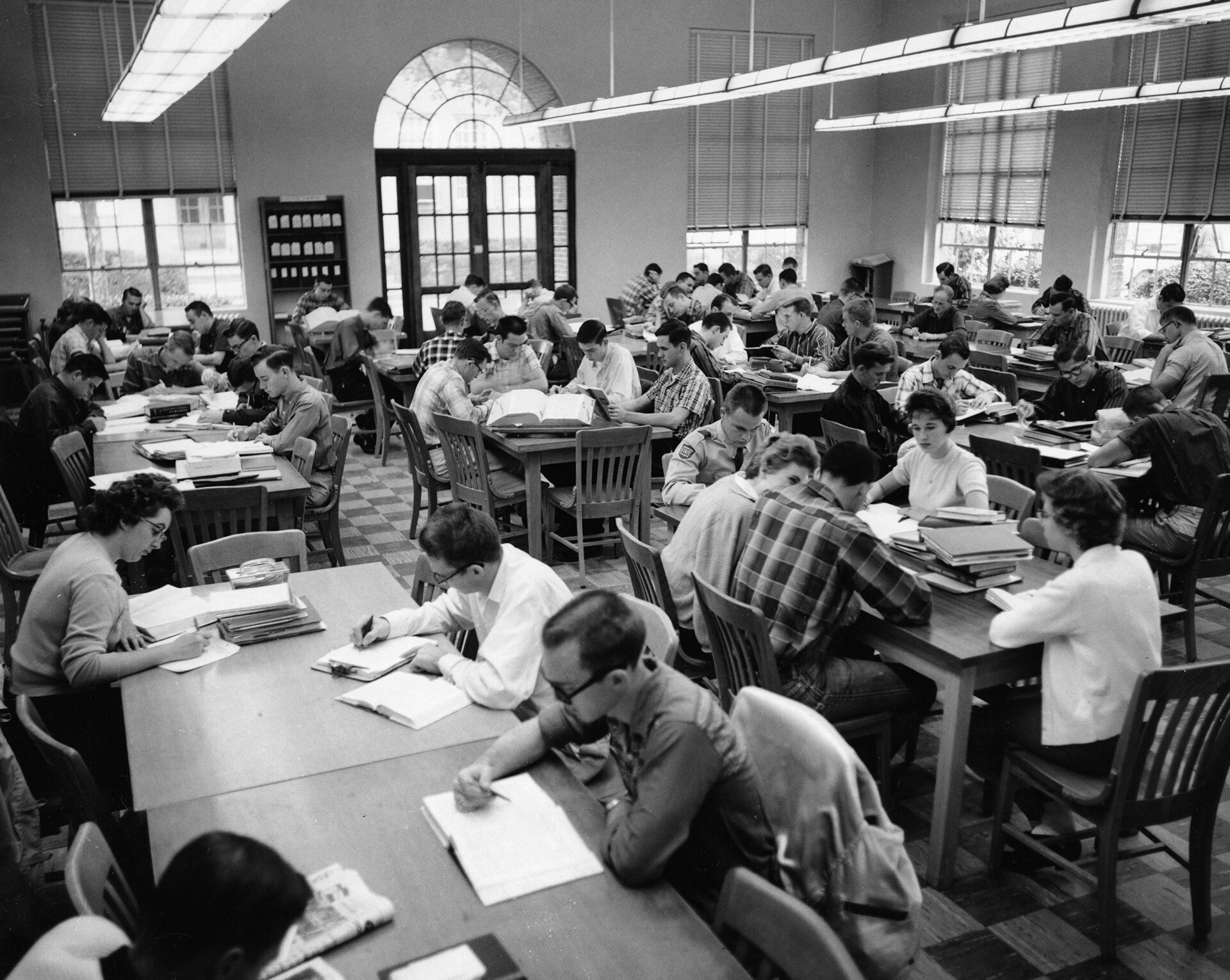
[Students studying at a library table. Photograph: University of Texas at Arlington Photograph Collection]
Image Credits: Wikimedia Commons
A long course tests something different from a short one. The first weeks run on novelty, but by month three the material is harder, the deadlines pile up, and the finish line still looks far away.
That fade is normal, not a personal failure. Motivation during a long course behaves less like a battery and more like a rhythm: it rises after small wins and falls after long stretches without rest or visible progress. This article explains how to stay motivated during a long course, including why motivation fades, the weekly-win-and-rest rhythm, and the study habits that keep the rhythm going.
Why motivation fades mid-course
Early in a course, progress is easy to see. Each lecture adds something new, and every completed assignment is visible proof of movement.
Later, the work gets denser and the gains get harder to notice. A student can study for a week and feel no smarter, even when the learning is happening underneath.
Psychologists Edward Deci and Richard Ryan, who developed self-determination theory, argue that lasting motivation depends on three needs: autonomy, competence, and relatedness.
Autonomy means feeling that you chose the work. Competence means feeling capable of doing it. Relatedness means feeling connected to other people in the effort.
A long course strains all three. Set syllabuses shrink autonomy, harder material dents competence, and solo study erodes relatedness.
When all three sag at once, quitting starts to feel rational rather than lazy. The fix is to rebuild each need deliberately, in small ways, week by week.
Another common trap is waiting to feel motivated before starting. The University of Melbourne's study advice turns that idea around: psychological research shows that action leads to motivation, which then leads to more action. A student who opens the book and works for ten minutes often finds the motivation arriving mid-task, not before it.
The weekly-win-and-rest rhythm
The core method is simple: one clear win per week, plus rest that is planned rather than stolen. A weekly win is a single outcome you can point to on Friday and say it is done. Examples include finishing one problem set, writing one essay section, or mastering one topic well enough to explain it aloud.
Small goals work better than large ones here. The Justice Institute of British Columbia's motivation guide advises setting small goals with small timeframes, daily or weekly, alongside larger goals with larger timeframes. A weekly win is the bridge between the two: big enough to feel like progress, small enough to finish in a real week.
Rest belongs in the plan, not after it. Stanford's Center for Teaching and Learning suggests tracking what you want to learn before and after each class, and that reflection only helps if the brain has downtime to consolidate. Students who study seven days a week usually crash by mid-semester, then lose more days to recovery than a planned rest day would ever have cost.
A workable rhythm looks like this. Pick the week's win on Sunday evening. Work in focused blocks during the week, and protect one full rest evening.
On Friday, mark the win complete and note what is next. The ritual matters as much as the hours, because it manufactures the visible progress that long courses otherwise hide.

[Students studying in a library. Photograph: Gary Todd]
Image Credits: Wikimedia Commons
Study habits that protect motivation
Break big tasks into tiny steps. The University of Melbourne's guide gives the example of replacing "write your essay" with "review one relevant article and note two or three points for the first paragraph." Tiny steps lower the cost of starting, which matters most on the days motivation is lowest.
Make progress visible. Keep a simple log of completed topics, problems, or pages, and review it weekly.
Motivation runs on evidence, and a log turns invisible effort into something you can see. Stanford's learning-goals sheet serves the same purpose: writing down what you want to learn from a class, then reflecting after it on how close you got, makes each session's gain concrete.
Use other people on purpose. Study groups, accountability partners, and office hours all feed the relatedness need that solo study starves.
The University of Toronto Scarborough's advising centre suggests making goals public by telling family or friends and asking them to hold you accountable. A weekly check-in with one study partner often does more than any productivity app.
Vary the setting when a routine goes stale. A different library floor, a quiet cafe, or a change of method can break the association between a place and a slump. The point is not novelty for its own sake, but interrupting a pattern where sitting down at the same desk now triggers dread instead of focus.
Finally, separate a bad week from a bad course. A failed test or a missed deadline is information about one week, not a verdict on the whole effort. Students who treat setbacks as specific and fixable recover faster than those who treat them as proof they do not belong.
How do I restart after falling weeks behind?
Start with the smallest overdue item, not the largest. Completing one small task restores a sense of competence, and competence is what makes the next task feel possible. Then rebuild the weekly rhythm from the current week forward, rather than trying to repay every missed hour at once.
Is it better to study every day or take days off?
Both, in balance. Daily short sessions beat cramming, but a planned rest day each week prevents the mid-semester crash that costs far more time. The research pattern is consistent: steady effort with real breaks outlasts heroic bursts followed by burnout.
What if I chose the wrong course?
That question deserves honest attention, not automatic persistence. Talk to an adviser about whether the difficulty is the subject, the workload, or a mismatch of goals. Switching a course after a real conversation is a decision; quitting silently in week eight is a drift.
Do rewards actually help motivation?
Small rewards tied to completed goals help, especially early on. The Justice Institute guide pairs small goals with small rewards and large goals with large ones. Rewards work best as celebrations of finished work, not bribes for starting it.
The bottom line
Motivation across a long course is a rhythm you build, not a feeling you wait for. Pick one weekly win, protect real rest, make progress visible, and keep other people in the loop.
When the next slump arrives, and it will, the rhythm is what carries you through it. Start the next small task, finish it, and let the motivation catch up.
Tags: motivation, study skills, long courses
Rive News's research desk covers practical explainers across driving, work, and everyday science, checking each claim against published sources before writing.
Related
- Why does motivation run out mid semester? What research shows
- What is the Pomodoro technique, and does it work?
- How to study for exams without burning out
- How to stay motivated during long exam seasons
Subscribe for one practical explainer each morning.
Standards: facts checked against the sources listed above; corrections are published when an error is found.
Related stories

Why Do I Blank Out During Tests Despite Studying: Test Anxiety and Retrieval Failure
Blanking out in exams is retrieval failure, not missing knowledge. Anxiety drains working memory; rereading builds false confidence. Here

How to Study for Exams Without Burning Out
Sleep 7-8 hours, study in 25-50 minute blocks, and exercise daily. The science-backed way to study for exams without burning out, and what

Why Do I Forget What I Just Read? Science Has an Answer
You forget what you just read because of the forgetting curve, mapped by Ebbinghaus in 1885. Science explains why memory fades fast and how