
How to Use Past Papers to Revise for Exams Effectively
Key takeaways
- Attempt each paper under timed exam conditions before you look at any answers.
- Mark against the official mark scheme, then log every lost mark by topic and error type.
- Revisit weak topics, then repeat with a fresh paper to check the fix worked.

A past paper is the closest thing to a rehearsal for an exam. It shows the question style, the timing pressure, and the marks on offer. Used well, it turns vague revision into a clear list of what to fix.
This article explains how to use past papers to revise for exams effectively, including why practice testing works, how to sit a paper, how to review it with the mark scheme, and how to turn lost marks into a plan.
Why answering beats rereading
Rereading notes feels productive because the material looks familiar. Familiarity is not memory. When you read a page for the fifth time, you recognise it.
In the exam, you must produce it from memory under time pressure. Those are different tasks.
Retrieval practice closes that gap. It means pulling answers from memory rather than re-reading them. The testing effect is the name researchers give to the finding that practising recall strengthens later memory more than the same time spent restudying.
Roediger and Karpicke ran the classic test in 2006. Students who practised recall kept 61 percent of a passage after one week, against 40 percent for students who reread it. The rereading group had read the passage about 14 times on average, while the tested group had read it about 3.4 times. Testing won with far fewer exposures.
Past papers are retrieval practice in exam form. Each paper forces you to recall, decide, and write under pressure. That is why a paper done properly teaches more than a week of rereading notes.
For more on beating the reread trap, see how to beat procrastination when studying feels boring.
Gather the right papers first
Use papers from your own exam board and your own syllabus. Boards differ in question style, command words, and mark schemes. A paper from a different board still helps, but it should never be your main diet.
Get the mark scheme for every paper you use. Without it, you cannot tell what the examiner wanted. Get the examiner report too if your board publishes one.
It lists the mistakes real candidates made, which is often the most useful page in the whole pack.
Start with older papers and save the most recent two for the final fortnight. Recent papers match the current syllabus best. Older papers may include topics that no longer appear, so check each question against your syllabus before you sit it.
Print the paper if you can. A screen tempts you to check notes mid-answer. Paper, a pen, and a timer reproduce exam conditions better.
If you must work on screen, close every other tab.
Sit the paper under exam conditions
Treat each paper as a real exam. Set a timer for the full paper length. Work in a quiet room.
Put notes, phones, and answer keys out of reach. No pausing the clock for a quick check.
Use the paper length to plan your time. A 90 minute paper with 60 marks allows about 1.5 minutes per mark. Write that budget on the paper before you start.
When a question eats its budget, move on and return later.
Read each question twice before you answer. Underline the command word: describe, explain, evaluate, calculate, compare. Each word asks for a different kind of answer.
"Describe" wants what happened. "Explain" wants what happened and why. "Evaluate" wants strengths, limits, and a judgement.
Attempt every question, even ones you feel unsure about. A blank answer scores zero. A partial answer can earn partial marks.
Mark schemes often award marks for method, a correct first step, or a relevant point even when the final answer is wrong.
Keep the answer in the format the question asks for. If it asks for two reasons, give two. If it asks for a labelled diagram, draw one.
Extra pages of unfocused writing waste time and earn little.
Review with the mark scheme, line by line
The review is where the learning happens. Do it the same day if you can, while the paper is still fresh in your mind. Work through the mark scheme question by question.
Mark strictly. Give yourself a mark only where your answer matches the mark scheme wording or clearly makes the same point. Being generous with yourself hides the gaps you need to fix.
For each question, note three things: the marks you scored, the marks you lost, and why. Was the answer missing a point, was the method wrong, or did you run out of time? The reason matters more than the score, since it decides what you do next.
Read the mark scheme as a guide to how examiners think. Notice how many marks each part carries. A 6-mark question expects about six distinct points or steps.
A 2-mark question expects two. Matching the length of your answer to the marks on offer is a skill, and the mark scheme teaches it.
Watch for command words you misread. Many lost marks come from answering a different question than the one asked. If you wrote a description when the question asked for an explanation, note that pattern.
It is cheap to fix once you see it.
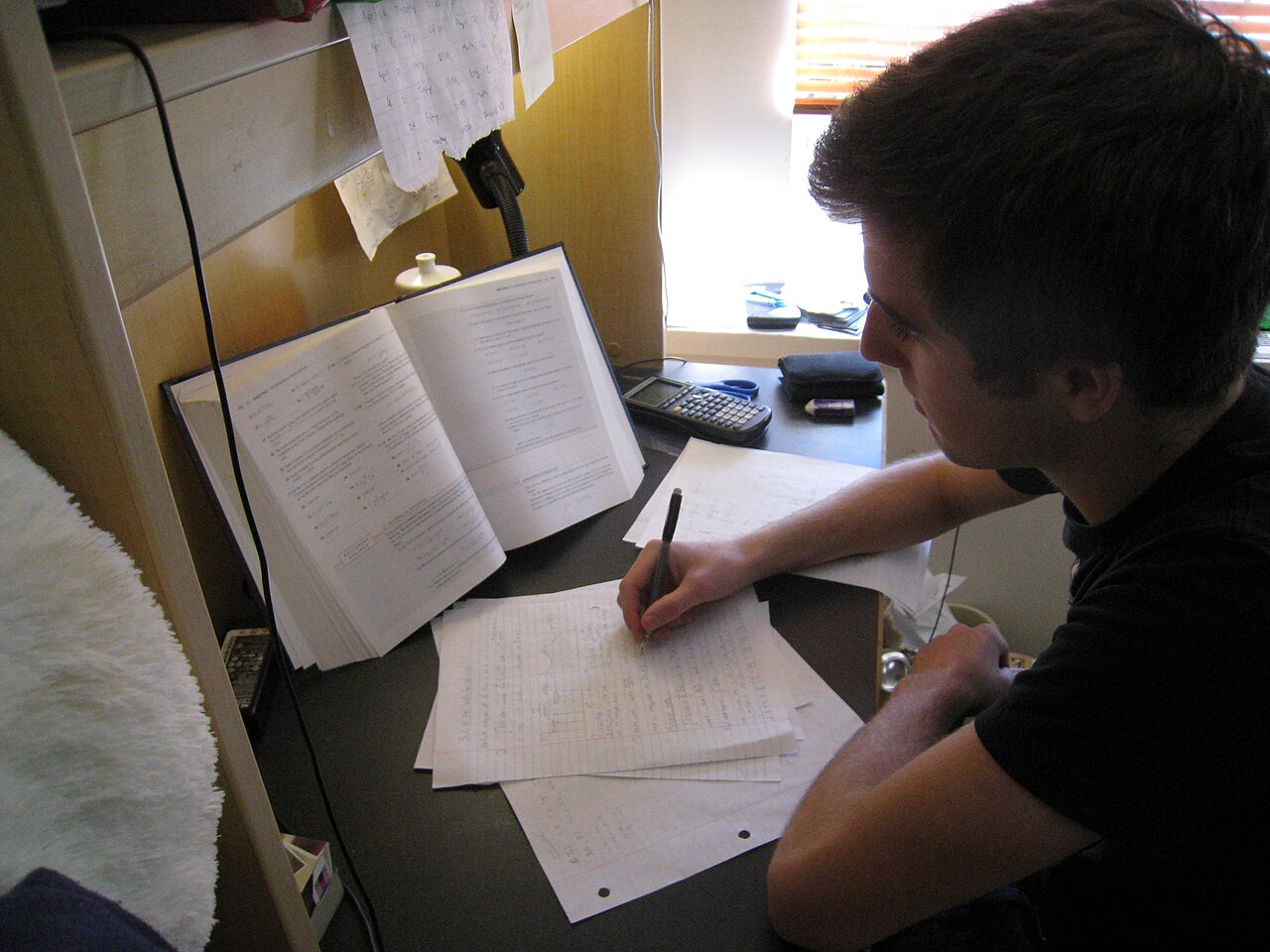
Keep a lost-marks log
A lost-marks log turns a pile of papers into a plan. Use one page per subject. After each paper, add a row for every question where you lost marks: question number, topic, marks lost, and error type.
Use a small set of error types: knowledge gap, method error, misread question, time pressure, and careless slip. Five labels are enough. Most students find one or two types dominate their losses.
Review the log after three papers. Patterns jump out. A student who loses marks on the same topic three times has a knowledge gap.
A student who loses marks to misread questions has a reading habit to fix. The fix for each pattern is different.
Act on the pattern, not the score. A low score on one paper means little. Three papers with the same error type mean a lot.
The log is the difference between doing papers and learning from them.
Retarget weak topics before the next paper
After each review, pick the top two weak topics from the log. Spend the next study session on those topics only. Reread the notes, work short practice questions on that topic, and write a one-page summary from memory.
Then test the fix with fresh questions on the same topic. Use a different year or a topic question set. If the marks improve, the fix worked.
If they do not, try a different approach, such as a worked example or a teacher question.
Space the papers out. One full paper per subject every few days beats five papers in one weekend. Spacing gives the memory time to settle and gives you time to fix gaps between papers.
Cramming papers back to back leaves no room for the retarget step.
In the last two weeks, switch to the most recent papers under full exam conditions. This is your dress rehearsal. Use the same start time as the real exam if you can.
Sleep and food matter here too, since a tired brain recalls less.
Handle the questions you got wrong
Wrong answers deserve a second look, not a quick glance. Rewrite the correct answer in full for any question where you lost more than half the marks. Writing the full answer builds the memory that reading alone does not.
For method errors in maths or science, redo the question from scratch without looking at the scheme. Then compare each step. Find the exact step where your working left the path.
That step is the thing to practise.
For essay subjects, compare your structure with the mark scheme points. Did you make a claim, support it, and link it back? Did you answer the question set, or drift into a nearby topic?
A short plan before writing helps. Spend five minutes planning a long essay answer before you write a word.
Ask a teacher or tutor to look at one marked paper. An outside eye spots habits you cannot see. Bring your lost-marks log so the teacher can see the pattern across papers, not just one answer.
If you are picking up after a bad result, how to learn from a failed exam covers the same review habit in more depth.
Build a weekly past-paper routine
A simple routine beats a complicated one. Here is a pattern that works for most students.
Day 1: sit a paper under timed conditions. Day 2: mark it, log lost marks, and pick two weak topics. Day 3: study those two topics with short practice questions.
Day 4: sit a fresh paper or a topic set. Repeat.
Keep the routine light enough to sustain. Three papers per subject per fortnight is plenty for most students. Quality of review matters more than quantity of papers.
Ten papers skimmed teach less than three papers reviewed properly.
Track your scores per topic, not just per paper. A rising score on a weak topic is the real sign of progress. A single high score on an easy paper proves little.
FAQ
How many past papers should I do?
Three to five full papers per subject is a solid target, plus topic questions on weak areas. More papers help only if you review each one. Doing papers without review wastes the benefit.
Should I look at the mark scheme while answering?
No. Answer first, then check. Peeking turns a recall task into a copying task.
The struggle to recall is the part that builds memory.
What if my syllabus changed?
Check each paper against the current syllabus and skip removed topics. Use the most recent papers for the closest match. Your teacher or board website lists the current syllabus.
Can past papers help for essay subjects?
Yes. They train planning, timing, and argument structure. Plan each essay, write it timed, then compare your points with the mark scheme or examiner report.
The same log method works.
The bottom line
Past papers work when you treat them as rehearsals and review them like a coach. Sit each paper timed, mark it strictly, log every lost mark, and retarget the weak topics before the next paper. The paper shows you the gap.
The mark scheme shows you the fix. The log makes sure the fix sticks. If cramming tempts you, why studying for an exam in one week goes badly explains the cost of leaving it late.
Tags: revision, exams, study, past papers
Latest in Education
- How to beat procrastination when studying feels boring
- How to learn from your mistakes after a failed exam
- How to stay focused when studying at home
- Why studying for an exam in one week goes badly
Subscribe to the Rive News newsletter for one practical study guide each week.
Related stories

Why Do I Blank Out During Tests Despite Studying: Test Anxiety and Retrieval Failure
Blanking out in exams is retrieval failure, not missing knowledge. Anxiety drains working memory; rereading builds false confidence. Here

How to Study for Exams Without Burning Out
Sleep 7-8 hours, study in 25-50 minute blocks, and exercise daily. The science-backed way to study for exams without burning out, and what

Why Do I Forget What I Just Read? Science Has an Answer
You forget what you just read because of the forgetting curve, mapped by Ebbinghaus in 1885. Science explains why memory fades fast and how