
Why your ATM receipt balance differs from your app
By Rive News / Research desk | Rive News / Published October 28, 2026 at 9:00 AM PKT
Key takeaways
- An ATM receipt usually shows one balance figure, while an app may show two: current balance and available balance.
- Pending transactions reduce your available balance immediately but leave the current balance unchanged until they post.
- Spend against the available balance, not the larger number, to avoid overdraft fees.
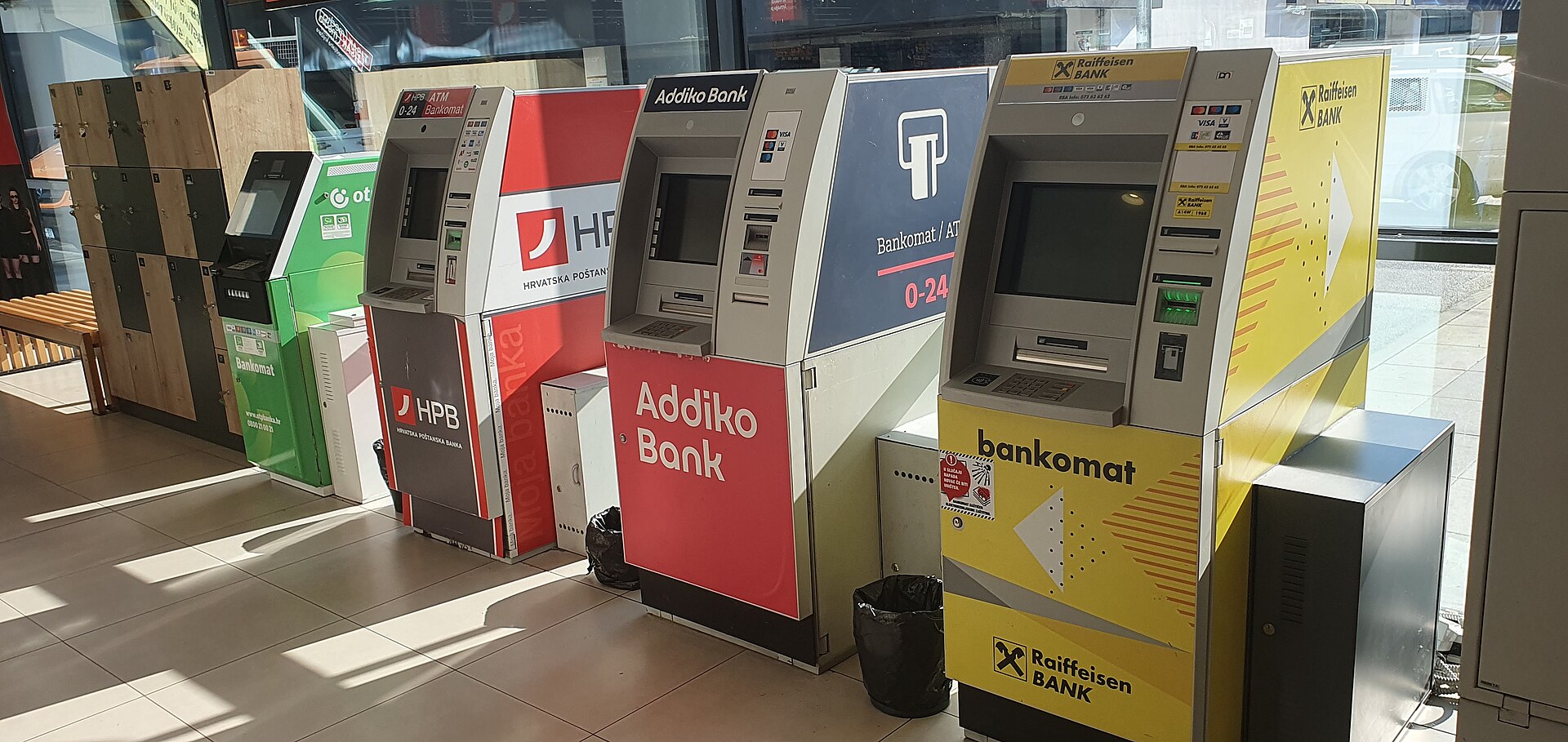
[An automated teller machine on a street.] Photograph: ATM machine
Image Credits: Wikimedia Commons
You withdraw cash, glance at the receipt, then open your banking app and see a different number. Neither figure is necessarily wrong. They are usually two different measurements taken at two different moments.
This article explains why an ATM receipt balance differs from a banking app balance, including current versus available balance, pending transactions, authorisation holds, and timing delays.
Two balances, one account
Banks show two numbers because they serve different purposes. Your current balance, sometimes called the ledger balance, is the total after all posted transactions. Your available balance subtracts pending holds from that total, giving your real spending power at any moment.
LegalClarity gives a clean example: with $1,000 in current balance and a $200 pending charge, the available balance reads $800. The $200 is frozen and earmarked for the merchant, but it has not technically moved yet.
An ATM receipt often prints a single figure, and which figure it prints varies by bank and machine. Some print the available balance, some the ledger balance, and some print the balance as of the last update the machine received. The app, by contrast, usually shows both figures and updates more often.
That alone explains most mismatches. If the receipt shows $1,000 and the app shows $800, the $200 gap is probably a pending transaction the receipt's figure does not reflect.
Pending transactions sit in between
A pending transaction is a payment the bank knows about but has not finalised. The merchant has authorised the charge, the bank has set the money aside, and the final amount may still change.
Capital One's help centre notes that a purchase will generally post within 5 days of the transaction, and that the pending amount can differ from the final amount. Restaurants are a classic case: the authorisation may cover the meal before the tip is added. Petrol stations and hotels do something similar, authorising an estimated amount for fuel or incidentals.
SoFi's guide gives typical posting timelines: debit card transactions often take 1 business day, online payments 1 to 5 business days, and check deposits 1 to 2 business days. Transactions made on weekends or holidays often do not post until the next business day or later.
During that window, the two balances disagree by design. The current balance ignores the pending item.
The available balance counts it. Both are correct descriptions of different things.
[An ATM machine with a notice sign attached.] Photograph: ATM machine
Image Credits: Wikimedia Commons
Timing: the ATM may be behind the app
Even without pending transactions, timing creates gaps. An ATM is not a live window into the bank's core system in every case. It may show the balance from its last refresh, which could predate a deposit, a direct debit or a card payment that posted minutes earlier.
The reverse happens too. A withdrawal you just made at the ATM may not yet appear in the app if the app has not refreshed, or if the ATM transaction itself is still settling. A receipt printed at the machine captures the moment of the transaction, while the app captures the moment you opened it.
Deposits add a third timing wrinkle. A check deposited at an ATM may appear in the current balance only after it clears, which SoFi puts at 1 to 2 business days, while the bank may hold part of it longer for large amounts, new accounts or suspected fraud.
Authorisation holds look like missing money
Some mismatches are larger than a single purchase and harder to explain. Hotels, car rental firms and petrol stations place temporary authorisation holds that can exceed the final bill.
A hotel might authorise an estimated amount for the room plus incidentals. A petrol station might authorise a fixed sum at the pump before you have finished filling up. Until the merchant finalises the charge, the hold reduces your available balance, and the app may show a much lower spendable figure than the receipt suggests.
These holds usually release within a few days, but Capital One notes that the pending amount can change before posting. If a hold lingers beyond a week, contacting the merchant is usually faster than contacting the bank, since the merchant controls when it finalises the charge.
Which number should you trust
For spending decisions, trust the available balance. It is the figure that accounts for money already committed to pending transactions. The current balance can look deceptively high when several pending charges have not cleared, and spending against it is the fastest route to an overdraft fee.
For reconciling, trust the transaction list rather than either headline number. Work through pending and posted items one by one.
A gap that matches a pending item to the cent is explained. A gap that matches nothing deserves a call to the bank.
A few checks resolve most cases quickly. First, compare the receipt time with the app's last update time. Second, list pending transactions and add them up.
Third, check for authorisation holds from hotels, car rentals or petrol stations. If the gap survives all three checks, or if it grows over days, report it rather than waiting for it to resolve itself.
[An ATM machine being repaired by a technician.] Photograph: ATM repair
Image Credits: Wikimedia Commons
Why is my available balance lower than my account balance?
Pending transactions reduce the available balance immediately but do not change the current balance until they post. The difference between the two figures is usually the total of your pending items.
How long do pending transactions take to clear?
Debit card transactions typically post within 1 business day, online payments within 1 to 5 business days, and check deposits within 1 to 2 business days, according to SoFi. Weekends and holidays can extend those windows.
Can an ATM receipt simply be out of date?
Yes. An ATM may print the balance from its last system refresh rather than a live figure, so deposits or payments that posted minutes earlier may not appear on it.
What if the difference never goes away?
List pending items and authorisation holds first. If no item explains the gap, contact the bank with the receipt, the time of the transaction and a screenshot of the app balance.
The bottom line
An ATM receipt and a banking app disagree because they measure different things at different times. The receipt shows a snapshot, often of a single balance type, while the app shows current and available balances that move as pending transactions and authorisation holds come and go.
Spend against the available balance, reconcile against the transaction list, and treat an unexplained gap as worth a phone call. This is general educational information, not financial advice.
The Rive News research desk writes plain-language explainers from published sources, with no invented experts or first-hand claims.
Related
- How a debit card payment travels from shop to bank
- Why banks hold your check deposits for days
- What your bank means when it says funds are pending
- How banks make money on free checking accounts
Subscribe to the Rive News newsletter for one plain-language explainer each morning.
Rive News publishes explainers from verifiable public sources; corrections are noted on the article page.
Related stories

How your APR is divided by 365 to get daily interest
Lenders divide your APR by 365 for a daily rate, then apply it to your average daily balance. This guide walks through every step

What is the difference between APR and effective annual rate?
APR ignores compounding inside the year; the effective annual rate includes it. A 12.99% APR card really costs 13.80% a year. Worked

APY vs interest rate: what compounding does to your money
APY includes compounding; the interest rate does not. A 5% rate compounded monthly is really 5.12% APY. Here is how the math works and what