
How a debit card payment travels from shop to bank
By Rive News / Research desk | Rive News / Published October 27, 2026 at 9:00 AM PKT
Key takeaways
- A debit card payment moves in three stages: authorization, clearing, and settlement.
- Authorization checks the account balance in seconds, while settlement can take 1 to 3 business days.
- Four parties handle the payment: the merchant, the acquiring bank, the card network, and the issuing bank.
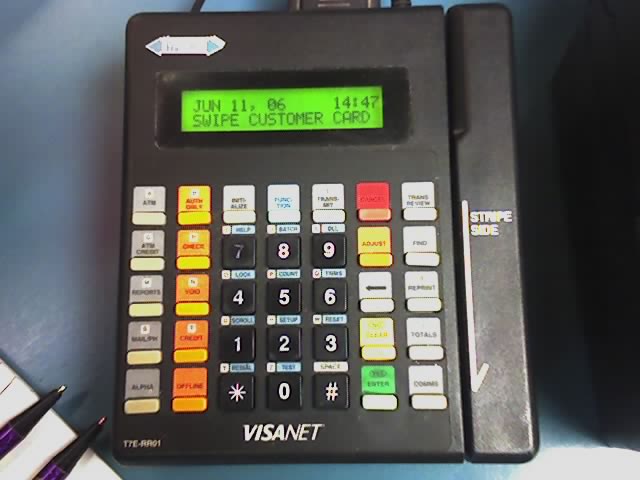
[A card payment terminal on a shop counter.] Photograph: the subject
Image Credits: Wikimedia Commons
A debit card payment is a message that travels between four parties in seconds. The tap at the till is only the first step, and the money itself moves days later.
The journey has three stages, which are authorization, clearing, and settlement. Authorization asks whether the payment can happen, clearing sorts out the details, and settlement moves the money.
This article follows a single shop purchase through each stage, names the parties involved, and explains where the fees go.
The four parties in every card payment
The merchant is the shop that sells the goods, and the customer is the cardholder. Behind them sit two banks with different jobs.
The acquiring bank, often shortened to acquirer, serves the merchant and receives the payment on the shop's behalf. The issuing bank, or issuer, is the bank that gave the customer the debit card and holds the customer's account.
Between the two banks sits the card network, such as Visa or Mastercard, which routes messages and sets the rules. The network does not hold the customer's money, but no payment completes without it.
Step one: authorization in seconds
When a customer taps, inserts, or swipes a card, the shop terminal sends an authorization request. The request goes first to the acquirer, which routes it through the card network to the issuing bank.
The issuing bank then checks the card, the account balance, and fraud signals. If the balance covers the purchase and nothing looks suspicious, the bank approves the payment and places a hold on the funds.
The approval message travels back along the same path, from the issuer through the network and the acquirer to the terminal. The whole exchange usually takes seconds, and Checkout.com reports that it typically responds to authorization requests within one second.
A decline works the same way in reverse, with the issuer sending a refusal code back to the terminal. Common reasons include insufficient funds, a blocked card, or a fraud rule triggered by an unusual purchase.
Authorization is not yet a payment, because the shop has only reserved the money. The funds stay in the customer's account until the later stages move them.
Between stages: batching at the end of the day
After approval, the terminal stores the transaction in a batch file with the day's other approved payments. Merchants usually submit this batch to their acquirer at the end of the business day.
Batching is why a single tap does not trigger a single bank transfer. The acquirer collects many transactions and forwards them together, which keeps the system efficient.
Online purchases follow the same pattern, with one difference in timing. A shop that ships goods later may capture the payment only when the order ships, rather than at checkout.
Step two: clearing
Clearing begins when the acquirer sends the batch through the card network to the issuing banks. The network calculates what each bank owes and passes the final transaction details to the issuers.
During clearing, the issuing bank posts the charge to the customer's account and moves the funds toward a settlement account. The money has left the customer's balance at this point, but it has not yet reached the merchant.
Clearing usually completes overnight, according to payment industry guides. The customer often sees the transaction as pending during this window, which is why a balance can look different from the available funds.
Step three: settlement
Settlement is the final stage, when the issuing bank pays the acquiring bank and the acquirer credits the merchant. Stripe describes settlement as the point when funds enter the merchant's bank account or the payment provider's bank account.
For most shop purchases, settlement takes 1 to 3 business days after the transaction. Weekends and public holidays can stretch the wait, because traditional settlement runs on business days only.
Some networks now offer weekend settlement options for certain banks, but the standard shop payment still follows the business day cycle. A customer who pays on Friday may therefore see the merchant funded early the following week.
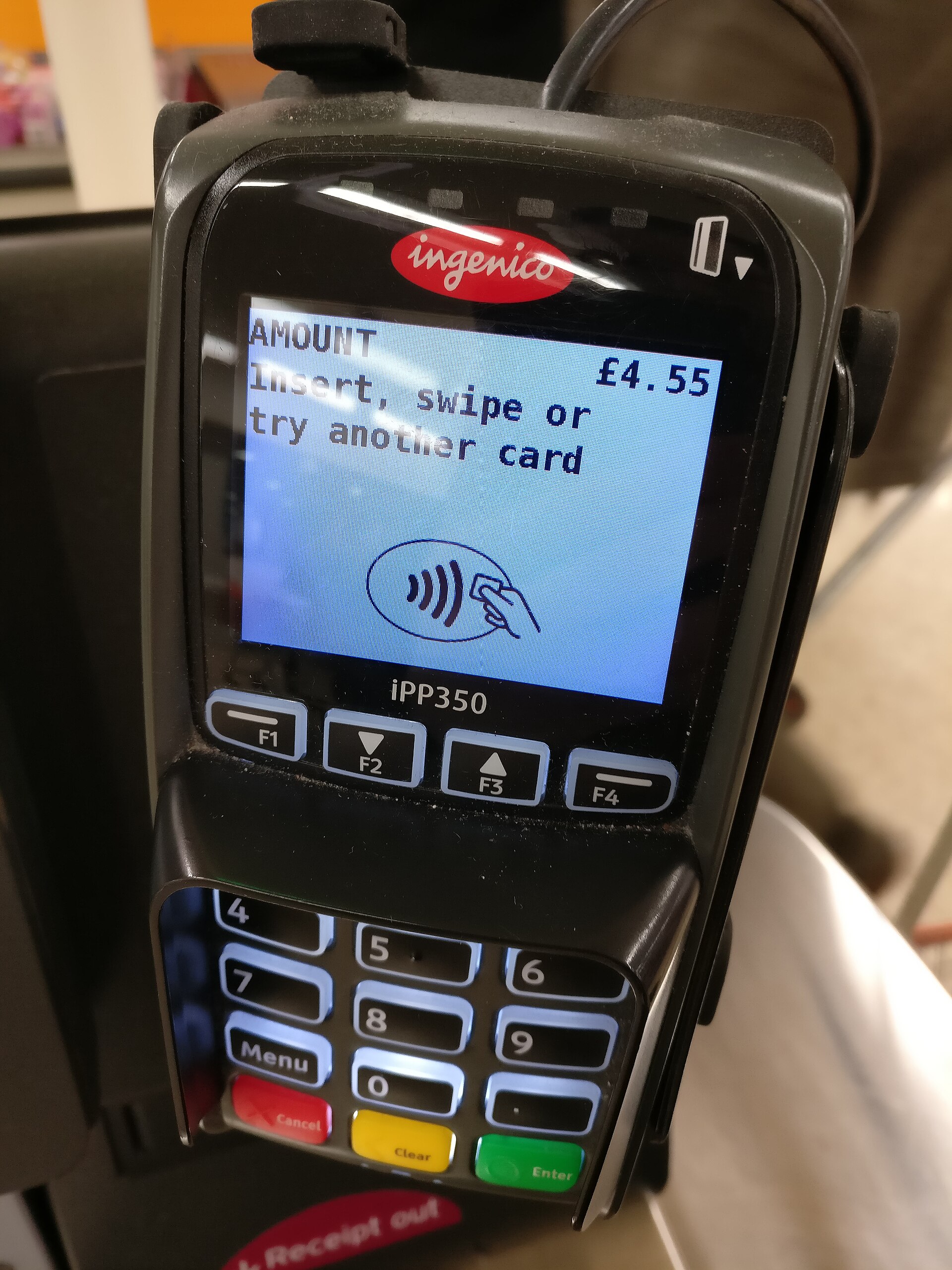
[A payment terminal at a self-checkout counter.] Photograph: the subject
Image Credits: Wikimedia Commons
Where the fees go
Every card transaction carries three layered fees, and the shop pays all of them. The largest is the interchange fee, which goes to the customer's issuing bank.
For regulated debit cards in the United States, the Federal Reserve reported an average interchange fee of 0.73 percent of transaction value in 2023. Credit card interchange runs higher, often between 1.5 and 2.5 percent depending on the card and the merchant category.
The second fee is the assessment fee, which goes to the card network itself and typically runs around 0.10 percent. The third is the processor markup, which goes to the merchant's payment processor and is the only component that is truly negotiable.
A flat rate such as 2.9 percent plus 30 cents bundles all three components into one number. Interchange-plus pricing lists each component separately, which makes the split visible on the merchant's statement.
What can go wrong along the way
A payment can fail at authorization if the balance is short or the card is blocked. It can also fail if the terminal loses its connection before the approval message returns.
Refunds reverse the journey, with the acquirer returning funds through the network to the issuer. Chargebacks work differently, because the issuer pulls funds back after a customer disputes a charge.
Pending holds deserve a note, since a hotel or petrol station may authorize more than the final bill. The hold releases after clearing, but the gap can confuse customers who check their balance in between.
Why debit differs from credit
A debit payment draws on money the customer already holds, which is why the issuer checks the account balance rather than a credit limit. A credit payment draws on a line of credit that the customer repays later.
That difference explains the fee gap, since debit interchange is capped for regulated banks in the United States while credit interchange is not. It also explains why a debit decline usually means insufficient funds rather than a credit decision.
This is general educational information, not financial advice.
Frequently asked questions
How long does a debit card payment take to reach the shop?
Authorization takes seconds, but settlement usually takes 1 to 3 business days. The shop has the customer's commitment at the till, while the money arrives later.
Why does my debit payment show as pending?
The payment is between authorization and clearing, so the issuer has reserved the funds but not yet posted the final charge. Pending status usually clears overnight.
Who gets the fee when I tap my card?
The issuing bank receives the interchange fee, the card network receives the assessment fee, and the payment processor receives its markup. The merchant pays all three, not the customer.
Is a debit payment instant for the shop?
No, only the approval is instant, and the money follows through clearing and settlement. Faster payment rails exist for bank transfers, but card settlement still follows the business day cycle.
The bottom line
A debit card tap is a fast question with a slow answer, since approval arrives in seconds and money arrives in days. Four parties handle the journey, and each stage has a distinct job.
Authorization reserves the funds, clearing sorts the details, and settlement moves the money into the merchant's account. Knowing the stages makes pending balances, declines, and fee statements far easier to read.
Tags: debit cards, payments, banking
Rive News is a research desk covering everyday science, money, travel, and family life in plain language.
Related
- Debit versus credit card: what changes for daily spending
- Bank says your funds are pending: what it actually means
- How banks make money on free checking accounts
- Routing number versus account number: what each code does
Subscribe for one plain-language explainer in your inbox each morning.
Rive News publishes researched explainers and corrects errors when readers point them out.
Related stories

How your APR is divided by 365 to get daily interest
Lenders divide your APR by 365 for a daily rate, then apply it to your average daily balance. This guide walks through every step

What is the difference between APR and effective annual rate?
APR ignores compounding inside the year; the effective annual rate includes it. A 12.99% APR card really costs 13.80% a year. Worked

APY vs interest rate: what compounding does to your money
APY includes compounding; the interest rate does not. A 5% rate compounded monthly is really 5.12% APY. Here is how the math works and what