
Routing number vs account number: what each code does
By Rive News / Research desk | Rive News / Published October 24, 2026 at 9:00 AM PKT
Key takeaways
- A routing number is always nine digits and names your bank; your account number names your specific account at that bank.
- Every electronic payment needs both: the routing number delivers money to the right institution, and the account number places it in the right account.
- Wire transfers often use a different routing number than the one printed on your checks, so always confirm the right code with your bank before sending.

[The ornate art-deco crown of a bank tower rising against a blue sky.] Photograph: Acroterion
Image Credits: Wikimedia Commons
A routing number is a nine-digit code that identifies your bank or credit union in the United States payment system. Think of it as the bank's address: it tells every payment network exactly which institution should receive or send your money.
An account number is a separate, longer code that identifies your specific account inside that institution. It is your account's fingerprint. Together, the two numbers route a payment first to the right bank, then to the right customer.
This article explains what a routing number is, what an account number is, how the nine digits of a routing code are structured, why wires sometimes need a different routing number, where to find both numbers, and the mistakes that delay payments.
What is a routing number?
A routing number is a sequence of exactly nine digits assigned to a US bank or credit union. The American Bankers Association (ABA) created the system in 1910 to sort paper checks, and the industry adopted it in 1911, according to the ABA and the entry for routing transit numbers on Wikipedia.
The number proves the institution is federally or state chartered and holds an account with the Federal Reserve, Investopedia explains in its routing and account number guide, which was reviewed by financial professional Khadija Khartit. The ABA still manages the system with its official registrar, now LexisNexis Risk Solutions, and roughly 22,000 active routing numbers are in use across the country, according to LegalClarity citing the ABA.
Routing numbers are required for direct deposit, automatic bill payments, ACH transfers, domestic wires, and mobile payment apps that link to a bank account.
"The term 'routing number' is the most searched for term on the ABA's website," said Diane Poole, the association's senior vice president of data management and policy development. "We responded by developing an easy-to-use search tool, so consumers can quickly and confidently find any bank's routing number."
What is an account number?
An account number is the unique identifier your bank assigns to your specific checking, savings, or money market account. Investopedia compares it to a customer ID or fingerprint: it shows precisely where funds came from or where they should land.
Account numbers are usually between eight and 12 digits, though some banks use longer ones or include letters, per Investopedia and Wise. Two accounts at the same bank share the same routing number but carry different account numbers.
Unlike a routing number, which anyone can look up online, your account number is private. Treat it like a PIN or Social Security number. Anyone who holds your routing and account numbers together can initiate debits against your account, so share them only through trusted channels.
Routing number vs account number: the differences
The cleanest way to keep the two straight is to ask what each one names. The routing number names the institution. The account number names the account.
A few contrasts make the division of labor concrete:
- Length: routing numbers are always exactly nine digits; account numbers usually run eight to 12 digits and can vary by bank.
- Who it identifies: the routing number identifies the bank or credit union; the account number identifies you and your account inside it.
- Uniqueness: many branches and thousands of customers can sit behind one routing number; no two accounts share the same account number at one bank.
- Visibility: a bank's routing number is public information you can look up; your account number is confidential and should stay that way.
- History: the routing system dates to 1910 and was built for paper check sorting; account numbering schemes grew up separately, bank by bank.
When you pay a bill online, the payment first uses the routing number to find the right bank, then the account number to find the right ledger. If either is wrong, the money goes nowhere or, worse, somewhere it should not.
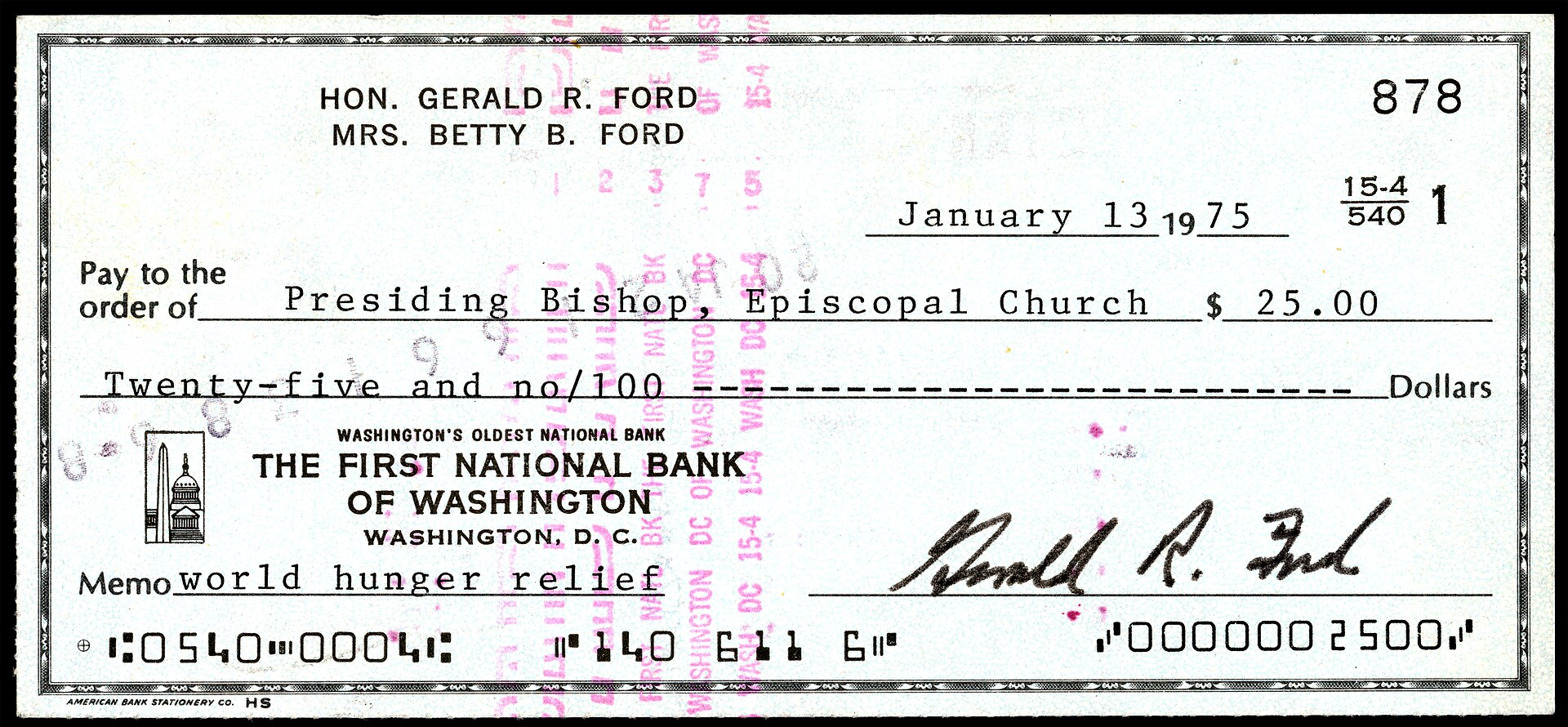
[A signed vintage check with handwritten details from the National Museum of American History.] Photograph: National Museum of American History
Image Credits: Wikimedia Commons
The anatomy of a nine-digit routing number
The nine digits are structured, not random. The first four identify the Federal Reserve district and processing center, the next four identify the institution, and the ninth is a check digit calculated from the other eight, according to LegalClarity and BiyaPay.
Payment software uses the check digit to catch typos and transposed digits before a transfer leaves your account. If you mistype one digit, the check digit usually fails validation and the system rejects the number instead of sending your money to a stranger.
Roughly 22,000 active routing numbers exist, yet a single large bank can hold several of them. Big national banks commonly assign different routing numbers by state, based on where you opened your account. Small banks and credit unions usually have just one, Investopedia notes.
Why wires and ACH sometimes use different routing numbers
This is the detail that causes the most confusion. The routing number printed on your checks may not be the right one for a wire transfer. Investopedia warns that the codes used for domestic and international wires are often not the same as the check routing number, and it advises checking the bank's website or asking directly.
Banks maintain separate routing numbers for separate payment rails. A check routing number moves paper through the check-clearing system. An ACH routing number moves electronic batches through the ACH network.
A Fedwire routing number moves same-day wires through the Federal Reserve's wire network. Most banks use one number for everything, but not all of them do.
For international wires, the ABA routing number alone is usually not enough. Banks outside the US use systems like SWIFT or BIC codes and IBANs instead.
An IBAN can run up to 34 alphanumeric characters identifying the country, bank, branch, and account. Sending money abroad requires the destination country's identifiers, not just your own bank's routing code.
Where to find both numbers
The fastest place to look is a paper check. At the bottom, the magnetic-ink line (called the MICR line, pronounced "micker") prints three groups of numbers: the nine-digit routing number first at the bottom left, then your account number, then the check number, per Investopedia.
Online banking and mobile apps usually list both under "account details" or "direct deposit information." Bank statements sometimes show them too.
Because a routing number is public, you can also find it on your bank's official website or through the ABA's lookup tool. Just be sure the site you use belongs to your actual bank or credit union, since look-alike pages are a common phishing setup.
Never use a routing number from a search result for a wire without confirming it. A stale or wrong code causes delays, returned transfers, or fees. The five minutes it takes to verify beats the week it can take to trace a lost wire.
Mistakes that delay payments
The most common error is mixing up the two numbers. Some people enter the routing number where the account number belongs, or paste the check number in as the account number. Double-check the order on your check before submitting any form.
The second mistake is using the check routing number for a wire. If your bank uses different codes per payment rail, the wire may be rejected or routed through a slower channel. Ask which routing number applies to wires specifically.
The third mistake is sharing account numbers carelessly. A credit card minimum payment form is harmless, but a photo of a check posted on social media exposes both numbers at once. Guard the account number the way you guard a password.
A fourth mistake is assuming the routing number never changes. Mergers and acquisitions can reassign routing numbers, and some banks add new ones by region. If a transfer that used to work starts failing, confirm the current code on your bank's own site.

[A modern bank headquarters building with glass facades in Houston, Texas.] Photograph: Jim Evans
Image Credits: Wikimedia Commons
Frequently asked questions
Can two banks have the same routing number?
No. Each routing number is assigned to exactly one institution, and the ABA's registrar ensures no duplicates. Large banks hold multiple routing numbers, but every code still points to one bank.
Is my routing number the same as my sort code?
Only if your accounts are in the United States. Sort codes are the UK's equivalent. The ABA system is used within the US only, while international transfers rely on SWIFT, BIC, and IBAN codes.
What happens if I use the wrong routing number?
The transfer is usually rejected or returned, and your bank may charge a fee. If the wrong code happens to belong to a real institution, the money can land in the wrong place, so always verify before sending.
Do I need a routing number for cash deposits or ATM withdrawals?
No. Tellers and ATMs identify your account by your card and PIN, not by these codes. Routing and account numbers matter for electronic transfers, direct deposits, bill payments, and wires.
The bottom line
The routing number names your bank; the account number names your account. Both are required for almost every electronic payment, and each must be exactly right. When in doubt, pull both numbers from your own bank's official site or app, and confirm the correct routing code for the specific payment type before you send.
This is general educational information, not financial advice.
Topics: routing number, account number, banking, ACH transfers
Rive News is an independent research desk that explains how everyday systems work, from banking rails to household science. Articles cite public sources and link to the lab's related explainers.
Related
- Why is your credit score dropping for no reason?
- Why banks charge monthly fees on checking accounts
- Why cash advances have no grace period
- Why credit card minimum payments barely reduce the balance
Get one clear explainer like this in your inbox every morning. Subscribe to the Rive News newsletter.
Standards: every claim links to a named source; corrections are published promptly and never made silently.
Related stories

How your APR is divided by 365 to get daily interest
Lenders divide your APR by 365 for a daily rate, then apply it to your average daily balance. This guide walks through every step

What is the difference between APR and effective annual rate?
APR ignores compounding inside the year; the effective annual rate includes it. A 12.99% APR card really costs 13.80% a year. Worked

APY vs interest rate: what compounding does to your money
APY includes compounding; the interest rate does not. A 5% rate compounded monthly is really 5.12% APY. Here is how the math works and what