
Why Do CDs Charge Early Withdrawal Penalties? 4 Real Reasons
Key takeaways
- Federal rules set the floor: any withdrawal within a CD's first six days must cost at least seven days of simple interest, per Regulation D.
- Banks charge more than the minimum because they plan their lending around your locked-up deposit; early exits wreck that planning.
- Penalties usually come out of earned interest first, but they can eat principal, so match the CD term to when you need the money.
A certificate of deposit is a simple trade. You agree to leave a lump sum with a bank for a fixed term, from a few months to five years, and the bank agrees to pay a fixed rate for the whole stretch. That rate is typically higher than a standard savings account because you give up something real: access to your money.
Pull the money out before the maturity date and the bank charges an early withdrawal penalty. The fee is not random and not a quirk of your bank.
It sits on top of a federal rule, protects how banks fund their loans, and follows a pricing logic that punishes longer-term commitments more. This article explains the federal minimum rule, why banks rely on term deposits for their lending plans, how penalties are actually calculated, when banks waive them, and how savers can avoid them entirely.

A circular vault door guarding a bank's safe deposit room. Photograph: Joe Mabel
Image Credits: Wikimedia Commons / Joe Mabel, Cleveland Trust Company
The federal rule behind the penalty
Under the Federal Reserve's Regulation D, a certificate of deposit is classified as a time deposit. That classification comes with a built-in price for breaking the contract early. Any withdrawal made within the first six days after the deposit must trigger a penalty of at least seven days' simple interest, according to LegalClarity's summary of 12 CFR Part 204.
That minimum is only a floor, not the whole story. The regulation does not cap what banks can charge beyond it, so almost every bank sets its own steeper schedule.
The reason the floor exists at all is historical. Time deposits once carried lower reserve requirements than demand deposits, and the mandatory penalty discouraged savers from treating CDs like checking accounts with better interest. Even though reserve requirement ratios dropped to zero in 2020, the penalty architecture stayed in place.
Why banks need the money to stay put
The deeper reason is on the bank's balance sheet. When you open a CD, the bank is not parking your cash in a drawer. It uses your deposit to fund loans and other investments built around predictable timelines, according to MoneyRates.
A five-year CD lets a bank plan five years of lending against that money. If depositors could exit for free at any moment, that planning would fall apart.
This is the core trade that makes the product work. Banks pay a fixed, above-savings rate precisely because they can count on having the funds for a known stretch, as LegalClarity puts it. Without a penalty to enforce the bargain, every CD would be a liquid account with an inflated rate, and the economics of the product would collapse.
For savers, the lesson is structural. A CD rate is not a gift; it is compensation for giving the bank certainty.
The longer the term, the more certainty you supply, which is why longer terms usually carry higher rates and steeper penalties at the same time. The relationship between compounding and quoted rates also matters when you compare offers, since two CDs with the same rate can earn different amounts depending on how often interest compounds.
How banks calculate the penalty
Almost every bank calculates the penalty as a chunk of the interest your CD would have earned, not a flat dollar fee. Common structures look like this: terms of one year or less often carry a 90-day interest penalty, longer terms often carry 180 days of interest, and some banks charge even more on CDs of three years or longer, according to LegalClarity. MoneyRates reports a similar spread, with five-year CDs often costing a full year of interest.
Here is the part that surprises people. The penalty normally comes out of your interest earnings first.
But if you withdraw early enough that you have not accrued enough interest to cover it, the bank takes the difference from your original deposit. You walk away with less than you put in. Withdrawing from a five-year CD after a few months is the classic way to take that hit.
Credit unions follow the same logic with their own version of the product, sometimes called share certificates. The federal minimum still applies, and their penalty schedules are often just as steep. The FDIC covers bank CDs up to $250,000 per depositor, per institution, for each ownership category, which makes them low-risk places to park cash, but insurance protects you against bank failure, not against the penalty for changing your mind early.
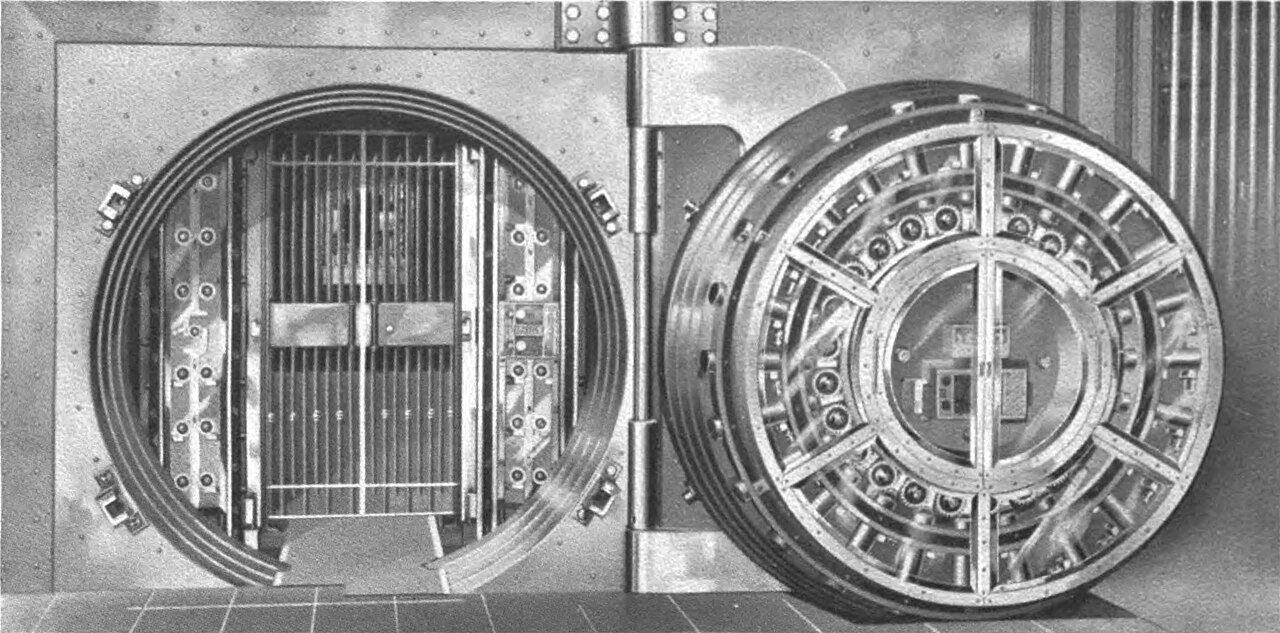
A 1908 safe deposit vault at the Cleveland Trust Company. Photograph: Cleveland Trust Company
When the penalty is waived
Federal rules carve out a small set of situations where a bank may release CD funds without any early withdrawal penalty. The two established exceptions are the death of an account owner and a court determination that an owner is legally incompetent, according to LegalClarity's reading of 12 CFR Part 204.
Everything beyond those cases is discretionary. Some banks waive penalties for military deployment or for hardship cases, but no federal rule requires it.
If a penalty waiver matters to you, the time to ask is before you open the account, in writing, with the bank's actual policy. Regulation DD requires banks to disclose their penalty and grace-period terms before you commit, so read the account disclosure rather than the marketing page.
Match the term to your timeline
The cleanest strategy is term matching: only buy a CD that matures when you expect to need the money. That sounds obvious, but most penalty payments come from people who guessed wrong about their own timeline.
A ladder, where you split savings across CDs maturing at staggered intervals, gives you regular access without ever paying a fee.
No-penalty CDs: lower rate, full liquidity
No-penalty CDs exist and let you withdraw after a short lockup, usually six days, without a charge. The trade-off is a lower rate, sometimes meaningfully lower than a standard CD of the same term.
Compare the spread honestly: if the no-penalty rate is 0.5 percentage points below the standard rate on a large deposit, you may be paying more in forgone interest than the penalty would have cost. Also keep in mind that savings account rates move with the broader rate environment, so a CD that looks great today may look ordinary by next year.
Brokered CDs: a different kind of exit cost
Brokered CDs, bought through a brokerage rather than directly from a bank, are a different animal. Instead of a fixed penalty, you sell the CD on a secondary market if you need cash early.
If market rates have risen, buyers pay less for your lower-yielding certificate and you can lose part of the original deposit. That cost is unpredictable, unlike a bank CD's known penalty.
What counts as an early withdrawal?
Any removal of funds before the maturity date, including partial withdrawals. Some banks allow partial withdrawals but still apply the penalty to the withdrawn amount, while others treat any touch as a full break of the contract.
Can the penalty be bigger than the interest I earned?
Yes. Banks charge the full penalty even when it exceeds accrued interest, and the shortfall comes from your principal. This is most dangerous on long-term CDs cashed out in the first months.
Do online banks charge lower penalties than branch banks?
Not systematically. Penalty schedules are a policy choice, and online banks compete mainly on rates rather than gentler penalties. Always check the fee schedule, because two banks with identical APYs can have very different early withdrawal costs.
Is a no-penalty CD always the safer choice?
It is safer for liquidity, but not always the better deal. If you are confident you will not touch the money, a standard CD with a higher rate usually wins. Run the numbers on the actual dollar difference before choosing.
What happens at maturity if I do nothing?
Most banks roll the CD into a new CD of the same term at the current rate, often after a grace period of about a week. Mark your calendar: after rollover, a new penalty clock starts.
The bottom line
CDs charge early withdrawal penalties because a federal rule requires a minimum fee, and because banks build their lending plans around the certainty that term deposits provide. The penalty is the price of breaking a deal both sides priced in.
Match the term to your real timeline, consider a ladder for staggered access, and never open a CD without reading the penalty schedule first. High-yield savings accounts remain the better parking spot for money you might need on short notice, and compound interest math will tell you exactly what a rate difference costs over the years.
This article is an explainer for information only, not financial advice. Bank rules and rates change; check your bank's current disclosure before making decisions.
Latest in Personal Finance
- APY vs Interest Rate: How Compounding Changes Your Return
- High-Yield Savings Account Explained
- Why Savings Account Rates Change
- Compound Interest in a Savings Account
Subscribe for weekly explainers on the money questions that actually cost you money.
Related stories

How your APR is divided by 365 to get daily interest
Lenders divide your APR by 365 for a daily rate, then apply it to your average daily balance. This guide walks through every step

What is the difference between APR and effective annual rate?
APR ignores compounding inside the year; the effective annual rate includes it. A 12.99% APR card really costs 13.80% a year. Worked

APY vs interest rate: what compounding does to your money
APY includes compounding; the interest rate does not. A 5% rate compounded monthly is really 5.12% APY. Here is how the math works and what