
Why is everything more expensive? Inflation, shrinkflation explained
By Rive News / Research desk | Rive News / Published October 24, 2026 at 9:00 AM PKT
Key takeaways
- US inflation hit 3.7% in September 2026, driven largely by a 9.1% gasoline price jump.
- Shrinkflation quietly shrinks package sizes instead of raising prices, and 74% of European consumers have noticed it.
- Prices rarely fall back after inflation cools, because wages, contracts, and supply costs lock in the new level.
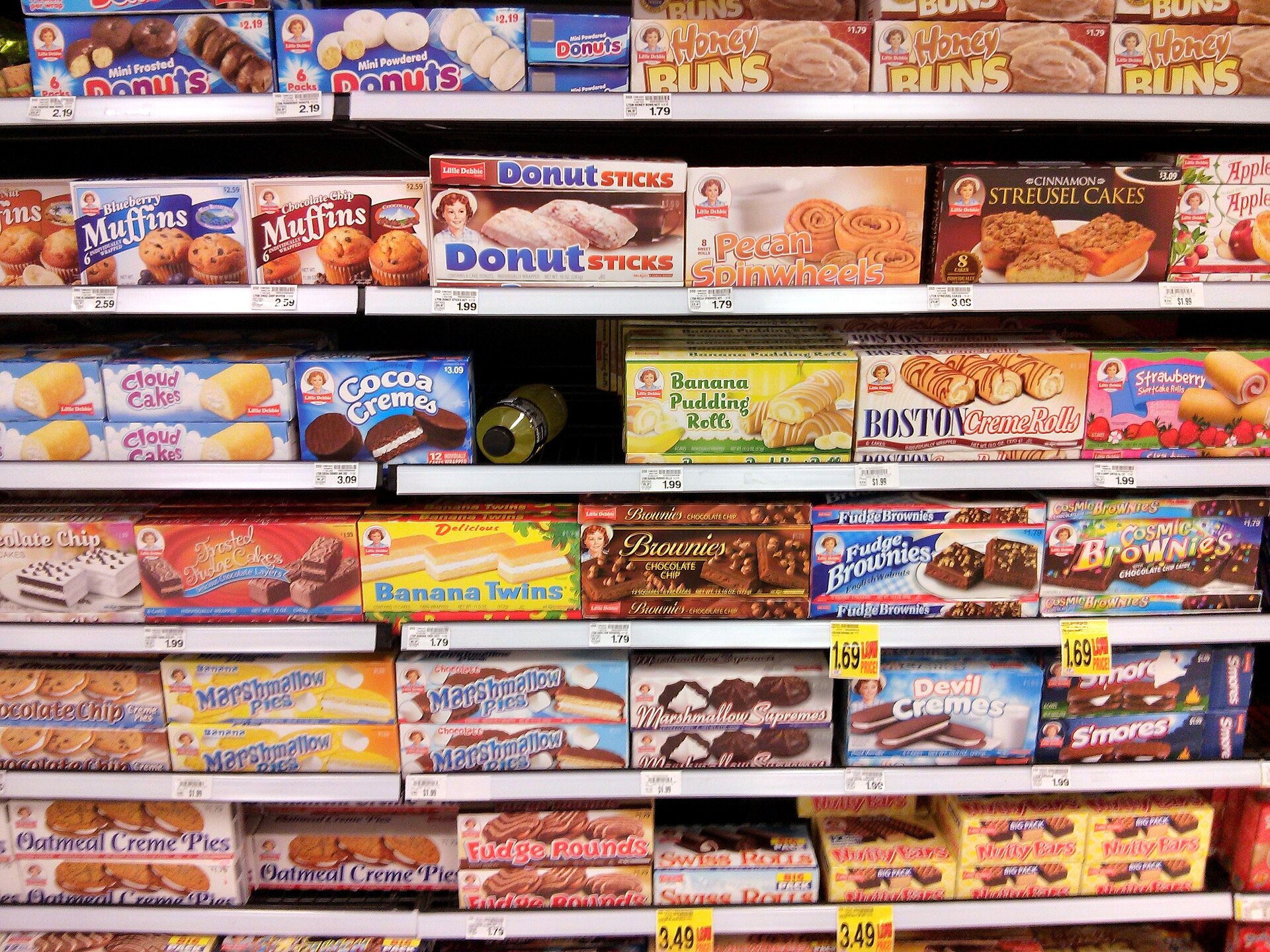
[Grocery store shelves stocked with products, the everyday setting where inflation and shrinkflation hit shoppers.] Photograph: grocery store shelves
Image Credits: Wikimedia Commons
Inflation is the rise in the general price level of goods and services over time. It means each unit of money buys a little less than it did before.
It is measured through indexes like the Consumer Price Index (CPI), which tracks the cost of a fixed basket of goods. When the CPI rises, the average shopper's money loses purchasing power.
This article explains why prices keep rising, including what inflation is, why companies raise prices, how shrinkflation hides price increases, what role supply chains play, and why prices rarely come back down.
What is inflation, really?
Inflation is not one price going up. It is the average of thousands of prices drifting upward together.
The Bureau of Labor Statistics builds the CPI by collecting prices each month from about 23,000 retail establishments and 6,000 housing units across 75 US urban areas. Each item is weighted by how much households spend on it, so rent and food move the index more than, say, postage stamps.
The headline rate compares this month's basket to the same month last year. In September 2026, that annual rate reached 3.7%, up from 3.4% in August, according to BLS data published on October 14, 2026.
That number is an average, and your own experience depends on what you buy. Rent, childcare, and medical care have run well above the headline rate for years, so households heavy in those categories feel higher personal inflation than the published figure.
Why do companies raise prices in the first place?
Prices rise when costs rise, when demand outruns supply, or both at once.
The 2021-2023 inflation surge combined massive pandemic stimulus spending with severe supply chain disruption, pushing US annual inflation to 9.1% in June 2022, its peak of the cycle. That peak has passed, but the price level never returned to where it started.
Cost increases still flow through the chain. EuroCommerce director general Christel Delberghe told Euronews that when the costs of energy, inputs, production, and processing increase, prices go up.
Wages are another driver. As labor markets stay tight, businesses pay more for staff and pass some of that cost to customers. Tariffs add a further layer: CBO estimates cited in 2025-2026 analysis put the tariff contribution at roughly 0.4 percentage points of the annual US inflation rate.
Energy shocks can push the headline rate quickly. In September 2026, gasoline jumped 9.1% in a single month and accounted for more than half of the CPI's monthly increase, BLS data showed. Mark Zandi, chief economist at Moody's, told CNBC that "the war's fingerprints are all over the report" and that it was driving much of the pickup.
What is shrinkflation and why is it everywhere?
Shrinkflation is a quieter kind of price rise. Manufacturers reduce the weight, volume, or quantity in a package while keeping the sticker price unchanged.
The definition comes from Loïc de Hults, a senior associate at law firm CMS Belgium: shoppers "purchase the same product in the same packaging, but will buy less for the same price."
It became much more common after the 2022 inflation surge. In 2019, a French syrup maker shrank its bottles from 750ml to 600ml, and consumer group Foodwatch later calculated the price per liter had risen by more than 37%. In Germany, a brand cut its chocolate bars from 100g to 90g, prompting a court ruling against the company in May 2026.
The scale is remarkable. A 2025 European Commission report found that 74% of consumers had noticed products getting smaller without becoming cheaper. In the UK, a January 2026 YouGov survey found 80% of adults were "very" or "fairly" concerned about shrinkflation, up from 75% in 2023.
It is legal in the US as long as the package states the new size accurately. The defense is the unit price on the shelf tag: price per ounce or per liter tells the truth that the headline price hides.
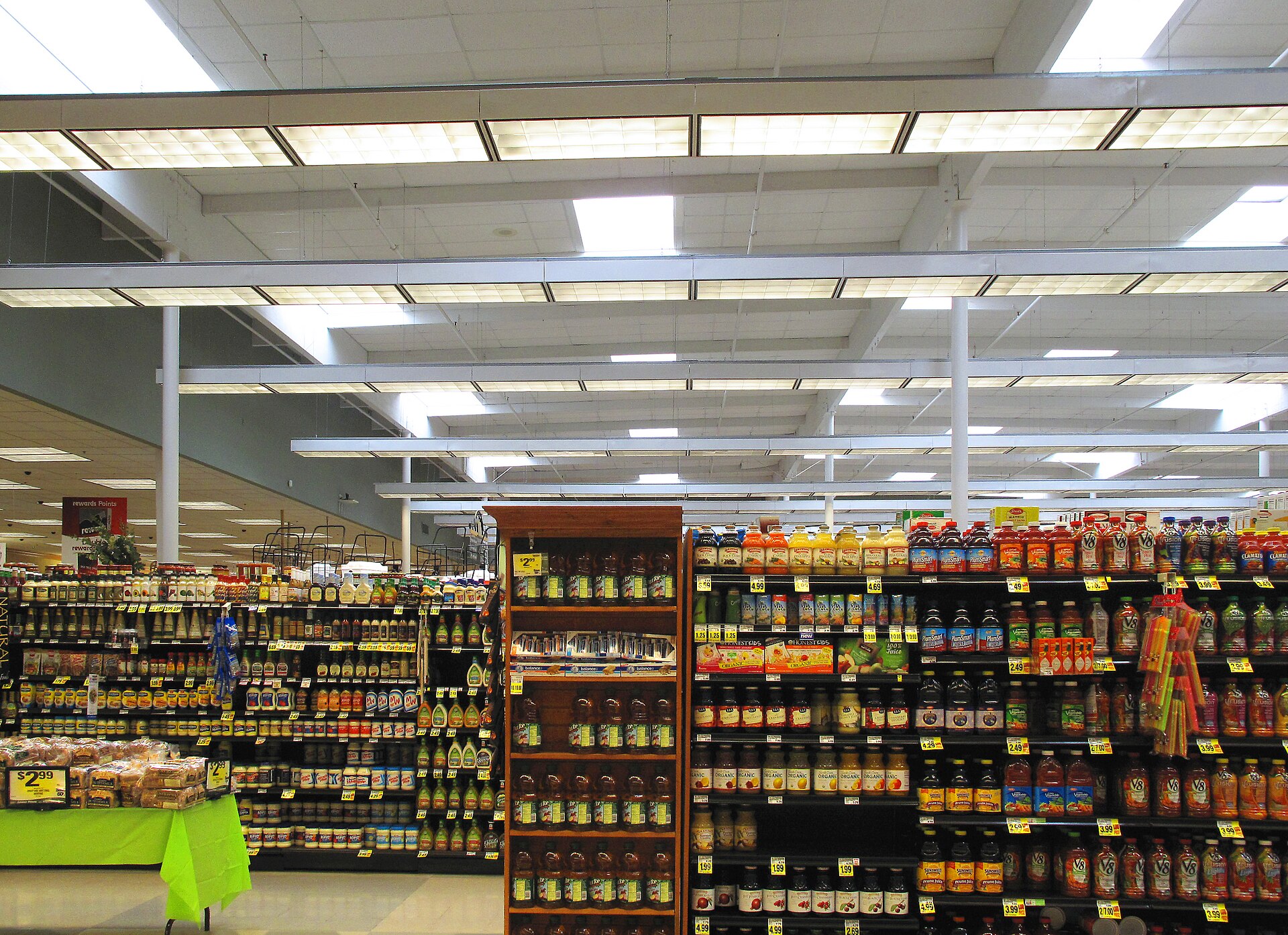
[Shelves in a Ralphs grocery store, where unit-price labels tell the truth that headline prices hide.] Photograph: supermarket shelves
Image Credits: Wikimedia Commons
Do supply chains and energy still keep prices high?
Yes, and this is the part inflation charts do not show directly.
After the pandemic, companies moved from "just-in-time" to "just-in-case" supply chains, building redundancy to avoid another breakdown. That security costs money, and it stays in prices even when the disruption that caused it fades.
Grocery prices illustrate the persistence. In 2026 they sit roughly 25-30% above 2020 levels, according to Grocery Chop's 2026 analysis, because the 2021-2023 surge baked in permanent increases. Commodity shocks keep some categories elevated on their own: successive H5N1 avian flu outbreaks have repeatedly culled US laying flocks, and beef remains expensive with the cattle herd at multi-decade lows.
Energy runs through everything, from diesel for trucks to gas for fertilizer plants. When energy prices jump, the effect shows up weeks later in food, transport, and manufactured goods.
Why don't prices fall back when inflation cools?
This is the most misunderstood part of the whole story. Falling inflation does not mean falling prices. It means prices are rising more slowly.
Most price increases are sticky on the way down. Wages, once raised, are not cut.
Commercial rents, supplier contracts, and insurance premiums renew at higher levels. Companies that absorbed higher input costs rarely volunteer to give the margin back.
Some specific items do normalize when a supply shock resolves. Eggs ease after avian flu cycles pass, and olive oil settles after a few normal Mediterranean harvests.
But broad grocery prices almost never return to old levels. The realistic expectation is slower future increases, not absolute decreases.
That stickiness is why "everything is more expensive than last year" stays true even when the inflation headlines calm down. Last year's surge became this year's baseline, and the baseline rarely moves backward.
Frequently asked questions
Is inflation going back to 2%?
The Fed's target is around 2%, but the September 2026 reading of 3.7% headline and 2.6% core shows the path is uneven. Energy, tariffs, and housing costs keep pushing upward.
Is shrinkflation illegal?
In the US, no, as long as the package accurately states its contents. France and Austria require stores to flag downsized products, and the EU relies on general rules against misleading practices.
Why do wages not keep up with prices?
Wages are "sticky." Employers resist raising labor costs, and workers often do not notice shrinking purchasing power until it is obvious. Union contracts and minimum wage laws help wages catch up, usually with a lag of 6 to 18 months.
Will grocery prices ever return to 2020 levels?
Almost certainly not in broad terms. Some items like eggs or olive oil may normalize after their supply shocks pass, but most increases are structural and permanent.
The bottom line
Everything costs more than last year because of three overlapping forces: headline inflation that cooled but never reversed, shrinkflation that hides unit-price increases, and supply-chain and energy costs that got locked into prices. Understanding which force is hitting your budget is the first step toward responding to it.
This is general educational information, not financial advice.
Topics: inflation, shrinkflation, grocery prices, CPI explained
Rive News / Research desk covers personal finance and consumer economics, writing plain-language explainers from public data and named sources.
Related
- Why is your credit score dropping for no reason? 8 silent triggers
- Why Do Banks Charge Monthly Maintenance Fees on Checking Accounts?
- Why Do Credit Card Minimum Payments Barely Reduce the Balance?
Subscribe for one plain-English money explainer every morning.
Rive News standards: every claim traced to a named source; no invented statistics; corrections on request.
Related stories
How your APR is divided by 365 to get daily interest
Lenders divide your APR by 365 for a daily rate, then apply it to your average daily balance. This guide walks through every step
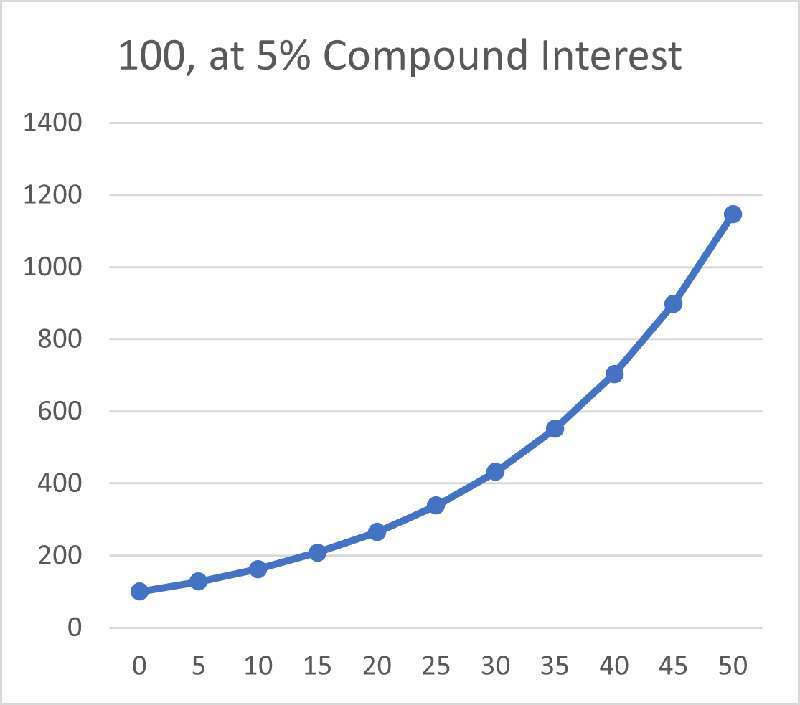
What is the difference between APR and effective annual rate?
APR ignores compounding inside the year; the effective annual rate includes it. A 12.99% APR card really costs 13.80% a year. Worked
APY vs interest rate: what compounding does to your money
APY includes compounding; the interest rate does not. A 5% rate compounded monthly is really 5.12% APY. Here is how the math works and what