
How Does Inflation Eat Savings Account Interest?
Key takeaways
- Your savings account pays a nominal rate, but what matters is the real rate: the nominal rate minus inflation.
- With the national average savings rate at 0.37 percent and consumer prices rising 2.4 percent, the average account loses about 2 percent of purchasing power a year.
- The erosion is invisible because the balance grows while what it buys shrinks. The math is simple once you see both numbers together.
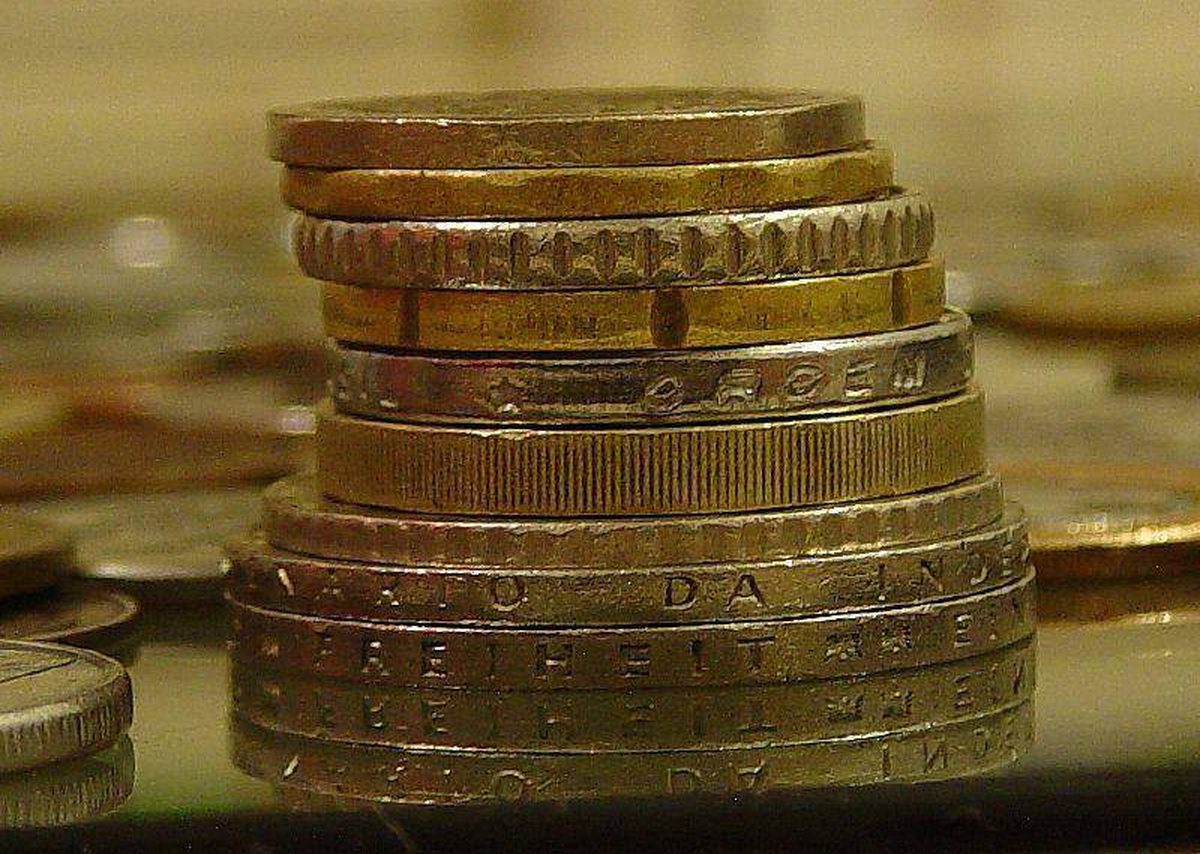
Savings balances grow in dollars while inflation quietly shrinks what those dollars buy. Photograph: Jeff Belmonte/Wikimedia Commons
Image Credits: Wikimedia Commons
Your savings account balance goes up every month. The interest lands, the number grows, and it feels like progress. But if prices rise faster than the interest rate, your savings are losing value even as the balance climbs. Economists call the difference between the two numbers the real interest rate. That number decides whether your money is growing or shrinking.
This article explains the erosion: what nominal and real returns mean, how to calculate the real return, what current rates and inflation look like, why the damage is invisible, and what savers can do about the gap.
This article explains concepts for general education only. It is not financial advice.
Nominal vs real: the two numbers on your savings
The nominal interest rate is the stated rate: the percentage your bank advertises and pays. If your account pays 0.37 percent, a $10,000 balance earns $37 over a year. That is the nominal return.
The real interest rate adjusts for inflation. Inflation is the rate at which prices for goods and services rise, which reduces what each dollar can buy. The real rate answers the question that actually matters: after prices rose, can my savings buy more or less than before?
The relationship is simple. For small numbers, the real rate is approximately the nominal rate minus the inflation rate. When the nominal rate is higher than inflation, the real rate is positive and purchasing power grows. When inflation is higher, the real rate is negative and purchasing power shrinks, no matter what the balance says.
How to calculate your real return
The exact formula comes from the economist Irving Fisher: the real rate equals (1 + nominal rate) divided by (1 + inflation rate), minus 1. For everyday numbers, the shortcut of subtracting inflation from the nominal rate gets you close enough. The shortcut slightly overstates the real rate, but the difference is small when both numbers are low.
Work through an example with current figures. The FDIC national average savings rate was 0.37 percent APY as of September 2026, per FDIC data reported by The Motley Fool. The Bureau of Labor Statistics reported that consumer prices rose 2.4 percent over the 12 months ending January 2026.
Real return = 0.37 - 2.4 = -2.03 percent. The average savings account was losing about 2 percent of its purchasing power per year.
Put it in dollars: a $10,000 balance at 0.37 percent grows to $10,037 after a year. But prices up 2.4 percent mean you would need $10,240 to buy what $10,000 bought a year earlier. Your balance grew by $37 while your purchasing power fell by roughly $200. That is how inflation eats savings account interest: not by taking the interest, but by outrunning it.

The real return formula is simple arithmetic: nominal rate minus inflation reveals whether savings are growing or shrinking. Photograph: Joe Haupt/Wikimedia Commons
Image Credits: Wikimedia Commons
What current rates and inflation look like
The national average is not what everyone earns. Most traditional banks pay at or near that 0.37 percent average, while the best high-yield savings accounts from online banks were paying in the 3.50 to 4.00 percent range in 2026, per the same FDIC-based reporting. Same federal deposit insurance, same dollars, roughly ten times the interest.
Run the real-rate math on a 4 percent account with 2.4 percent inflation: real return = 4 - 2.4 = +1.6 percent, a positive number. The account genuinely grows in purchasing power. The difference between the average account and a competitive one is the difference between a negative and a positive real return.
Inflation itself moves. The BLS reported 3.0 percent for the year ending January 2025, 2.7 percent for the year ending December 2025, and 2.4 percent for the year ending January 2026. The trend was downward, which helps savers. But every one of those readings exceeded the national average savings rate, so the gap has been the normal state of affairs, not an exception.
To feel the scale over time, consider that a $20,000 emergency fund at the August 2026 national rate of 0.38 percent earns about $76 in a year, while the same balance at 4 percent earns about $800, as SavingAdvice calculated. That $724 gap required no extra saving and no extra risk. It was purely the rate.
Why the erosion is invisible
Inflation's damage is hard to see for three reasons. First, the balance never falls. Interest is always positive in nominal terms, so the account statement always looks like progress. Nothing on the statement mentions purchasing power.
Second, price increases arrive one item at a time. Groceries cost a little more, then the electric bill, then the haircut. Nobody sends you a notice that your $10,000 now buys $9,800 worth of goods. The loss is distributed across thousands of small transactions.
Third, the time horizon is long. At 3 percent annual inflation, the Rule of 70 says purchasing power halves in about 23 years. That is slow enough to ignore in any given month and devastating enough to matter over a working life. Money sitting in a low-rate account for decades is not standing still. It is melting.

Price increases arrive one item at a time, which is why the erosion of purchasing power is so easy to miss. Photograph: MatthewHoobin/Wikimedia Commons
Image Credits: Wikimedia Commons
What savers can do about the gap
The first step is knowing your own two numbers: the APY your account actually pays and the current inflation rate. Most people know neither. The APY is on your statement or your bank's site, and inflation is published monthly by the Bureau of Labor Statistics.
The second is understanding what the average means. The FDIC national rate is a broad benchmark, not a ceiling. Comparing your APY to the national average tells you whether your money is earning a typical return or a below-typical one.
The third is knowing the tradeoffs of where cash sits. Savings accounts at insured banks offer safety and instant access, which is why emergency funds live there. Other options for cash, like certificates of deposit or Treasury securities, typically pay more but lock money up or add complexity. Every option has its own risks and constraints.
None of this changes the core math. If your nominal rate is below inflation, your purchasing power is shrinking. The fix is never mysterious. It is arithmetic.
Frequently asked questions
What is the difference between nominal and real interest rates?
The nominal rate is the stated percentage your bank pays. The real rate subtracts inflation from it. If your account pays 3 percent and inflation is 2 percent, your real return is about 1 percent. That is the actual growth in what your money can buy.
Can a savings account have a negative real return?
Yes, and it is common. Whenever inflation exceeds the account's interest rate, the real return is negative. With the national average savings rate at 0.37 percent and inflation at 2.4 percent, the average account's real return is about negative 2 percent.
Does the exact Fisher formula matter, or is subtraction enough?
Subtraction is enough for everyday decisions. The exact Fisher equation, (1 + nominal) / (1 + inflation) - 1, gives a slightly lower and more accurate answer. The gap between the two only matters when rates are high.
Why do banks pay so much less than inflation sometimes?
Banks set deposit rates based on their own funding needs, competition, and the broader rate environment, not on the inflation rate. Traditional banks with large branch networks and sticky customers often pay near the national average, while online banks with lower costs compete on higher rates.
The bottom line
Inflation eats savings account interest through simple arithmetic: your bank pays a nominal rate, prices rise at the inflation rate, and the difference is your real return. When that difference is negative, your balance grows while your purchasing power shrinks, and no statement will tell you. The defense is equally simple: know both numbers, compare your APY against the national average, and remember that a growing balance is not the same as growing wealth.
Tags: inflation, savings accounts, interest rates, personal finance, purchasing power
Rive News is the research desk behind these explainers, writing evidence-based answers to everyday questions.
Latest in finance
- Why Am I Not Losing Weight Despite Exercising?
- What Is Companion Planting and Does It Work?
- Why Do I Understand in Class but Fail the Exam?
- How to Buy a Used Car Without Getting Scammed: The Checklist
Subscribe for one evidence-based explainer in your inbox every morning.
This article is for general education only and is not financial advice. Rive News publishes corrections transparently. Spot an error? We review every report.
Related stories

How your APR is divided by 365 to get daily interest
Lenders divide your APR by 365 for a daily rate, then apply it to your average daily balance. This guide walks through every step

What is the difference between APR and effective annual rate?
APR ignores compounding inside the year; the effective annual rate includes it. A 12.99% APR card really costs 13.80% a year. Worked

APY vs interest rate: what compounding does to your money
APY includes compounding; the interest rate does not. A 5% rate compounded monthly is really 5.12% APY. Here is how the math works and what