
Why Am I Not Losing Weight Despite Exercising?
Key takeaways
- Most exercise weight-loss stalls come from compensation: people unknowingly eat more, move less outside workouts, or both.
- In one controlled trial, 90 minutes of vigorous weekly exercise led participants to eat an extra 91 calories a day. That is enough to erase much of the deficit.
- The scale measures everything at once (fat, water, food, muscle), so a flat number does not always mean nothing changed.
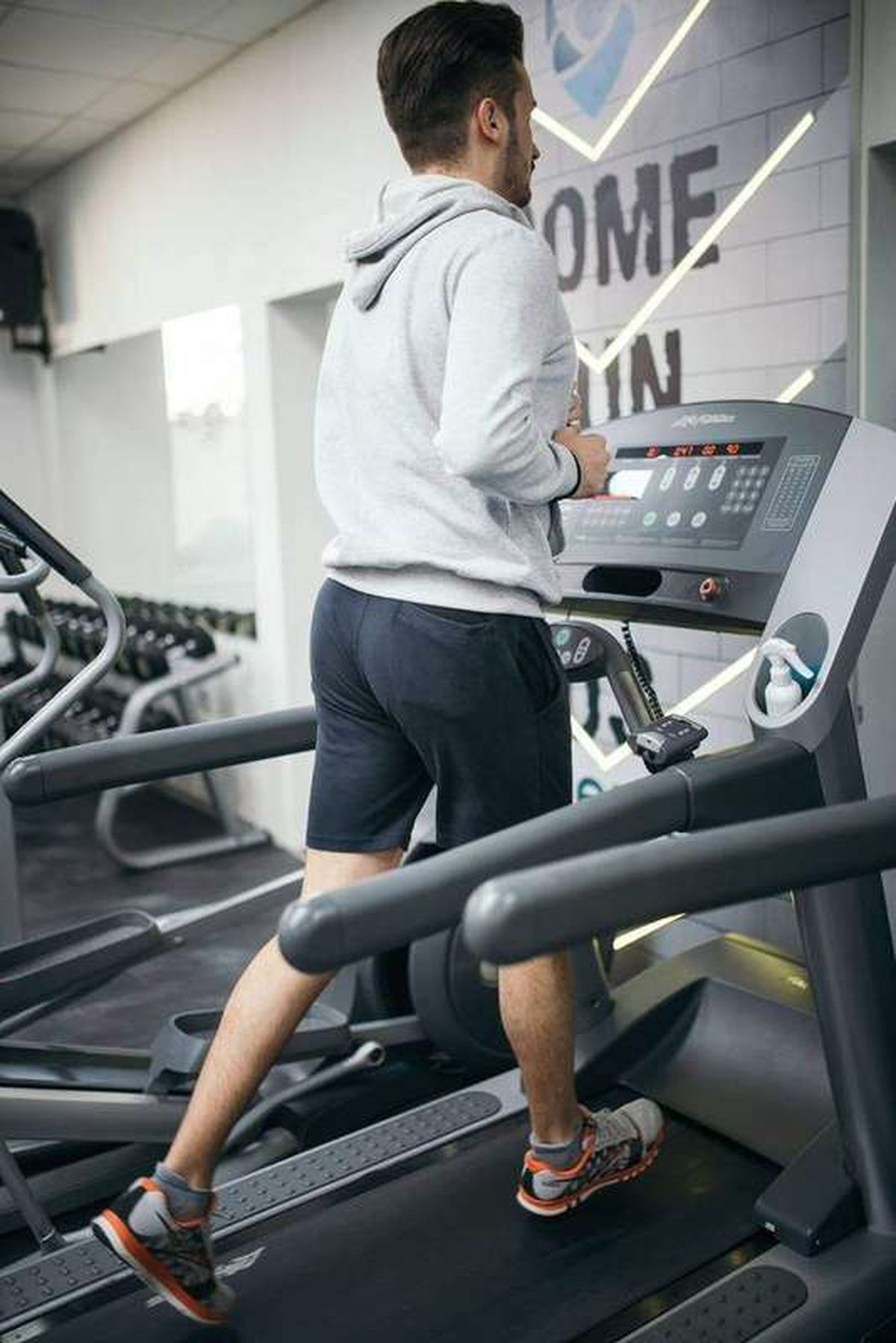
A runner training on a treadmill in a gym; even a steady cardio routine can stall on the scale when compensation creeps in. Photograph: Nenad Stojkovic/Wikimedia Commons
Image Credits: Wikimedia Commons
The question sounds like a contradiction. Exercise burns calories, and burning more than you eat should shrink body weight. That logic is true in physics but incomplete in humans.
Weight loss stalls despite exercise are so common that researchers have spent decades explaining them. The answers are humbling: people eat more without realizing it, move less for the rest of the day, and count more calories burned than they actually burned. Their bodies may also defend a narrower energy budget than fitness apps assume. This article explains the stall. It covers what "despite exercising" really means, the compensation effect, the quiet NEAT drop, the metabolism debate, the measurement problem, what to check, and the steps that actually work.
What does "despite exercising" actually mean?
First, a definition check. When someone says they exercise, they usually mean a session: 30 to 60 minutes of deliberate effort, three to five times a week. That is real work, and also a small slice of a week.
A typical exercise session burns roughly 200 to 400 calories for most people, depending on body size, intensity, and duration. Those numbers come from lab measurements, not watch displays. So a workout is about 10 to 20 percent of the day's energy burn. The question is really why that slice is not winning against the other 80.
The compensation effect: you eat back what you burn
The best-studied explanation is compensation. When people start exercising, many start eating more, and the increase is large enough to matter.
A randomized controlled trial called E-MECHANIC, run at the Pennington Biomedical Research Center, tested this directly. Participants were assigned to a control group or to low or high doses of supervised exercise: about 90 or 210 minutes of vigorous aerobic exercise per week. The researchers tracked food intake, metabolism, and non-exercise activity.
Compensation was common: 76 percent of the low-dose group and 90 percent of the high-dose group compensated. Nearly half of the low-dose participants lost no weight or gained weight. The mechanism was food, not rest, with daily activity outside the workouts unchanged. The low-dose group ate an extra 91 calories a day and the high-dose group an extra 124.
"This increase really adds up over time, and it diminishes the effect that calorie-burning exercise has on body weight," said researcher Dr. Martin.
One hundred calories a day is a banana, a handful of nuts, or two bites you do not remember. That is why the stall feels so confusing: the compensation is not a feast, it is a drift.

Daily movement outside workouts, like walking and jogging, is often the first thing to slip when training increases. Photograph: NPS Photo/Wikimedia Commons
Image Credits: Wikimedia Commons
The NEAT drop: moving less the rest of the day
There is a second compensation channel: moving less when you are not working out. Scientists call the calories burned outside deliberate exercise NEAT, non-exercise activity thermogenesis. It covers fidgeting, walking to the bus, taking stairs, cleaning, and all the standing and pacing you do without thinking.
A systematic review from the University of Copenhagen looked at 24 studies that measured people's daily activity before and during exercise programs. In 67 percent of the studies, people cut back on non-exercise activity as their training increased. They walked less, cycled less, and took the elevator instead of the stairs, said lead author Julie Marvel Mansfeldt of the university's Department of Nutrition, Exercise and Sports.
This is the quiet version of the E-MECHANIC finding. The body seems to seek a budget. Add a workout and, for many people, the rest of the day gets a little more sedentary without any conscious decision.
The metabolism debate: does your body adapt?
The boldest claim in this field comes from evolutionary anthropologist Herman Pontzer. In 2012, he and colleagues published a study in the journal PLOS ONE. They measured the daily energy expenditure of the Hadza, a hunter-gatherer group in Tanzania, using the doubly labeled water method, the gold standard for measuring energy use in free-living people.
The expectation was that the Hadza, who walk about 8 kilometers a day (women) to 14 kilometers a day (men), would burn far more than desk workers in the United States. They did not. Adjusted for body size, Hadza men burned about 2,500 calories a day and Hadza women about 1,900, essentially the same as adults in industrialized countries. Pontzer developed the constrained total energy expenditure model from this, proposing that the body keeps total daily burn within a narrow range and reallocates energy away from other processes when activity rises.
His practical summary is blunt. "It's more gluttony than sloth," Pontzer said in an interview about the work, meaning that extra food intake explains weight gain more than low activity does.
Honesty requires the counterpoint: a 2025 Virginia Tech study led by Kevin Davy and Kristen Howard, with 75 participants aged 19 to 63, also used doubly labeled water and found the opposite. More activity meant more total energy burned, with no sign of the body dialing down other functions. "We looked at folks who were adequately fueled," Howard said, adding that apparent compensation under extreme conditions may reflect under-fueling.
The science is genuinely unsettled on whether bodies adapt their burn. It is much more settled on the two behavioral channels: eating more and moving less outside workouts.
The measurement problem: the scale and the watch
Two instruments make the stall look worse than it is. First, the scale: body weight changes daily with water, glycogen, digestion, and muscle gain. New exercisers often gain a kilogram or two of water and muscle while losing fat, which nets out to nothing on the scale for weeks.
Second, the calorie display. In a July 2026 PLOS One study, Jason Kostrna of Florida International University tested four popular smartwatch models against indirect calorimetry. He found errors of 15 to 25 percent. For people with higher body fat, a watch reading of 100 calories could mean an actual burn of only 50 to 60. Eating back the displayed number can quietly create a surplus.
What to check before changing anything
If the scale has stalled for four or more weeks despite regular exercise, work through this short audit before overhauling anything.
First, track food for two weeks, honestly. Weighing or measuring portions is the difference between a guess and data. Most people underestimate intake, and the E-MECHANIC numbers show it only takes about 100 extra calories a day to cancel a moderate routine.
Second, check your step count and sitting time, not just your workouts. If workouts are up and daily steps are down, the NEAT drop from the Copenhagen review may be your leak.
Third, ignore the watch's burn estimate for planning. Treat it as a motivational number, not a food budget.
Fourth, consider whether exercise is new. Beginners gain water weight and muscle in the first six to eight weeks, which masks fat loss on the scale. Waist measurements and how clothes fit are better early signals.
Fifth, rule out medical causes with a professional. Thyroid disorders, certain medications, and other conditions can affect weight. This article explains a common pattern. It is not a diagnosis, and it is a good idea to see your clinician or a registered dietitian for personal advice.
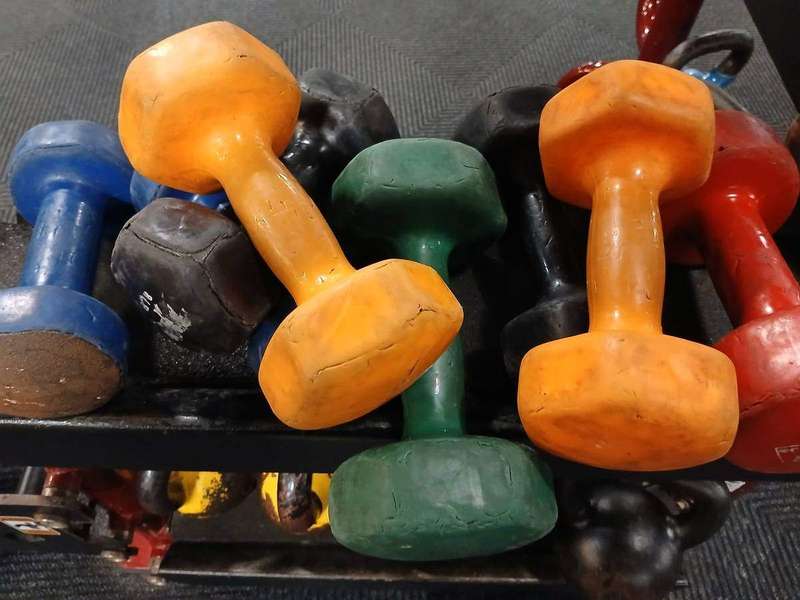
New training routines can add water weight and muscle that mask fat loss on the scale. Photograph: Ser Amantio di Nicolao/Wikimedia Commons
Image Credits: Wikimedia Commons
Steps that actually move the scale
None of this means exercise is useless. It means exercise is misused as a weight-loss tool when it is really a health tool: studies consistently show it lowers the risk of heart disease, diabetes, and several cancers, even without weight loss. Pontzer himself runs to stay in shape while acknowledging exercise will not drop 15 pounds by itself.
What does move the scale is the unglamorous combination researchers keep landing on.
- Keep the exercise: it protects your health and preserves muscle.
- Pay equal attention to food: intake is where the deficit is made.
- Guard your daily movement: the stairs and the walk are calories too.
- Judge progress by weekly trends, not single mornings on the scale.
Frequently asked questions
How long should I exercise before expecting weight loss?
Give it at least eight to twelve weeks of consistent routine and honest food tracking. In the first month or two, water and muscle changes can hide fat loss entirely, so a stalled scale early on is normal and not proof the routine is failing.
Can I lose weight with exercise alone?
It is possible but uncommon. In the E-MECHANIC trial, supervised vigorous exercise without diet changes produced little or no weight loss for many participants because intake drifted upward. People who combine exercise with attention to food consistently do better.
Does building muscle explain why the scale is stuck?
Partly, especially in the first two months of training. Muscle gain and water retention can offset fat loss on the scale. Track waist circumference, progress photos, and strength gains alongside weight for a fuller picture.
Is my metabolism broken?
Probably not. The constrained-expenditure model is still debated, and the Virginia Tech study found no metabolic compensation at all. Behavioral compensation, eating a little more and moving a little less, explains most stalls without needing any metabolic explanation.
Outlook
The uncomfortable truth is that your workout is probably fine. It is the rest of the equation that leaks, from the uncounted snack to the elevator you took because you were tired from the gym. Close those leaks and the same routine can start producing the results it promised. Keep exercising for your heart, your sleep, and your mood. If a stall persists despite honest tracking, it is a good idea to see your clinician or a registered dietitian rather than guessing at a medical cause.
Tags: weight loss, exercise, metabolism, NEAT, nutrition
Rive News is the research desk behind these explainers, writing evidence-based answers to everyday questions.
Latest in fitness
- What Is Companion Planting and Does It Work?
- Why Do I Understand in Class but Fail the Exam?
- How to Buy a Used Car Without Getting Scammed: The Checklist
- How Does Inflation Eat Savings Account Interest?
Subscribe for one evidence-based explainer in your inbox every morning.
Rive News publishes corrections transparently. Spot an error? We review every report.
Related stories

How long does it really take to build noticeable muscle?
Strength gains start in week one, but visible muscle takes 8-12 weeks for most beginners. What the Oklahoma CT-scan study measured,

Why you feel dizzy after a workout: the 5 common causes
Post-workout dizziness usually comes from a blood pressure dip, dehydration, or low blood sugar. The numbers behind each cause, and when

Why Do Knees Hurt When Squatting but Not Running?
Knees hurt when squatting but not running because deep bends multiply force on the kneecap. Learn the mechanics, common causes, fixes,