
Why does your mortgage payment include escrow and where does it go?
Key takeaways
- Escrow is a holding account where your servicer collects property taxes and insurance monthly and pays those bills for you.
- Federal RESPA rules cap the cushion at two months of disbursements and require an annual escrow analysis.
- If your escrow runs a surplus of $50 or more, your lender must refund it to you.

Every buyer discovers the escrow line on the first mortgage statement. Photograph: Famartin / Wikimedia Commons
This is an educational explainer, not financial advice. Talk to your lender or a qualified professional about your specific loan.
Many first-time buyers open their first mortgage statement and find a surprise The monthly payment is higher than the principal-and-interest figure they were quoted, and a line labeled "escrow" accounts for the difference
It is not
Escrow is simply your mortgage servicer collecting your property taxes and homeowners insurance in monthly installments, holding the money, and paying those bills on your behalf when they come due. Understanding where the money goes removes the mystery and tells you what to check when the payment changes.
This article explains what mortgage escrow is, what it covers, how the monthly amount is calculated, and the federal rules that protect borrowers.
What escrow actually is
A mortgage escrow account is a holding account managed by your mortgage servicer. It collects a portion of your monthly payment to cover property taxes, homeowners insurance, and certain other recurring costs. Instead of paying those large bills yourself once or twice a year, you pay a smaller amount each month, and your servicer disburses the funds when they come due.
The servicer is usually not your original lender. Most mortgages are sold, and a separate company collects the payments. Whoever holds your loan holds the escrow account with it.
Escrow exists because of aligned interests You need your property taxes paid to avoid a tax lien Your lender needs your homeowners insurance active to protect the collateral behind the loan
Having the servicer collect and pay both is more reliable than trusting every borrower to save up for two large annual bills Failing to pay taxes and insurance can result in additional costs and fees and even lead to foreclosure, the Consumer Financial Protection Bureau notes
What your escrow payment covers
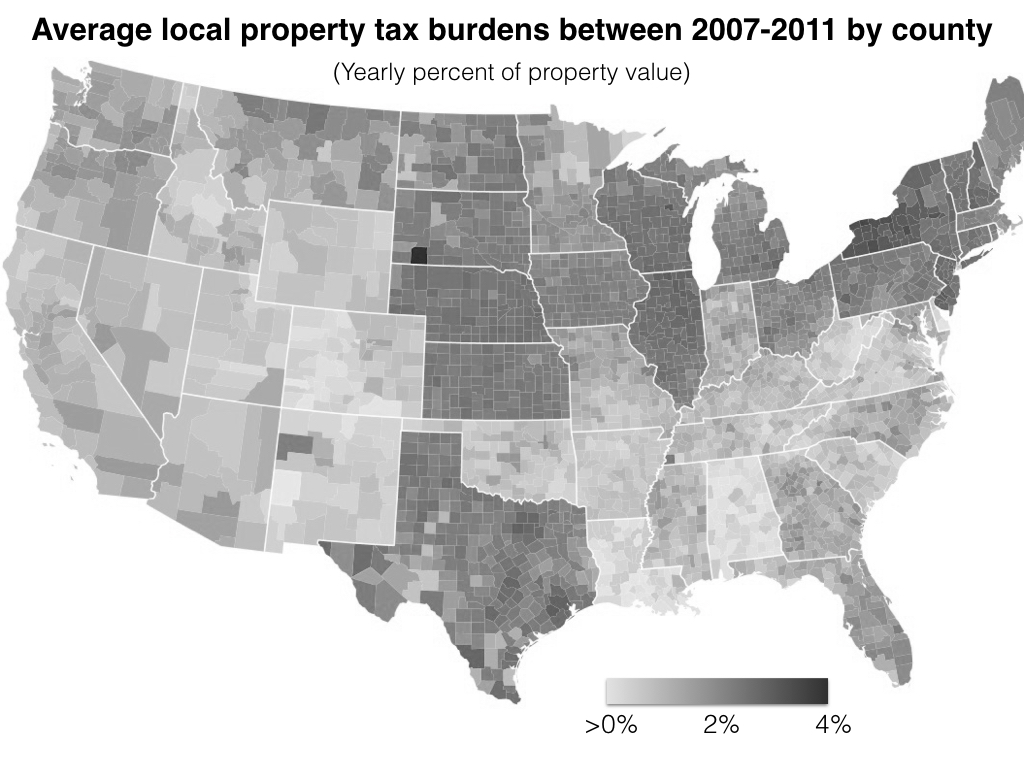
Property taxes are usually the largest piece of an escrow payment. Graphic: Wikideas1 / Wikimedia Commons
Your escrow payment bundles several property-related costs into one monthly amount alongside your principal and interest. The most common components are property taxes, homeowners insurance, and any required mortgage insurance.
Property taxes are the largest piece for most borrowers. Your servicer divides the annual property tax bill into twelve equal portions, collects that amount each month, and pays the local taxing authority on your behalf when the bill is due. Tax bills arrive once or twice a year depending on the county, but you pay for them in twelve smooth installments.
Homeowners insurance works the same way. The annual premium for the policy protecting your home is collected monthly through escrow. Keeping this policy active protects both you and the lender's interest in the property.
Private mortgage insurance, or PMI, rides along in escrow when it applies If you put down less than 20 percent on a conventional loan, your lender typically requires PMI, which protects the lender if you default
FHA loans carry their own mortgage insurance premiums, including an annual premium collected monthly through escrow
How the monthly escrow amount is calculated
Your servicer adds up the total estimated annual costs for every item in your escrow account, property taxes, insurance premiums, and any required mortgage insurance, and divides that total by twelve. The result becomes the escrow portion of your monthly mortgage payment.
That is the simple version Federal law then puts guardrails around it
On top of that, the servicer may maintain a cushion, a reserve against unexpected increases in taxes or insurance
The cushion is capped by law at one-sixth of total annual escrow disbursements, which works out to roughly two months of escrow payments. A lender cannot require more. This limit comes from the Real Estate Settlement Procedures Act, or RESPA, and its implementing rule, Regulation X.
At closing, you will also pay into escrow upfront as part of your "cash to close." Before the loan closes, the lender estimates the total annual expenses to be paid from escrow and can require advance payment, but only enough to make sure the account never carries a negative balance, plus that same two-month cushion. This is why closing costs include several months of tax and insurance prepaids.
The annual escrow analysis and your statement
Escrow is not set-and-forget. Lenders must analyze escrow accounts once a year to calculate borrower contributions for the following year. The servicer reviews what it actually paid out, projects the next twelve months, and adjusts your monthly amount up or down.
You receive an annual escrow account statement showing the account history and a projection of activity for the next year For most mortgages with an escrow account, the servicer must provide this statement, along with an initial statement at the start
It explains exactly why your payment changed
If the analysis shows a surplus, meaning you paid in more than was disbursed, the rules favor you If the surplus is $50 or more, the lender must refund it to you
If the account is short, because taxes or insurance rose, you will typically see the monthly payment increase, and the servicer may spread the shortage over the next twelve months or ask you to pay it as a lump sum
This annual reset is the reason mortgage payments creep even when the interest rate is fixed. A fixed-rate mortgage fixes the principal and interest, not the taxes and insurance. When the county raises assessments or the insurer raises premiums, escrow absorbs the change and your payment follows.
The federal rules behind escrow

RESPA caps how much a lender can require in escrow. Photograph: Blogtrepreneur / Wikimedia Commons
Escrow is governed by the Real Estate Settlement Procedures Act of 1974, which took effect on June 20, 1975. Congress passed it to protect consumers from unnecessarily high settlement charges caused by certain abusive practices in the real estate business. The Department of Housing and Urban Development enforced it for over thirty years before the Consumer Financial Protection Bureau took over in 2011.
RESPA limits the amount a lender can require a borrower to place in escrow. Any monthly escrow payment can be no larger than one-twelfth of the anticipated annual charges, plus the amount needed to maintain the cushion of no more than one-sixth of annual charges. These are the caps that keep servicers from padding your payment.
Some loans require escrow for longer than others If your loan is considered higher-priced under the Truth in Lending Act, you might be required to maintain escrow for at least the first five years
On many conventional loans, you can request escrow cancellation once you reach enough equity, typically 20 percent, though the servicer decides based on its own criteria and your payment history
One more protection worth knowing: when your mortgage servicing is transferred from one company to another, which happens routinely, the escrow account transfers with it. The new servicer must honor the existing account and statements, and both companies must notify you of the transfer.
What to check on your own escrow account
Start with the annual statement Compare the projected disbursements to the actual tax and insurance bills you receive
Errors in escrow analysis are common and correctable
Watch for payment shock after the first year. Tax assessors often reassess after a sale, and the first annual analysis can bring a noticeable increase. Budgeting a small buffer for this in year one prevents the surprise.
If you believe you no longer need escrow, ask your servicer about cancellation requirements before assuming you can drop it. Requirements vary by investor and loan type, and a history of late payments can disqualify you.
Finally, remember that escrow money is still your money. The servicer holds it in trust to pay your bills. The annual statement, the refund rules, and the RESPA caps exist so you can verify every dollar.
FAQ
Is escrow a fee the lender keeps?
No Escrow is a pass-through
The money is never the lender's profit; the annual statement shows where every dollar went
Why did my mortgage payment go up if my rate is fixed?
Your rate fixes principal and interest only. Property taxes and insurance, which flow through escrow, change independently. When either rises, the annual escrow analysis raises your monthly collection to cover it.
How much of a cushion can my servicer require?
No more than one-sixth of total annual escrow disbursements, roughly two months of payments, under RESPA and Regulation X. Monthly collections are capped at one-twelfth of anticipated annual disbursements plus that cushion.
Can I cancel escrow and pay taxes myself?
Sometimes. On many conventional loans you can request cancellation after reaching sufficient equity, usually around 20 percent, with a clean payment history. Some loans, including many FHA loans and higher-priced loans, require escrow for the full term or a minimum period.
What happens to escrow when I sell or refinance?
The account is closed and any remaining balance is refunded to you, usually within 30 days. On a refinance with the same servicer, the old escrow is refunded and a new one is funded from the new loan's closing costs.
The bottom line
Your mortgage payment includes escrow because property taxes and insurance have to be paid reliably, and collecting them monthly is the most reliable way to do that The money goes into a holding account your servicer uses to pay those bills, with federal RESPA rules capping the cushion and requiring an annual accounting
Read it, check the math against your actual tax and insurance bills, and claim any surplus refund you are owed
Latest in Personal Finance
- What it means when your bank says funds are pending
- How a credit limit change actually works when you ask
- Direct debit vs. standing order, in plain terms
- What happens to your pension when you change jobs
Image Credits: Wikimedia Commons / Famartin, Wikideas1, Blogtrepreneur
Subscribe to the Rive News newsletter for one research-backed money explainer every week.
Related stories

How your APR is divided by 365 to get daily interest
Lenders divide your APR by 365 for a daily rate, then apply it to your average daily balance. This guide walks through every step

What is the difference between APR and effective annual rate?
APR ignores compounding inside the year; the effective annual rate includes it. A 12.99% APR card really costs 13.80% a year. Worked

APY vs interest rate: what compounding does to your money
APY includes compounding; the interest rate does not. A 5% rate compounded monthly is really 5.12% APY. Here is how the math works and what