
Why Does a Paycheck Sometimes Shrink After a Raise?
Key takeaways
- A higher tax bracket can never shrink your take-home pay: only the dollars inside the new bracket are taxed at the higher rate.
- The real culprits are usually a flat 22% withholding on bonuses, bigger pre-tax deductions, or higher benefits premiums.
- For 2026, a single filer pays 10% only up to $12,400 of taxable income and reaches 22% only above $50,400.
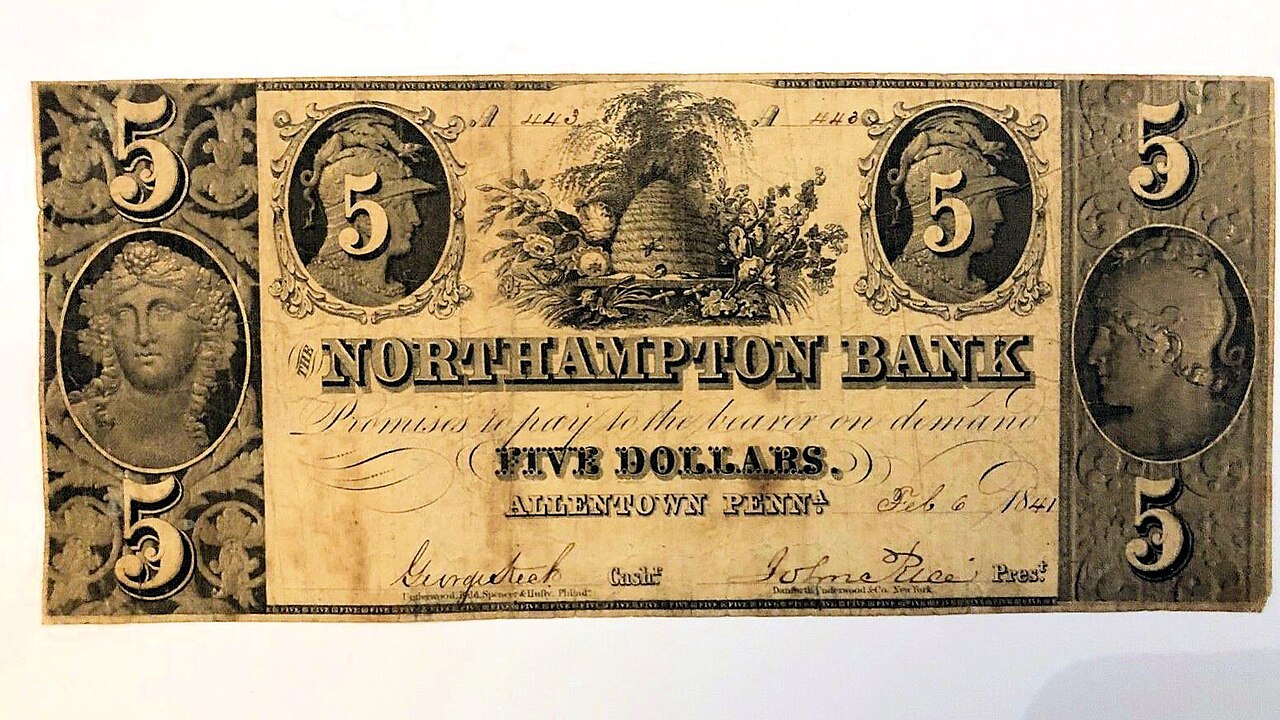
An 1841 five-dollar banknote, from an era when pay was simpler but far less documented. Photograph: Wikimedia Commons contributor
Image Credits: Wikimedia Commons / Self Scanned (1841 Northampton Bank note); Lehigh County Bank and Allentown National Bank note images via Wikimedia Commons contributors
The paycheck puzzle after a raise
You get the raise you asked for, and the next paycheck is smaller than the one before it. The first suspect is usually taxes: maybe the raise pushed you into a higher bracket. That explanation is wrong, but the confusion is understandable, because something real is shrinking the check.
This article busts the bracket myth with the 2026 numbers, then walks through the five genuine reasons a paycheck can shrink after a raise: bonus withholding rules, pre-tax deductions that grew with your pay, benefits premiums, timing quirks, and state-level effects. You will be able to read your own pay stub and name the culprit.
The bracket myth, killed with the 2026 numbers
Federal income tax in the United States is marginal, which means each rate applies only to the slice of taxable income inside its bracket. Your entire income is never taxed at your highest rate.
For 2026, set by IRS Revenue Procedure 2025-32, a single filer faces these brackets: 10% on taxable income up to $12,400; 12% from $12,401 to $50,400; 22% from $50,401 to $105,700; 24% from $105,701 to $201,775; then 32%, 35%, and 37% at higher levels. The 2026 standard deduction is $16,100 for single filers, which comes off gross income before any bracket applies.
Here is why a raise cannot hurt you through brackets alone. Suppose your taxable income rises from $50,000 to $52,000. The first $50,400 is still taxed at 12% or less. Only the $1,600 above $50,400 meets the 22% rate, costing $352 in additional tax while your raise was $2,000.
You keep $1,648 of it. Climbing into a new bracket always leaves you with more, never less.
So if your check shrank, the bracket is not the cause. Look at the deductions instead.
Reason 1: Your bonus was withheld at a flat 22%
Raises often arrive alongside bonuses, and bonuses are taxed differently at the payroll level. The IRS treats bonuses as "supplemental wages." Under IRS Publication 15, when a bonus is paid separately from regular wages, employers may withhold a flat 22% for federal income tax on the first $1 million in a calendar year.
That 22% is withholding, not your final tax rate. If your marginal rate is 12%, you overpaid and will get the difference back at filing time. But in the pay period it arrives, a $5,000 bonus can land as roughly $3,900 after federal withholding alone, before state tax and FICA.
A bonus check that looks "shrunk" is usually just aggressively pre-withheld.
Reason 2: Your pre-tax deductions scaled up with your pay
Many deductions are percentages, not fixed amounts, so they grow automatically when your salary does.
A 401(k) contribution of 10% takes $500 from a $5,000 monthly check and $550 from a $5,500 one. Health savings account (HSA) contributions, dental and vision premiums tied to salary bands, and life insurance priced as a multiple of earnings all behave the same way. If your raise pushed your salary into a higher benefits tier, the premium jump can outpace the raise in that pay period.
None of this is lost money: 401(k) and HSA dollars are yours, just redirected. But they shrink the number at the bottom of the stub, which is what you feel.
Reason 3: Benefits premiums rose at the same time
Raises frequently land in January, which is also when employers reset health plan years. A higher premium starting the same month as your raise can fully offset it. Family coverage premiums at large employers routinely run into the hundreds per month, so even a modest percentage increase can swallow a 3% raise whole.
Open-enrollment changes also reset deductibles and out-of-pocket structures, and flexible-spending (FSA) elections you increased for the new year start coming out of the same checks. Compare the "deductions" section of your stub line by line against the pre-raise stub; the answer is usually sitting there in plain sight.
Reason 4: FICA takes a cut of the whole raise
Payroll taxes take 7.65% of wages from each paycheck: 6.2% for Social Security (up to the 2026 wage base of $184,500) plus 1.45% for Medicare. Unlike income tax, there is no standard deduction or bracket structure softening this bite. Every extra dollar of salary loses 7.65 cents to FICA immediately.
That alone cannot shrink a check, since 92.35% of the raise still reaches you. But combined with percentage-based deductions, it explains why a 5% raise rarely feels like 5% more spending money.
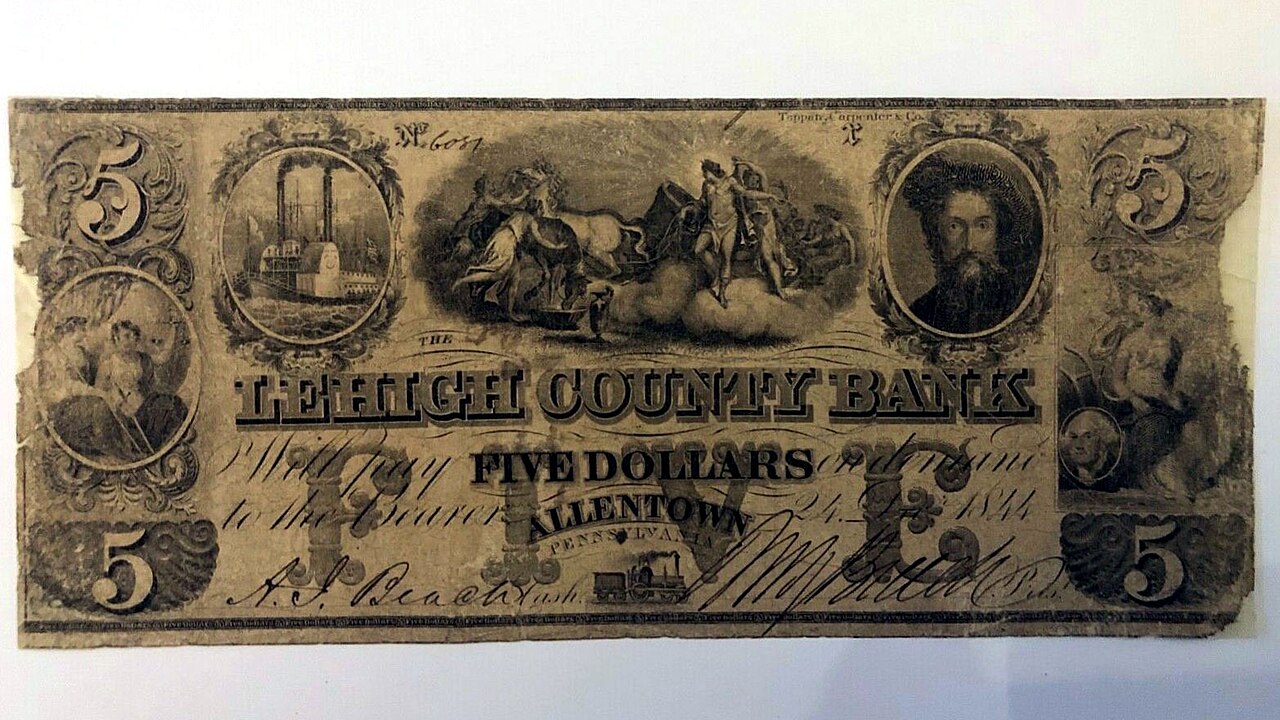
An 1844 five-dollar note from the Lehigh County Bank, a reminder that wages have always come with fine print. Photograph: Wikimedia Commons contributor
Reason 5: Timing and withholding-table quirks
Payroll systems withhold as if each paycheck represents your whole year. A raise paid mid-year can make the system annualize the higher amount and withhold slightly more than needed, especially if the raise is large. You get the excess back as a refund, but the current check looks light.
State and local withholding add another layer. Some states have their own supplemental-wage rates, and a few cities levy wage taxes that climb with income. If you moved or your employer corrected your work location in the payroll system at the same time as the raise, the tax line can jump for reasons that have nothing to do with the raise itself.
How to diagnose your own stub
Pull two consecutive pay stubs: the last one before the raise and the first one after. Check these lines in order.
First, gross pay. Confirm the raise actually posted at the expected amount and that no pay period shifted (a 26-period biweekly schedule versus a 24-period semi-monthly one changes every per-check number).
Second, federal withholding. If it jumped far more than the raise would suggest, look for a bonus line withheld at 22%.
Third, pre-tax deductions. Flag any line that grew by more than the raise percentage; that is your prime suspect.
Fourth, benefits. Compare health, dental, and vision premiums to the prior stub.
In most cases, one of those four lines explains the whole mystery.
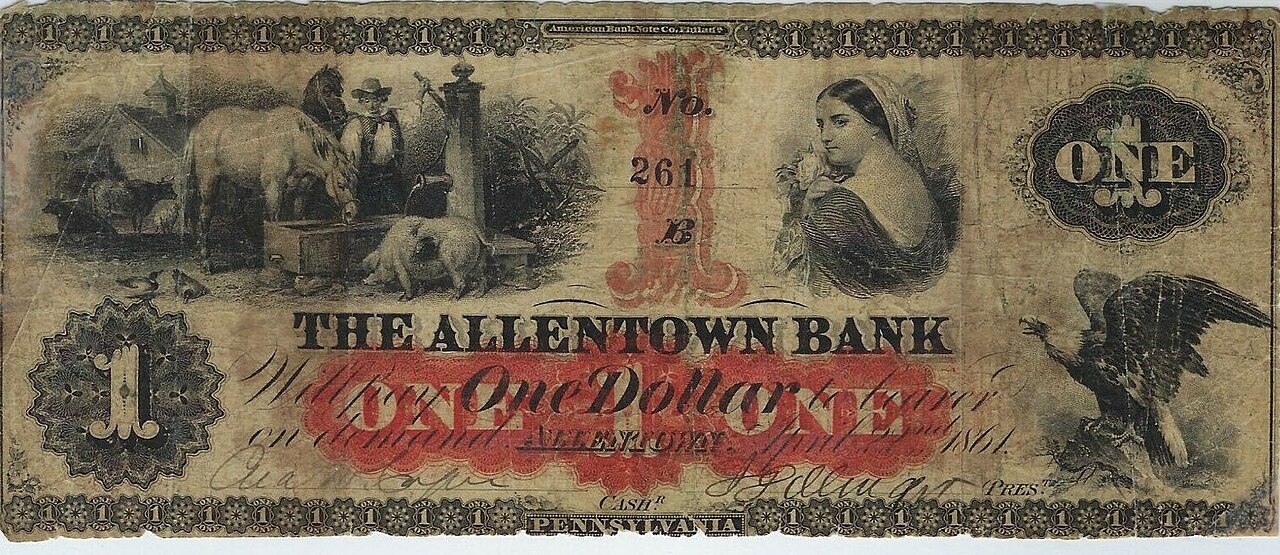
An 1861 one-dollar note from the Allentown National Bank. Photograph: United States Treasury Department / Wikimedia Commons
Frequently asked questions
Can a raise ever lower my take-home pay?
Through federal income tax alone, no. The marginal system taxes only the new dollars at the higher rate. A smaller check after a raise comes from withholding, deductions, or benefits, not the bracket.
Why is my bonus taxed more than my salary?
It is not taxed more; it is withheld more. The flat 22% federal withholding on bonuses often exceeds your actual marginal rate, and the difference returns to you at tax time.
Should I lower my 401(k) contribution after a raise?
Usually not. The contribution is building your own balance, and cutting it to inflate a paycheck trades long-term wealth for short-term cash. Check whether auto-escalation raised your percentage first.
Do state taxes work the same marginal way?
Most states with an income tax use either flat rates or their own marginal brackets. A few have flat rates, where every dollar is taxed the same, so state withholding is simpler but still cannot make a raise shrink a check by itself.
What if the numbers on my stub just do not add up?
Ask payroll for a withholding breakdown and verify your W-4 settings. A stale W-4, a wrong filing status, or an unclaimed dependent can distort withholding for months.
This article is for general information only and is not financial advice.
The bottom line
A shrinking paycheck after a raise feels like a tax penalty, but the tax bracket is innocent. The 2026 brackets are marginal, so a raise always increases after-tax pay on its own.
The real explanations are a 22% flat withholding on bonuses, percentage-based deductions that grew with your salary, higher benefits premiums, FICA on the full raise, and payroll timing quirks.
Read the stub line by line and the culprit will confess.
This article is for education only and is not tax advice.
Latest in Personal Finance
- Learn what happens when your bank says funds are pending on a deposit.
- See the difference between direct debit and standing order in plain terms.
- Find out what happens to your pension when you change jobs.
Subscribe for one plain-English money explainer every morning.
Related stories

How your APR is divided by 365 to get daily interest
Lenders divide your APR by 365 for a daily rate, then apply it to your average daily balance. This guide walks through every step

What is the difference between APR and effective annual rate?
APR ignores compounding inside the year; the effective annual rate includes it. A 12.99% APR card really costs 13.80% a year. Worked

APY vs interest rate: what compounding does to your money
APY includes compounding; the interest rate does not. A 5% rate compounded monthly is really 5.12% APY. Here is how the math works and what