
How to breathe correctly when lifting weights, rep by rep
Key takeaways
- Exhale while you lift the weight and inhale as you lower it. This exhale-on-exertion pattern is the default advice in strength-training guidance summarized by Muscle & Fitness.
- Bracing your breath against a closed throat is called the Valsalva maneuver. It stiffens the torso for heavy sets, but one 1985 study recorded blood pressure of 320/250 mmHg during a heavy leg press.
- Keep any breath-holding brief and skip it if you have heart or blood-pressure conditions. Steady, rhythmic breathing suits most training.
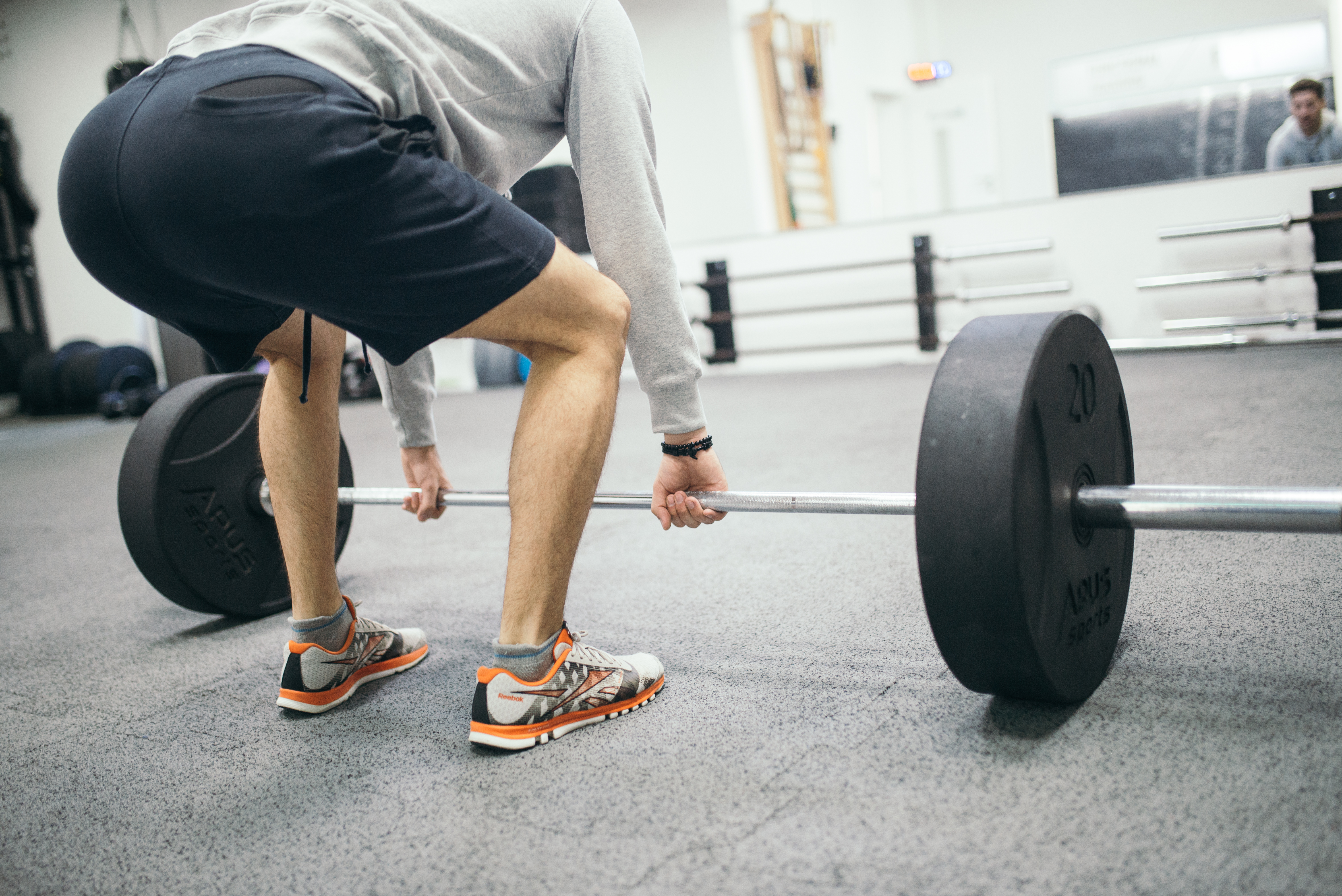
Correct breathing in resistance training means matching your breath to each phase of a repetition. You breathe in as the weight returns to its starting position, and you breathe out as you push, pull, or stand the weight up.
The timing matters because breathing changes the pressure inside your chest and abdomen. Well-timed breathing helps brace the spine, keeps blood pressure from spiking as hard, and gives every rep a steadier rhythm.
This article explains the basic rule for how to breathe correctly when lifting weights. It covers what the Valsalva maneuver is, breathing cues for the squat, deadlift, and bench press, common breathing mistakes, and how breathing protects your blood pressure and spine.
The basic rule for how to breathe correctly when lifting weights
The standard guidance is simple: exhale through the sticking point, the hardest part of the lifting phase, and inhale during the easier lowering phase. Muscle & Fitness writer Bryan Haycock states that all authoritative bodies in health and fitness warn against holding your breath. Lifters should exhale during the concentric portion of a lift and inhale during the eccentric portion.
Counting your repetitions out loud is a practical way to lock in the pattern. If you can say the number, you are breathing, and you cannot hold your breath by accident.
The rule applies across almost every movement. On a squat you inhale standing tall and exhale as you drive back up.
On a bench press you inhale as the bar lowers to your chest and exhale as you press it away. Machines and dumbbell work follow the same logic: effort out, lowering in.
What the Valsalva maneuver is and when lifters use it
The Valsalva maneuver is an exhale pushed against a closed glottis, the part of the throat that can seal shut. You take a full breath into your belly, brace your core as if someone were about to punch you in the stomach, and hold that pressure through the hardest part of the lift.
The payoff is mechanical. Raising intra-abdominal pressure stiffens the entire torso and supports the vertebral column, which is why lifters use the maneuver on squats, deadlifts, and other movements that load the spine. Haycock's review for Muscle & Fitness notes that this pressure increases spine stability and prepares the body for the high-axial loading of squats and deadlifts.
The maneuver is not a beginner tool. Haycock reports that at loads near or above 80 percent of a one-repetition maximum, some breath-holding happens involuntarily and is briefly unavoidable with maximum exertion. He also notes that intra-abdominal pressure rises at those loads whether you deliberately hold your breath or not.
Some lifters should skip it entirely. According to the same review, individuals with a history of heart or vascular disease or hernias are advised to avoid the Valsalva maneuver because of its effect on blood pressure. As the weights climb through progressive overload, the temptation to hold the breath longer grows, which is exactly when the risk grows too.
Breathing cues for squats, deadlifts, and the bench press
The squat starts with a full breath at the top. Stand tall with the bar on your back, take air deep into your belly, and brace before you descend.
Drive up through the sticking point and exhale once you are past it. On near-maximum attempts, advanced lifters may hold the brace for the whole rep and exhale at lockout.
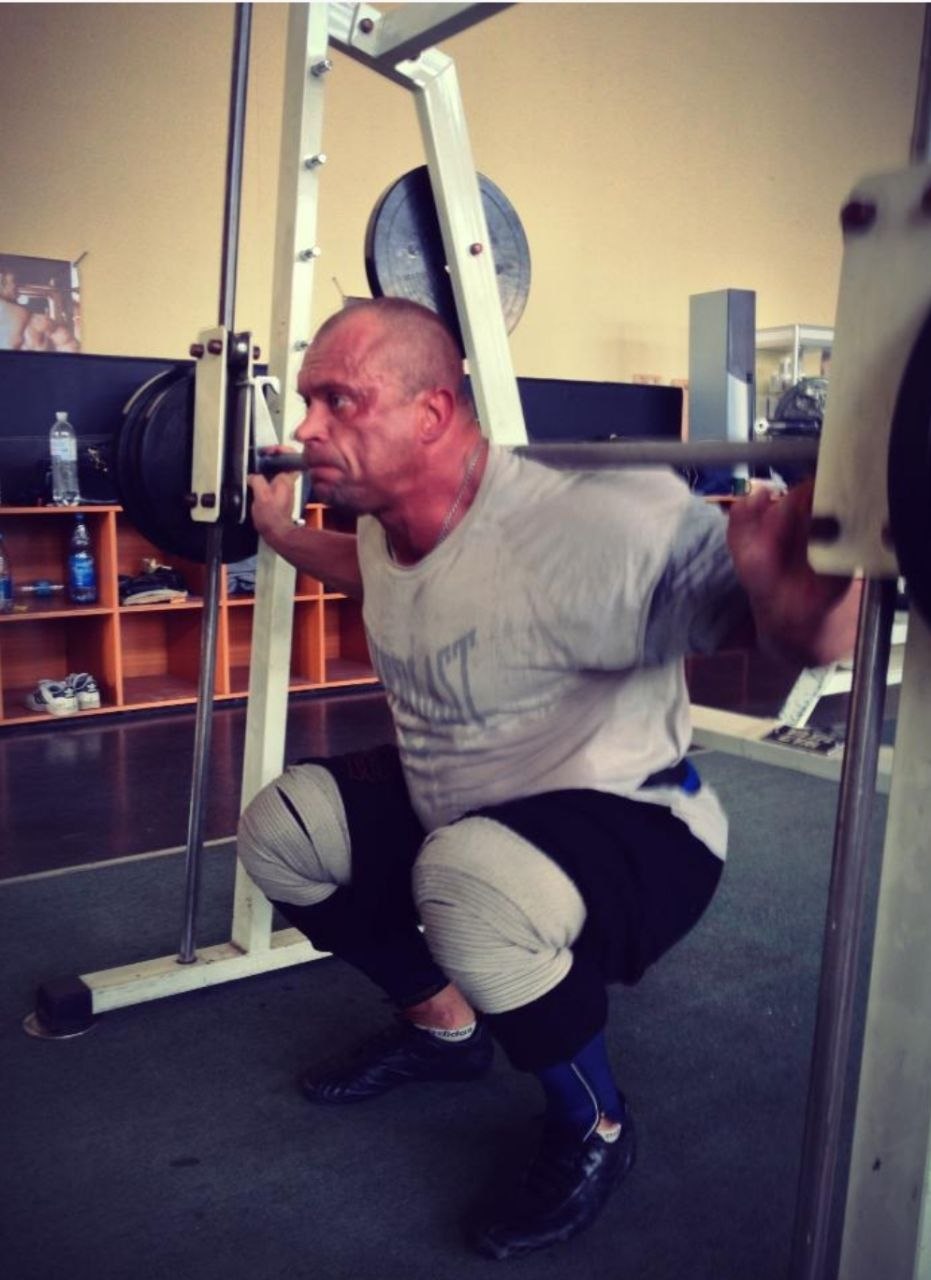
The deadlift demands the brace before the bar leaves the floor. Take your breath, set your back flat, and hold the pressure through the pull.
Exhale at lockout, inhale again at the bottom, and reset before the next rep. A solid brace is also what keeps the spine safe when the load gets serious, and it is the first thing to check if you notice lower back pain after deadlifts.
The bench press is the most forgiving of the three. Unrack the bar, inhale as it lowers to your chest, then press up and exhale through the sticking point. Because the spine is supported by the bench, most lifters never need a full Valsalva here and can breathe in a steady rhythm for every rep.
Common breathing mistakes
- Holding your breath on every set, including light warm-ups where the brace buys nothing and lightheadedness is the only reward.
- Breathing backward: inhaling on the lift and exhaling on the way down, which scrambles both the rhythm and the brace.
- Shallow chest breathing that never reaches the belly, so the core never pressurizes at all.
- Holding the breath too long between reps while standing under a loaded bar, letting pressure climb for no reason.
Even warm-up sets and active recovery days deserve full, steady breathing. Treat light sets as rehearsal for the pattern you want under heavy loads.
How breathing protects your blood pressure and spine
The strongest case for breathing discipline comes from a 1985 study by MacDougall and colleagues, published in the Journal of Applied Physiology. Five experienced bodybuilders had their blood pressure measured directly through a catheter in the brachial artery while lifting.
According to the PubMed abstract, peak pressures during the double-leg press averaged 320/250 mmHg, and pressures in one subject exceeded 480/350 mmHg.
Those extremes were not from effort alone. Mouth pressures of 30 to 50 Torr during maximum lifts showed that a Valsalva maneuver was contributing, the same study reports. Even single-arm curls taken to failure produced average peaks of 255/190 mmHg.
Breathing strategy changes the outcome without changing the load. Biology Insights, summarizing research published in the Archives of Physical Medicine and Rehabilitation, reports that when lifters exhaled slowly through an open airway instead of holding their breath, average peak blood pressure fell from 311/284 to 198/175 mmHg at the same maximum effort.
The spine side of the trade-off is genuine. The intra-abdominal pressure from a proper brace supports the vertebral column and reduces compressive forces on the discs during heavy lifting, as Haycock's Muscle & Fitness review explains. The same pressure that protects the spine stresses the cardiovascular system, which is why the hold must stay brief.
The practical lesson is direct: limit any breath-hold to the sticking point of a heavy rep and exhale the moment you are past it. Prolonged holding raises the risk of dizziness or blackout. Lifters who finish hard sets drenched may also wonder why they are sweating more than others, though that is a separate question from breathing mechanics.
This article is for information only and is not medical advice.
Should you breathe in or out when lifting a weight?
Breathe out during the lifting phase and in during the lowering phase. For a squat, that means exhaling as you stand back up. For a bench press, exhaling as you press the bar away.
Is it safe to hold your breath while lifting weights?
A brief hold through the sticking point of a heavy rep is a normal technique called the Valsalva maneuver. Long holds are not safe, and people with heart or vascular disease or hernias are advised to avoid the maneuver, according to Muscle & Fitness.
Why do people grunt when lifting heavy weights?
A grunt is a partial, forced exhale through a braced core. It releases a small amount of air to get through the sticking point while keeping most of the torso pressure that protects the spine.
Should beginners use the Valsalva maneuver?
No. Beginners should learn the exhale-on-exertion pattern first and keep every rep breathing steadily. The Valsalva is an advanced tool for heavy structural lifts, and only for lifters without cardiovascular risk factors.
The bottom line
Exhale on the effort, inhale on the way down, and treat breath-holding as a short, advanced tool rather than a default habit. That single pattern protects both your blood pressure and your spine, and the measured difference between open-airway breathing and breath-holding is large.
On your next session, pick one compound lift and rehearse the pattern for every rep, then finish the workout with some stretching. If you have high blood pressure or a heart condition, check with a clinician before adding any breath-holding to your lifts.
Related stories

How long does it really take to build noticeable muscle?
Strength gains start in week one, but visible muscle takes 8-12 weeks for most beginners. What the Oklahoma CT-scan study measured,

Why you feel dizzy after a workout: the 5 common causes
Post-workout dizziness usually comes from a blood pressure dip, dehydration, or low blood sugar. The numbers behind each cause, and when

Why Do Knees Hurt When Squatting but Not Running?
Knees hurt when squatting but not running because deep bends multiply force on the kneecap. Learn the mechanics, common causes, fixes,