
What is the difference between flexibility and mobility?
By Rive News / Research desk | Rive News / Published October 20, 2026 at 9:00 AM PKT
Key takeaways
- Flexibility is how far a muscle can passively lengthen; mobility is how well a joint moves actively under your control.
- You can be flexible but not mobile, such as touching your toes yet failing a deep squat with good form.
- Mobility adds strength and coordination to flexibility, and it transfers better to sport and daily life.
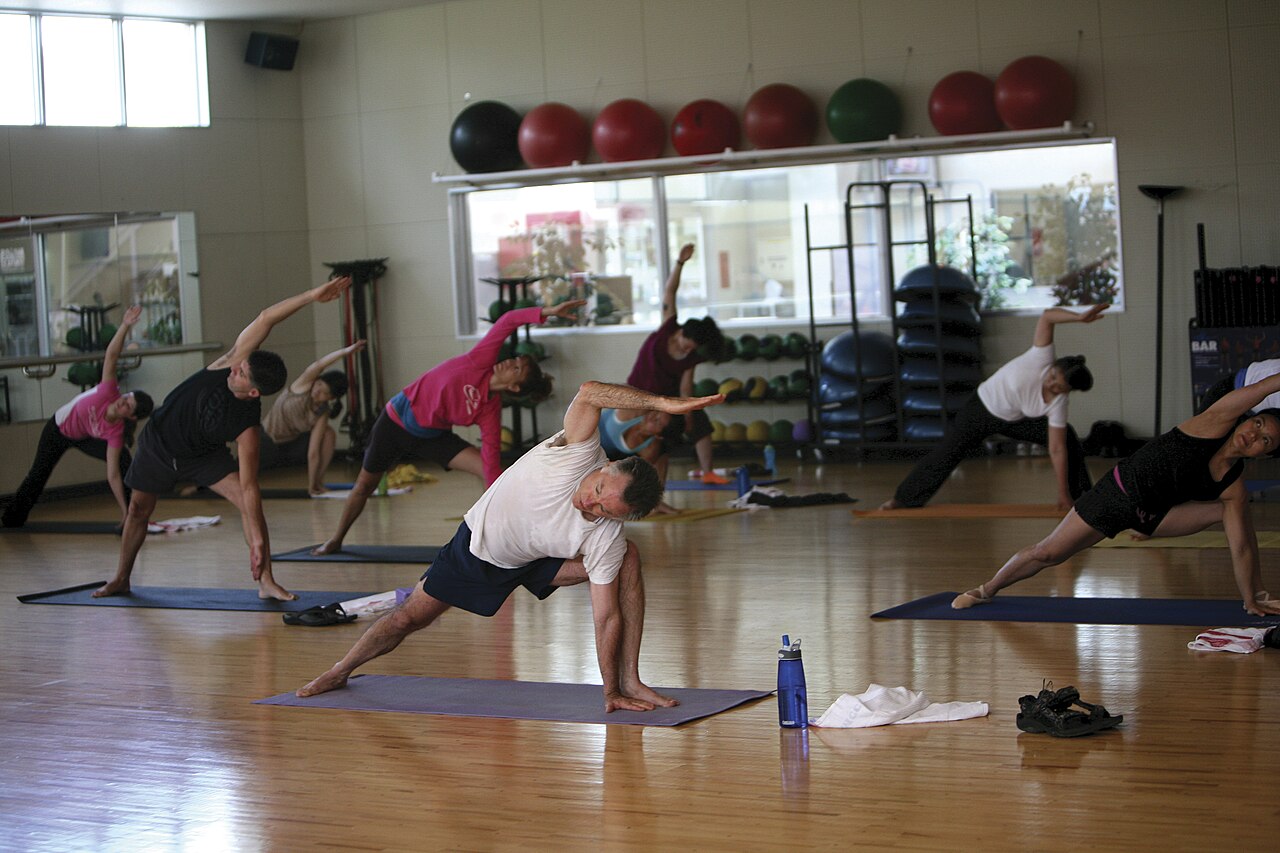
A group yoga class in flowing poses. Yoga builds passive flexibility, but mobility needs strength work too.
Image Credits: Wikimedia Commons
People use flexibility and mobility as if they were the same word. They are related, but they describe different qualities, and confusing them leads to training that stretches without strengthening.
Flexibility is about the muscle. Mobility is about the joint and your control over it. The gap between the two explains why some very bendy people still move poorly, while some less flexible people move through training and daily life with no issues at all.
This article explains the difference between flexibility and mobility, including what each one measures, why the distinction matters, how to test both, and how to train them.
What flexibility means
Flexibility is the ability of a muscle or muscle group to lengthen passively through a range of motion. The key word is passive: how far the tissue will go when something else, gravity, a partner, or your own hands, moves it there.
A classic example is the hamstring stretch. Lie on your back and have someone gently lift your straight leg.
How far it travels before you feel a strong stretch measures your passive flexibility. Static stretching, partner-assisted stretching, and holding poses all train this quality.
Flexibility depends on muscle and soft-tissue elasticity plus the nervous system's tolerance for stretch. With consistent practice, it can change relatively quickly.
But flexibility alone does not guarantee you can control or use that range, as S2S Perform notes. Range you cannot access under your own power is range you cannot use in sport.
What mobility means
Mobility is the ability to move a joint actively through its full range of motion with control. It includes flexibility, but it also requires strength, stability, and neuromuscular coordination.
ACE Fitness puts it sharply: flexibility measures capacity, while mobility measures control. Mobility is range of motion the body can organize, stabilize, and use. As one set of muscles contracts to move a joint, the opposing muscles must lengthen to allow it, while sensory receptors feed information back to the nervous system in real time.
Concrete examples make the split clear, as PureGym's coaches describe:
- Using your arms to sink into a cobra backbend is flexibility; pulling into the same cobra using only your back muscles is mobility.
- Sitting in a deep squat while holding a support is flexibility; performing repeated deep squats under load is mobility.
- Being pushed into floor splits is flexibility; lifting into standing splits under your own strength is mobility.
Mobility takes longer to develop than flexibility alone, because it demands strength in end ranges, not just tolerance of them. But it transfers directly to real movement: squatting, reaching overhead, rotating to check a blind spot.
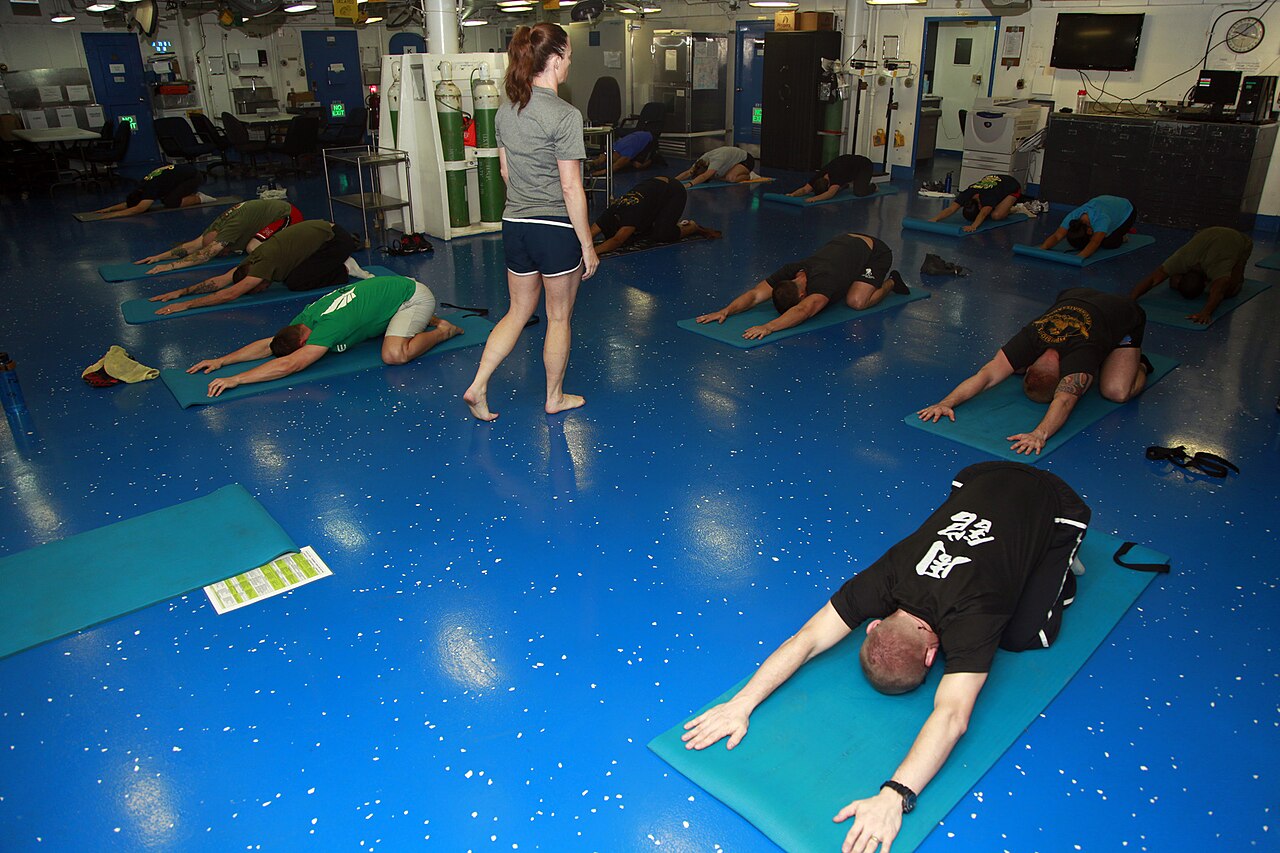
A group yoga session in child's pose. Passive stretching builds range; adding strength makes that range usable.
Image Credits: Wikimedia Commons
Why the distinction matters
Most real-world movement needs active, controlled range of motion, not passive flexibility. You rarely have someone pushing your limbs into position during daily life. Reaching, lifting, and changing direction all happen under your own muscular control.
This is why flexible people still get hurt. Someone with extreme passive range but no strength at the end of that range has joints that travel far without muscular protection. An overly mobile joint without enough strength can be unstable and prone to injury, while an overly stiff joint forces neighboring joints to compensate.
The practical rule: strength through a full range of motion builds the most useful kind of mobility. If you only stretch passively, you may gain range you cannot use.
If you only lift in partial ranges, you keep strength but never expand control. The best programs combine both, and if you must prioritize, usable controlled range generally delivers more benefit.
Joint needs differ by location, too. Hips and shoulders want mobility; the lower back and knees want stability. Training should respect that split rather than chasing maximum range everywhere.
How to test which one you lack
Two simple tests reveal where you stand. They need no equipment and take five minutes.
Test 1: the deep squat. Stand with feet shoulder-width apart and squat as deep as you can with heels down and chest up, without holding anything. If you can reach full depth with control, your ankle, hip, and thoracic mobility are solid. If you can only get there while holding a doorframe, you likely have the flexibility but lack the mobility.
Test 2: the active straight-leg raise. Lie on your back and lift one straight leg as high as you can using only your hip flexors and core, no hands. Compare that height with how high a partner can gently lift the same leg. A big gap between the passive and active heights means flexibility outruns mobility.
Record both results and retest monthly. Mobility responds slower than flexibility, so expect steady rather than dramatic change. Ankle limitations are the most common hidden cause of a failed squat test.
How to train both
Train flexibility and mobility as separate qualities with different methods.
For flexibility, use static stretches after training, holding each position for 20 to 30 seconds and breathing deeply. Target the muscles that limit your key positions: calves and hip flexors for the squat, chest and lats for the overhead reach. A focused post-workout stretching routine covers this without eating your whole evening.
For mobility, use active methods:
- Controlled articular rotations: slow, deliberate circles through each joint's full range.
- Strength through full range: deep goblet squats, Romanian deadlifts, and overhead presses with light loads.
- End-range holds: pause for 3 to 5 seconds at the deepest position you control.
- Eccentric lowers: slow 4-second descents into squats and hinges to build strength where you are weakest.
A sample weekly structure: lift through full ranges two to three times per week, add one 10-minute mobility flow, and finish sessions with short static stretches. This balances both qualities without turning every workout into a yoga class.
If you have pain, joint conditions, hypermobility, or medical concerns, consult a doctor or physical therapist before starting a new stretching or mobility program. Extra-mobile joints need stability work first, not more stretching.
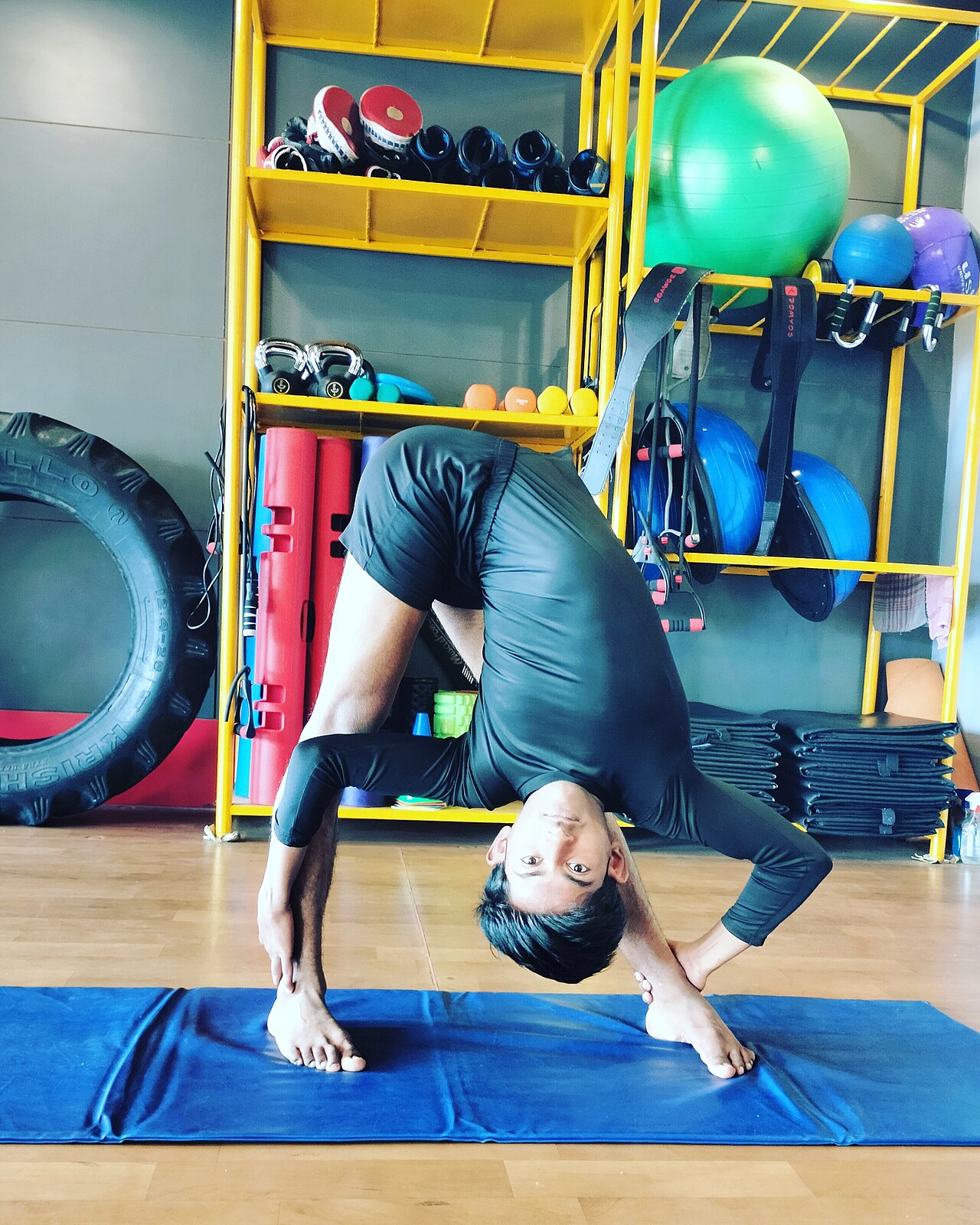
An individual yoga pose. Testing active versus passive range reveals whether flexibility or mobility is the real limiter.
Image Credits: Wikimedia Commons
Can you be flexible but not mobile?
Yes, and it is common. Touching your toes shows flexible hamstrings, but failing a deep unsupported squat shows poor ankle or hip mobility. The fix is strength and control work in the missing ranges, not more passive stretching.
Which should I train first?
Train both, but prioritize the limiter. If passive range is missing, stretch. If range exists but you cannot use it under control, do active mobility and strength work.
Most lifters need the second more than the first.
Does stretching before a workout hurt performance?
Long static holds right before explosive or heavy work can temporarily reduce power output. Save static stretching for after training, and use dynamic, active movements in the warm-up instead.
Is more mobility always better?
No. Joints need a balance of mobility and stability. Excessive range without matching strength raises injury risk, which is why hypermobile people should emphasize control and strength over chasing deeper stretches.
The bottom line
Flexibility is passive range; mobility is active control. Flexibility tells you how far your tissues can go. Mobility tells you how far you can take yourself there and stay safe.
Stop asking only "am I flexible enough" and start asking "can I control the range I have." Train passive range with stretching, then make it usable with strength through full ranges of motion.
This week, run the two home tests above. Whatever gap they reveal decides your next training block, and checking whether your lifting loads are honest keeps the strength side of the equation real.
Rive News is a research desk that turns exercise science and clinical guidance into plain-English explainers for everyday training.
Latest in Fitness
- Why are you sore two days after a workout
- How to tell if your workout is actually working
- How to stretch after a workout without wasting time
Get one practical fitness tip in your inbox every week: subscribe to the Rive News newsletter.
© 2026 Rive News. Published October 20, 2026.
Related stories

How long does it really take to build noticeable muscle?
Strength gains start in week one, but visible muscle takes 8-12 weeks for most beginners. What the Oklahoma CT-scan study measured,

Why you feel dizzy after a workout: the 5 common causes
Post-workout dizziness usually comes from a blood pressure dip, dehydration, or low blood sugar. The numbers behind each cause, and when
Why Do Knees Hurt When Squatting but Not Running?
Knees hurt when squatting but not running because deep bends multiply force on the kneecap. Learn the mechanics, common causes, fixes,