
Why some people get a runner's high, others not
By Rive News / Research desk | Rive News / Published October 28, 2026 at 9:00 AM PKT
This article is for general information only and is not medical advice; talk to a clinician about any symptoms.
Key takeaways
- The runner's high is driven mainly by endocannabinoids, not endorphins.
- Blocking opioid receptors does not remove the high, but blocking cannabinoid receptors does.
- Intensity, training history, and fatigue decide whether a given run produces the feeling.
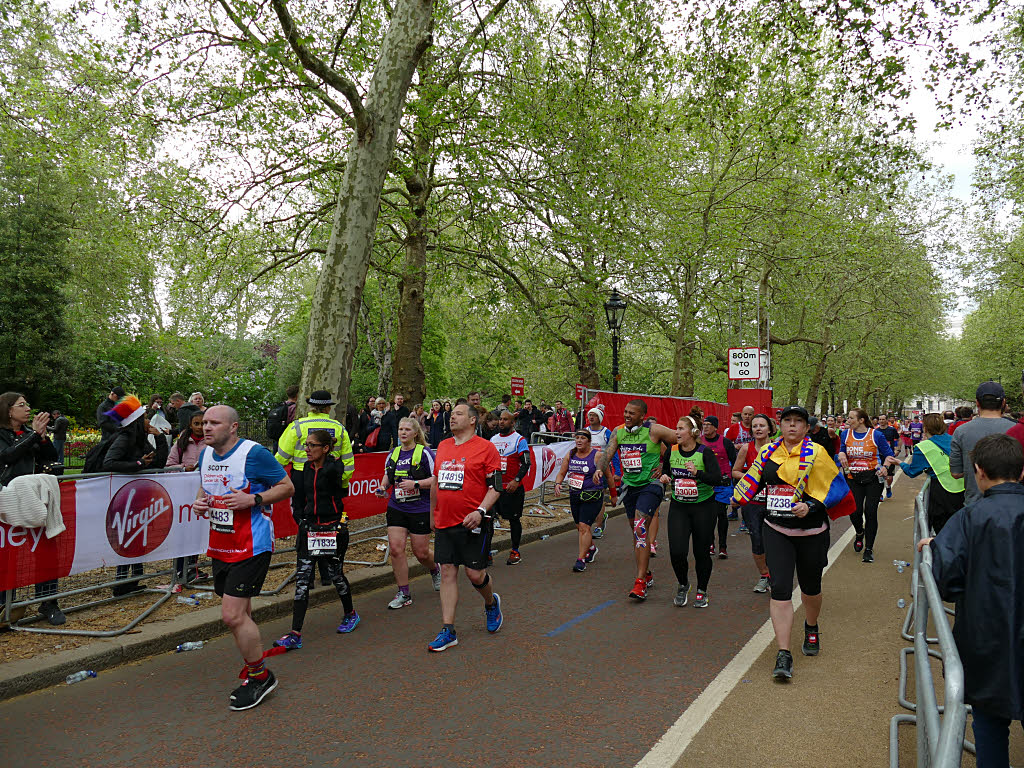
[Marathon runners near the finish show the sustained effort most linked to the runner's high.] Photograph: marathon runners
Image Credits: Wikimedia Commons
Some runners finish a long run glowing, calm, and oddly cheerful. Others finish the same distance feeling only tired. Both ran hard, both improved their fitness, but only one got the famous high.
The difference is not willpower or imagination. It comes down to brain chemistry, how hard and how long the run was, and what state the body was in that day. This article explains what the runner's high actually is, including endocannabinoids, endorphins, and intensity, and why it visits some runners and skips others.
What the runner's high feels like
Runners describe the high as a wave of euphoria, reduced anxiety, and dulled pain that arrives during or after sustained running. It is not the same as simple relief at finishing. It feels like a mood shift: lighter, calmer, and more content than the effort should allow.
Some runners also describe a sense of flow, where the run feels easier and attention narrows to the rhythm of movement.
The feeling is transient. It fades within hours, and it does not arrive on every run. That inconsistency is part of the puzzle.
A runner can chase the same route, pace, and distance and get the high one week and nothing the next. Any explanation has to account for that variability, not just for the good days.
The endorphin story, and why it fell apart
For decades, the standard explanation was endorphins. Exercise raises endorphin levels in the blood, endorphins are the body's natural painkillers, and so the high must be endorphins at work. The story was neat, widely repeated, and mostly wrong about the brain.
The problem is the blood-brain barrier. Endorphins are large, water-soluble molecules that cannot easily cross from the bloodstream into the brain. Wayne State University researchers put it plainly: endorphins are not likely to be the main driver of the mood effects of exercise, because they cannot readily cross that barrier.
Blood levels can rise sharply while brain levels barely change.
Blocking studies made the case sharper. In a 2015 study led by Johannes Fuss at the University Medical Center Hamburg-Eppendorf, mice given drugs that block opioid receptors still showed the calming, pain-reducing effects of running. Mice given drugs that block cannabinoid receptors, or mice lacking those receptors entirely, did not.
A 2021 human study found the same pattern: runners given naltrexone, which blocks opioid receptors, still felt euphoria and reduced anxiety after running.
Endorphins still have a job. They likely help dull pain in the body during hard exercise and help regulate stress. But the euphoric, mood-lifting part of the runner's high points elsewhere.
Endocannabinoids: the stronger candidate
Endocannabinoids are the body's own cannabis-like chemicals. The best known is anandamide, along with a second molecule called 2-AG. Unlike endorphins, anandamide is fat-soluble and crosses the blood-brain barrier easily.
Levels of both molecules rise sharply during sustained aerobic exercise, according to the Realm of Caring Foundation's review of the research.
Once in the brain, endocannabinoids act on cannabinoid receptors involved in pain, anxiety, stress, and reward. That matches the shape of the runner's high: less pain, less anxiety, and a mild lift in mood. The match is not just theoretical.
The mouse blocking study showed that removing cannabinoid signalling removed the running effect, while removing opioid signalling did not.
Evolution may have shaped the system. Researchers at the University of Arizona found that humans and dogs, both built for endurance running, show an endocannabinoid rise after running, while ferrets, which are not endurance animals, do not. The theory is that natural selection used the endocannabinoid system to reward long-distance movement in species that depended on it.
Feeling good after a long run may have helped our ancestors keep doing it.
Why the high is so inconsistent
If endocannabinoids rise during running, why doesn't everyone feel high on every run? A study of ultramarathon runners published in BMC Medicine gives a useful clue. Researchers followed 36 experienced athletes running 100, 160, or 230 kilometres in the TorTour de Ruhr ultramarathon, taking blood samples before and after.
Anandamide and 2-AG rose after all three distances, yet only 12 of the 36 reported a runner's high during the race.
Researcher Michael Siebers summed up the difficulty: "The runner's high is a difficult phenomenon to capture scientifically. It is transient and highly individual, rather like trying to capture fog in a jar." Elevated endocannabinoid levels alone, he explained, are not sufficient to produce a runner's high.
Several factors can drown out the signal. Extreme fatigue and pain compete with mild euphoria, and a 230-kilometre race leaves little room for bliss. The study also measured mood only before and after the races, so brief highs during the run may have been missed.
Timing matters: a high that lasts twenty minutes in the middle of a ten-hour race is easy to miss in a post-race questionnaire.
Intensity, duration, and training history
Intensity seems to matter more than distance alone. In the ultramarathon study, endocannabinoid levels were sometimes higher after a standard marathon than after the longer ultras. Ultramarathoners run more slowly to conserve energy, and slower running may produce a smaller chemical response.
A moderately hard, sustained effort may beat a very long, very slow one for producing the high.
Training history changes the experience too. A 2024 study by Weiermair and colleagues found that regular runners reported stronger mood improvements from running than occasional runners. Occasional runners showed a larger chemical spike in 2-AG, but regular runners reported the bigger psychological lift.
Experience may teach the brain to recognise and use the signal, turning a raw chemical surge into a sustained mood shift.
Overtraining can push the system the other way. A 2023 systematic review found that while single bouts of exercise reliably raise endocannabinoids, long-term high-volume endurance training can lower baseline levels. The body adapts by increasing the enzyme that breaks anandamide down.
In that state, a run may feel flat rather than rewarding, even though the runner is fitter than ever.
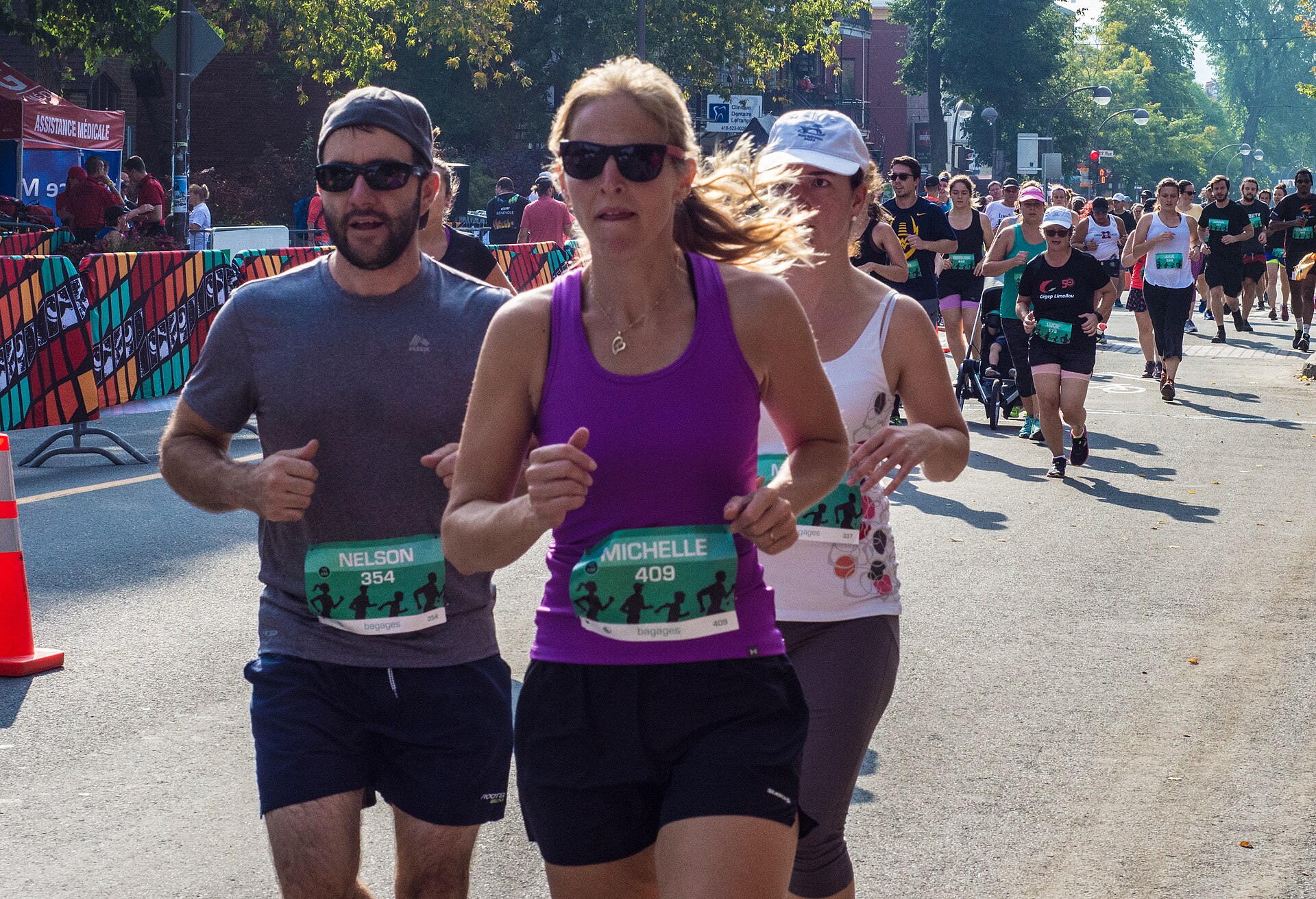
[Runners in a road race show the steady, moderate-to-hard effort most often tied to the high.] Photograph: runners in a race
Image Credits: Wikimedia Commons
The rest of the orchestra
No single molecule carries the whole effect. Researchers describe the runner's high as a neurochemical orchestra. Dopamine contributes reward and motivation, serotonin shapes mood, noradrenaline adds alertness, and a growth factor called BDNF supports brain plasticity.
Leptin links energy balance to the urge to move.
Individual biology tunes that orchestra. Genetics affect receptor density and enzyme activity. Sleep, food, stress, and time of day all influence endocannabinoid levels.
A well-rested runner on a cool morning may feel the high, while the same runner sleep-deprived and stressed may feel nothing on the same route. The system is sensitive to context, which is why the high resists scheduling.
Expectation plays a part as well. Runners who have felt the high before may notice it more readily, while runners who dread running may focus on discomfort instead. That does not make the high imaginary.
It means attention and chemistry interact, and the same chemical signal can be felt strongly, weakly, or not at all depending on what else the brain is processing.
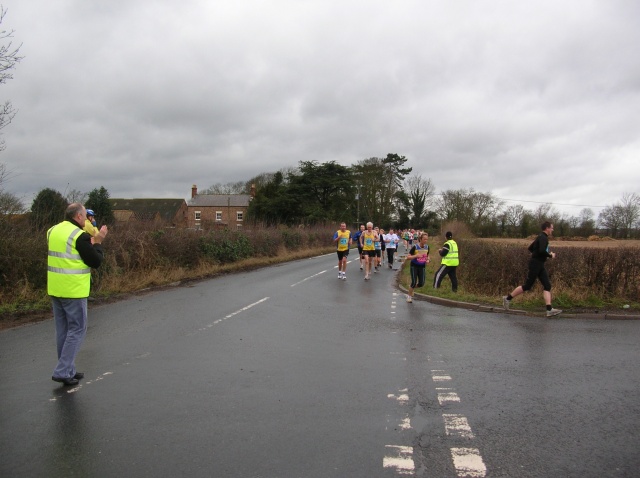
[A road race shows runners at varied paces, each experiencing the same distance differently.] Photograph: a road race
Image Credits: Wikimedia Commons
Frequently asked questions
Can you force a runner's high?
Not reliably. A sustained, moderately hard run of 30 minutes or more gives the best odds, but no pace or distance guarantees it. Chasing the high by overtraining can backfire by lowering baseline endocannabinoid levels.
Do walkers or cyclists get it too?
Yes, the effect is not limited to running. Endocannabinoid rises have been found across running, swimming, weightlifting, and other exercise forms. Running got the name because long, rhythmic, sustained effort is a reliable trigger, not because it is the only one.
Is the runner's high the same as being high on cannabis?
No. Endocannabinoids act on the same receptor system, but they are produced in small, localised amounts and broken down quickly. They do not cause the mental impairment associated with cannabis use, according to Wayne State University researchers.
Why did I feel it as a beginner but not now?
Training adaptations can lower baseline endocannabinoid levels, and familiarity can dull the novelty. Varying routes, easing back on volume, and prioritising sleep and recovery can help, but the high may still come and go.
The bottom line
Some people get a runner's high and others do not because the high depends on more than effort. Endocannabinoids must rise, reach the brain, and arrive in a body that is not too fatigued, stressed, or overtrained to notice. Intensity, training history, sleep, and individual biology all tilt the odds.
The high is real, but it is a visitor, not a reward that running owes you.
Tags: running, runner's high, endocannabinoids
Rive News / Research desk: The Rive News research desk writes plain-language explainers from published sources, with every key fact traceable to its source.
Related
- Why runners hit the wall in marathons
- How to breathe properly while running without getting winded
- What VO2 max is in simple terms, and why runners care
- Why you get a stitch in your side while running
Subscribe for one clear fitness-science explainer each week.
Rive News follows a simple standards rule: no invented facts, quotes, or statistics, and every key claim carries its source.
Related stories
How long does it really take to build noticeable muscle?
Strength gains start in week one, but visible muscle takes 8-12 weeks for most beginners. What the Oklahoma CT-scan study measured,
Why you feel dizzy after a workout: the 5 common causes
Post-workout dizziness usually comes from a blood pressure dip, dehydration, or low blood sugar. The numbers behind each cause, and when
Why Do Knees Hurt When Squatting but Not Running?
Knees hurt when squatting but not running because deep bends multiply force on the kneecap. Learn the mechanics, common causes, fixes,