
How your sense of balance keeps you upright daily
By Rive News / Research desk | Rive News / Published October 28, 2026 at 9:00 AM PKT
This article is for general information only and is not medical advice; talk to a clinician about any symptoms.
Key takeaways
- Balance is not one sense but three systems agreeing: inner ear, eyes, and body position.
- The inner ear tracks head rotation and straight-line movement with fluid and hair cells.
- The brain corrects posture constantly, which is why you can stand without thinking about it.
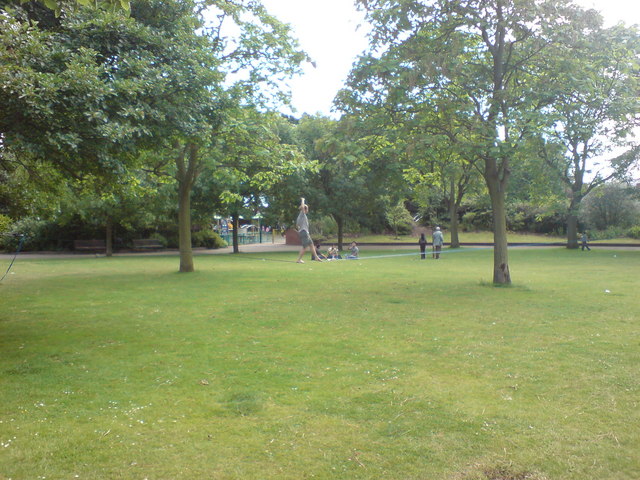
[A tightrope walker shows balance pushed to its limit, with eyes, inner ear, and muscles working together.] Photograph: a tightrope walker
Image Credits: Wikimedia Commons
Standing still looks effortless, but it is an active achievement. Your body sways slightly all the time, and a control system you never notice keeps nudging you back to centre. That system blends three streams of information: the vestibular organs in your inner ear, your eyes, and sensors in your muscles and joints.
This article explains how each stream works, including the vestibular system, vision, and proprioception, and what happens when they disagree.
Balance is a comparison, not a single signal
The technical name for the sense of balance is equilibrioception. It is the perception of balance and spatial orientation, and it helps prevent falls when standing or moving. According to Wikipedia, equilibrioception results from several sensory systems working together, and the eyes, inner ears, and proprioception ideally all need to be intact.
The key word is comparison. The brain does not trust any single signal on its own. It checks the inner ear against vision and against body position, then acts on the consensus.
When all three agree, you feel steady. When one disagrees, you feel dizzy, tilted, or unsure of where you are.
This design also explains a familiar test. Stand on one foot with your eyes open, then close them. Most people wobble more with eyes closed.
Nothing changed in the inner ear or the muscles. The brain simply lost one of its three votes, so its estimate of position got noisier.
The inner ear: your motion sensor
The vestibular system sits inside the inner ear, in the hardest part of the temporal bone. The Open University describes it as a system of tunnels called the bony labyrinth. Within it sit two structures that matter for balance: the vestibule and the three semicircular canals.
The semicircular canals detect rotation. Each canal is filled with fluid called endolymph and ends in a chamber called the ampulla, which holds sensory hair cells. When you turn your head, the canal moves with it, but the fluid lags briefly behind.
That lag bends the hair cells, and the bending becomes a nerve signal to the brain.
Each of the three canals watches a different plane of rotation. The InformedHealth guide lists them plainly: tilting upwards or downwards, tilting right or left, and turning sideways. Together, the three canals cover every direction your head can rotate.
When your head stops turning, the fluid bends the hair cells the other way, signalling the change in speed.
Straight-line movement is handled by two otolith organs, the utricle and the saccule. Their hair cells sit in a gel-like membrane studded with tiny crystals called otoliths. When you speed up in a lift or brake in a car, the membrane shifts and bends the hair cells.
The brain reads that shift as linear acceleration, including the constant pull of gravity.
Vision: the anchor to the world
Eyes tell the brain where the body sits relative to its surroundings. A stable horizon, a fixed doorway, or the pattern of a room gives the brain a reference frame. If the visual world moves, the brain assumes the body moved, unless the other senses disagree.
Vision also stabilises your gaze. The vestibular system works with the visual system to keep objects in focus while the head moves, through a reflex called the vestibulo-ocular reflex. When you nod, your eyes counter-rotate so the page in front of you stays still.
Without that reflex, every step would make the world bounce.
This is why moving visual scenes can cause dizziness. Sitting in a parked car while the bus beside you pulls away can feel like your own car is rolling. Vision reported motion, the inner ear reported stillness, and the brain briefly believed vision.
The feeling passes once the signals settle.
Proprioception: knowing where your limbs are
Proprioception is the sense of where your body is in space, built from sensors in muscles, tendons, and joints. These sensors report joint angles, muscle stretch, and pressure on the soles of the feet. They tell the brain whether your ankle is bending, your knee is straight, and your weight is shifting forward.
The Open University puts it clearly: proprioceptors in the periphery monitor the balance of the limbs, while the vestibular system monitors the balance of the head. The two jobs split neatly. Feet and ankles handle the ground contact.
The head sensor handles orientation in space.
Ankle sensors deserve special attention. Small shifts in ankle angle are among the first warnings that the body is tipping. The calf muscles respond with tiny corrections long before a person notices any sway.
Strong, sensitive ankles are one reason balance training often starts at the feet.
The brain puts it together
All three streams converge in the brainstem, in a processing hub called the vestibular nucleus, and in the cerebellum, which fine-tunes movement. The brain compares the signals, resolves conflicts, and sends corrections to posture muscles. Most of this happens below conscious thought, which is why standing feels automatic.
Corrections come in layers. For small sways, the ankles adjust. For larger ones, the hips shift.
For a big push, the brain orders a step. Each layer costs more effort and covers a bigger error. The system escalates only as far as needed, which keeps everyday standing efficient.
Learning sharpens the system. Gymnasts, dancers, and surfers train the same three signals until corrections become faster and smaller. The sensors do not change, but the brain gets better at weighting them.
A trained brain trusts the most reliable signal in each situation and ignores noisy ones faster.

[A gymnast on the balance beam relies on rapid corrections from eyes, inner ear, and ankle sensors.] Photograph: a gymnast on the balance beam
Image Credits: Wikimedia Commons
When the signals disagree
Dizziness often means disagreement, not weakness. If the inner ear reports spinning while the eyes report stillness, the brain cannot reconcile the two. Vertigo, nausea, and unsteadiness can follow.
Inner ear infections, displaced otolith crystals, and certain neurological conditions can all create such mismatches.
Age changes the balance of the system too. Vision dims, ankle sensors lose sensitivity, and inner ear hair cells wear down. Older adults often compensate by leaning more on vision, which is why poor lighting raises fall risk.
The system still works, but with less margin for error.
Alcohol disrupts the system in a different way. It changes the density of the endolymph fluid in the semicircular canals, so the fluid moves differently from normal. The brain receives false rotation signals, which is one reason balance fails after drinking.
The effect fades as the fluid returns to normal.
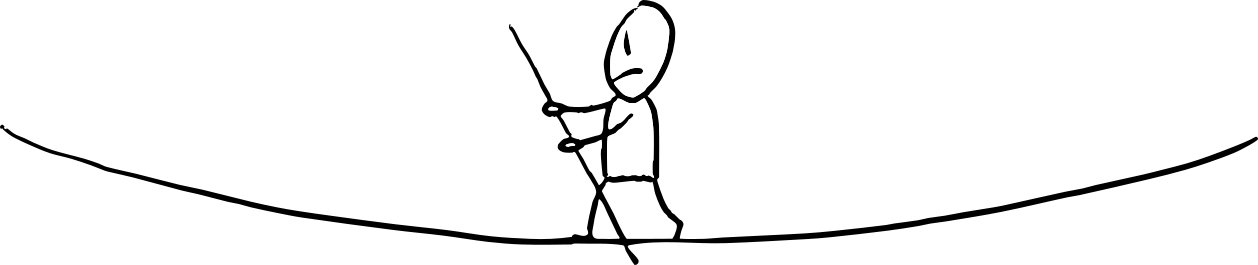
[A tightrope act shows how the body corrects posture continuously to stay over a narrow base.] Photograph: a tightrope act
Image Credits: Wikimedia Commons
Frequently asked questions
Why do I feel dizzy when I spin and stop?
Spinning sets the canal fluid moving. When you stop, the fluid keeps going briefly and bends the hair cells the other way. The brain reads that as rotation in the opposite direction, so the room seems to spin even though you are still.
Why is balancing harder with eyes closed?
Closing your eyes removes the visual signal. The brain must rely on the inner ear and proprioception alone. Its position estimate becomes less precise, so corrections come later and sway grows larger.
Can balance be improved with training?
Yes, to a degree. Balance training improves how the brain weights and combines signals, and it strengthens ankle and hip muscles. It cannot replace damaged inner ear sensors, but it can improve the use of the signals that remain.
Why do some people get motion sick and others do not?
Motion sickness is linked to sensory conflict, especially between vision and the vestibular system. People differ in how sensitive their vestibular organs are and how quickly their brains adapt. Repeated exposure often reduces symptoms as the brain learns the pattern.
The bottom line
Your sense of balance is a team effort. The inner ear measures head motion, the eyes anchor you to the world, and proprioceptors track your limbs. The brain compares all three and corrects your posture before you notice the wobble.
When the signals agree, standing feels like nothing at all. That nothing is the system working exactly as it should.
Tags: balance, vestibular system, proprioception
Rive News / Research desk: The Rive News research desk writes plain-language explainers from published sources, with every key fact traceable to its source.
Related
- Why you feel dizzy after a workout
- Why your arms shake when you hold a plank
- How to breathe properly while running without getting winded
- What VO2 max is in simple terms, and why runners care
Subscribe for one clear fitness-science explainer each week.
Rive News follows a simple standards rule: no invented facts, quotes, or statistics, and every key claim carries its source.
Related stories
How long does it really take to build noticeable muscle?
Strength gains start in week one, but visible muscle takes 8-12 weeks for most beginners. What the Oklahoma CT-scan study measured,

Why you feel dizzy after a workout: the 5 common causes
Post-workout dizziness usually comes from a blood pressure dip, dehydration, or low blood sugar. The numbers behind each cause, and when
Why Do Knees Hurt When Squatting but Not Running?
Knees hurt when squatting but not running because deep bends multiply force on the kneecap. Learn the mechanics, common causes, fixes,