
Why your arms shake when you hold a plank
By Rive News / Research desk | Rive News / Published October 27, 2026 at 9:00 AM PKT
This article is for general information only and is not medical advice; talk to a clinician about any symptoms.
Key takeaways
- Shaking during a plank is usually motor units tiring and handing work to each other, which makes force output uneven and visible as tremor.
- A plank is an isometric hold, so the same muscles work without rest or movement, which is why the shake appears sooner than in moving exercises.
- Normal shaking fades with rest and improves as you get stronger. Sharp pain, loss of control, or shaking at rest are reasons to stop and get checked.
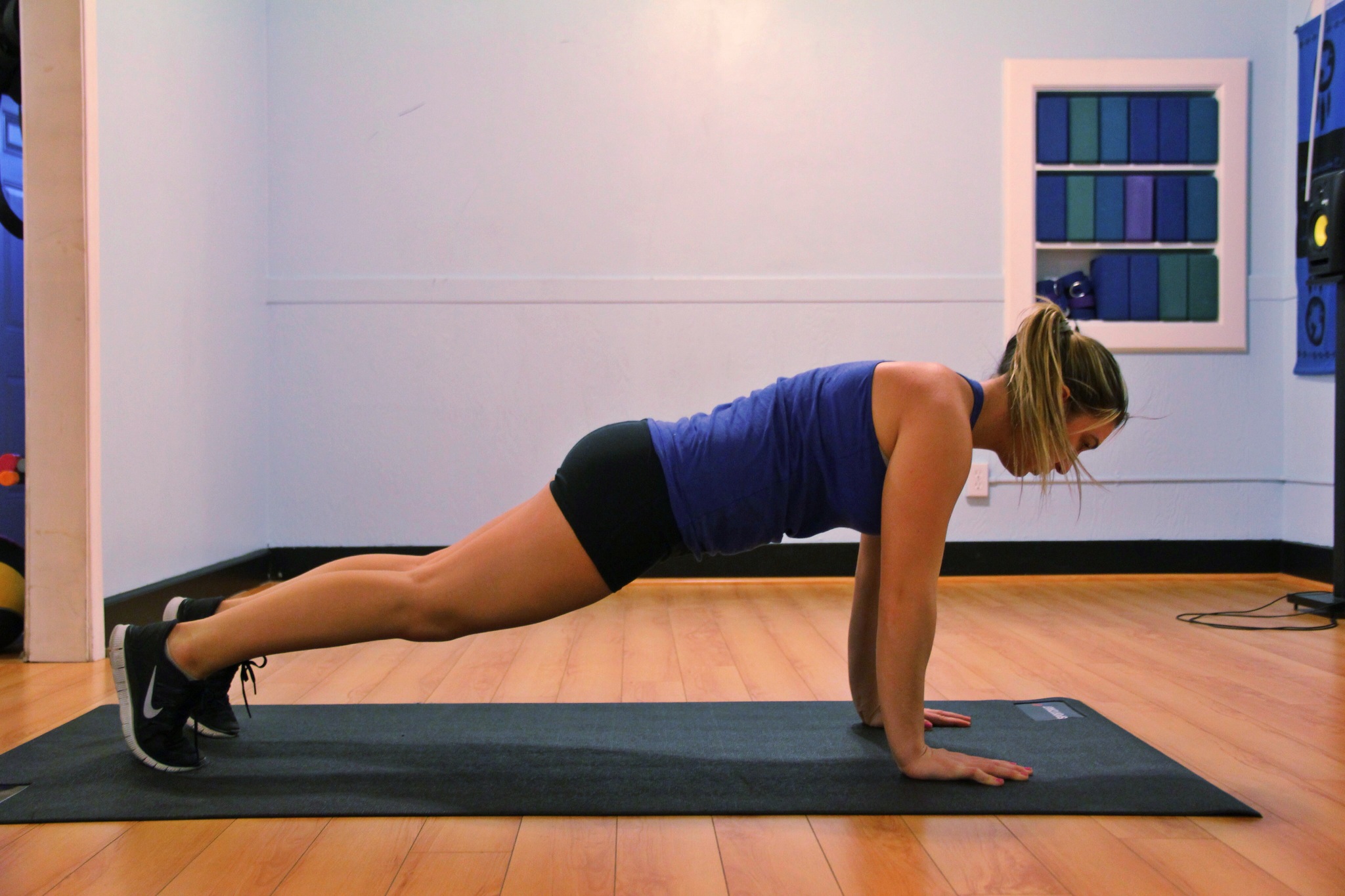
[A person holding a plank position, the isometric exercise in which arm shaking commonly appears.] Photograph: a plank hold
Image Credits: Wikimedia Commons
Hold a plank long enough and your arms will probably start to shake. The tremor often begins in the shoulders and forearms, spreads to the core, and gets worse the longer you hold. It can feel alarming, especially the first time it happens, because the shaking seems to come from nowhere.
In most cases it comes from a normal, well-understood mechanism. Your nervous system controls muscles through motor units, and a long hold pushes those units to their limit. This article explains that mechanism, including why a plank triggers it sooner than many other exercises, why the arms show it first, and how to tell ordinary shaking from a warning sign.
What a motor unit is, and why it matters here
A motor unit is a single motor neuron plus all the muscle fibres it controls. When your brain wants force, it fires motor units, and the fibres they control contract. Healthline's explanation of post-exercise shaking describes this process directly: during activity, the central nervous system fires motor units to contract muscles, and the longer you work, the more those signals slow down and lose intensity.
That slowing is the start of the shake. Early in a plank, small motor units do most of the work, because they are efficient and fatigue-resistant. As the hold continues and more force is needed, the nervous system recruits larger motor units, which are stronger but tire faster.
When some units tire, others take over, and the handover is not smooth. Force rises and falls in small steps instead of holding steady, and your arms show that uneven force as visible tremor.
The Marathon Handbook describes the same handover in plain terms. As a contraction goes on, more motor units start firing, and because the level of force being produced keeps changing, the result can be tremors or jerkiness. At the same time, the smaller units that started the movement begin to fatigue, their firing rates drop, and the force they produce becomes less consistent.
The shake is the visible result of that changing force.
Why a plank triggers shaking sooner than moving exercises
A plank is an isometric exercise, which means the muscles contract without changing length or moving a joint. Cleveland Clinic defines the related phenomenon, isometric tremor, as shaking during a voluntary muscle contraction that does not involve motion, such as holding a heavy object in the same position.
Isometric holds are unusually tiring for three reasons. First, the same fibres work continuously, with no relaxation phase to let blood flow through and clear waste products. In a moving exercise such as a press or a squat, the muscles briefly unload between reps.
In a plank, there is no such break.
Second, the hold demands constant correction. Your shoulders, arms, core, and glutes must all fire together to keep your body in a straight line against gravity. Small shifts in position require constant micro-adjustments, and each adjustment is another demand on already tiring motor units.
Third, the plank loads smaller stabilizer muscles alongside larger ones. When the smaller stabilizers tire first, larger muscles try to compensate, and the compensation itself is uneven. Peloton's guide to shaking during workouts notes this pattern, explaining that tremors commonly appear when smaller stabilizing muscles cannot keep up with stronger primary muscles.
In a forearm plank, the shoulders and arms often show the shake first because they carry a large share of the load through a small base of support.
Why the arms, and not just the core
A plank is usually described as a core exercise, so arm shaking can seem misplaced. It is not. In a forearm plank, your arms and shoulders hold up roughly half your body weight through your elbows or hands.
The deltoids, triceps, and forearm muscles work isometrically for the entire hold, and they are smaller than the leg and hip muscles that support you in standing exercises.
Beginners often feel the shake in their arms before their core because their shoulder stabilizers are the weakest link in the chain. The core may still have capacity left, but the arms give the first visible signal. That is useful information rather than a failure.
It tells you which part of the system tired first, and therefore what to strengthen.
Form matters here too. If your shoulders drift forward of your elbows, or your hips sag or pike, the load shifts onto the arms and shoulders and away from the core and glutes. A straight line from head to heels, with shoulders stacked over the elbows and ribs down, spreads the work more evenly and usually delays the shake.
Other contributors: fuel, fluids, and newness
Fatigue is the main cause, but three other factors can make shaking worse. The first is low blood sugar. Glucose fuels muscle work, and a long or intense session can deplete it, which Healthline lists among the causes of post-exercise tremor, alongside fatigue and dehydration.
The second is dehydration and electrolyte disturbance. Sodium, potassium, magnesium, and calcium all play roles in muscle contraction, and Cleveland Clinic lists low blood sugar and low magnesium among the metabolic conditions that can cause tremor. A plank alone rarely causes a serious electrolyte problem, but training while dehydrated or after heavy sweating makes shaking more likely.
The third is newness. The American Council on Exercise, cited by Peloton, notes that when you try an exercise your body is not accustomed to, your nervous system must recruit more muscle fibres to complete it, and that extra recruitment can itself cause shakiness. A first plank, a longer hold than usual, or a harder variation will shake more than a familiar one, even at the same fitness level.
When shaking is normal, and when it is not
Normal plank shaking has a clear pattern. It builds gradually during a hard hold, stays in the muscles being worked, and fades within minutes of rest. It improves over weeks as you get stronger, because trained muscles recruit motor units more efficiently and fatigue more slowly.
Shorter sets with more repetitions, such as four to six holds of 20 to 40 seconds, usually produce less shaking than one maximal hold, and they build the same endurance.
Stop and reassess if the pattern breaks. Sharp or sudden pain is not normal shaking. A joint giving way, a loss of control that makes you collapse, or shaking that continues long after you stop all deserve attention.
Shaking that appears at rest, outside exercise, or only on one side of the body is a different matter from exercise tremor and should be discussed with a clinician. So should shaking that starts after a new medication, since several common medicines can cause or worsen tremor, according to Cleveland Clinic.
The practical test is simple. If the shake arrives late in a hard hold, fades with rest, and gets better as you train, it is your nervous system doing its job at the edge of its current capacity. If it arrives suddenly, hurts, or does not fade, treat it as information worth checking rather than pushing through.
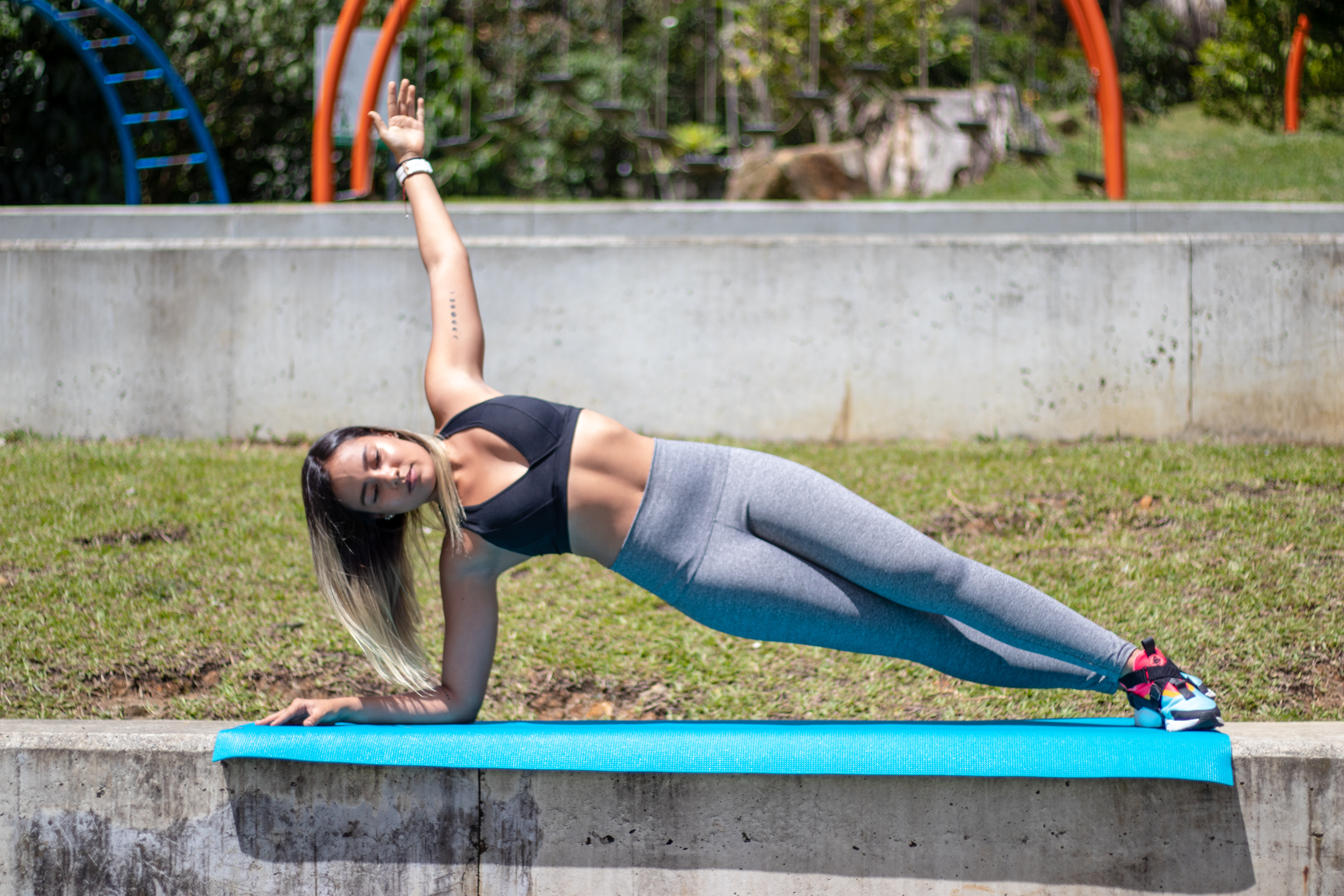
[A person holding a side plank, a variation that loads the shoulders and core differently.] Photograph: a side plank hold
Image Credits: Wikimedia Commons
How to shake less over time
The fix is not to avoid shaking entirely. It is to raise the threshold at which it appears. Shorter, well-formed sets build endurance without practising bad form under fatigue.
Strengthening the stabilizers helps too: dead bugs, bird-dogs, and side planks train the same support system with less load on the arms.
Rest and fuel matter as well. Train fed and hydrated, and give the muscles a day to recover between hard core sessions. A plank done the day after a heavy upper-body workout will shake sooner, because the same motor units are still recovering.
Finally, treat the shake as feedback, not failure. It marks the point where your nervous system is working hardest to hold position. Training just short of that point, repeatedly, is what moves the point further out.
Frequently asked questions
Is it bad if my arms shake during a plank?
Usually not. Shaking late in a hard hold is a normal sign that motor units are fatiguing and handing work to each other. It fades with rest and improves with training.
Sharp pain or loss of control are different and mean you should stop.
Why do my arms shake but not my core?
Your arms and shoulders carry much of the load in a plank through a small base of support, and their stabilizer muscles often tire first. The shake shows where the weakest link is, which is usually the shoulders and forearms for beginners.
How do I stop shaking during planks?
Use shorter sets with good form, such as several 20 to 40 second holds instead of one maximal hold. Strengthen your stabilizers, train fed and hydrated, and build hold time gradually. The shake should appear later as you get stronger.
Should I stop immediately when shaking starts?
Not necessarily. Mild shaking with good form is fine to work through briefly. Stop if form breaks down, if you feel sharp pain, or if you lose control of the position.
Quality of the hold matters more than the clock.
The bottom line
Your arms shake during a plank because the motor units holding you up tire and hand work back and forth, making force output uneven. The isometric nature of the hold, the small stabilizer muscles involved, and the load on the shoulders all make that tremor appear sooner than in moving exercises. Treat it as a signal: mild, late, fading shaking means you are training at your edge, while pain, collapse, or shaking at rest means it is time to stop and get advice.
Tags: plank, muscle shaking, core training, exercise science
Rive News's research desk covers practical explainers on cars, careers, study, fitness, and food, written from public sources and checked against a published QA list.
Related
- What is the difference between a plank and a crunch for core strength?
- Why do muscles shake during exercise?
- Muscle soreness vs injury: how to tell DOMS from real damage
Subscribe for one practical explainer each morning, written to be read in five minutes.
Standards: facts checked against public sources listed above; corrections welcomed and noted on update.
Related stories
How long does it really take to build noticeable muscle?
Strength gains start in week one, but visible muscle takes 8-12 weeks for most beginners. What the Oklahoma CT-scan study measured,
Why you feel dizzy after a workout: the 5 common causes
Post-workout dizziness usually comes from a blood pressure dip, dehydration, or low blood sugar. The numbers behind each cause, and when
Why Do Knees Hurt When Squatting but Not Running?
Knees hurt when squatting but not running because deep bends multiply force on the kneecap. Learn the mechanics, common causes, fixes,