
Why do you yawn during hard workouts?
Key takeaways
- Yawning during hard workouts is probably not boredom: the leading theory says your brain is cooling itself as exertion raises its temperature.
- In rat studies, brain temperature rose just before yawns and fell right after, supporting the brain-cooling hypothesis.
- Cooling your forehead or breathing through your nose reduces yawning, which researchers treat as evidence for the temperature link.
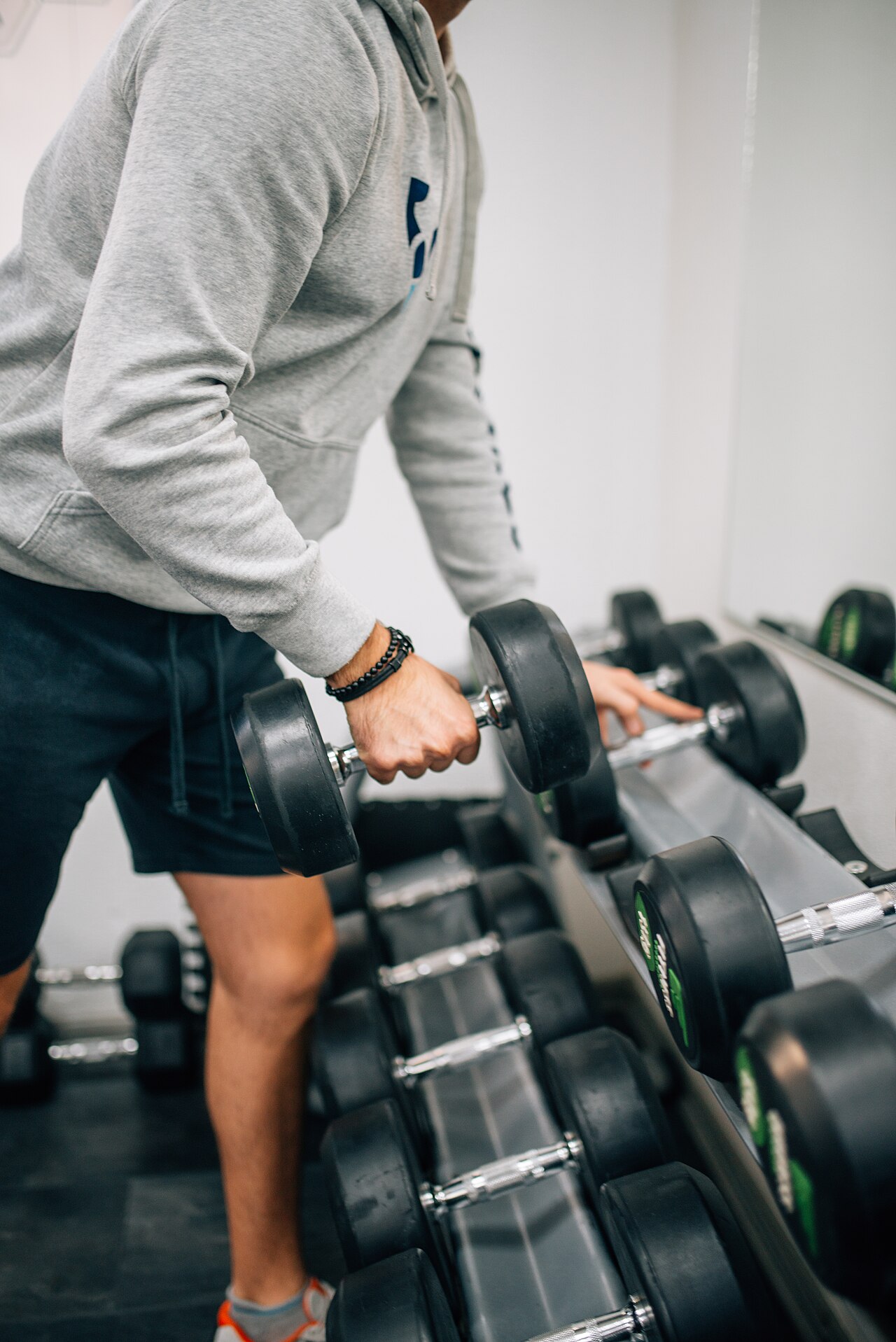
Why do you yawn during hard workouts? It feels wrong. You are pushing through a heavy set, fully alert, and your body acts like it wants a nap.
The answer is not boredom or laziness. The leading explanation is that yawning is your brain's cooling system kicking in.
This article covers what scientists actually know about exercise yawning: the brain-cooling hypothesis, the experiments behind it, and what the yawn is telling you mid-workout.
It is not about oxygen
The oldest theory said yawning pulls in extra oxygen or dumps excess carbon dioxide. Exercise researchers tested that idea directly and it failed.
In a 1987 study, Provine and colleagues exposed subjects to 3 to 5 percent carbon dioxide, pure oxygen, and outright exercise. None of it changed yawning rates. Later blood-gas measurements found no significant change in oxygen or CO2 levels around yawns either.
So the deep inhale of a yawn is not your body gasping for air. During hard exercise your breathing rate already handles oxygen delivery. The yawn is doing something else.
The brain-cooling hypothesis
The human brain is exquisitely sensitive to temperature. Even small rises can impair attention, decision-making, and neural efficiency. Hard exercise raises body heat, and the brain needs ways to dump it.
The brain-cooling hypothesis proposes that yawning works like a radiator flush. The gaping jaw and deep inhalation draw cooler air in, boosting blood flow to the skull and flushing warmer blood away from the brain.
Researchers at SUNY Albany, including Gordon Gallup Jr, have championed this idea since the mid-2000s.
Direct evidence comes from rats. In a 2010 study by Shoup-Knox and colleagues, sensors tracked cortical temperature in rats around spontaneous yawns.
Brain temperature climbed significantly in the seconds before each yawn, then dropped measurably afterward. The yawn predicted the temperature swing, not the other way around.
Human physiology studies agree. Corey and colleagues measured heart rate, lung volume, eye closure, skin conductance, and respiratory patterns across 75 seconds before and after human yawns in two experiments, published in Frontiers in Evolutionary Neuroscience in 2012 (PMID 22319494). They found increases in heart rate, lung volume, and eye-muscle tension during and immediately after yawning, and concluded the pattern was most consistent with the brain-cooling hypothesis.

The temperature experiments that convinced skeptics
Two clever experiments by Gallup and Gallup in 2007 tested the cooling idea by manipulating temperature directly.
In the first experiment, participants watched videos of people yawning while breathing in different ways. When participants breathed normally or through their mouths, about 48 percent showed contagious yawning.
When they were instructed to breathe nasally, which cools air before it reaches the brain, not a single participant yawned. Nasal breathing had switched the cooling need off.
In the second experiment, participants held temperature packs to their foreheads while watching the same videos. With a warm pack at 46°C or a room-temperature pack, contagious yawning occurred 41 percent of the time.
With a cold pack at 4°C, it dropped to 9 percent. Cooling the forehead, which sits right above the frontal lobes, nearly eliminated the urge to yawn.
Animal work lines up too. In parakeets, researchers found that yawning increased sharply as ambient temperature rose to within 0.5°C of body temperature, the point where normal heat regulation starts to fail. Heat stress and abnormal thermoregulation consistently precede yawning across species.
Why it happens mid-workout specifically
Hard workouts stack several yawn triggers at once. Your core temperature climbs, blood diverts to working muscles and skin for cooling, and your brain works hard on coordination, balance, and pacing. That combination can push brain temperature into the range where the cooling reflex fires.
Mental fatigue plays a role as well. Yawning appears during demanding concentration, not just physical heat.
A heavy compound lift that requires full-body focus can trigger yawns the same way a long exam does. The brain treats both as thermal and attentional load.
This also explains the timing. Many lifters notice yawns during rest periods between sets rather than mid-rep. The body is catching up on cooling while the muscles recover, and the brain gets its radiator flush in the gap.
When workout yawning is a warning sign
Occasional yawning during training is normal physiology. But a sudden change in the pattern deserves attention.
If you start yawning excessively during workouts that used to feel fine, check the basics first: sleep, hydration, and room temperature. Training in a hot gym while under-slept stacks two known yawn triggers. Overtraining can also show up as unusual fatigue signals, including drowsiness that was not there before.
See a doctor if yawning comes with chest pain, faintness, shortness of breath beyond normal exertion, or daytime sleepiness that persists outside training. Those are medical symptoms, not fitness quirks, and they need professional evaluation rather than internet theorizing.
Frequently asked questions
Does yawning during a workout mean I am out of shape?
No. Yawning tracks brain temperature and attentional load, not cardiovascular fitness. Well-trained athletes yawn during hard sessions too, especially in warm environments.
Should I try to stop yawning at the gym?
There is no need to suppress it. The yawn is a regulatory reflex. If anything, frequent yawning may be a cue to cool down, hydrate, or check whether the training room is too hot.
Does yawning improve workout performance?
There is no direct evidence that yawning boosts performance. But the cooling it provides may help sustain focus and decision-making during long or hot sessions, which matters for complex lifts.
Why do I yawn more on leg day than arm day?
Larger muscle groups generate more metabolic heat, and compound lower-body movements demand more neural coordination. Both raise the thermal load that triggers the brain-cooling reflex.
The bottom line
Yawning during hard workouts is your brain running its cooling system, not your body asking for a nap. Rising brain temperature triggers the reflex, and the deep inhale flushes heat away. Treat it as a normal signal, keep your training environment cool and yourself hydrated, and get checked out only if excessive yawning arrives with other warning symptoms.
This article is a fitness explainer only and is not medical advice. If you experience concerning symptoms during exercise, consult a qualified healthcare professional.
Latest in Fitness
- Why you get dizzy after working out
- How long it takes to build noticeable muscle
- Muscle soreness vs. injury: how to tell
Subscribe to the Rive News newsletter for one practical fitness explainer every week.
Related stories
How long does it really take to build noticeable muscle?
Strength gains start in week one, but visible muscle takes 8-12 weeks for most beginners. What the Oklahoma CT-scan study measured,
Why you feel dizzy after a workout: the 5 common causes
Post-workout dizziness usually comes from a blood pressure dip, dehydration, or low blood sugar. The numbers behind each cause, and when
Why Do Knees Hurt When Squatting but Not Running?
Knees hurt when squatting but not running because deep bends multiply force on the kneecap. Learn the mechanics, common causes, fixes,