
Determinate vs. indeterminate tomatoes: growth, pruning, and harvest differences
Key takeaways
- Determinate tomatoes grow to a fixed size, then ripen most of their fruit in one concentrated window.
- Indeterminate tomatoes keep vining and fruiting until frost, and they need sturdy support and regular pruning.
- The growth habit decides your pruning strategy: leave determinates mostly alone, manage indeterminates actively.

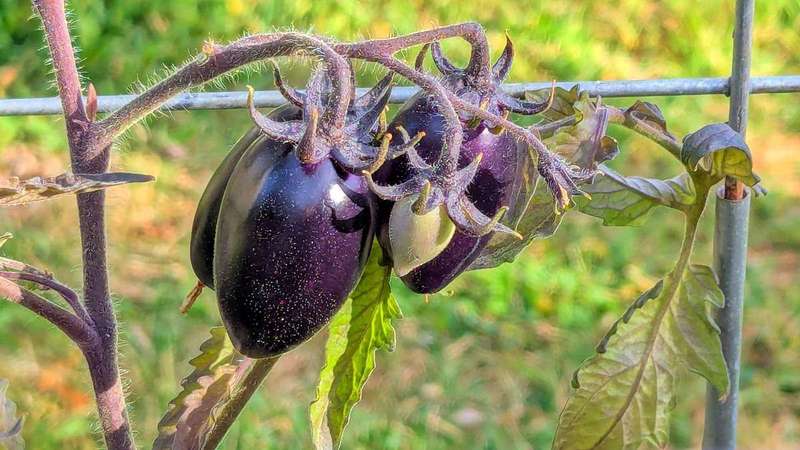
A tomato plant loaded with ripening fruit in a garden bed. Photograph: Хомелка/Wikimedia Commons
Image Credits: Wikimedia Commons
Every tomato variety falls into one of two growth habits. Determinate tomatoes grow like bushes: they reach a set size, stop, and ripen their fruit in one big flush. Indeterminate tomatoes grow like vines: they keep climbing, flowering, and fruiting until cold weather shuts them down.
That single distinction shapes nearly every decision you will make, from pruning to staking to when you plan your harvest. This article explains the difference between determinate and indeterminate tomatoes, including how each type grows, how harvests differ, what pruning each one needs, and which to plant for your garden.
How each type grows
Determinate varieties are genetically programmed to stop. Their main shoots end in a flower cluster, a terminal bud, and once that sets, upward growth is finished.
Becky Sideman, a professor and extension specialist with the University of New Hampshire Cooperative Extension, describes them as bush-habit plants that usually stop around 4 feet tall. The University of Minnesota Extension puts typical bush types even smaller, at about 24 to 30 inches, though mature size varies by variety.
Indeterminate varieties never get that stop signal. They keep producing new stems, flowers, and fruit until frost or disease ends the season, behaving essentially as vines.
Sideman notes they keep growing indefinitely, and one grower guide puts mature vines at 6 to 10 feet of heavy plant. Without support they sprawl across the ground, which invites disease and makes harvest miserable.
Cherry tomatoes confuse beginners because they can be either type. Fruit size tells you nothing about growth habit. Check the seed packet or plant tag: it will say determinate or indeterminate, and that label matters more than the variety name.
How harvests differ
Here the difference is about timing, not just size. Determinate tomatoes ripen most of their crop in a concentrated burst, roughly a four to six week period according to Grow Organic, with some sources describing the main flush as lasting just a few weeks. After that, the plant's vigor fades and it sets little new fruit.
That concentrated harvest is a feature, not a bug. If you want a big batch of tomatoes for sauce, salsa, or canning, determinates deliver the goods all at once. Paste and roma types like Roma, San Marzano, Rutgers, and Celebrity are classic determinates, bred for exactly this job.
Indeterminate tomatoes play the long game. They bloom, set new fruit, and ripen fruit simultaneously all season, giving you a steady trickle for fresh eating from summer into fall. Most heirlooms, most cherry types, and popular slicers like Big Boy, Early Girl, and Brandywine grow this way.
Your kitchen plans should drive the choice. Canners plant determinates. Salad lovers plant indeterminates.
Smart gardeners plant some of each.
Roma-type tomatoes on the vine, a classic determinate choice for sauces and canning. Photograph: Daderot/Wikimedia Commons
Image Credits: Wikimedia Commons
What pruning each type needs
This is where the growth habit really dictates your technique, and where beginners most often go wrong.
Determinate tomatoes: prune lightly or not at all. Because every shoot ends in fruit, removing suckers, the small shoots that sprout where a branch meets the main stem, directly removes future tomatoes. One widely shared growing guide warns that suckering determinates severely reduces the crop. The University of Georgia Cooperative Extension agrees that determinate plants need only light pruning, mainly to open a dense canopy for air and sunlight.
Indeterminate tomatoes: prune actively. These vines produce far more foliage than they need, and all that leaf crowds out airflow and light. UGA Extension recommends vigorous pruning for indeterminates to let air and sunlight penetrate and to balance the plant's top-heaviness. The standard move is removing suckers while they are still small, which directs the plant's energy upward into fruit instead of extra stems.
Both types benefit from removing lower leaves that touch the soil, which cuts down on soil-borne disease. Cornell Cooperative Extension's high-tunnel guide makes the same point for production growers: stripping the lowest leaves improves air circulation and lowers disease pressure.
Support follows the same split. Determinates are stocky but still appreciate a cage or stake, since a concentrated fruit set adds serious weight. Indeterminates demand substantial support, tall stakes, sturdy cages, or a trellis, because a 6 to 10 foot vine loaded with fruit will not stand on its own.
Which type to plant
Match the plant to your space and your goals.
Choose determinate if you want a big harvest for preserving, have a small garden or containers, or prefer lower maintenance. Their compact size suits pots well, with a minimum container of about 5 to 6 gallons, and they ask little of you beyond water, feed, and a basic cage.
Choose indeterminate if you want fresh tomatoes all season, have room for tall supports, and do not mind regular pruning. They reward attention with months of production, and most heirloom and cherry varieties live in this camp.
First-time growers often do best starting with one determinate for the canning batch and one indeterminate for the salad bowl. You will learn both habits in a single season, and you will eat well either way.
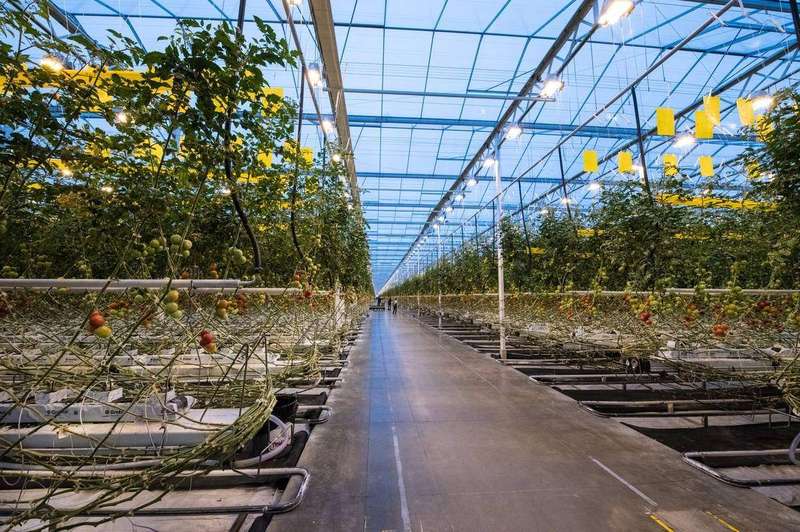
Indeterminate tomato vines trained vertically in a greenhouse, kept productive with pruning and support. Photograph: Lance Cheung/USDA/Wikimedia Commons
Image Credits: Wikimedia Commons
Frequently asked questions
Can you prune determinate tomatoes?
Lightly, yes, but do not sucker them the way you would an indeterminate. Removing suckers from a determinate plant removes fruit. Stick to taking off lower leaves that touch the soil and any damaged foliage.
Do indeterminate tomatoes need a cage or trellis?
Yes, absolutely. Indeterminate vines grow 6 to 10 feet and keep fruiting until frost. Without sturdy support they collapse onto the ground, where fruit rots and disease spreads.
Tall stakes, heavy cages, or a string trellis all work.
Can I grow indeterminate tomatoes in containers?
You can, but it is a commitment. They need a large container, constant watering, and a serious support structure. Determinate varieties are the easier container choice for most gardeners.
Are cherry tomatoes determinate or indeterminate?
They can be either, so fruit size is not a reliable clue. Most cherry varieties are indeterminate, but determinate cherries exist. Always check the variety description or plant tag before you buy.
The bottom line
Determinate means bush, one big harvest, and hands off the pruners. Indeterminate means vine, all-season harvest, and regular pruning with real support. Learn which type you bought, treat it accordingly, and your tomato season gets dramatically easier.
When you are standing in front of the seed rack, decide what you want from the plant first: a freezer full of sauce or a summer of salads. Then pick the habit that delivers it.
Rive News's research desk covers gardening topics from university extension publications and established growing guides.
Subscribe to the Rive News newsletter for one practical explainer like this every morning.
Related stories

What Is Companion Planting and Does It Work?
Marigolds work as a nematode cover crop, but the basil flavor claim failed repeated tests. An honest evidence review of what companion

How to improve clay soil for gardening
Gypsum will not fix ordinary clay soil, say extension experts. What actually works: 2 to 3 inches of compost, mulch, better drainage,
What Does NPK on Fertilizer Actually Mean: Nitrogen, Phosphorus, and Potassium
NPK means nitrogen, phosphorus, potassium; the numbers are the percent of each by weight. See what each nutrient does for plants and how