
What Does NPK on Fertilizer Actually Mean: Nitrogen, Phosphorus, and Potassium
Key takeaways
- NPK stands for nitrogen, phosphorus, and potassium, the three nutrients plants need in the largest amounts.
- The three numbers (like 10-10-10) are the percentage of each nutrient by weight in the bag.
- Match the ratio to the plant: nitrogen for leaves, phosphorus for roots and blooms, potassium for overall health.
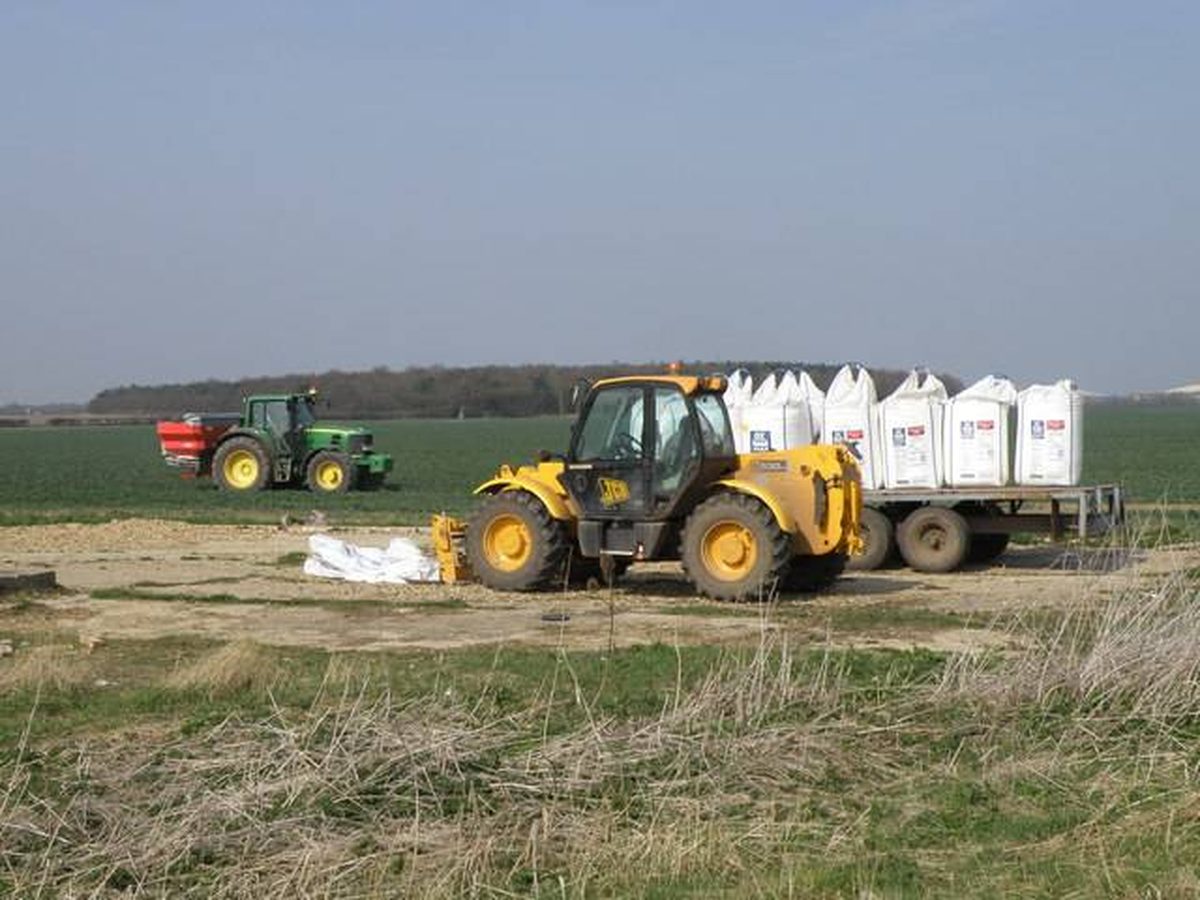
Fertilizer application on a flowering oilseed rape field. The ratio on the bag decides which nutrients the crop actually gets. Photograph: Michael Trolove/Wikimedia Commons
Image Credits: Wikimedia Commons
NPK is the nutrition label for fertilizer. It names the three main nutrients every plant needs in large amounts: nitrogen (N), phosphorus (P), and potassium (K). They are called primary macronutrients (main nutrients) because plants use them in bigger amounts than anything else in the soil.
The numbers next to the letters are just as standard as the letters. Together, the letters and numbers tell you exactly what is in the bag and in what share, which is what this article breaks down: what the three letters stand for, what the three numbers mean, what each nutrient does for plants, and how to pick the right ratio.
What the three letters stand for
N is nitrogen. P is phosphorus. K is potassium, which takes the letter K from its Latin name, kalium.
These three are the nutrients that appear on every fertilizer bag by law, in that order, because they are the ones most likely to run short in soil and most likely to hold back growth when they do.
Plants need about 17 essential elements in total, but they pull N, P, and K from the soil in the largest amounts. Calcium, magnesium, and sulfur come next as secondary macronutrients, followed by micronutrients (tiny-amount nutrients) like iron and zinc that plants need only in traces. Fertilizer bags lead with NPK because those three do most of the work.
A handy memory aid used by many gardeners: nitrogen for shoots, phosphorus for roots and blooms, potassium for fruits and overall health. It is a simplification, but it points in the right direction.
What the three numbers mean
The three numbers are always in N-P-K order, and each one is the percentage of that nutrient by weight in the bag. A bag labeled 10-10-10 contains 10 percent nitrogen, 10 percent phosphorus, and 10 percent potassium by weight. The remaining 70 percent is filler and carrier material.
So a 50-pound bag of 10-10-10 holds 5 pounds of nitrogen, 5 pounds of phosphorus compounds, and 5 pounds of potassium compounds. A bag labeled 20-10-5 is 20 percent nitrogen, 10 percent phosphorus, 5 percent potassium: a nitrogen-heavy blend.
One technical detail worth knowing, spelled out by Mississippi State University Extension: the phosphorus and potassium figures are expressed in their oxide forms, P2O5 and K2O, not as pure elemental phosphorus and potassium. This is a labeling custom, and it is why the percentages can look higher than the actual elemental content. For everyday gardening, you can treat the numbers as a straight ratio: 20-10-10 has twice the nitrogen of 10-10-10 at the same application rate.
The ratio also tells you the fertilizer's character at a glance. Equal numbers like 10-10-10 are "balanced" general-purpose feeds.
A first number much larger than the others, like 24-4-12, is a nitrogen-forward lawn fertilizer. A middle number that dominates, like 10-20-10, is aimed at flowering and root growth.
What each nutrient does for plants
Nitrogen drives leafy, green growth. It is a core part of chlorophyll, the pigment that captures light for photosynthesis, and it is essential for building amino acids and proteins.
Give a plant plenty of nitrogen and you get lush, green foliage. Starve it and you get stunted growth with yellowing older leaves, the classic nitrogen-shortage symptom, because the plant moves its limited nitrogen to new growth first.
Phosphorus is the energy and reproduction nutrient. It is a key part of ATP, adenosine triphosphate, the molecule that carries energy around inside plant cells.
It supports root growth, flowering, and fruit formation. Phosphorus shortage shows up as purplish leaves and weak, stunted roots.
Potassium is the plant's regulator and bodyguard. "Potassium (K) enhances overall growth while helping to regulate root and top growth and increasing plant protection to pest resistance and drought and cold tolerance," according to Mississippi State University Extension.
It controls water uptake, switches on enzymes, and helps build proteins and starches. Potassium shortage appears as scorched or browned leaf edges and poor fruit development.
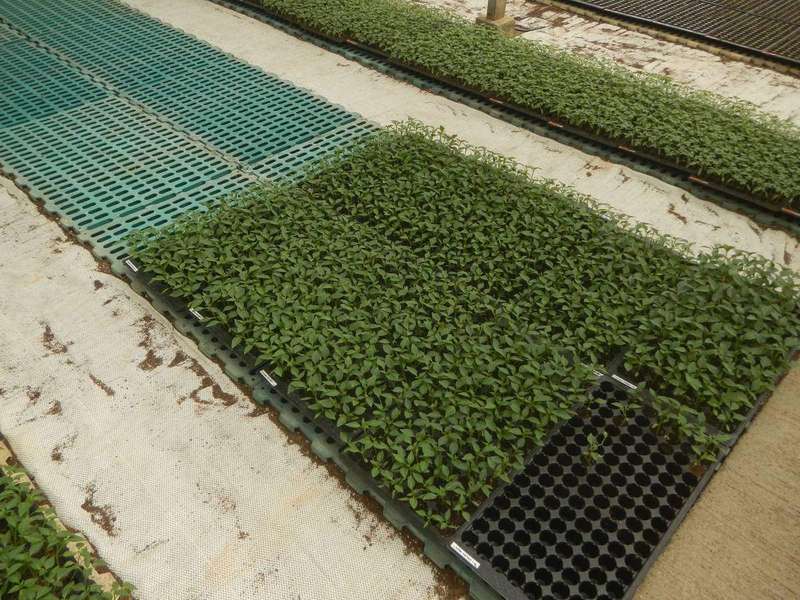
Young seedlings in nursery trays. Phosphorus supports the root establishment that gets transplants off to a strong start. Photograph: Judgefloro/Wikimedia Commons
Image Credits: Wikimedia Commons
How to pick the right ratio (and why 10-10-10 is often wrong)
The natural move is to buy 10-10-10 for everything. It feels balanced and safe. Extension educators say it is often the wrong choice, and the reason is that plants do not use the three nutrients in equal amounts.
Research gathered by the Garden Professors, a group of university extension educators, shows that plants typically take up nutrients from soil at roughly a 5:1:2 ratio of nitrogen to phosphorus to potassium. A fertilizer that truly matched plant use would look more like 15-3-6 or 20-4-8, not 10-10-10. The equal-parts formula supplies roughly five times more phosphorus than plants need relative to nitrogen.
That extra phosphorus causes real problems because phosphorus, unlike nitrogen, does not wash away. Nitrogen drains out with rain and watering; phosphorus sticks to soil particles and builds up season after season. Gardens fed with 10-10-10 for years without soil testing commonly build up phosphorus to very high levels, where extra doses do nothing for plants but raise the risk of runoff into waterways, where phosphorus feeds algal blooms (overgrowth of algae).
There is a subtler cost too. Extra soil phosphorus suppresses mycorrhizal fungi (helpful fungi that team up with roots), the helpful organisms that extend plant roots' reach for water and micronutrients. Dr. Linda Chalker-Scott of Washington State University Extension has noted that "excessive phosphates inhibit mycorrhizae," making routine 10-10-10 use a poor default without knowing baseline nutrient levels.
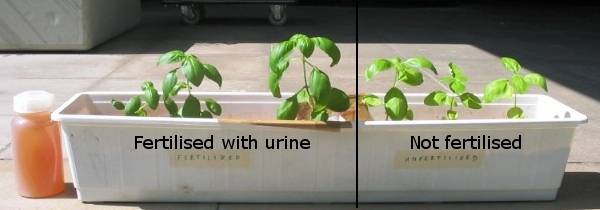
A fertiliser trial on basil showing the visible difference nutrients make. More is not always better: match the feed to what the soil test says. Photograph: SuSanA Secretariat/Wikimedia Commons
Image Credits: Wikimedia Commons
The practical rules follow from this. First, get a soil test before choosing a fertilizer; many university extension services and garden centers offer affordable testing, and it is the only way to know what your soil actually lacks.
Second, match the ratio to the plant and stage: high-nitrogen blends (like 20-10-10) for leafy greens and spring lawns, higher phosphorus and potassium (like 5-10-10) once fruiting vegetables start flowering, and potassium-forward feeds for fall lawns building cold toughness. Third, when in doubt, a lower-phosphorus "balanced" option near the 3-1-2 or 5-1-2 pattern is closer to what plants actually use than 10-10-10.
Frequently asked questions
What does 10-10-10 fertilizer mean?
It means the bag contains 10 percent nitrogen, 10 percent phosphorus compounds, and 10 percent potassium compounds by weight, in that order. A 50-pound bag holds 5 pounds of each nutrient, with the rest being filler and carrier.
Is a higher NPK number always better?
No. Higher numbers mean a more concentrated product, so you apply less per feeding, but they do not mean a better fertilizer.
A 20-20-20 at half the rate delivers the same nutrients as 10-10-10 at full rate. What matters is matching the ratio to your plants and soil, not the size of the numbers.
Can too much fertilizer hurt my plants?
Yes. Overuse can burn roots and foliage with excess salts, and chronic overuse of phosphorus builds up in soil, suppresses helpful root fungi, and can run off into waterways where it feeds algal blooms (overgrowth of algae). Always follow label rates and test your soil first.
Do flowers and lawns need different NPK ratios?
Generally yes. Flowering plants benefit from higher phosphorus once buds form (ratios like 5-10-10 or 10-20-10), while lawns in active growth want nitrogen-forward feeds (like 20-5-10) for green-up and potassium-forward blends in fall for cold tolerance.
The bottom line
NPK names the three nutrients plants need most, nitrogen for leaves, phosphorus for roots and blooms, potassium for overall toughness, and the numbers are simply the percentage of each in the bag. Read the ratio instead of grabbing 10-10-10 by habit, test your soil, and feed what the plants actually use. Your garden and the local waterways will both be better for it.
Topics: fertilizer, NPK, gardening, soil, plant nutrition
Rive News is the research desk of this publication, covering evidence-based explainers across fitness, parenting, gardening, career, and education.
Related stories
- Why Is Protein Important After a Workout: The Window, the Dose, and What Matters Most
- How Much Screen Time Is OK for Toddlers: AAP Rules and the Evidence
- How to Ask for a Raise With Data, Not Emotions
- Why Do I Blank Out During Tests Despite Studying: Test Anxiety and Retrieval Failure
Subscribe to our newsletter for one evidence-based explainer in your inbox every morning.
© 2026 Rive News. All rights reserved.
Related stories

What Is Companion Planting and Does It Work?
Marigolds work as a nematode cover crop, but the basil flavor claim failed repeated tests. An honest evidence review of what companion

Determinate vs. indeterminate tomatoes: growth, pruning, and harvest differences
Determinate tomatoes grow to a set size and ripen all at once, while indeterminate types vine all season. That one difference shapes

How to improve clay soil for gardening
Gypsum will not fix ordinary clay soil, say extension experts. What actually works: 2 to 3 inches of compost, mulch, better drainage,