
How Much Screen Time Is OK for Toddlers: AAP Rules and the Evidence
Key takeaways
- The AAP says: no screens before 18 months except video calls, and a one-hour daily limit of high-quality content for ages 2 to 5.
- The WHO agrees on one hour maximum for ages 2 to 4, with none at all for babies under one.
- The evidence is weakest on exact time limits; what matters most is content quality, co-viewing, and protecting sleep and play.
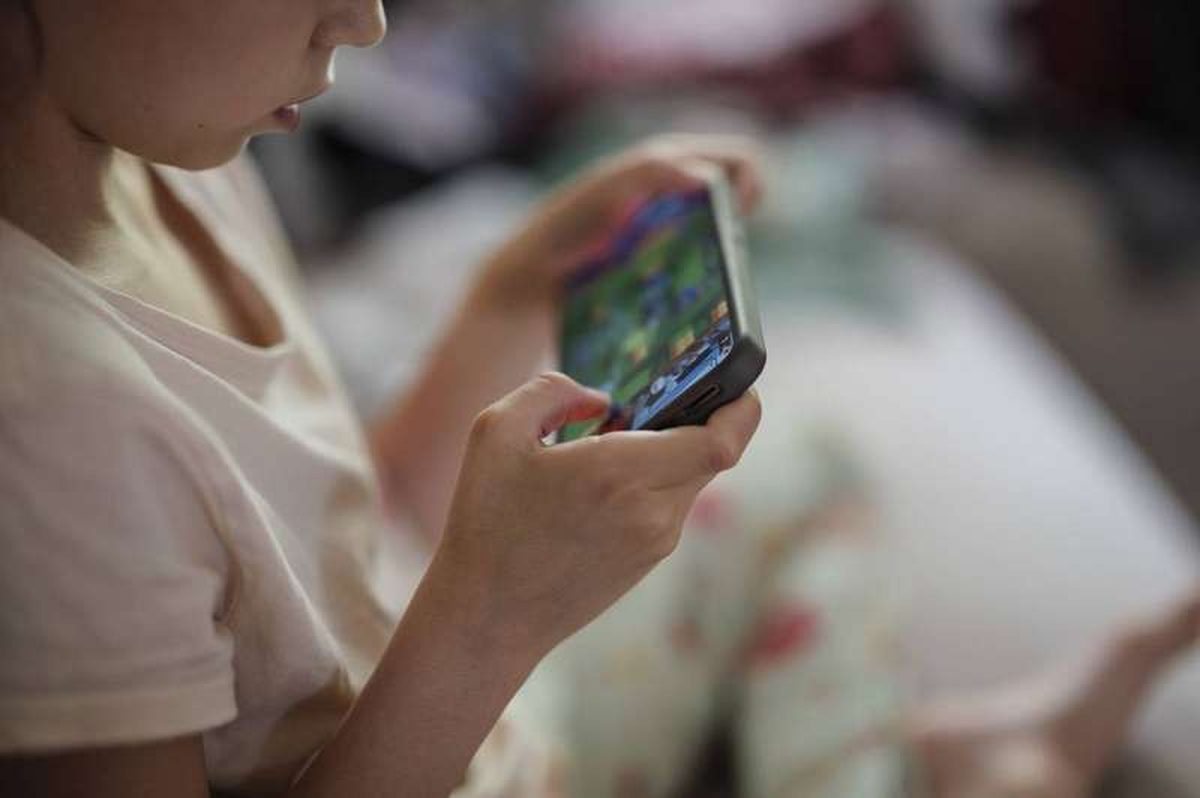
Solo screen time is what the pediatric guidance targets most. Video calls with family are the one clear exception for babies. Photograph: Shixart1985/Wikimedia Commons
Image Credits: Wikimedia Commons
"Screen time" is a cover term for every minute a child spends with a phone, tablet, TV, or computer. Pediatricians (children's doctors) worry less about the glow itself and more about what it replaces: sleep, active play, and the back-and-forth interaction with caregivers that drives early brain growth.
For toddlers, two big health organizations have published numbers, and they agree on more than they disagree on. The disagreement is mostly about how strict parents need to be, and how much the numbers are backed by hard evidence.
This article explains what the AAP actually recommends, what the WHO adds to the picture, where the evidence gets honest (and where experts disagree), and practical rules that fit real family life.
What the AAP actually recommends
The American Academy of Pediatrics issued its current policy on media and young children in October 2016. It is still the reference point most pediatricians use. The recommendations break down by age.
For children younger than 18 months, the AAP says to avoid screen media other than video chatting. A live video call with grandparents counts as interaction, not passive viewing.
For children 18 to 24 months, parents who want to introduce digital media should choose high-quality programming and watch it together with the child. Solo use at this age is discouraged.
For children 2 to 5 years, the AAP recommends limiting screen use to one hour per day of high-quality programming, watched together with a parent or caregiver who helps the child understand what they are seeing and apply it to the real world.
The policy goes beyond time limits. It says to keep bedrooms, mealtimes, and parent-child playtimes screen-free for all ages.
It advises turning screens off an hour before bedtime and charging devices outside the bedroom. It also warns against using media as the main way to calm a fussy child, and against fast-paced programs and apps packed with distracting content.
The reasoning, in the words of one of the policy's lead authors, Jenny Radesky, MD, a developmental-behavioral pediatrician (a doctor who studies how children grow and behave) at the University of Michigan: under age three, "toddlers' immature brains have a hard time transferring what they see on a screen to real-life knowledge." Researchers call this the transfer deficit, and it is why a two-year-old can tap a shape-sorter app perfectly yet fail at the physical toy.
What the WHO adds to the picture
The World Health Organization published its first guidelines on physical activity, sitting behavior, and sleep for children under five in April 2019. The screen time numbers line up closely with the AAP.
For infants under one year, the WHO says sitting screen time is not recommended at all. For one-year-olds, it is not recommended either.
For two-year-olds, sitting screen time should be no more than one hour, and "less is better." For three- and four-year-olds, the cap stays at one hour, again with less preferred.
The WHO frames screens inside a full day. Children ages one to four should get at least 180 minutes of physical activity daily, with at least 60 of those minutes at moderate to vigorous effort for the three- and four-year-olds. Sleep targets run 11 to 14 hours for one- and two-year-olds and 10 to 13 hours for three- and four-year-olds.
The WHO's bottom line is about displacement. Screens themselves are not the only problem; the problem is when sitting in front of them pushes out movement, sleep, and interactive play like reading and storytelling with a caregiver.
Where the evidence gets honest
Here is the part most summaries skip: the evidence behind the exact time limits is thinner than the confident tone suggests.
Andrew Przybylski, director of research at the Oxford Internet Institute, told TIME that the WHO guidelines "overly focus on quantity of screen time and fail to consider the content and context of use," adding that "not all screen time is created equal." A video call with grandma, a slow-paced educational show watched with a parent, and an hour of autoplaying cartoons alone are very different experiences wearing the same "screen time" label.
Dr. Max Davie, the officer for health improvement at Britain's Royal College of Paediatrics and Child Health, went further, saying his organization's research found "there is not strong enough evidence to support the setting of screen time limits," and that the WHO's restricted limits "do not seem proportionate to the potential harm."
That does not mean anything goes. The areas with the strongest evidence are specific.
Heavy screen use that displaces sleep is consistently linked to shorter, poorer-quality sleep. Fast-paced and violent content is linked to behavior problems. And background TV, the kind left running while a child plays, has been shown to interrupt play and reduce the amount and quality of parent-child interaction.
The honest summary: content quality, setting (alone or with a parent), and what screens displace matter more than whether the timer reads 55 or 75 minutes.
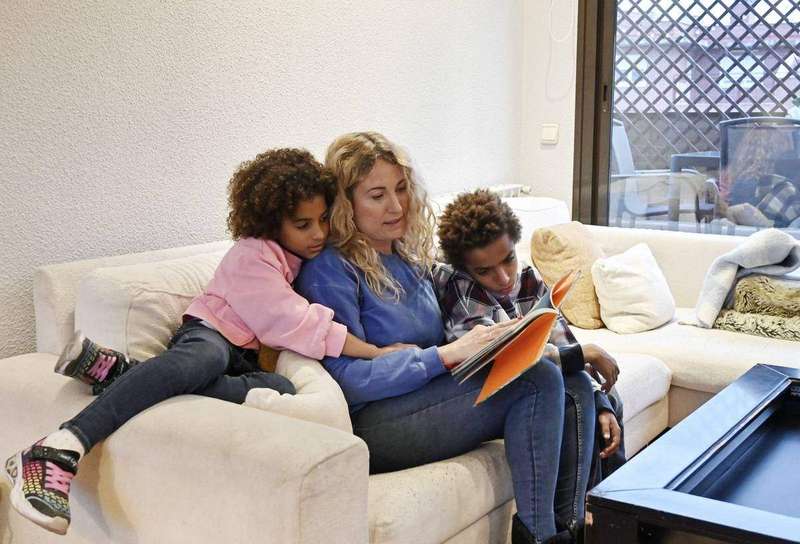
Reading and storytelling with a caregiver is the activity both the AAP and WHO say should replace screen time. Photograph: Oscar del Pozo/European Commission Audiovisual Service/Wikimedia Commons
Image Credits: Wikimedia Commons
Practical rules that fit real family life
Start with the non-negotiables. No screens during meals and none in the hour before bed.
Keep devices out of the bedroom overnight. These two rules protect sleep and family interaction, the outcomes with the best evidence behind them.
Co-view when you can. For ages 18 months to five, the AAP's central advice is not just the hour limit but watching together: name what is happening on screen, connect it to real life, and turn passive viewing into conversation. A parent who talks through a show doubles its educational value.
Choose slow over stimulating. The AAP points families toward resources like Common Sense Media, PBS Kids, and Sesame Workshop for age-appropriate picks. Programs with a calm pace, clear language, and social-emotional lessons (think Sesame Street or Mister Rogers' Neighborhood) are the model; rapid-fire cartoons and ad-heavy apps are the opposite.

Active outdoor play is the other half of the equation: the WHO recommends at least 180 minutes of physical activity a day for ages one to four. Photograph: Lukas/Wikimedia Commons
Image Credits: Wikimedia Commons
Build a family media plan. The AAP offers a free Family Media Plan tool and a Media Time Calculator that maps a child's day to check that screens are not crowding out sleep, play, and schoolwork. Writing the rules down makes them easier to enforce consistently, and to share with grandparents and caregivers.
Model the behavior. The Harvard summary of the AAP guidance puts it bluntly: children pay more attention to what parents do than what parents say. A parent scrolling through dinner while enforcing a no-tablet rule is teaching a louder lesson than the rule itself.
Frequently asked questions
Is FaceTime with grandparents OK for a baby under 18 months?
Yes. Video chatting is the one clear exception in the AAP guidance for children under 18 months. Because it is live and interactive, researchers treat it as social interaction rather than passive screen exposure.
What counts as "high-quality" programming for toddlers?
Slow-paced, age-appropriate shows with clear language and prosocial messages. The AAP points to PBS Kids and Sesame Workshop as examples. Avoid fast-paced cartoons, apps with distracting pop-ups, violent content, and anything with advertising aimed at children.
Does background TV count as screen time?
It counts as exposure, and the evidence against it is real. Studies show background television interrupts children's play and reduces both the amount and quality of parent-child talk. Turn the TV off when nobody is actively watching.
My toddler goes over the limit some days. Is that harmful?
Occasional overages are not what the research flags. The consistent harms show up when heavy use displaces sleep, physical activity, or interactive play, or when content is fast-paced or violent. Aim for the one-hour guideline as a daily average, and protect mealtimes, bedtime, and playtime first.
Outlook
The guidance for toddlers is unlikely to get simpler: expect the one-hour rule of thumb to stick around, with growing emphasis on content and setting over raw minutes. The AAP's own framing has already moved in that direction, from counting hours to asking how, when, and where media is used.
For parents, the practical target stays the same. Keep the first 18 months nearly screen-free apart from video calls, hold ages two to five to about an hour of high-quality content watched together, and guard sleep and play above all. It's a good idea to talk to your pediatrician if screen habits are affecting your child's sleep, behavior, or development.
Topics: toddlers, screen time, AAP, parenting, child development
Rive News is the research desk of this publication, covering evidence-based explainers across fitness, parenting, gardening, career, and education.
Related stories
- Why Is Protein Important After a Workout: The Window, the Dose, and What Matters Most
- What Does NPK on Fertilizer Actually Mean: Nitrogen, Phosphorus, and Potassium
- How to Ask for a Raise With Data, Not Emotions
- Why Do I Blank Out During Tests Despite Studying: Test Anxiety and Retrieval Failure
Subscribe to our newsletter for one evidence-based explainer in your inbox every morning.
© 2026 Rive News. All rights reserved.
Related stories

Why babies cry more in the evening: the witching hour explained
The witching hour is the fussy evening stretch most newborns hit daily. Why overtiredness, cluster feeding, and overstimulation stack up

When Do Babies Start Sleeping Through the Night by Month?
Most babies sleep through the night between 3 and 6 months, with regressions at 4 and 8 to 10 months. See the month-by-month table

Why Your Baby Wakes Up the Second You Put Them Down
Newborns wake when put down as the startle reflex, light sleep, and lost warmth hit at once. It is normal and peaks early, fading