
How to Get Rid of Aphids Without Chemicals
Key takeaways
- A strong spray of water removes most aphids, and repeat sprays keep new colonies from settling.
- Ladybugs, lacewings, and other predators eat aphids for free when the garden welcomes them.
- Soap sprays and plant oils work by contact, so full coverage on leaf undersides matters more than strength.
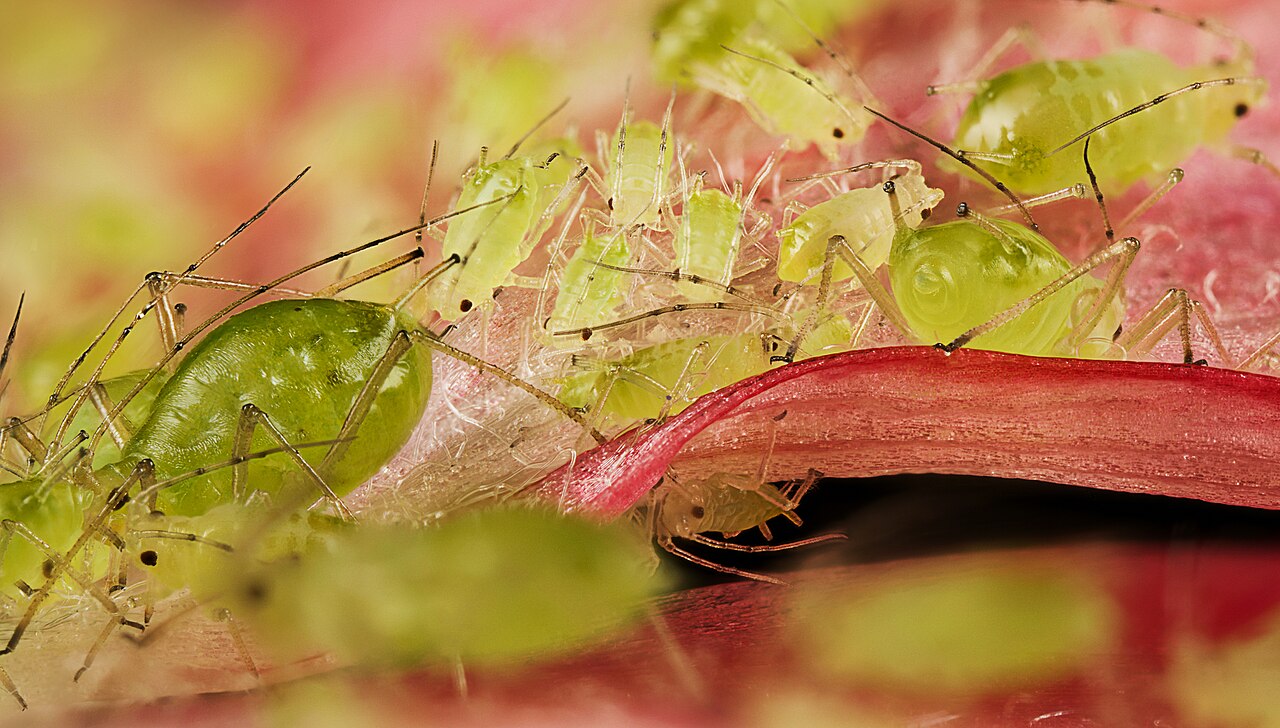
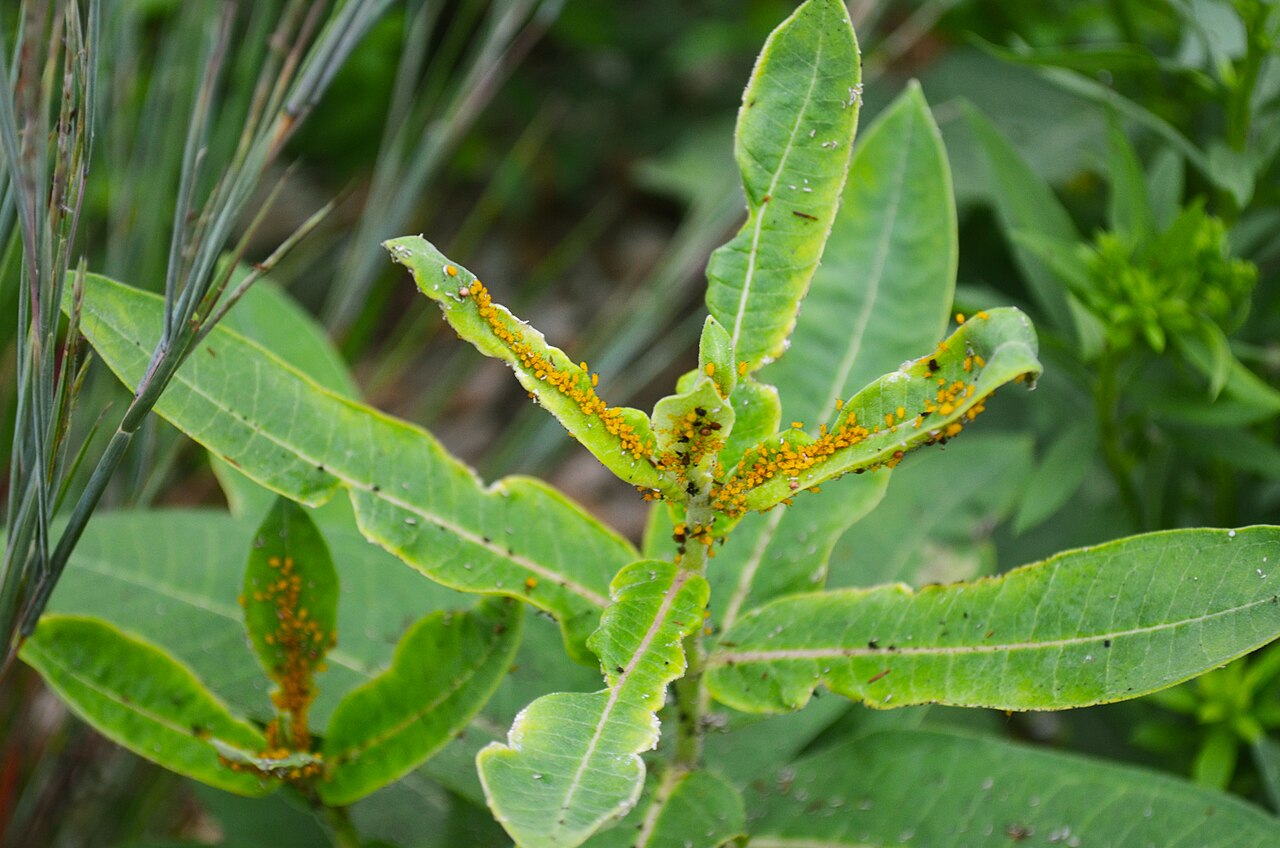
Aphids are tiny, soft-bodied insects that feed on plant sap. They gather on new growth, buds, and the undersides of leaves, and a small group can grow into a large colony in a matter of days.
They rarely kill a healthy plant outright. They do weaken growth, curl leaves, and leave behind a sticky residue called honeydew that can grow sooty mold. Some species also spread plant viruses from one host to another.
This article explains how to get rid of aphids without chemicals, including water sprays, hand removal, predator insects, and low-toxicity sprays. It also covers how to keep aphids from coming back.
What aphids do to plants
Aphids are pear-shaped insects, about one-tenth of an inch long, with soft bodies that may be winged or wingless. They come in many colors, including green, yellow, red, black, and brown. Their slender mouthparts pierce plant tissue and draw out sap.
That feeding drains the plant. Leaves may curl, yellow, or grow in a twisted shape. Buds can fail to open.
Young shoots may stall while the colony grows.
Most aphids secrete honeydew, a sticky substance that attracts ants, bees, and flies. Honeydew dripping onto leaves encourages sooty mold, a dark coating that blocks light. The mold looks worse than it is, but it still cuts into photosynthesis.
Check plants once a week in spring and early summer. Look at the undersides of leaves, around buds, and along tender stems.
Early colonies are small and easy to remove. Late colonies coat whole shoots.
Ants guarding a plant are a useful clue. Ants farm aphids for honeydew, so a line of ants climbing one stem often leads straight to a colony.
Start with water and your hands
Water is the first tool to reach for, and it is often enough on its own. A strong spray from a hose knocks aphids off rose buds, bean plants, and the tender shoots of broccoli, cabbage, and other vegetables.
Spray in the morning so leaves dry during the day. Aim at the undersides of leaves, where aphids hide. Repeat every two or three days until you stop finding live aphids.
Some aphids will climb back. Most will not. Aphids knocked to the ground struggle to return, and many get eaten by ground predators before they find the plant again.
For a small infestation, hand removal works just as well. Wipe aphids off stems with a gloved hand or a damp cloth. BBC Gardeners World Magazine also lists hand-squashing as a fair option for small numbers.
Prune away badly infested leaves or stems. Put the prunings in the bin, not the compost, so the colony does not spread. A plant with strong growth can spare a leaf or two, and removing a heavy colony at once cuts the pressure fast.
Yellow sticky traps catch flying aphids without chemicals. Hang them near, not on, the affected plants. They work best as an early warning tool and as backup for water sprays.
Isolate infested houseplants right away. Aphids spread fast in still indoor air, and one infested pot can seed every plant on the same windowsill. A small herb garden on a windowsill is worth checking leaf by leaf when one plant shows aphids.
Bring in the predators
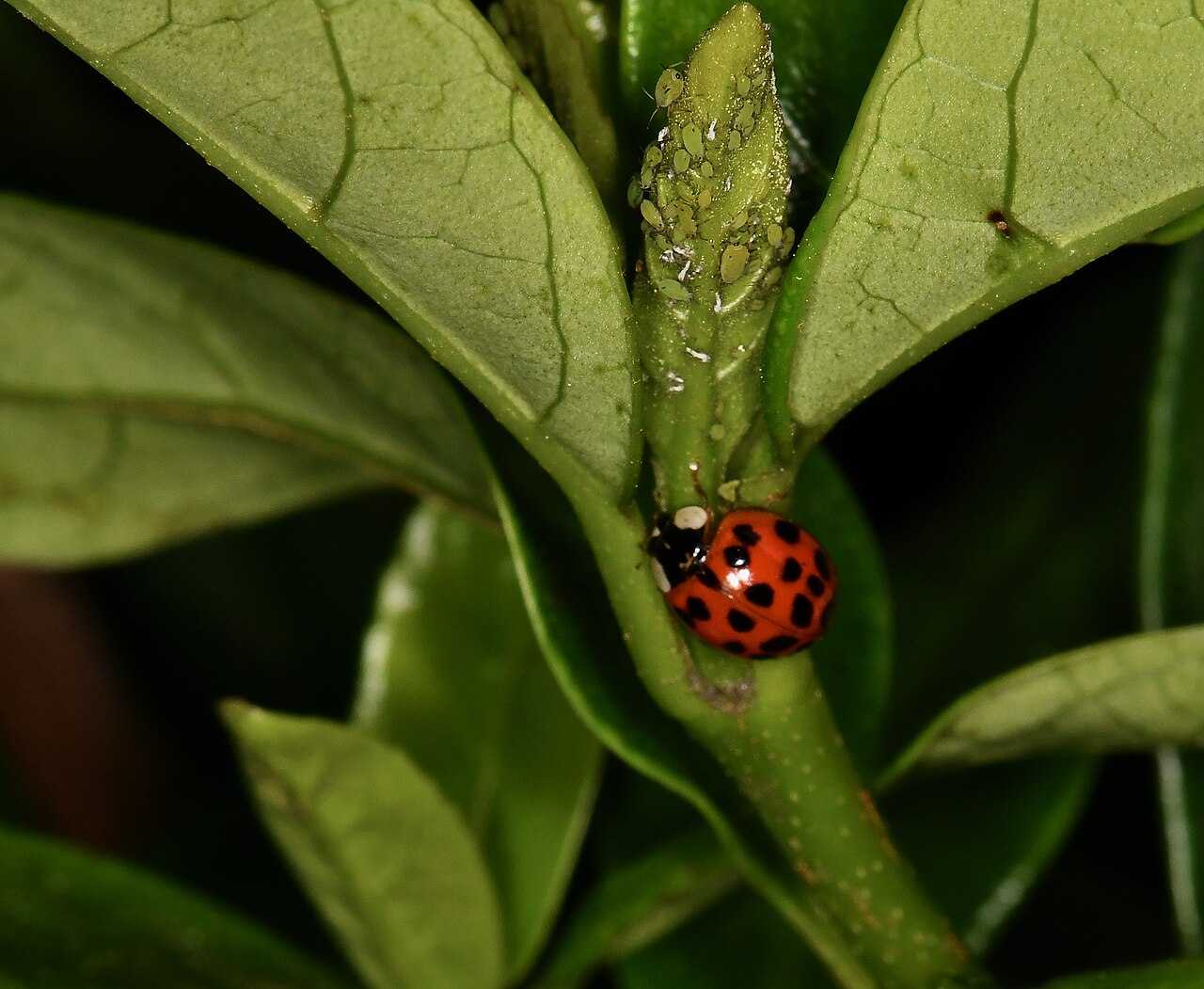
Aphids have many enemies, and those enemies do the work for free. Ladybugs, green lacewings, hoverflies, parasitic wasps, and earwigs all feed on aphids.
Real Simple quotes Dr. Rawlings: "Earwigs, ladybugs, and parasitic wasps are all voracious feeders of aphids, and can remedy an aphid outbreak almost as quickly as one takes hold."
The catch is that predators arrive after the aphids do. A garden that already feeds and shelters them responds faster than a bare one.
Oregon State University Extension horticulturist Heather Stoven advises gardeners to avoid broad-spectrum pesticides that kill beneficial insects. Stoven said: "Encouraging the survival of beneficial insects such as ladybugs provides ongoing natural pest control."
Do not buy adult ladybugs and release them. Stoven warns that they usually fly away. Green lacewings, sold as eggs or larvae, are a better purchase because the young stay and feed.
Grow plants that feed adult predators. Yarrow, buckwheat, white sweet clover, cosmos, sweet alyssum, spearmint, Queen Anne's lace, hairy vetch, crimson clover, goldenrod, sunflowers, and caraway all help, according to OSU Extension. Many of these bloom across a long season, so food stays available.
Leave some untidiness in the garden over winter. Ladybugs shelter in leaf litter and dense shrubs. A garden stripped bare each autumn has fewer predators in spring, when aphids appear first.
Pungent plants may help deter aphids. BBC Gardeners World Magazine names sage, onions, garlic, and nasturtium as companions worth growing beside susceptible plants. Nasturtiums also act as a trap crop, pulling aphids away from the plants you want to protect.
Birds eat aphids too. Climbing plants and dense shrubs give birds perches and nesting cover near the beds where aphids feed.
Sprays that do not count as harsh chemicals
When water and predators are not enough, low-toxicity sprays can finish the job. These still kill insects, so use them with care and only where aphids are present.
Commercial insecticidal soaps are among the least toxic chemical options, according to Stoven. They work by direct contact and lose their toxicity once dry, which makes them safer for pollinators and other beneficial insects.
Stoven said: "Commercial formulations of insecticidal soap have been tested on plants and are safer than homemade versions."
If you make your own, keep it mild. MasterClass gives a mix of two and a half tablespoons of pure castile liquid soap per gallon of water, with two tablespoons of vegetable oil to help it stick. Do not use grease-cutting dish soap, which can burn leaves.
A white oil spray is another option. Real Simple describes a mix of one-quarter cup of dish soap with one cup of vegetable oil such as canola or sunflower. Shake it well and spray it onto the plants.
The oil suffocates the aphids, and the soap helps the oil stick.
Spray in the cool of the day, early morning or evening. Test any mix on a few leaves first and wait a day for signs of damage. Coat the undersides of leaves, where aphids cluster, and reapply every few days until the colony is gone.
Neem oil disrupts aphid growth and reproduction. Apply it the same way, with full coverage, and repeat after rain. It works slowly, so do not judge it after one spray.
Diatomaceous earth, sold as food-grade DE, kills aphids with jagged particles that damage their soft bodies. Dust it onto dry plants and reapply after rain. Buy food-grade DE only, since pool-grade DE can be harmful to people.
Skip any spray on plants in full bloom when pollinators are active. Spray early or late in the day, and keep the mix off open flowers where you can.
Stop them coming back
Aphids target soft young growth, so feeding habits matter. Excess fertilizer pushes out soft, succulent growth that attracts aphids. Slow-release or organic fertilizers help prevent overfeeding, according to OSU Extension.
Avoid heavy doses of nitrogen-rich fertilizer on plants that already attract aphids. Tough leaves resist feeding better than soft ones, and steady growth beats a sudden flush.
Keep plants healthy in the basics: enough light, enough water, and room for air to move. Stressed plants attract more aphids than strong ones, and a crowded bed stays damp and still.
Plan the garden with aphids in mind. OSU Extension gives linden trees as an example: they draw aphids and can coat decks or vehicles with sticky honeydew if planted nearby. Put aphid-prone species where honeydew will not cause trouble.
Clean out greenhouses and conservatories once or twice a year. Remove all plants and debris, wash surfaces and staging, and clear stored pots that give pests hiding places. A strawberry patch in a small space benefits from the same clean start each season.
Watch new plants before you add them to the garden. Check the leaf undersides and buds at the nursery, and keep a new plant apart for a few days. One infested purchase can seed a whole bed.
FAQ
How fast will water sprays clear aphids?
A strong spray removes most aphids at once, but eggs and stragglers remain. Repeat sprays every two or three days for one to two weeks. Numbers should fall with each pass, and predators usually finish what the water starts.
Are aphids harmful to people or pets?
No. Aphids feed on plants, not on people or animals. They do not bite, and they carry no diseases that affect humans.
The main harm is to the plants they feed on.
Why do aphids keep returning to the same plant?
Aphids reproduce fast, and a few survivors can rebuild a colony in days. Winged aphids also fly in from nearby plants. Steady checks and prompt sprays break the cycle better than one heavy treatment.
Should I remove a plant covered in aphids?
Most plants recover once the colony is controlled. Remove the plant only when it is badly weakened and the colony keeps spreading to neighbors. In that case, pull it, bin it, and check the plants around it for a week.
Do ants make aphid problems worse?
Yes. Ants protect aphids from predators in exchange for honeydew. If ants are farming a colony, deal with the ants too.
A sticky barrier on the stem or a bait station near the plant can break the partnership.
The bottom line
Start with water, remove what you can by hand, and let predators do the long-term work. Add a soap or oil spray only when the colony survives those steps. Keep plants fed but not overfed, check leaf undersides weekly, and act while colonies are still small.
Tags: aphids, pest control, organic gardening, garden pests
Latest in Gardening
- Start a Herb Garden on Your Windowsill
- Grow Strawberries in a Small Space
- Compost Kitchen Scraps Without the Smell
Subscribe for one practical gardening guide in your inbox each week.
Related stories
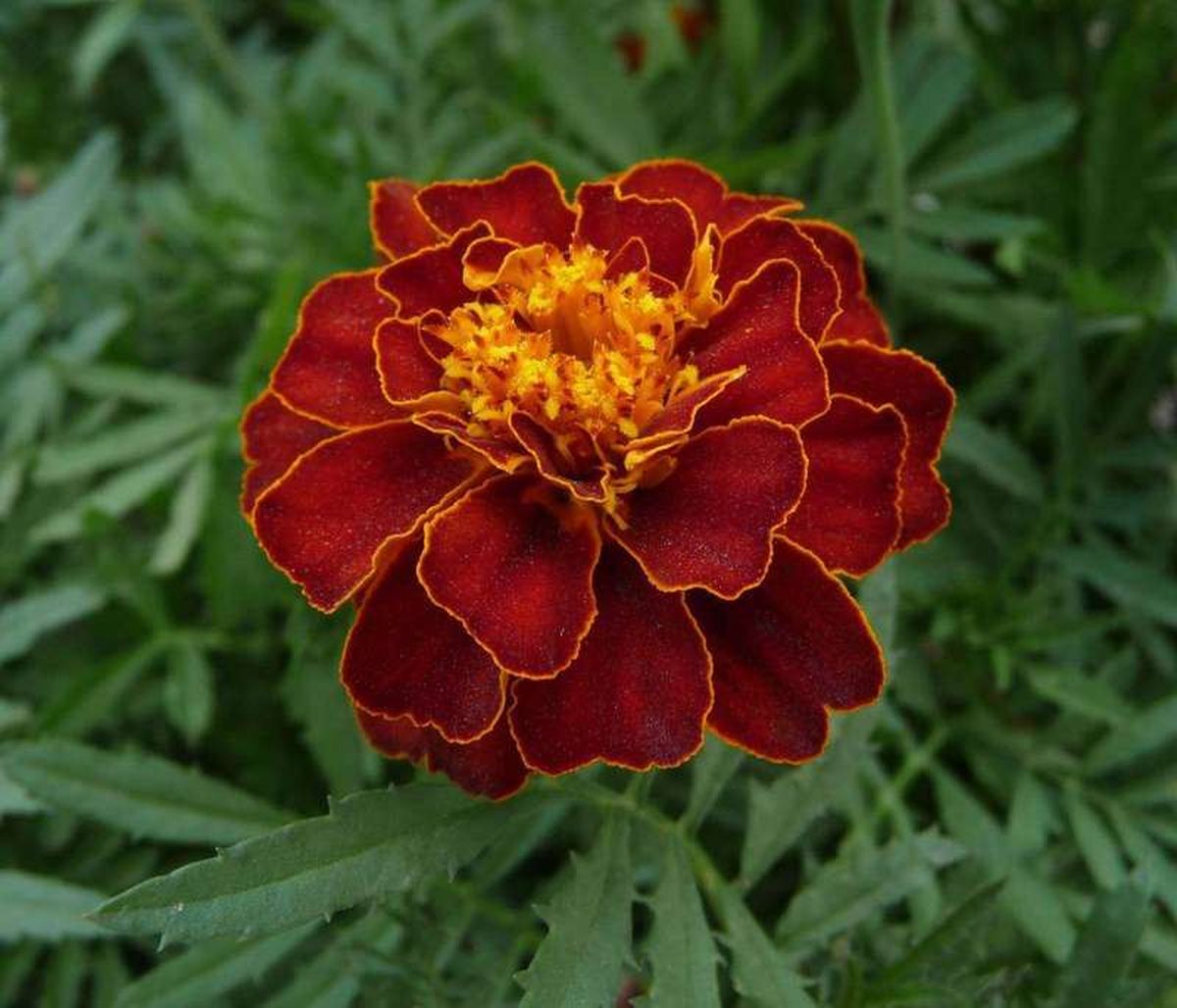
What Is Companion Planting and Does It Work?
Marigolds work as a nematode cover crop, but the basil flavor claim failed repeated tests. An honest evidence review of what companion
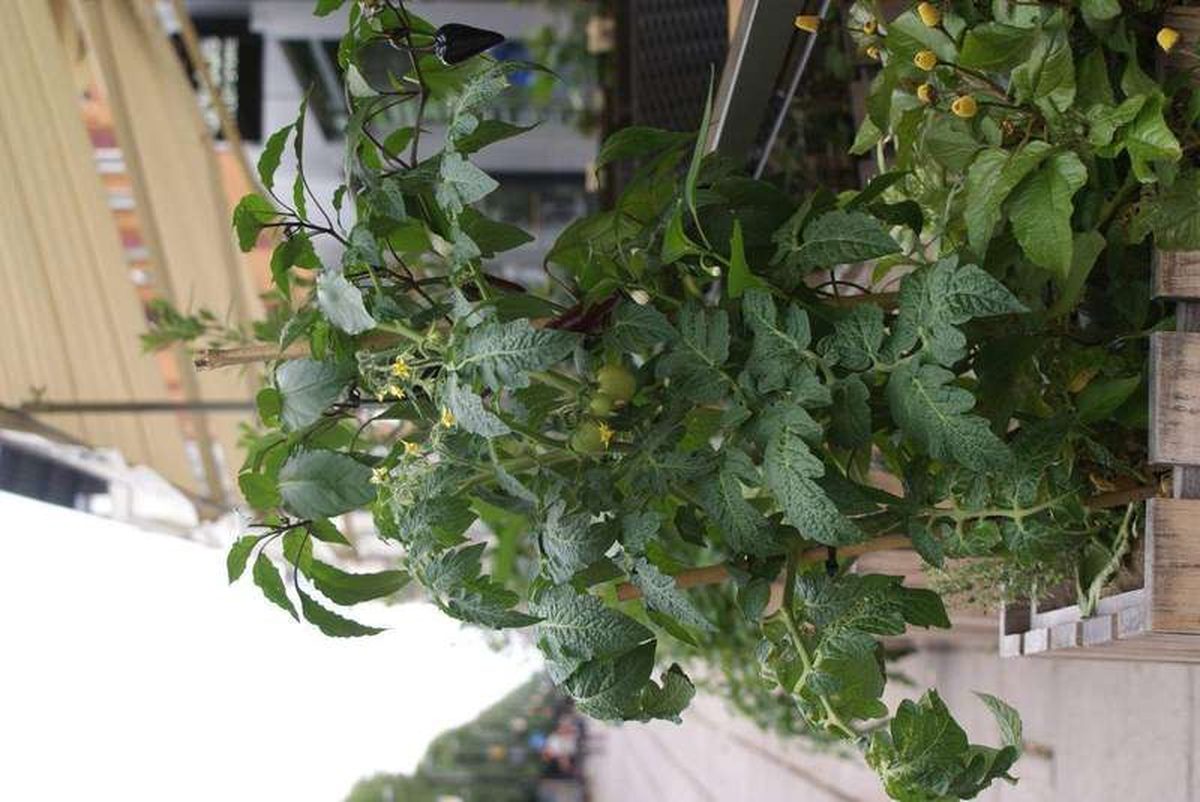
Determinate vs. indeterminate tomatoes: growth, pruning, and harvest differences
Determinate tomatoes grow to a set size and ripen all at once, while indeterminate types vine all season. That one difference shapes
How to improve clay soil for gardening
Gypsum will not fix ordinary clay soil, say extension experts. What actually works: 2 to 3 inches of compost, mulch, better drainage,