
Can dehydration cause cramps the day after exercise?
Key takeaways
- Controlled studies find that dehydration does not reliably trigger exercise cramps; muscle fatigue and altered neuromuscular control look like the bigger culprits.
- Cramps the day after a workout are usually about tired, overworked muscles rather than yesterday's water intake.
- Severe dehydration from illness or heavy unreplaced sweating is a different story and can cause cramps, so the details matter.
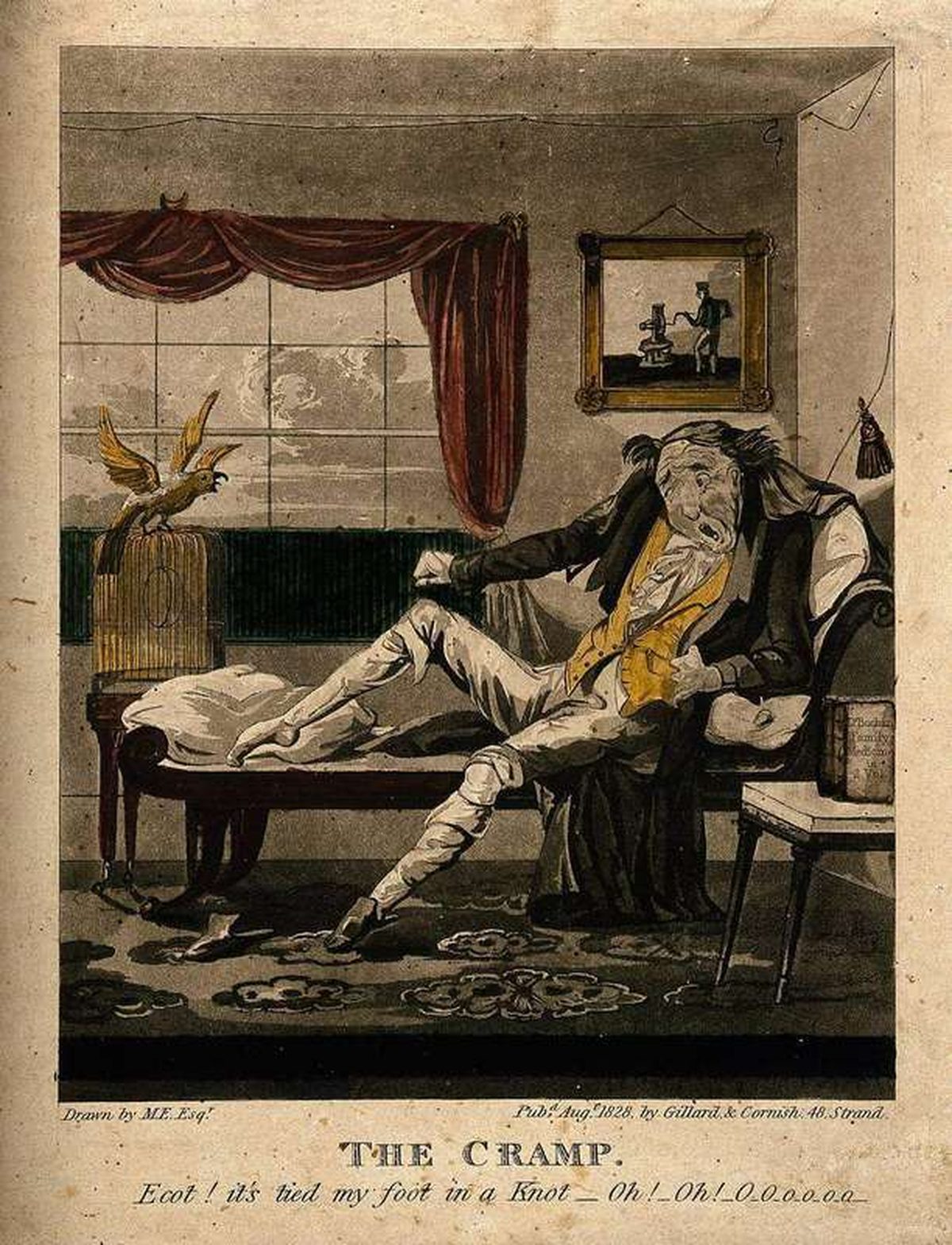
Muscle cramps have puzzled athletes and doctors for centuries, as this historical medical illustration shows. Photograph: Wellcome Collection/Wikimedia Commons
Image Credits: Wikimedia Commons
A muscle cramp is a sudden, involuntary contraction that ties a muscle into a painful knot. When one strikes the day after a hard workout, dehydration is the first suspect most people name.
The evidence points somewhere more interesting. This article takes a closer look at dehydration and next-day cramps, including what the research says, why cramps hit the day after exercise, what actually helps, and when to talk to a healthcare professional.
What the research says about dehydration and cramps
The dehydration theory sounds logical: you sweat, you lose water and salts, your muscles misfire. But when researchers tested it under controlled conditions, the link kept failing to show up.
In a study published in the British Journal of Sports Medicine, researchers led by Kyle Braulick and Kevin Miller measured cramp susceptibility in 10 men before and after serious dehydration. The subjects exercised until they lost 4.7 percent of their body mass, about 3.9 liters of fluid, along with 4.0 grams of sodium through sweat.
The result surprised the dehydration camp. Cramp threshold frequency, a measure of how easily cramps can be triggered, did not change in a statistically significant way (15 Hz hydrated versus 13 Hz dehydrated, p=0.12). The authors concluded that significant and serious dehydration with moderate electrolyte losses does not alter cramp susceptibility when fatigue and exercise intensity are controlled.
Field studies tell the same story. A prospective study of 209 Ironman triathletes by Martin Schwellnus's group at the University of Cape Town found no significant difference in dehydration or electrolyte loss between the 43 athletes who cramped and the 166 who did not. The crampers actually lost slightly less body mass (2.8 percent versus 3.1 percent).
What predicted cramping instead? Faster predicted race times, faster actual race times, and a previous history of cramping. In other words, going harder than your fitness supports, a fatigue story, not a water story.
The leading explanation: tired nerves, not dry muscles
Sports-medicine researchers now favor a theory called altered neuromuscular control. The idea is that fatigued muscles lose the normal balance between the signals that excite them and the signals that tell them to relax, and the muscle locks up.
This theory explains details the dehydration idea cannot. Cramps strike individual working muscles, like one calf, rather than hitting the whole body the way a body-wide fluid shortage would. They also ease when you stop and stretch, which does nothing to rehydrate you.
A 2014 review of the literature by Buskard in the Strength and Conditioning Journal reached the same conclusion. Two large studies of Ironman triathletes and ultra-marathon runners found no difference in hydration status or blood electrolyte levels between athletes who cramped and those who did not, as summarized by Sports Injury Physio.
None of this means water is irrelevant. The Mayo Clinic still lists dehydration as a risk factor, noting that athletes who become fatigued and dehydrated in warm-weather sports frequently develop cramps.
And severe fluid loss from vomiting, diarrhea, or illness can absolutely cause cramps through rapid salt loss. But for the typical next-day-after-exercise cramp, the lab evidence says look at fatigue first.
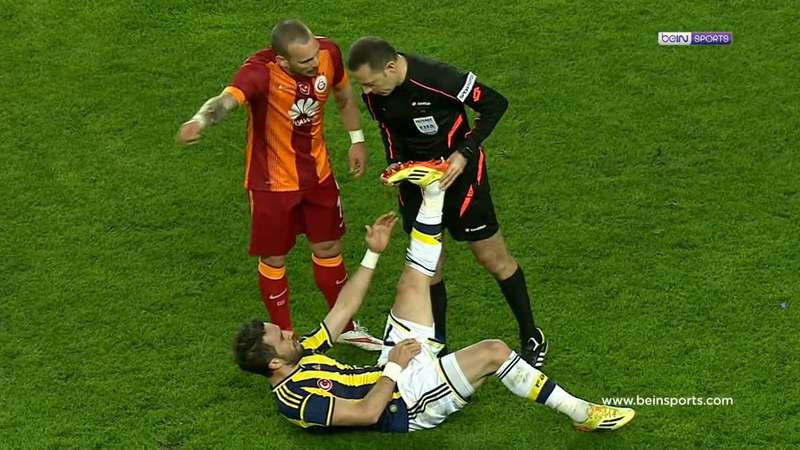
A footballer dealing with cramp mid-match during a 2014 derby. Researchers note cramps hit the working muscles hardest, which fits fatigue better than dehydration. Photograph: beIN SPORTS Türkiye/Wikimedia Commons
Image Credits: Wikimedia Commons
Why cramps hit the day after
Next-day cramps usually trace back to what the muscles went through, not what the water bottle did. A workout that was longer, harder, or more novel than usual leaves muscles fatigued and irritable, and cramps can fire hours later, often at night.
Nocturnal leg cramps are the classic version. They strike the calves, feet, or thighs during sleep, and Mayo Clinic-linked sources note they are likely tied to tired muscles and nerve issues, with frequency increasing with age. A hard training day followed by hours of stillness is a common setup.
Dehydration can play a supporting role here without being the star. If you finished a sweaty session and never properly rehydrated or ate, your muscles are recovering in a depleted state. That may lower the threshold at which tired nerves misfire, even if water alone was never the main cause.
Sleep position matters too. Holding one position for a long time is itself listed by the Mayo Clinic as something a cramp can follow. A calf held in a shortened position under the covers all night is primed to seize when you finally move it.
What actually helps, according to the sources
Stretching is the best-supported immediate response. The Mayo Clinic recommends stretching muscles before and after extended use, and specifically suggests stretching before bedtime if you tend to get leg cramps at night. Light exercise, like a few minutes on a stationary bicycle before bed, may also help.
Staying hydrated still belongs in the plan, just with realistic expectations. The Mayo Clinic advises drinking plenty of fluids every day, replenishing at regular intervals during activity, and continuing afterward. Fluids help muscles contract and relax normally, in the Clinic's words, keeping muscle cells hydrated and less irritable.
Pacing and conditioning address the fatigue side directly. The Schwellnus findings suggest that realistic goal-setting and not outrunning your training lower cramp risk. A proper taper before a big event, so muscles arrive fresh rather than fried, follows the same logic.
What does not have strong support is chasing a single fix. No large trial has demonstrated that one food, one supplement, or one drink prevents cramps on its own. The banana claim, for example, has been rated false by sports-medicine reviewers, as covered in our companion explainer.
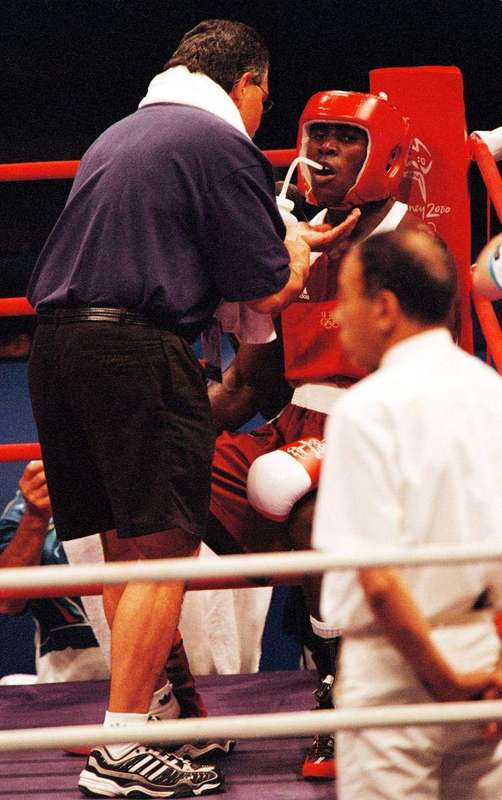
Rehydrating during exertion remains sensible practice, even though studies suggest water alone does not determine who cramps. Photograph: Tech. Sgt.
Robert A. Whitehead, U.
S. Air Force/Wikimedia Commons
Image Credits: Wikimedia Commons.
When to talk to a healthcare professional
Most exercise cramps are harmless and pass on their own. But the Mayo Clinic flags situations that deserve medical attention rather than self-management.
Talk to a healthcare professional if cramps are severe, happen frequently, do not improve with stretching and hydration, or come with muscle weakness, swelling, or skin changes. Cramps can occasionally signal an underlying issue with nerves, circulation, or mineral balance.
Certain medications also raise cramp risk, including diuretics prescribed for high blood pressure, which can deplete potassium, calcium, and magnesium. If cramps started after a new prescription, that is worth raising with the prescribing clinician rather than guessing at the cause.
Frequently asked questions
Should I drink more water to stop next-day cramps?
Staying hydrated is sensible and recommended by the Mayo Clinic, but the research suggests water alone is unlikely to be the deciding factor. Pacing, conditioning, and stretching have stronger links to cramp prevention in the studies.
Why do my calves cramp at night after leg day?
Fatigued calf muscles plus hours of stillness in a shortened position is a common trigger. Mayo Clinic-linked sources describe nocturnal cramps as likely related to tired muscles and nerve issues, and suggest stretching before bed.
Can low potassium or magnesium cause cramps?
Too little potassium, calcium, or magnesium can cause leg cramps, according to the Mayo Clinic, and some blood pressure medications can drain these minerals. That is a separate mechanism from ordinary post-exercise cramps, so talk to a clinician before supplementing.
Are cramps a sign I exercised too hard?
Not necessarily, but intensity matters. In the Schwellnus Ironman study, faster-than-planned pacing was one of the few factors that predicted cramping. Repeated cramps after hard sessions can be a sign your training load is outpacing your recovery.
Outlook
The short answer to the headline question is: probably not, at least not the way most people mean it. The best-controlled research available finds that dehydration does not reliably cause exercise cramps, and the next-day timing points more toward muscle fatigue and irritated nerves.
That does not make hydration pointless. Drinking water, replacing salts after heavy sweating, and stretching remain the standard, sensible routine, and severe dehydration is a genuine cramp trigger in its own right. It just means that when cramps keep arriving the morning after, the fix is more likely found in training load and recovery than in another liter of water.
It's a good idea to see a healthcare professional if cramps are frequent, severe, or unexplained, especially if they began with a new medication or come with other symptoms. An expert can check for the mineral, nerve, and circulation issues that self-diagnosis misses.
This article is for general information only and is not medical advice. Talk to a healthcare professional about cramps that are frequent, severe, or worrying.
Tags: muscle cramps, dehydration, exercise, hydration, sports science
Rive News is the research desk behind this explainer series, covering tech, health, science, and everyday questions with sourced reporting.
Latest in Health
- Do bananas actually prevent muscle cramps?
- Why Do Athletes Get Cramps Despite Drinking Water?
- Night leg cramps: causes, relief, and prevention
- Leg cramps vs restless legs syndrome difference, explained
Subscribe for one evidence-based explainer in your inbox every morning.
Related stories

ADHD linked to fourfold dementia risk in Pitt study of 187,000 adults
Adults with ADHD face four times the risk of dementia, a University of Pittsburgh study of 187,000 adults published in JAMA Psychiatry

Why Do Athletes Get Cramps Despite Drinking Water?
Muscle cramps strike even well-hydrated athletes because sweat drains electrolytes that plain water cannot replace. Here is why water alone

Do bananas actually prevent muscle cramps?
A medium banana has 422 mg of potassium, but the evidence says it cannot stop cramps. Here is what the research shows, and what actually