
Why babies babble before they can talk at all
By Rive News / Research desk | Rive News / Published October 28, 2026 at 9:00 AM PKT
Key takeaways
- Babbling is practice, not nonsense: babies rehearse the sounds, rhythm, and timing of speech months before words.
- Canonical babbling, with repeated consonant and vowel syllables, usually appears between about 6 and 10 months.
- Babies tune their babble to the language they hear, so their sounds gradually start to match home speech patterns.
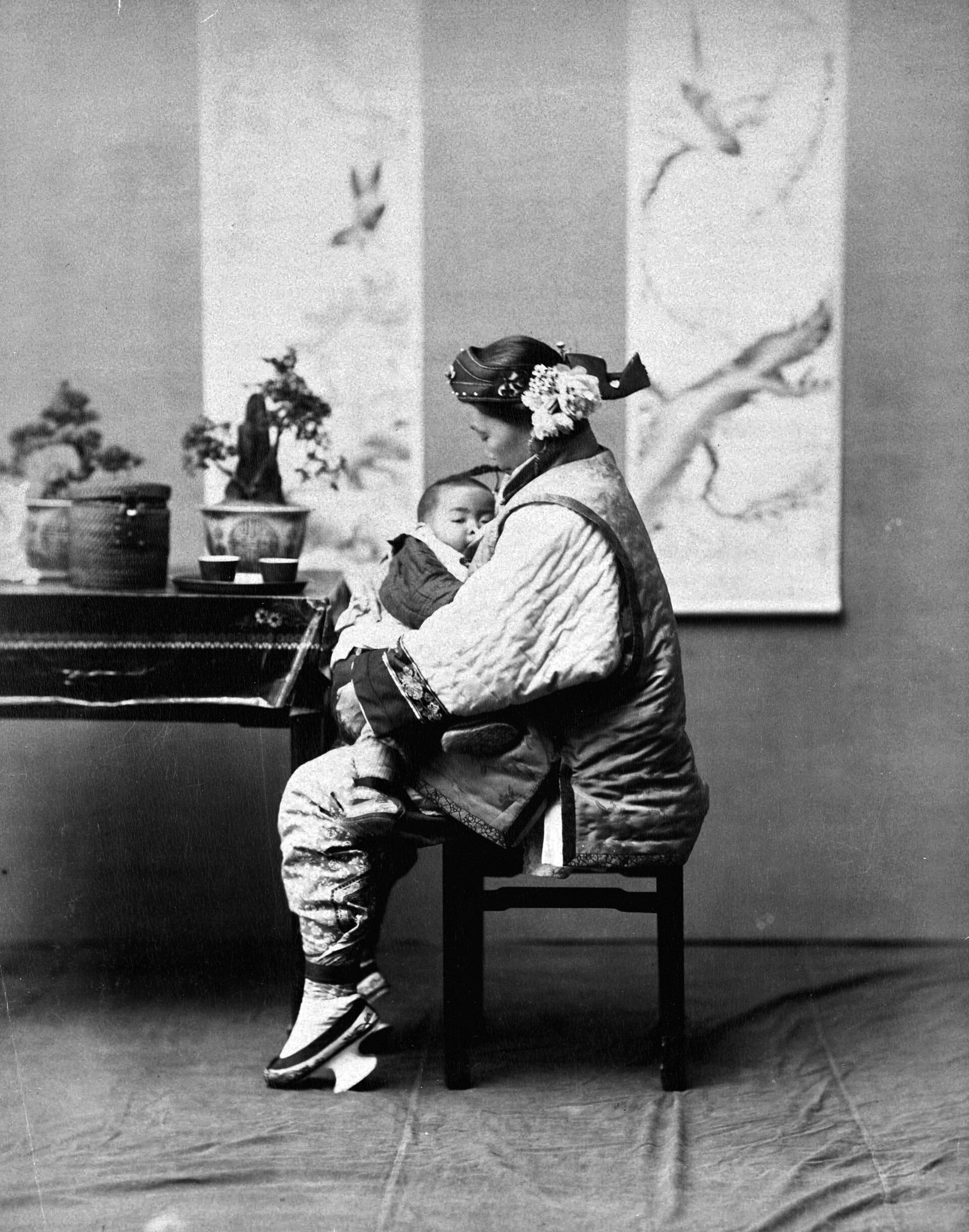
[A mother holding a baby.] Photograph: mother holding a baby
Image Credits: Wikimedia Commons
Babbling is the stage when a baby produces repeated syllables such as "ba-ba" or "da-da" without yet using words with fixed meanings. It sits between early cooing and first words, and it matters because it lets a baby practise the physical and social parts of speech at the same time.
This article explains what babbling is, why it comes before words, how it changes with age, and how adults can respond in ways that support language growth.
What babbling actually is
Babbling is not failed talking. It is a baby producing syllables on purpose, often in long strings, and listening to the sounds that come back.
Early sounds in the first months are mostly reflexive. Crying, cooing, and laughing happen without a baby deliberately choosing the sound, according to the Hanen Centre, a language development organisation.
Between about 5 and 10 months, that changes. Babies begin to produce canonical babbling, which means syllables that combine a consonant and a vowel, such as "ba" or "di", according to the Hanen Centre.
Those syllables matter because they closely resemble the syllables babies will later use in words. A baby who can reliably produce "ma" and "da" has the building blocks for "mama" and "dada", even if those early strings carry no meaning yet.
Later babbling can sound like full conversation. This stage is sometimes called jargon, because the rhythm and tone mimic adult speech even though the words are not real.
Why babies need to babble first
Speech is a motor skill as much as a mental one. A baby must learn to coordinate breathing, the vocal cords, the tongue, the lips, and the jaw in a precise sequence.
Babbling gives that system daily practice. Each repeated syllable is a small rehearsal of timing and muscle control, and the baby hears the result at once.
Babbling also trains listening. Babies are sensitive to the sounds of the language around them, and research summarised on the Babbling page notes that infants mimic the intonation patterns and timing of their home language.
That is why babble in different language environments starts to sound different. Babies use the consonants and vowels they hear most often, so their practice set matches the language they will eventually speak.
A third reason is social. Babbling usually draws a response from an adult, and that response teaches a baby that sounds can start an exchange.
A 2017 study cited by Healthline found that conversations between babies and their mothers shaped language development. When mothers responded to babbling, babies' language grew, and babies also seemed to prompt those responses so they could learn to converse.
How babbling changes with age
Babbling does not arrive all at once. It builds in stages, and the ages below are typical ranges rather than deadlines.
In the first 2 to 4 months, babies mostly coo and gurgle with long vowel sounds, according to Healthline. These sounds are softer and less structured than later babble.
From about 4 to 6 months, single syllables begin to appear as vowels and consonants come together. Healthline describes this as marginal babbling, the bridge between cooing and repeated syllables.
From about 6 to 10 months, canonical babbling takes over. Syllables double and triple into strings such as "dadada" or "bababa", and babies vary pitch and rhythm as they play with sound.
From about 10 to 15 months, many babies move toward first words. Babbling does not vanish overnight, but real words start to take over the job of naming things.
A study cited by the Hanen Centre found that the age at which a baby starts to babble predicts when first words arrive. That link is one reason clinicians pay attention to babbling milestones, though every baby develops at a different pace.
Why babble sounds like the home language
A baby in any country starts with a similar pool of sounds. Over months, that pool narrows toward the sounds of the language spoken at home.
The Babbling page notes that infants use intonation patterns and timing that match their parent language. They also favour the consonants and vowels that occur most often in that language.
This tuning happens through listening, not teaching. A baby hears thousands of examples of speech each day, and the sounds that get attention and repetition become easier to produce.
Hearing plays a central role here. Babies with typical hearing tend to produce more complex babble as they grow, because they can hear their own sounds clearly and compare them with adult speech.
That also explains why babbling is worth mentioning to a clinician if it is absent. Healthline notes that a delay or absence of canonical babbling can be a marker linked to later developmental differences, according to a 2019 study.
That finding is not a diagnosis. It is a reason to check hearing and development early, when support can make the most difference.
What to do when your baby babbles
The simplest response is also the most useful: answer. Treat a babble string as a turn in a conversation, then pause so the baby can take another turn.
That back-and-forth teaches timing. Babies learn that speech involves waiting, listening, and responding, not just making noise.
Naming what the baby looks at helps too. If a baby babbles while reaching for a cup, saying "cup" connects a sound to an object in the moment.
Reading aloud, singing, and narrating everyday routines all add sound examples. None of these need special equipment, and none need to sound polished.
What does not help is correcting babble as if it were a mistake. Babbling is the practice itself, and a baby who is corrected may simply babble less.
It also helps to face the baby during these exchanges. Babies watch mouths closely, and seeing lips and tongue move gives them visual clues about how sounds are made.
When babbling deserves a closer look
Most variation in babbling is normal. Some babies babble early and talk late, while others move quickly from babble to words.
Still, a few signs are worth raising with a paediatrician or speech-language pathologist. These include no babbling by about 9 to 10 months, no response to sounds, or a loss of sounds a baby previously used.
A clinician can check hearing first, since hearing underpins the whole process. If hearing is fine, they can look at broader development and suggest play-based support.
Parents should not wait for a perfect checklist moment. Asking early costs little, and it can rule out a simple cause such as fluid in the ears.
[A smiling young boy with his mouth open.] Photograph: smiling young boy
Image Credits: Wikimedia Commons
The bottom line
Babies babble before they talk because talking needs practice, and babbling is that practice. It builds muscle control, tunes the ear to the home language, and teaches the give-and-take of conversation.
The sounds may look like nonsense, but they are a working system. Each repeated syllable brings a baby closer to a first real word.
If babbling is late or missing, a hearing and development check is a sensible next step. Otherwise, the best response is simple: listen, answer, and let the conversation continue.
This article is for general information only and is not medical advice; talk to a clinician about any symptoms.
Tags: babbling, language development, baby milestones
Rive News / Research desk writes plain-language explainers drawn from published research and reputable health and education sources.
Related
- When a baby usually starts talking and what counts as normal
- Why babies love peekaboo at a certain age
- Why babies put everything in their mouths
Subscribe to Rive News for one plain-language explainer each week.
Rive News follows published sources and corrects errors when readers point them out.
Related stories
Why babies cry more in the evening: the witching hour explained
The witching hour is the fussy evening stretch most newborns hit daily. Why overtiredness, cluster feeding, and overstimulation stack up
When Do Babies Start Sleeping Through the Night by Month?
Most babies sleep through the night between 3 and 6 months, with regressions at 4 and 8 to 10 months. See the month-by-month table
Why Your Baby Wakes Up the Second You Put Them Down
Newborns wake when put down as the startle reflex, light sleep, and lost warmth hit at once. It is normal and peaks early, fading