
Why babies stare at faces more than objects
By Rive News / Research desk | Rive News / Published October 28, 2026 at 9:00 AM PKT
Key takeaways
- Newborns orient toward faces and face-like patterns within hours of birth.
- Faces carry identity, emotion, and social signals that objects do not.
- Face attention sharpens between 3 and 9 months as vision improves.
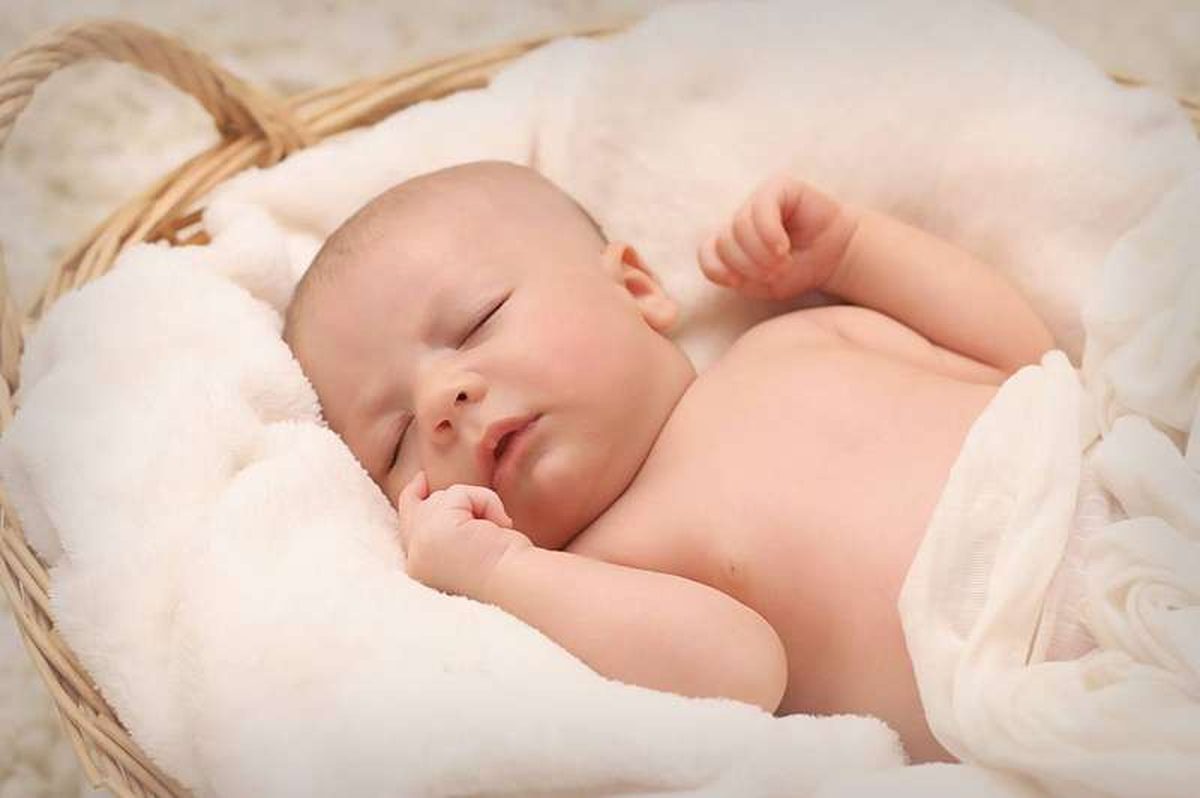
[A baby.] Photograph: the subject
Image Credits: Wikimedia Commons
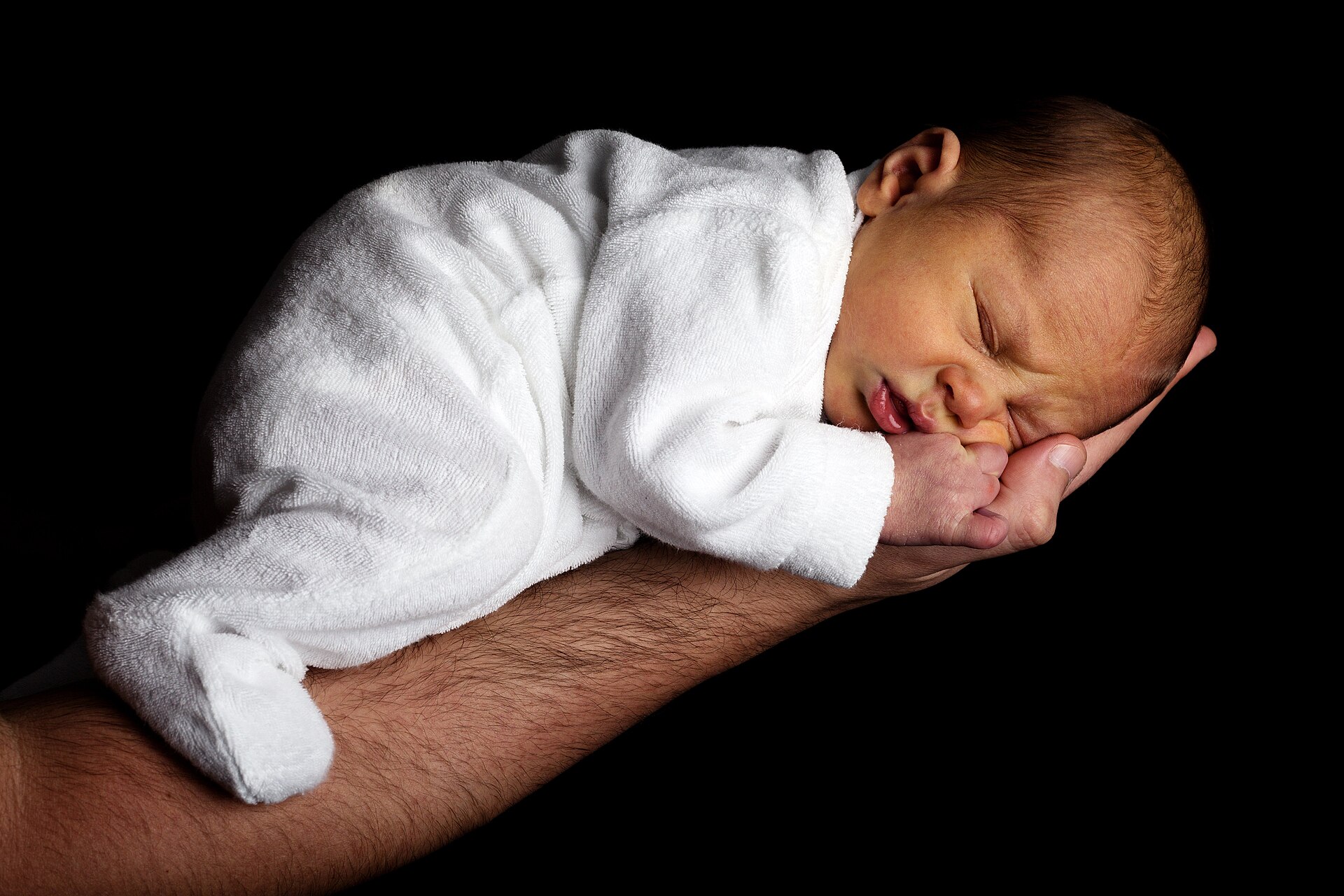
A newborn held face to face will often lock eyes and hold the gaze far longer than the same baby holds a gaze on a toy. The stare can feel personal, as if the baby already knows that a face matters more than anything else in the room.
Research says that impression is largely right. Babies are born with a bias toward faces, and that bias shapes how they learn about people from the first hours of life.
The newborn evidence
The classic finding comes from Goren, Sarty, and Wu in 1975, who showed that newborns preferentially orient toward faces. Later work by Maurer and Young in 1983 supported the same conclusion: even with poor visual acuity, newborns turn toward face-like patterns over other patterns.
A recent Cambridge study tested the question again with unusual care. Researchers presented 130 newborns, 67 boys and 63 girls with a mean age of 33 hours, with side-by-side videos of a moving human face and a non-social object made of swinging metal balls.
Regardless of sex, the newborns generally preferred the social stimulus. When the researchers analysed the percentage of looking time, girls on average allocated a greater percentage of time to the face than boys did, while boys showed no clear preference in absolute looking times.
Alex Tsompanidis, assistant research professor at the Autism Research Centre at the University of Cambridge, said the differences at birth are starting points rather than destinies. He said, "Gender differences at birth are important as starting points, but we need to remember that they don't fully determine how children learn and develop in later life."
That caution matters. The headline finding is the shared one: face preference is present within hours of birth, before family habits or social expectations have had time to teach it.
Why a face beats a toy
Faces are information-dense in a way no toy can match. A single face carries identity, emotional expression, gaze direction, and speech movements, all changing moment by moment.
For a baby, that information is also practical. A face tells the baby who is holding them, whether that person is calm or upset, and where that person's attention is going. An object tells the baby none of those things.
Evolutionary logic points the same way. A baby that attends to caregivers gets fed, soothed, and protected more reliably than a baby that attends to furniture. Face preference is therefore less a curiosity and more a survival tool.
There is also a simpler visual explanation that researchers still debate. Face-like patterns contain high-contrast elements arranged in a particular layout, with darker regions for eyes and mouth against a lighter background. Newborn vision is blurry, and such bold, simple patterns may simply be easier to see.
The two explanations are not rivals. A built-in sensitivity to face-like patterns can exist alongside a genuine social pull toward real faces, and both push attention in the same direction.
What changes in the first year
Face preference does not stay frozen at the newborn level. A study by Michael Frank and colleagues, published in Cognition in 2009, tracked eye movements of infants aged 3, 6, and 9 months while they watched clips from an animated film.
The tendency to look at faces increased with age across that window. At 3 months, infants were less consistent in where they looked, and their fixations were best predicted by low-level image salience rather than by the location of faces.
Between 3 and 9 months, infants gradually focused their attention on faces. The researchers discuss several possible reasons for the shift, including social development, the joining of sight with sound, and growing control over attention itself.
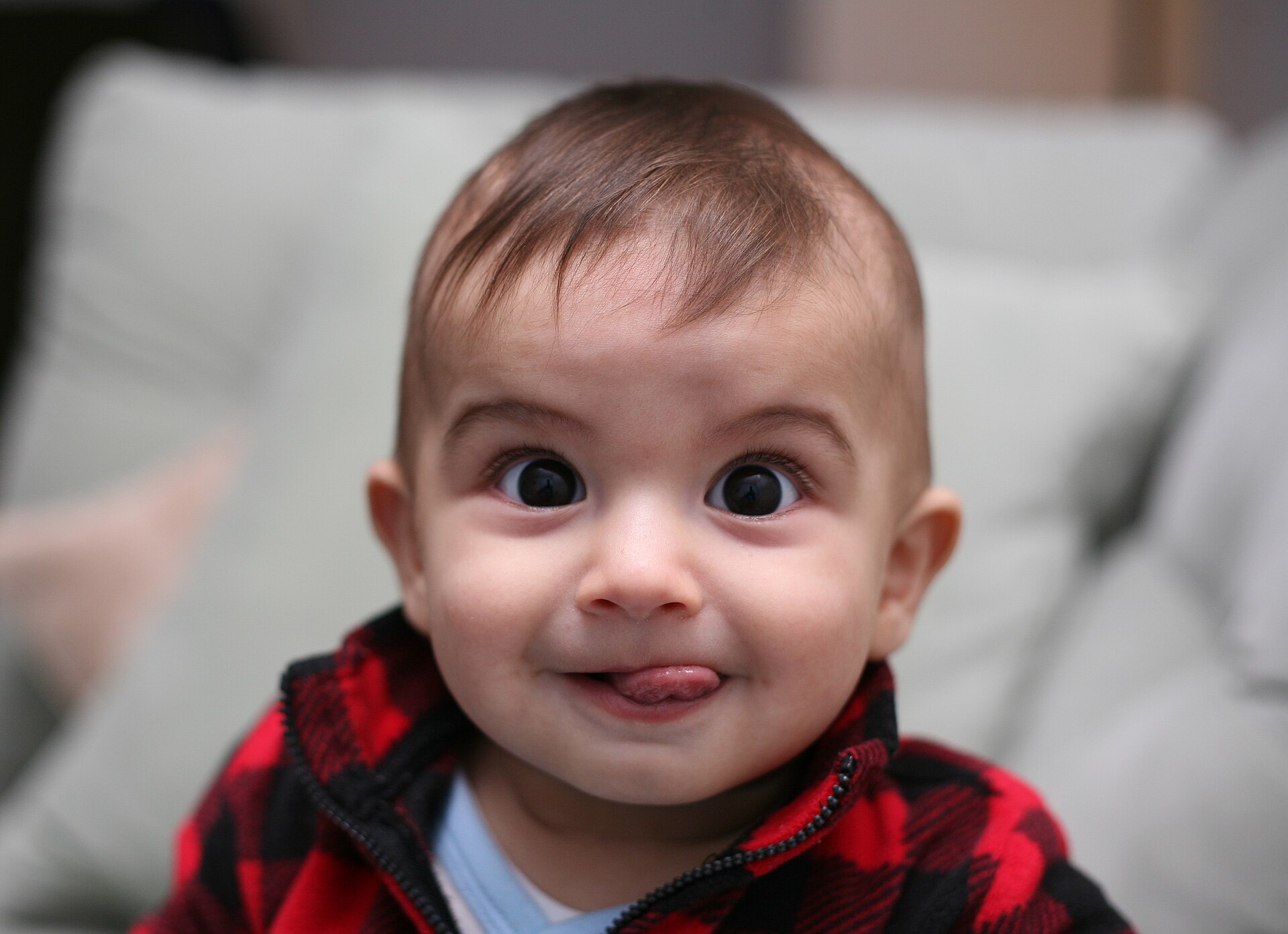
In practical terms, the baby moves from noticing face-like shapes to following real faces in busy scenes. By the second half of the first year, babies also grow sensitive to emotional expressions, and they begin to use a caregiver's face as a guide to new situations.
[A baby's face.] Photograph: the subject
Image Credits: Wikimedia Commons
Do babies prefer some faces over others
Newborns do more than prefer faces in general. Research by Slater and colleagues in 1998 and 2000 found that newborns look longer at faces rated as attractive than at faces rated as unattractive.
That finding does not mean babies judge beauty the way adults do. Attractive faces in these studies tend to be more average and symmetrical, which may simply be easier for an immature visual system to process.
Babies also prefer upright faces over upside-down ones. When researchers showed newborns an upright masked face beside the same face inverted, the babies preferred the upright version, which suggests they already expect a particular arrangement of features.
Masks, interestingly, did not disrupt that processing in one study conducted during the pandemic period. Newborns showed no preference between masked and unmasked upright faces, which suggests the overall configuration matters more than any single feature.
What parents can do with this
The practical lesson is reassuringly simple: face time is learning time. Talking face to face, making eye contact during feeding, and responding to a baby's gaze all feed the system that face preference serves.
There is no need for special face flashcards or training videos. Everyday interaction provides more varied, moving, expressive faces than any product, and it pairs those faces with voices, touch, and care.
Parents sometimes worry when a baby stares at a ceiling fan instead of a face. That behaviour has its own explanation, since fans combine movement, contrast, and predictability, and it does not cancel out the broader face preference.
If a baby rarely makes eye contact or rarely responds to faces over many months, that pattern is worth raising with a paediatrician. A single quiet day, or a preference for a fan in one moment, is not a signal on its own.
Frequently asked questions
Do newborns really recognise their mother's face?
Newborns prefer faces generally, and they learn a caregiver's face quickly through repeated close contact. Recognition builds over the first weeks rather than arriving fully formed at birth.
Why does my baby stare at strangers too?
Face preference is general, not limited to family. A new face is both a face and a novelty, so it draws attention for two reasons at once.
Does screen time with faces help?
Recorded faces lack the responsive back-and-forth of a live person. Live interaction teaches a baby far more than a video of a face, however expressive the recording looks.
When does face attention become social?
It is social from the start, but it deepens across the first year. By 9 months, babies follow faces in complex scenes and read expressions in ways newborns cannot.
The bottom line
Babies stare at faces more than objects because their brains arrive prepared to do so. The preference shows up within hours of birth, before experience can explain it, and it strengthens across the first year as vision and social understanding grow.
Faces repay that attention with the richest information a baby can get: who someone is, how they feel, and where they are looking. Objects can wait, and babies, wisely, let them.
Tags: babies, child development, face perception
The Rive News research desk writes plain-language explainers from published research and public guidance, with sources listed for every article.
Related
- Why babies stare at ceiling fans and lights
- Why babies love peekaboo at a certain age
- Object permanence: when babies develop it and why it matters
Subscribe to the Rive News newsletter for one research-backed explainer each week.
Rive News publishes general information explainers; claims are attributed to their sources, and corrections are published when an error is found.
Related stories
Why babies cry more in the evening: the witching hour explained
The witching hour is the fussy evening stretch most newborns hit daily. Why overtiredness, cluster feeding, and overstimulation stack up
When Do Babies Start Sleeping Through the Night by Month?
Most babies sleep through the night between 3 and 6 months, with regressions at 4 and 8 to 10 months. See the month-by-month table
Why Your Baby Wakes Up the Second You Put Them Down
Newborns wake when put down as the startle reflex, light sleep, and lost warmth hit at once. It is normal and peaks early, fading