
Why Babies Stare at Ceiling Fans and Lights: Vision Facts
Key takeaways
- Babies stare at fans and lights because newborn vision is blurry and drawn to contrast, motion, and brightness.
- Fan-watching usually begins between 6 weeks and 3 months and fades as babies start reaching for objects.
- Staring alone is normal, but pair it with missing eye contact or no social smile and raise it at a checkup.
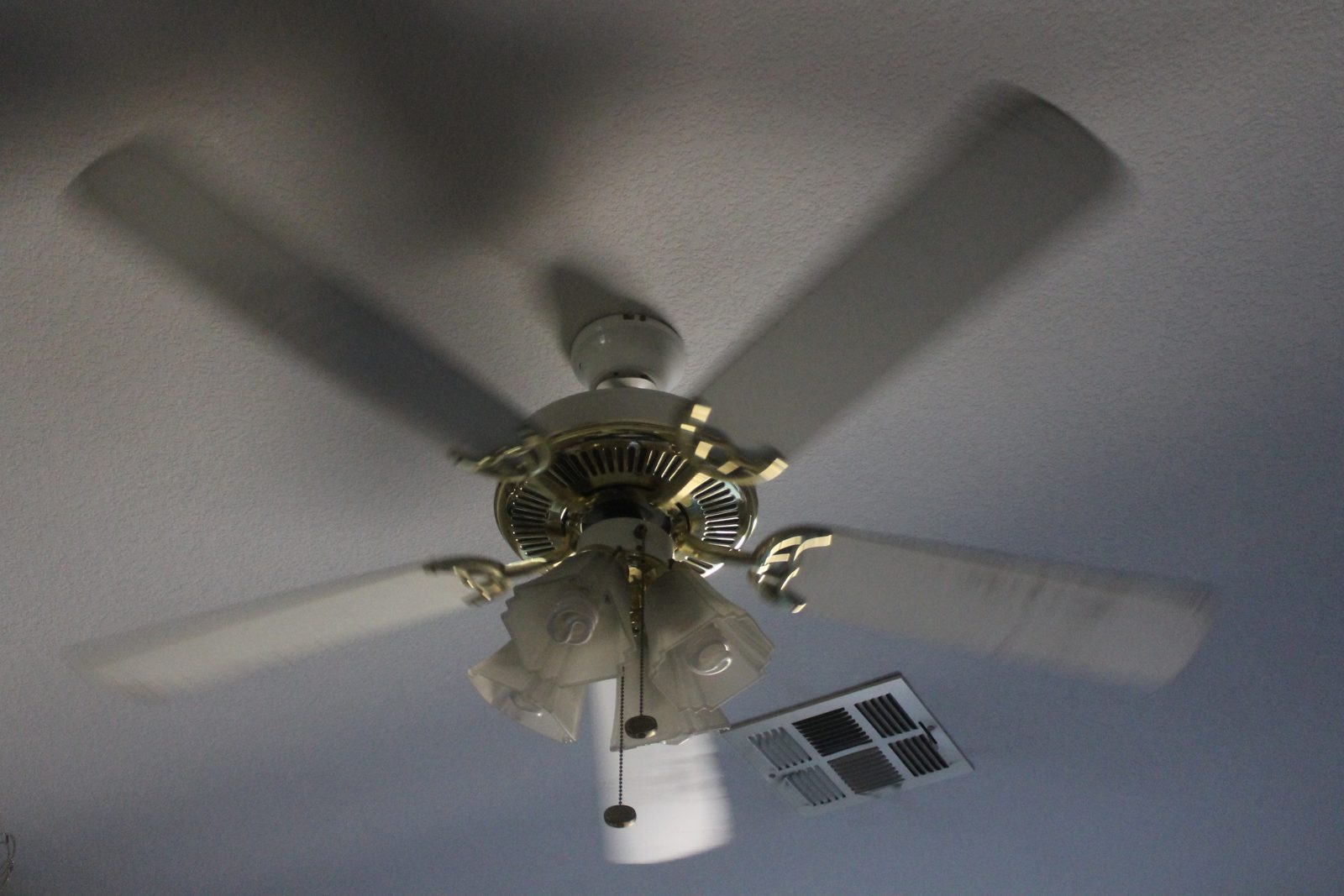
A baby lies on a changing mat, eyes locked on the ceiling fan. The blades turn, the baby stares, and the parent wonders what is so fascinating. The answer lies in how newborn vision works.
Newborns see a blurry, low-contrast world. A spinning fan against a plain ceiling offers exactly what their young visual system can process: sharp contrast, steady motion, and a predictable pattern. This article explains why babies stare at ceiling fans and lights, including how newborn vision develops, what the fan teaches the eyes, when staring peaks, and when it is worth mentioning to a pediatrician.
Newborn vision is blurry by design
A newborn does not see the world the way an adult does. At birth, a baby can only see objects clearly within about 8 to 12 inches of the face, according to FirstCry. That range is roughly the distance to a caregiver's face during feeding.
NeuroLaunch puts the gap in plain terms: a newborn's visual system can resolve only about 1/20th to 1/30th of the detail an adult eye can. Color perception is still catching up too. What remains is a preference for sharp contrast and movement.
That is why a ceiling fan beats a poster. The blades sweep across a pale ceiling in a high-contrast, rhythmic pattern. A stationary picture offers contrast but no motion.
A television offers motion but changes too fast and unpredictably. The fan sits in the sweet spot: simple, steady, and easy to follow.
Lights work the same way. Bright points against a darker room are among the easiest things for a newborn to detect. FirstCry notes that babies stare at lights or the ceiling because they cannot yet control their head movements well and their eyesight is still low, so bright or moving things win their attention.
What the fan teaches the eyes
Fan-watching is not idle staring. It is practice. NeuroLaunch describes the key skill as smooth pursuit, the ability to keep the eyes locked on a moving target without jerking or losing track of it.
That skill does not come pre-installed. It develops gradually over the first months of life, and a slow, predictable fan blade is close to ideal practice equipment.
The same skill later supports following a rolling ball, tracking a sibling across a room, and eventually reading a line of text left to right. A baby who watches a fan is rehearsing a tool the child will use for life.
Predictability matters. An erratic, jerky movement is harder for an immature visual system to track and less rewarding to watch.
A steady rotation lets the baby's brain build an expectation, and watching that prediction come true again and again appears to hold attention. NeuroLaunch notes that this preference for spinning, repetitive motion is common and ordinary in infancy.
The fan also sits where babies look. Fans hang above cribs and changing tables, right in a baby's natural line of sight.
The baby does not seek out the fan. The fan is simply the most watchable object in the room.
When staring peaks and fades
Most babies start showing real interest in ceiling fans between 6 weeks and 3 months old, according to NeuroLaunch. Before that window, a newborn's visual world is genuinely fuzzy, and the baby focuses mainly on close faces and high-contrast patterns.
By about 2 months, babies begin focusing better and tracking objects with their eyes, FirstCry reports. Around 3 to 4 months, they start recognizing familiar faces and responding to expressions. Vision keeps improving from there.
By around 4 to 6 months, most babies' attention starts moving away from passive targets like fans and toward things they can grab, mouth, and manipulate. That shift is itself a developmental milestone. A baby who reaches for toys is showing that vision and motor skills are joining up.
FirstCry adds that babies develop full color vision by about five months. As color, depth, and detail come online, the world fills with new targets. The fan, once the most interesting object in the room, becomes background.
If a six-month-old still spends most awake time staring at the ceiling rather than reaching for toys, NeuroLaunch says it is not automatically concerning, but it is a pattern worth mentioning at a checkup. Context matters more than any single behavior.
Why lights and shadows join the show
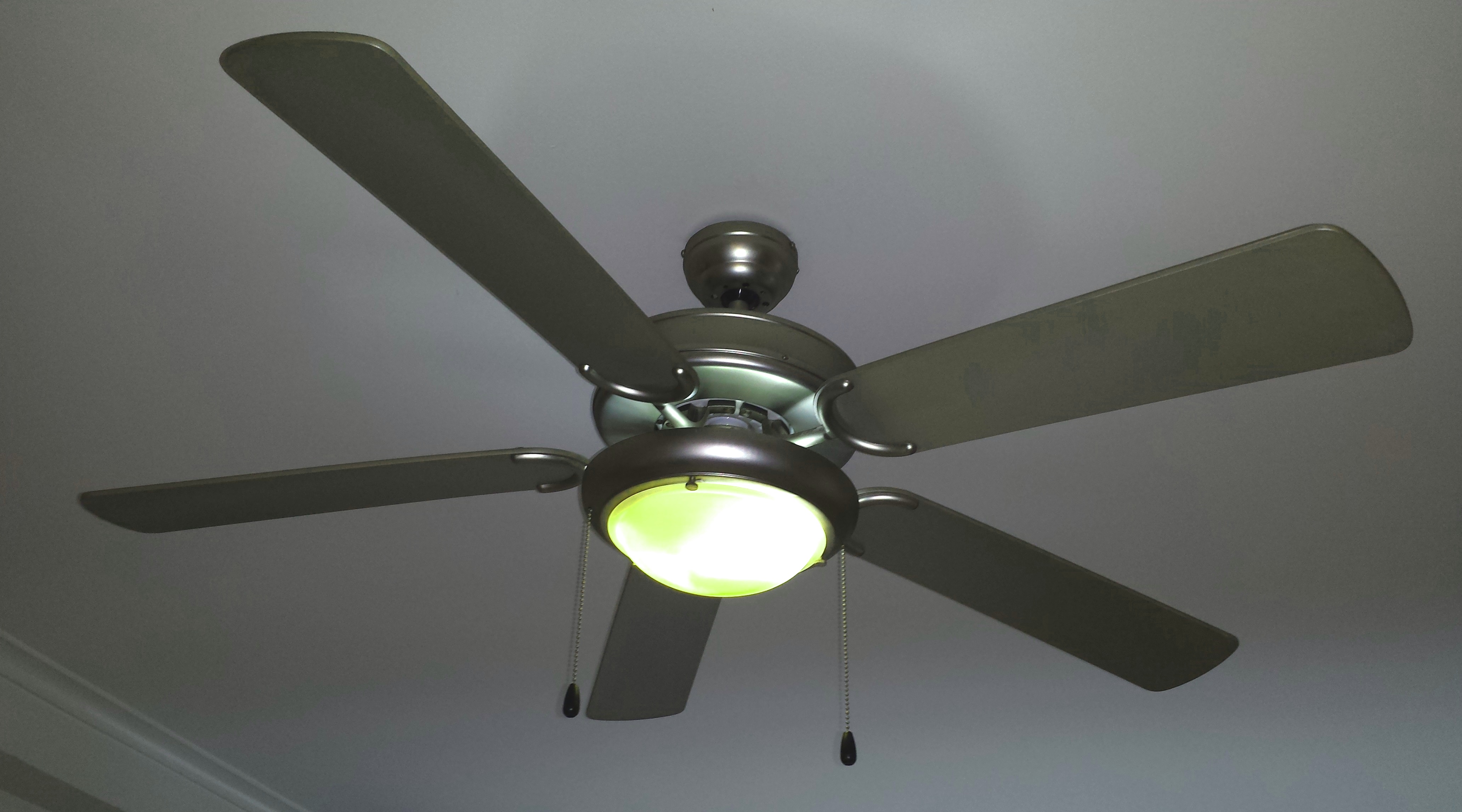
Ceiling fans rarely work alone. A fan with a light kit, or a fan near a window, throws moving shadows across the ceiling and walls. That play of light and dark adds another layer for a baby to track.
Bright lights also wake up a baby's senses. FirstCry notes that babies' eyes are highly sensitive to light, and bright lights make them more alert. A ceiling light fixture, a lamp, or sunlight through blinds can hold a baby's gaze for the same reason a fan does: it is bright, it is clear, and it stands out.
Parents sometimes worry that staring at lights could damage a baby's eyes. Ordinary room lighting is not a concern.
Still, keep very bright bulbs out of direct line of sight in the nursery, and choose softer lighting for sleep spaces. If a baby seems distressed by light, squints constantly, or turns away from all brightness, mention it at a visit.
Staring, autism worries, and what actually matters
Many parents search fan-staring alongside worries about autism. NeuroLaunch is direct on this point: intense fan-staring alone is not a diagnostic sign of autism spectrum disorder. Plenty of typically developing babies go through phases of intense fan or light fascination and grow out of it entirely.
What researchers actually watch for, according to NeuroLaunch, is a cluster of signs: reduced eye contact, delayed babbling and gesture use, and limited social responsiveness by 12 months. Repetitive interest in spinning objects can appear in autistic children, but it shows up as one part of a broader pattern, not as a standalone marker.
The useful question is not "does my baby stare at the fan?" It is "does my baby also engage with people?" A baby who stares at the fan for ten minutes but still turns toward your voice, smiles when you lean in, and can be distracted by a toy is behaving in an ordinary way.
Red flags worth a conversation include no eye contact pattern emerging by 6 months, no social smile by 3 to 4 months, no response to name by 12 months, or extreme distress when the fan is turned off that lasts well past infancy. Any loss of previously acquired skills, such as babbling that stops, warrants prompt evaluation regardless of fan behavior.
This article is for general information, not medical advice. A pediatrician who knows your baby can weigh any concern far better than a checklist can.
How to use fan-watching well
Fan-watching needs no intervention, but parents can make it useful. Narrate what the fan is doing: "Look, it is spinning." Linking words to the motion your baby already watches supports early language development, NeuroLaunch suggests.
Add variety during awake time. Pinwheels, rattles, and slow-spinning toys give the eyes other moving targets.
A mobile over the changing table offers gentle motion at close range. Variety keeps visual tracking practice from depending on one object.
Watch the balance. Passive fan-watching is fine in small doses, but babies also need face-to-face interaction, tummy time, and tactile play. If awake time skews heavily toward passive staring with little reaching, babbling, or face play, adjust the mix.
Babies who smile in their sleep are showing a similar story: an immature nervous system practicing skills during rest. Both behaviors look mysterious and both are ordinary.
Frequently asked questions
Is it normal for a baby to stare at a ceiling fan?
Yes. Fan-watching is a textbook example of typical visual development, according to pediatric developmental specialists cited by NeuroLaunch. It usually begins between 6 weeks and 3 months and fades as the baby starts reaching for objects.
Why does my baby stare at lights?
Newborn vision is blurry and drawn to brightness, contrast, and motion. Lights stand out against darker surroundings, so they are among the easiest things for a baby to detect. Staring at lights is normal in the first months.
When should I worry about my baby staring at the ceiling?
Mention it at a checkup if staring comes with no eye contact by 6 months, no social smile by 3 to 4 months, no response to name by 12 months, extreme distress when the fan stops, or loss of skills the baby once had. Staring alone is not a concern.
Can staring at a fan hurt my baby's eyes?
No. Watching a ceiling fan does not damage a baby's eyes.
Keep very bright bulbs out of direct line of sight, and use softer lighting in sleep spaces. If your baby seems pained by light, raise it with your pediatrician.
The bottom line
Babies stare at ceiling fans and lights because their developing vision is built to notice contrast, motion, and brightness. Fan-watching trains smooth eye tracking, peaks between 6 weeks and 3 months, and fades as babies start grabbing the world. Enjoy it, narrate it, and keep an eye on the broader picture of smiles, eye contact, and babbling.
Tags: babies, infant development, baby vision, parenting
Latest in Parenting
- Why Toddlers Run Away When Called: What Parents Can Do
- Why Babies Smile in Their Sleep: Reflexes, REM, and Meaning
- Why Toddlers Line Up Toys in Rows: Patterns, Play, and Meaning
- Why Toddlers Say No Even When They Mean Yes: Brain Facts
Subscribe for one practical parenting explainer in your inbox each week.
Related stories

Why babies cry more in the evening: the witching hour explained
The witching hour is the fussy evening stretch most newborns hit daily. Why overtiredness, cluster feeding, and overstimulation stack up

When Do Babies Start Sleeping Through the Night by Month?
Most babies sleep through the night between 3 and 6 months, with regressions at 4 and 8 to 10 months. See the month-by-month table

Why Your Baby Wakes Up the Second You Put Them Down
Newborns wake when put down as the startle reflex, light sleep, and lost warmth hit at once. It is normal and peaks early, fading