
How to help a child who is afraid of the dark
By Rive News / Research desk | Rive News / Published October 27, 2026 at 9:00 AM PKT
Key takeaways
- Fear of the dark is a normal stage for young children and usually fades within weeks with calm support.
- Validating the feeling, without confirming that monsters are real, helps more than dismissing it or arguing.
- Small daytime steps, a steady routine, and a dim nightlight build confidence faster than one big change.
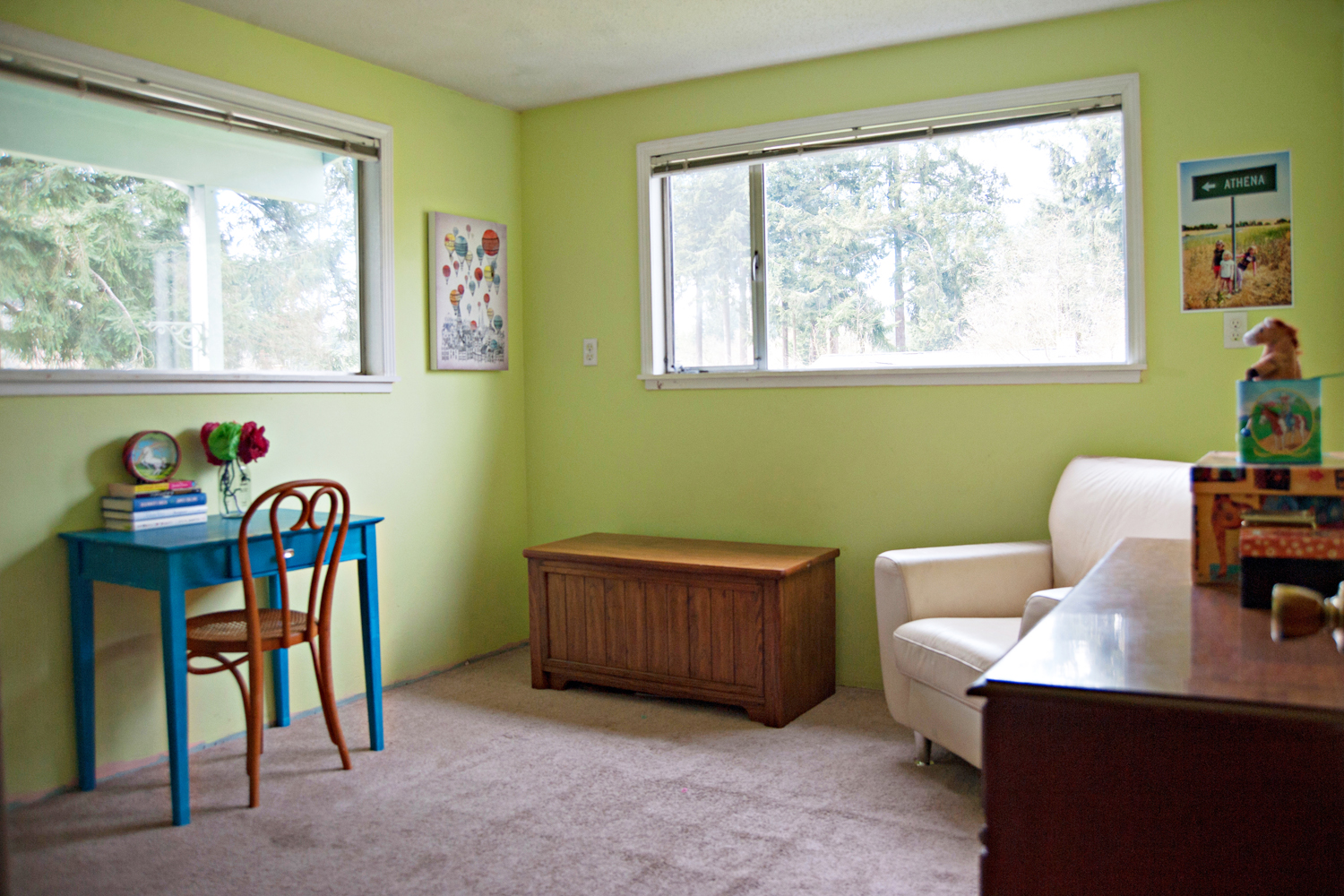
A child's bedroom, where familiar objects and a calm routine help the room feel safe at night. Photograph: Wikimedia Commons contributor
Image Credits: Wikimedia Commons
This article is for general information only and is not medical advice; talk to a clinician about any symptoms.
Bedtime arrives, the light goes off, and a child who was fine all day suddenly cannot sleep alone. They call out, cry, or appear at your bedside. It is exhausting, and it is also normal.
Fear of the dark is one of the most common childhood fears, and with steady, calm support, most children work through it in a matter of weeks.
This article explains why darkness scares young children, what to say and what not to say, how light and comfort objects help, how to build a calmer bedtime routine, which daytime practice builds courage, and when to ask a pediatrician.
Why darkness scares young children
Young children fear the dark for a simple reason: they cannot see what is there, so imagination fills the gap. Between roughly ages 2 and 6, children's imaginations grow faster than their ability to tell fantasy from reality. A shadow becomes a shape, a shape becomes a creature, and the creature feels real because the child cannot check otherwise in the dark.
Daytime stress often shows up at night too. WebMD notes that general stress, such as a divorce, the death of a pet, or the birth of a baby, can increase anxiety in children, and that anxiety can appear at night as a fear of the dark. A scary scene glimpsed on a screen, an argument overheard, or a change at school can all resurface when the room goes quiet.
That is why the fear sometimes arrives suddenly in a child who previously slept fine. Something changed, even if the change looks small to an adult. Asking gently, during the day, what the child is worried about often reveals the trigger faster than any bedtime negotiation.
What to say and what not to say
The first rule is to take the fear seriously without treating the imagined threat as real. Supernanny's advice, from child specialist Dr Erickson, puts it plainly: do not dismiss or ridicule the fear, hear the feeling and reflect it back with words such as, "I can see you're really scared." The feeling is real even when the monster is not.
The second rule is to avoid accidentally confirming the fear. WebMD quotes child psychologist Dr Dobbins warning parents not to say, "Let me make sure there aren't any monsters under the bed," or, "If you are a good boy, the monsters will go away." Both lines tell the child the fear has credibility, and the child cannot get past it until they understand it honestly.
When you check the closet, check it to show clothes and shoes, not to hunt monsters.
A better script names the plan, not the threat. "Let's look around together, then we will make a plan so your body knows you are safe" gives teamwork instead of debate. During the day, you can add the plain fact that monsters are not real, repeated calmly and without mockery.
The Mass General Brigham Clay Center notes that most children are not afraid of monsters during the daytime, which makes daytime the right moment to plant that reassurance.
Also avoid solving the problem by moving the child into your bed or a sibling's room every night. WebMD notes that sleepovers elsewhere are not the answer, because the child never learns that their own room is safe. Comfort is good, but the goal is confidence in their own bed.
Light, comfort objects, and the room
Total darkness is not a requirement, and for a fearful child it is often the wrong target. Cleveland Clinic notes that some children find safety in a nightlight or a very dim lamp, and that leaving the bedroom door open or cracked can help, as long as the child knows an open door is not an invitation to wander out after bedtime.
Choose the light carefully. A soft, warm-toned nightlight gives enough comfort without flooding the room. Blue-toned lights, colour-changing lights, and anything bright enough to read by work against sleep, since bright light suppresses the sleep hormone melatonin.
Soft and steady is what calms the nervous system.
Comfort objects help in the same way. A blanket, a stuffed animal, or a favourite toy gives the child something to hold onto when the room feels strange. Cleveland Clinic also suggests letting the child choose these objects themselves, since choosing builds a sense of control.
A "fear job" works on the same principle: making the child the official keeper of the nightlight, or the keeper of a bravery stone under the pillow, turns helplessness into a small, proud role.
A short room tour before lights-out helps too. Walk slowly around the room together, touch each familiar object, and name it: the chair, the bookshelf, the lamp, the bear. The brain calms when familiar things are confirmed one by one, and the room stops being a blank space where anything could hide.
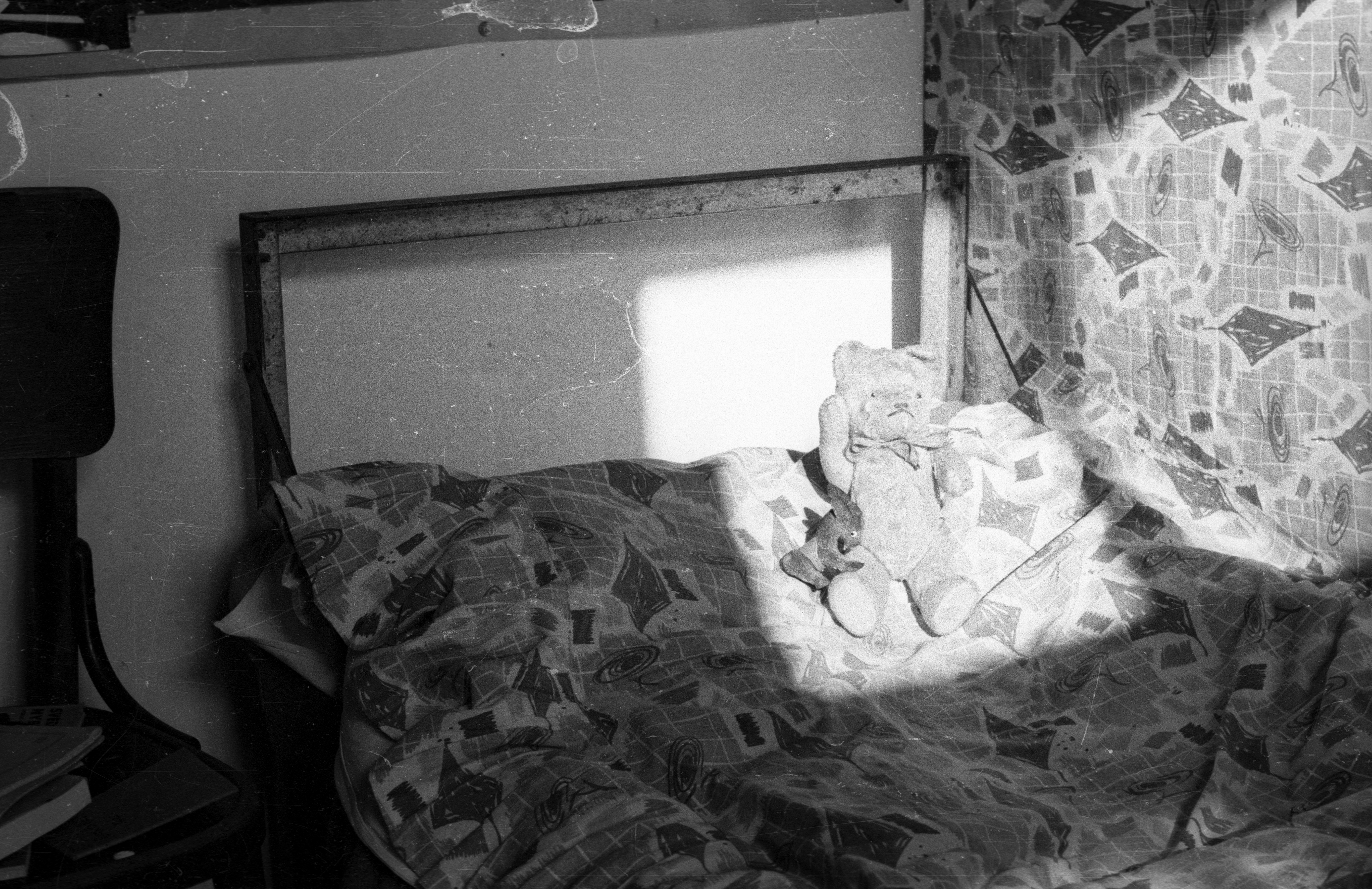
A bed with a teddy bear, the kind of comfort object that gives a child something safe to hold at night. Photograph: Wikimedia Commons contributor
Image Credits: Wikimedia Commons
A calmer bedtime routine
Predictability is one of the strongest tools against nighttime fear. Children's brains love routine, especially when they are anxious, because a steady sequence signals safety. Cleveland Clinic advises keeping the bedtime routine light, happy, and fun, and paediatrician Dr O'Connor recommends avoiding scary movies, television shows, frightening stories, scary music, or videos in the 30 to 60 minutes before bedtime.
A good wind-down might look like this: bath, pyjamas, a light-hearted story, a short chat about the day, lights low, then goodnight. The same order every night matters more than any single step. If the routine changes nightly, the child spends the evening guessing what comes next, and guessing feeds anxiety.
Keep the goodbye short and confident. A long, anxious farewell, with repeated returns to the room, teaches the child that bedtime is something to negotiate. A brief, warm goodbye, with a promised check-in time the child chooses, works better.
WebMD quotes experts suggesting parents ask the child when they want to be checked on, in 5 minutes or 2 hours, and letting the child decide what feels most secure. Giving the child that choice hands them control without handing them the night.
Daytime practice that builds courage
The real work happens during the day, when fear is low and the child can practise. Children's Colorado quotes Dr Mullin explaining that imagination, which inflates fear, can also shrink it: parents can use imagination as a tool to manage fear, and it makes children feel more in control and confident.
Three daytime techniques have good support. First, graduated exposure: practise being in dim spaces together for short periods, such as 30 seconds, during the day, and reward the child's bravery. Over time, stretch the time and dim the light.
Second, playful mastery: draw the feared creature, write it a letter, or make up rules for it, such as it must stay quiet under the bed. Children's Colorado describes an "anti-monster" letter in which the child writes a contract with their imaginary monster, setting rules the monster must follow.
Third, stories and cognitive behavioural techniques. The Clay Center notes that cognitive behavioural therapy, combined with comforting stories and graduated talk about fear of the dark, has proven effective for children. Find a book about bedtime fears, talk through it in stages, make it playful, and correct exaggerated thoughts as they come up.
Creative play helps too: acting out monster stories, with the child playing the brave parent reassuring a stuffed animal, lets them rehearse courage in a safe role.
Celebrate small steps. Staying in bed a little longer, turning off one extra light, or using words instead of tears are all real progress. Progress is uneven, and a bad night after a good week is normal, not a failure.
When to ask a pediatrician
Most fears of the dark pass. WebMD notes that with the support of an understanding parent, most children get over a fear of the dark in a few weeks. But some patterns deserve professional input.
Consider a pediatrician visit if the fear lasts much longer than a few weeks, disrupts sleep severely, spreads into daytime activities, or causes panic-level distress. The Clay Center lists similar flags: severe or ongoing sleep disruption, fear spreading into daytime life, and panic-level reactions. A pediatrician can check whether something else is driving the anxiety, such as a stressful event, a sleep problem, or an anxiety disorder, and can refer to a child therapist if that would help.
Also seek help sooner if the fear follows a traumatic event, or if the child starts showing other worrying changes, such as withdrawing from play, losing appetite, or regressing in skills they had mastered. These are not signs of bad parenting. They are signs a child needs more support than routine and reassurance alone can give.
FAQ
At what age is fear of the dark normal?
It is most common between ages 2 and 6, when imagination outpaces the ability to separate fantasy from reality. Older children can still fear the dark, but the reasons shift toward real worries such as burglars or being alone.
Should I check under the bed for monsters?
Check the room to show what is really there, clothes, shoes, toys, rather than to confirm a monster hunt. Saying you will make sure no monsters are hiding tells the child monsters might be real.
Is a nightlight a crutch that will make it worse?
No. A dim, warm nightlight is a reasonable support, not a crutch. The goal is a child who feels safe, and light is one of the simplest ways to get there.
You can dim it gradually later, once confidence grows.
How long should it take before the fear fades?
With steady support, many children improve within a few weeks. If fear persists, worsens, or disrupts sleep and daytime life, talk to a pediatrician about extra help.
The bottom line
A child afraid of the dark needs two things from adults: belief in the feeling, and calm confidence that the room is safe. Validate without confirming monsters. Keep a steady, happy routine.
Use a dim light and a comfort object. Practise bravery in small daytime steps, and celebrate each one. Most children outgrow the fear within weeks when those pieces are in place, and when they do not, a pediatrician is the right next call, not a sign that anything has gone wrong.
Tags: fear of the dark, bedtime, child anxiety, parenting
The Rive News research desk writes plain-English explainers from public sources, with every key claim traceable to a named source.
Related
- How to Build a Bedtime Routine Kids Actually Follow
- Why do children need routines to feel safe and calm?
- What Is the Difference Between a Tantrum and a Meltdown?
- How to handle toddler tantrums without yelling
Subscribe for one practical parenting explainer each week.
Rive News standards: no invented sources, no fake first-hand experience, corrections noted on the article.
Related stories

Why babies cry more in the evening: the witching hour explained
The witching hour is the fussy evening stretch most newborns hit daily. Why overtiredness, cluster feeding, and overstimulation stack up
When Do Babies Start Sleeping Through the Night by Month?
Most babies sleep through the night between 3 and 6 months, with regressions at 4 and 8 to 10 months. See the month-by-month table

Why Your Baby Wakes Up the Second You Put Them Down
Newborns wake when put down as the startle reflex, light sleep, and lost warmth hit at once. It is normal and peaks early, fading