
Nightmares vs Night Terrors in Toddlers: What Is the Difference
Key takeaways
- Night terrors are partial arousals from deep non-REM sleep in the first third of the night; the child is unresponsive and remembers nothing.
- Nightmares are frightening dreams in REM sleep in the second half of the night; the child wakes fully and often recalls the dream.
- Night terrors affect roughly 1% to 6.5% of children aged 1 to 12, and most children outgrow them by late adolescence.
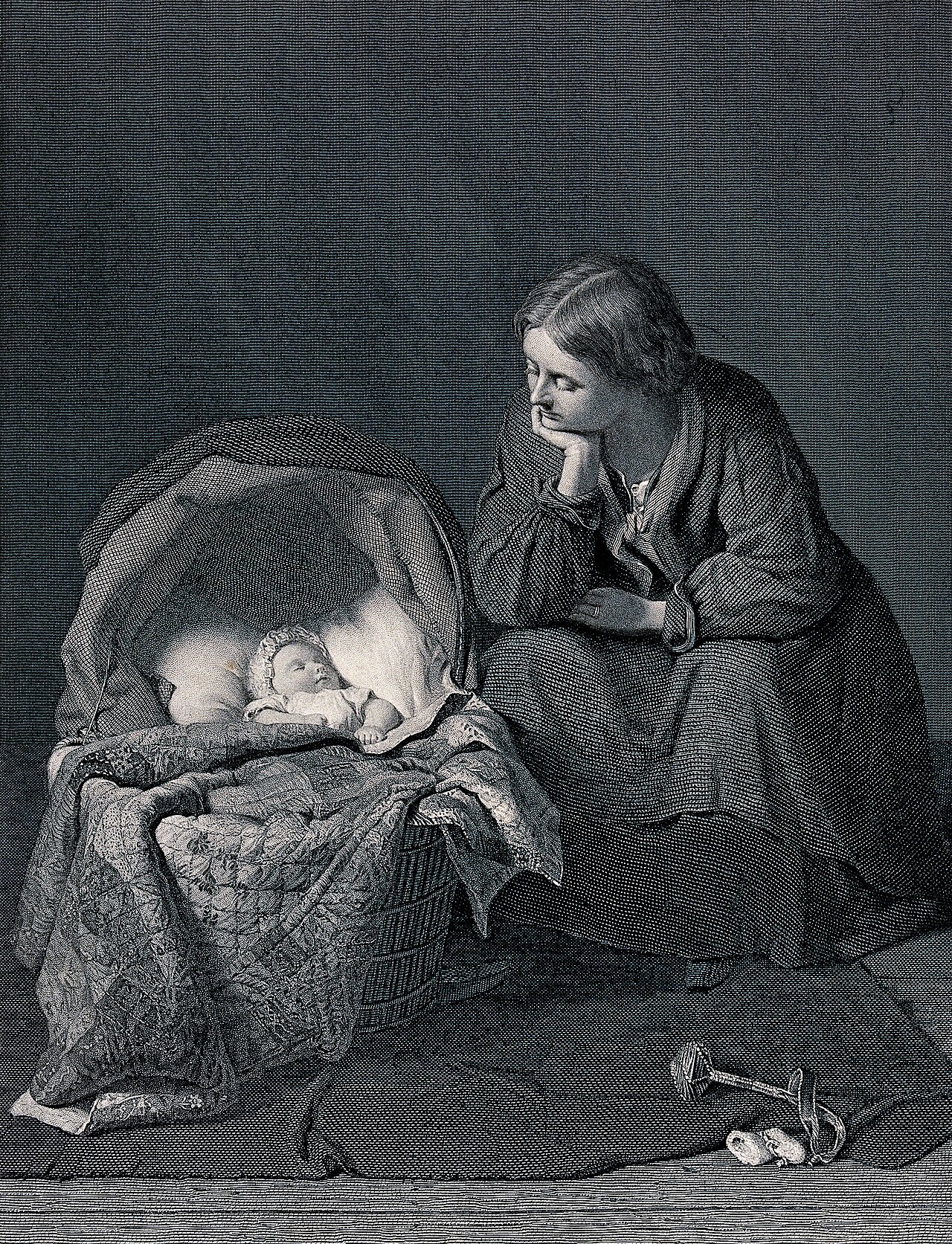
A mother watching over her sleeping baby. Photograph: Wikimedia Commons
Image Credits: Wikimedia Commons
A nightmare is a bad dream. A night terror is not a dream at all. That single distinction explains almost every difference parents notice: the timing, the child's behaviour, whether comfort works, and what the child remembers in the morning.
This article explains the difference between nightmares and night terrors in toddlers, including what happens in each, the sleep stages behind them, how common they are, the triggers that make terrors more likely, how to respond to each, and when to call the paediatrician.
This article is general information, not medical advice. If you are worried about your child's sleep, talk to your paediatrician.
What a nightmare is
A nightmare is a vivid, frightening dream that wakes the child from sleep. Nightmares occur during REM sleep, the stage in which most vivid dreaming happens. Because REM sleep becomes more concentrated as the night progresses, nightmares are more likely in the second half of the night or toward morning.
The classic picture is unmistakable. A child wakes crying, runs to the parent's room, and can describe the dream: a monster, a chase, being lost. The child is genuinely awake, aware of their surroundings, and responsive to comfort.
Within minutes of being held and reassured, most children settle. In the morning, they often remember at least part of the dream.
Nightmares are extremely common and usually not a cause for concern. They tend to peak between the ages of 3 and 6, when imagination develops rapidly, according to paediatric sleep guidance, though some clinical sources place the peak between 6 and 10 years. Either way, they are a normal feature of a developing mind processing fears and experiences, and they typically reduce as children get older.
Because the child wakes fully, nightmares respond to the standard parenting toolkit: comfort, a brief chat about the dream, a glass of water, a check under the bed, and a calm return to sleep. The American Academy of Pediatrics describes nightmares as happening during the second half of the night, when dreaming is most intense, which is why a child who wakes terrified at 4 a.
m. with a story to tell almost certainly had a nightmare.
What a night terror is
A night terror, also called a sleep terror, is a partial arousal from deep non-REM sleep. It is not a dream and not really waking up.
The child's body activates enough to scream, sit up, thrash, sweat and breathe fast, but the brain never crosses into consciousness. Eyes may be open, but the child does not recognise the parent or the room.
Night terrors typically happen within the first three hours of falling asleep, during the deepest stage of non-REM sleep, when slow-wave sleep is most concentrated. The Child Mind Institute describes them as a disorder of arousal: the child gets stuck between the deepest stage of sleep and waking, "grinding the gears" between the two states, in the words of clinical psychologist Shelby Harris.
For parents, the signature signs are unresponsiveness and amnesia. The child cannot be woken or comforted during the episode, shows no recognition of surroundings, and remembers nothing the next morning.
Night terrors are often more frightening for the parent than for the child. Episodes usually last a few minutes and end on their own, with the child settling back into normal sleep.
They are also more common than many parents realise. Estimates of prevalence range from 1% to about 6.5% of children between the ages of 1 and 12, according to the Child Mind Institute.
A clinical review, "Sleep Terrors: An Updated Review," puts the range at roughly 1% to 6.5% with a lifetime prevalence around 10%, a peak between ages 5 and 7, and onset usually between 4 and 12, though toddlers can experience them too. They tend to run in families, and most children outgrow them by late adolescence.
The sleep stages behind the difference
Understanding sleep architecture makes the distinction click. Each night, sleep cycles through deep non-rapid eye movement (NREM) sleep and lighter rapid-eye movement (REM) sleep. The two parasomnias live in opposite territories.
Night terrors belong to deep NREM sleep, specifically stage 3, the slow-wave stage. This stage dominates the first third of the night, which is why terrors cluster in the first few hours after bedtime.
The cause is not fully understood, but the current model describes a partial arousal that gets stuck: the brain begins to surface from deep sleep and stalls mid-transition. Children spend more time in deep slow-wave sleep than adults, which is why terrors are significantly more common in children.
Nightmares belong to REM sleep, the dreaming stage. REM periods grow longer and more intense across the night, which is why nightmares cluster in the second half. The dreaming brain generates vivid narratives, the sleeper wakes into them, and the memory systems are online enough to retain the story.
This staging also explains the memory difference. During a night terror, the conscious brain is effectively offline, so no memory forms. During a nightmare, the child wakes from REM with the hippocampus engaged, so the dream is encoded and recalled.
A child who describes the monster in the morning had a nightmare. A child who cheerfully eats breakfast with no recollection of screaming at midnight had a night terror.
A vintage bedtime illustration. Photograph: Wikimedia Commons
Image Credits: Wikimedia Commons
What triggers night terrors
Night terrors are not caused by bad dreams, scary stories or daytime fears. They are a glitch in the machinery of deep sleep, and ordinary things make that glitch more likely by deepening or fragmenting slow-wave sleep.
The "Sleep Terrors: An Updated Review" lists the usual triggers: sleep deprivation, an irregular sleep schedule, fever or illness, a full bladder, a noisy sleeping environment, and being overtired or overstimulated. The common thread is anything that makes deep sleep deeper or its transitions rougher. An overtired toddler does not sleep more restfully; they sink into deeper slow-wave sleep with rougher transitions, which is exactly the territory a night terror occupies.
This is why the most effective prevention is boring: a consistent bedtime, enough total sleep, and a calm wind-down routine. Keeping to a schedule matters more than any product. A regular bedtime keeps slow-wave sleep at its normal depth instead of the rebound depth that follows sleep deprivation.
Nightmares have different triggers: stress, anxiety, scary media, and developmental leaps in imagination. A toddler who watched something frightening or went through a big change (a new sibling, a move, starting nursery) may have more nightmares for a while. Addressing the daytime worry, plus the usual comfort, is the way through.
How to respond to each
The responses are nearly opposites, which is why the distinction matters in the moment.
For a night terror, do not try to wake the child. Waking is difficult, and it can prolong the confusion. Stay nearby, keep the child safe from thrashing into furniture, speak softly, and wait.
Do not restrain the child unless they are in danger of hurting themselves. The episode will pass, usually within minutes, and the child will settle back into sleep. In the morning, say nothing unless the child asks; there is nothing to debrief, because the child experienced nothing consciously.
For a nightmare, do the opposite: comfort actively. Hold the child, listen to the dream, offer reassurance, and help them feel safe before returning to bed. A nightlight, a comfort object, or a brief check of the room all help.
Because the child is awake and aware, your presence genuinely regulates their nervous system. Talking through toddler tantrums without yelling uses the same principle: a calm adult co-regulates a distressed child.
Keep a simple log if episodes repeat: time of night, duration, and the day's sleep and schedule. Patterns usually confirm the diagnosis. Screaming at 10 p.
m. , two hours after an 8 p. m.
bedtime, unresponsive and forgotten by morning, is a night terror. Crying at 5 a. m.
with a detailed monster report is a nightmare. Parents who track evening crying patterns find the same clarity from the same method.
How can I tell in the moment which one it is?
Check three things: the time (early night suggests terror, late night suggests nightmare), responsiveness (unresponsive suggests terror, interactive suggests nightmare), and whether comfort works (comfort fails during terrors, works for nightmares).
Should I wake my toddler during a night terror?
No. The child is not conscious, cannot be meaningfully woken, and attempts to wake can extend the episode. Keep them safe and wait it out.
Are night terrors a sign of trauma or anxiety?
No. They are a disorder of arousal in deep sleep, not a psychological condition. They are not caused by bad dreams or frightening experiences, though overtiredness and irregular schedules make them more likely.
Do I need to see a doctor for night terrors?
For occasional episodes, no medical intervention is required beyond reassurance, according to the clinical review. See a paediatrician if episodes are very frequent, very long, involve dangerous behaviour, or continue well into the school years.
Can nightmares be prevented?
Keeping scary media away before bed, maintaining a calm bedtime routine, and addressing daytime worries all help. Some nightmares are simply part of normal development and pass on their own.
The bottom line
Nightmares and night terrors look similar from the hallway but come from different parts of sleep and need opposite responses. Nightmares are REM dreams in the second half of the night: the child wakes, remembers, and is comforted by your presence.
Night terrors are partial arousals from deep sleep in the first few hours: the child screams but is not awake, cannot be comforted, and remembers nothing. Keep bedtimes consistent to reduce terrors, comfort actively for nightmares, and check with your paediatrician if episodes are frequent or worrying.
Latest in Parenting
- Why Babies Smile in Their Sleep
- How to Handle Toddler Tantrums Without Yelling
- Why Your Baby Cries at the Same Time Every Evening
- The Difference Between Time-Out and Time-In
Subscribe for one evidence-based parenting insight every week.
Related stories
Why babies cry more in the evening: the witching hour explained
The witching hour is the fussy evening stretch most newborns hit daily. Why overtiredness, cluster feeding, and overstimulation stack up
When Do Babies Start Sleeping Through the Night by Month?
Most babies sleep through the night between 3 and 6 months, with regressions at 4 and 8 to 10 months. See the month-by-month table

Why Your Baby Wakes Up the Second You Put Them Down
Newborns wake when put down as the startle reflex, light sleep, and lost warmth hit at once. It is normal and peaks early, fading