
Why Do Toddlers Ask for Water Right After Bedtime
Key takeaways
- The water request is usually stalling, not thirst: it buys one more visit from the most important person in the toddler's world.
- Sleep researchers split stalling into two engines: timing (bedtime is too early for the child's biology) and learning (the request reliably summons a parent).
- A 30 to 40 minute consistent routine plus a clear one-pass rule cuts most stalling within about a week.
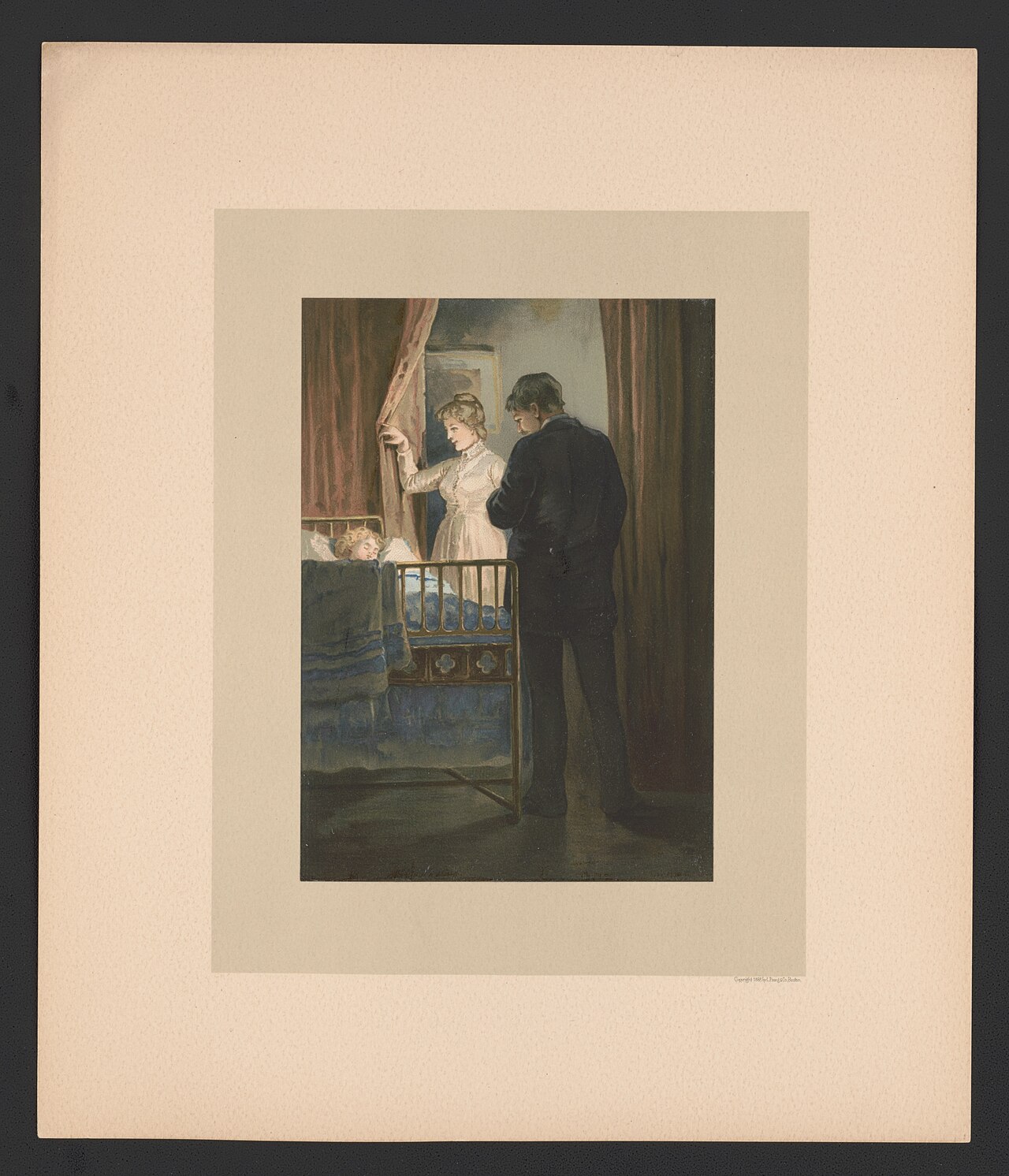
A century-old reminder that the bedtime dance is nothing new: parents checking on a sleeping child. Illustration: Library of Congress
Image Credits: Wikimedia Commons / Library of Congress
The book is read. The lights are low. Then, from the dark: I need water.
Then the sock feels weird. Then, with real tragic weight, is the moon going to be there tomorrow? Toddlers are world-class bedtime negotiators, and "I'm thirsty" is their opening gambit.
It is rarely about water. This article explains the two forces behind bedtime stalling, why the water request works so well, and the research-backed fixes that actually shorten the nightly negotiation.
The two engines behind the stall
Sleep researchers who study young children separate bedtime resistance into two broad causes: timing and learning. Treating the wrong one can mean months of getting tougher or softer without any change.
Timing is biological. Falling asleep depends on two systems working together: sleep pressure, which builds the longer a child has been awake, and the circadian clock, which signals when the body is ready to wind down.
Put a child to bed before both line up and they lie awake, not because they are being difficult, but because their body has not caught up with the schedule. The child's solution is to summon you.
Learning is behavioral. Every child learns what a request produces. A toddler who says "water" and gets you, the light, a cup, a cuddle, and a short conversation has learned that the request works.
This is not manipulation in any dark sense; it is how attention shapes behavior at every age. Your presence at 8 PM is the most valuable thing in their world, and a stall is a cheap way to buy a bit more of it.
Which engine is running your bedtime
There is a simple diagnostic. If your child routinely takes 30 to 45 minutes or more to fall asleep, treat that as a hint that bedtime may be ahead of their biology, and the stalling is the body's way of filling the gap. This often follows a long or late nap, or a stretch of dropping a nap entirely.
Many parents find that a bedtime shifted 15 to 30 minutes later, for about a week, makes the requests shrink without any discipline at all. The technique is called bedtime fading: you temporarily set bedtime closer to when your child actually falls asleep, then move it earlier in small steps as sleep onset gets quicker. It was described in behavioral sleep research as far back as the early 1990s and is still in standard use.
If instead your child drops off within 10 or 15 minutes on the nights you simply say goodnight and leave, the timing is probably fine. What you are looking at is learned behavior, and the fix is a boundary, not a schedule change.
Why water, specifically
"I need water" is the classic opener because it is reasonable, quick, and almost impossible to refuse on the spot. Bedtime represents the end of connection for the day and the start of separation: being alone in a dark room, away from parents, for many hours. For many children that transition triggers a real, if hard to articulate, low-level anxiety, and stalling tactics are frequently an attempt to extend connection and delay that separation.
Children also learn fast which requests work. Water is legitimate in a way that "one more cartoon" is not, which is why it survives night after night while other tactics get retired. Knowing how to handle toddler tantrums without yelling helps on the nights the boundary gets tested, and it is worth remembering that stalling peaks between ages 3 and 6, when negotiation skills bloom alongside imagination.

Presence is the currency: the water request buys one more visit from the person who matters most. Image: Wellcome Collection
Image Credits: Wikimedia Commons / Wellcome Collection
A routine that does the work for you
A short, calming routine done in the same order most nights can reduce bedtime stalling dramatically, because it takes the drama out of decision-making. Expect the whole routine to take around 30 to 40 minutes. Shorter routines tend to crash at the last minute; longer ones wear both of you out.
Preempt the classic requests inside the routine rather than after it. Offer a sip of water after brushing teeth, do the last bathroom trip after pajamas rather than after the books, and offer a small snack about 30 minutes before bed if hunger is the usual card played. By addressing needs before the goodnight moment, you create a smoother transition and give the water request no opening to exploit.
Start the wind-down earlier than you think you need to. A rushed bedtime routine tends to produce more resistance, not less, and building in enough time for a calm bath, book, and lights-out sequence reduces the pressure that often fuels stalling.
The one-pass rule
One research-backed tool for stalling is the one-pass rule. Let your child choose one last thing they can do after lights out: a sip of water, one last hug, checking under the bed.
They get one pass. Once they have used it, the pass "goes to sleep."
If they try to stall again, gently remind them that the pass is sleeping, and so are you. Stay calm and consistent; do not add new passes or negotiate.
The pass works because it is a clear, finite boundary. Bending it once teaches your child that stalling pays off. Pair it with a consistent, predictable ending cue, like dimming the light or a specific goodnight phrase, that reliably signals negotiation time is over.
Hold the boundary calmly and consistently. A calm, consistent response, repeated without frustration night after night, reduces stalling over time far more effectively than an inconsistent response that sometimes gives in. If bedtime resistance is severe, involves genuine distress, or comes with other signs of anxiety, it is worth discussing with your pediatrician.
The bottom line
Toddlers ask for water right after bedtime because it is the most reliable way to summon a parent for one more moment of connection, and sometimes because bedtime genuinely arrives before their body is ready for sleep. Preempt the request inside a consistent 30 to 40 minute routine, fix timing with bedtime fading if sleep onset runs past 30 minutes, and use a one-pass rule for learned stalling. Most families see the negotiation shrink within a week.
FAQ
Should I just keep a water bottle by the bed?
A small water bottle placed by the bed at the start of the routine, with a clear rule that the one bottle is for the whole night, works well. It removes the excuse without any extra visits.
Is my toddler actually thirsty?
Sometimes, but rarely repeatedly. If the request comes every single night right after lights out and disappears once the routine changes, it was stalling, not thirst.
What if my toddler uses the one pass and keeps asking?
Stay calm and consistent. Remind them the pass is sleeping, keep responses brief and boring, and do not add new passes. Consistency is what retires the behavior.
Could stalling mean bedtime is too early?
Yes. If sleep onset routinely takes 30 to 45 minutes or more, especially after a late nap, try bedtime fading: shift bedtime 15 to 30 minutes later for a week, then move it earlier in small steps.
Latest in Parenting
- How to Handle Toddler Tantrums Without Yelling
- Why Toddlers Say No to Everything
- When Do Babies Start Sleeping Through the Night?
- Toddler Screen Time Guidance
Subscribe to Rive News's weekly newsletter for practical, evidence-based parenting explainers.
Related stories
Why babies cry more in the evening: the witching hour explained
The witching hour is the fussy evening stretch most newborns hit daily. Why overtiredness, cluster feeding, and overstimulation stack up
When Do Babies Start Sleeping Through the Night by Month?
Most babies sleep through the night between 3 and 6 months, with regressions at 4 and 8 to 10 months. See the month-by-month table

Why Your Baby Wakes Up the Second You Put Them Down
Newborns wake when put down as the startle reflex, light sleep, and lost warmth hit at once. It is normal and peaks early, fading