
Why toddlers hide by covering their own eyes
By Rive News / Research desk | Rive News / Published October 28, 2026 at 9:00 AM PKT
Key takeaways
- Toddlers cover their eyes because they assume others see what they see.
- The behaviour reflects egocentrism, a normal stage of cognitive development.
- Perspective-taking develops gradually across the preschool years.

[A toddler during a photo shoot.] Photograph: the subject
Image Credits: Wikimedia Commons
A toddler shouts that they are hiding, presses both hands over their eyes, and stands in the middle of the room in full view. Everyone can see them, and they are delighted, because as far as they are concerned, the hiding worked perfectly.
The trick is not a trick at all from the child's side. A toddler who cannot see you genuinely believes you cannot see them, and that belief reveals how young minds understand other people.
The core explanation: egocentrism
Swiss psychologist Jean Piaget identified egocentrism as a hallmark of the preoperational stage of development, which runs roughly from ages 2 to 7. Egocentrism here does not mean selfishness or vanity.
It means the child's brain has not yet developed the ability to step outside its own viewpoint. A three-year-old who covers her eyes and says you cannot see her assumes that because she cannot see you, you cannot see her either.
Her experience of the world is, as far as her brain is concerned, the only experience of the world. That is why the same child may also hand you a picture held facing themselves, or describe a television show you cannot see as if you were watching it too.
Adults find the eye-covering game funny precisely because the error is so visible. The child's logic is internally consistent: out of sight means out of mind, and sight is the only evidence they have.
Object permanence comes first, perspective comes later
An earlier milestone sets the scene for this behaviour. Object permanence is the understanding that things continue to exist when they cannot be seen, and it develops at around 8 or 9 months.
Before that age, a hidden toy effectively stops existing for the baby. By 9 months, babies will lean forward, look at the hands hiding a toy, and try to uncover it, because they know the toy is still there.
Peekaboo works because it plays with that new understanding. The adult's face disappears and returns, and the baby delights in the return of something that briefly vanished.
Eye-covering hide-and-seek is the mirror image of peekaboo. The child has learned that hidden things still exist, but has not yet learned that seeing is different for different people. So they hide the one thing they can control: their own view.
Why the game feels real to the child
For a toddler, hiding is about the feeling of being hidden, not about the geometry of the room. Closing the eyes removes the adult from the child's visual world, and that removal feels like disappearance.
The child's body language supports the feeling. Many toddlers go still, hold their breath, or giggle quietly, all of which signal that they believe the game is working.
Parents sometimes correct the child by pointing out that they are visible. That correction rarely lands, because the child lacks the mental equipment to use it yet. Knowing you are visible requires imagining your own body from another person's position, and that imagination is exactly what is still developing.
What does land is playing along. Searching theatrically, calling the child's name, and expressing delighted surprise when the hands come down all reward the game without requiring the child to understand optics.
When perspective-taking arrives
Perspective-taking develops gradually across the preschool years rather than switching on one morning. Children begin to understand that others can hold different beliefs and see different views during that period, with fuller understanding arriving later.
Classic tests of this ability show the same pattern as the eye-covering game. A young child who watches a toy moved while another person is absent will often insist the absent person knows where the toy now is, because the child knows.
That error has a name in developmental psychology: theory of mind is the understanding that other people have minds with different knowledge, beliefs, and viewpoints. The eye-covering toddler is not failing a game; they are showing a theory of mind still under construction.
By school age, most children hide properly, crouching behind furniture and checking sightlines. The change does not come from being taught to hide better. It comes from a brain that can finally run the simulation: if I stand here, what can she see?
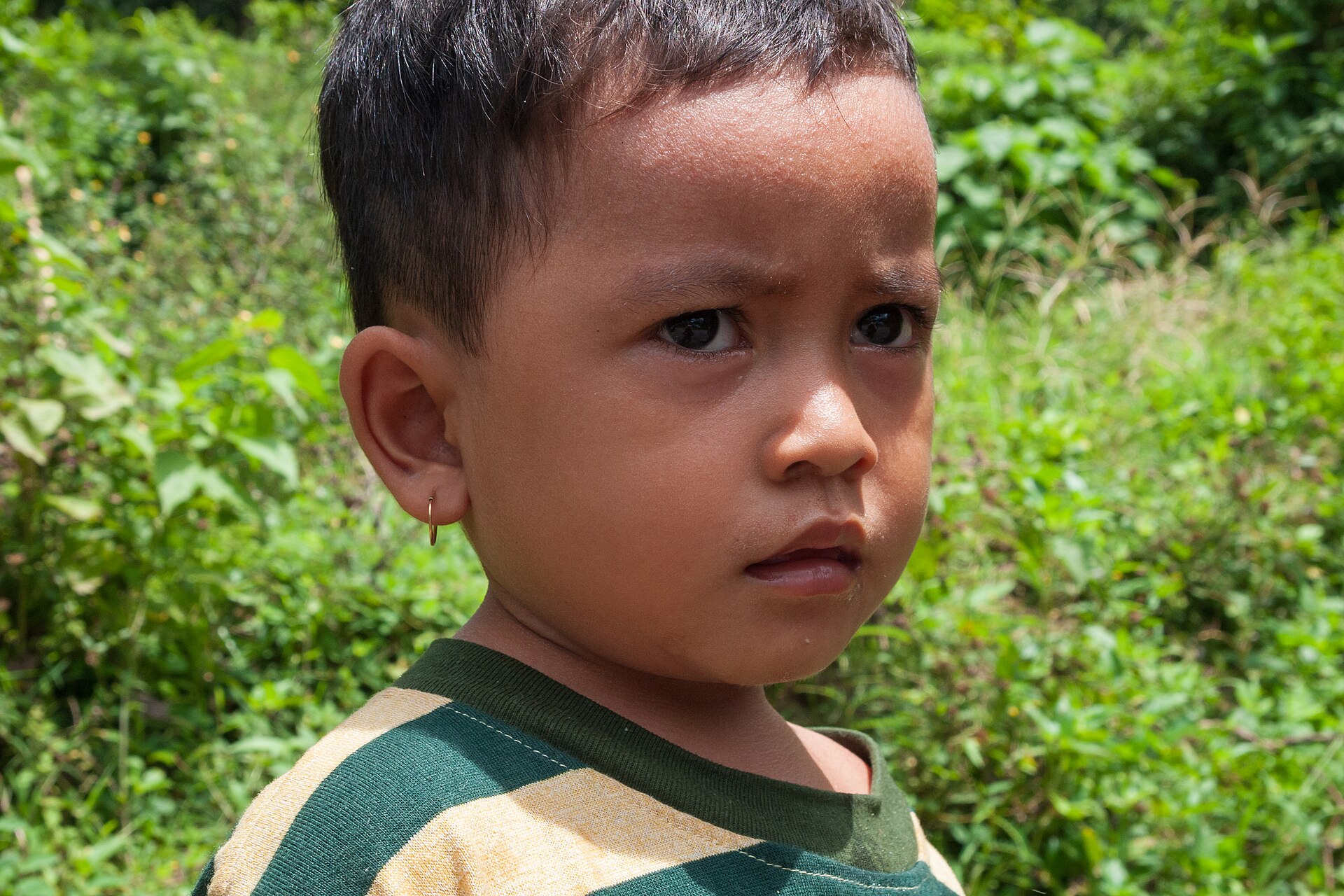
[A toddler in East Bali, Indonesia.] Photograph: the subject
Image Credits: Wikimedia Commons
What this behaviour is not
Eye-covering hiding is not a sign of poor eyesight, dishonesty, or delayed development. It is the expected behaviour of a child in the preoperational stage, and it appears in children across cultures.
It is also not the same as shyness or embarrassment, though the two can look similar. A child covering their face because they feel watched is managing a feeling, while a child covering their eyes in a game is trying to vanish.
The hiding game is different in intent: the child is trying to vanish, not to manage embarrassment. Context gives the difference away, since the hiding game comes with giggling, peeking, and calls of "you can't find me."
Parents should only worry if the pattern sits alongside broader concerns, such as a child rarely responding to their name, rarely seeking interaction, or losing skills they once had. Those patterns are worth discussing with a paediatrician, while eye-covering hiding on its own is not.
How to play it well
Let the child lead the game and keep the rules simple. Count aloud, search noisily, and act surprised at the reveal, since the performance is half the fun for the child.
Gradually introduce real hiding spots as the child grows, without lecturing about the old method. A child who hides behind a curtain at 4 is not correcting a mistake; they are showing a new mental ability.
Rotate roles so the child also does the seeking. Seeking teaches the same lesson from the other side: the child learns that a person can be present but unseen, which is the seed of understanding another viewpoint.
Avoid turning the game into a test. Quizzing a toddler on whether you can see them turns play into a puzzle they cannot yet solve, and it drains the joy that makes the game worth playing.
Frequently asked questions
At what age do toddlers stop hiding by covering their eyes?
Most children move to real hiding spots between ages 3 and 5, as perspective-taking develops. The exact timing varies, and some 4-year-olds still cover their eyes for fun even after they understand the trick.
Is my toddler being silly on purpose?
Usually not. Young toddlers genuinely believe the hiding works, while older preschoolers may repeat it as a joke once they understand it. The giggle gives away which version you are seeing.
Does this mean my child is selfish?
No. Egocentrism in developmental psychology means a cognitive limitation, not a character flaw. A child who cannot yet imagine another viewpoint is not choosing to ignore one.
Should I correct my toddler when they hide this way?
Playing along is better than correcting. The ability to imagine another person's view develops with age and play, not with being told they are wrong.
The bottom line
Toddlers hide by covering their own eyes because their minds have not yet separated seeing from being seen. If the world vanishes from their view, they assume they have vanished from the world.
That error is a window into a developing mind rather than a mistake to fix. Play along, enjoy the terrible hiding, and watch real hiding arrive on its own as perspective-taking grows.
Tags: toddlers, child development, hide and seek
The Rive News research desk writes plain-language explainers from published research and public guidance, with sources listed for every article.
Related
- Why babies love peekaboo so much
- Object permanence: when babies develop it and why it matters
- Why do toddlers say no to everything?
Subscribe to the Rive News newsletter for one research-backed explainer each week.
Rive News publishes general information explainers; claims are attributed to their sources, and corrections are published when an error is found.
Related stories
Why babies cry more in the evening: the witching hour explained
The witching hour is the fussy evening stretch most newborns hit daily. Why overtiredness, cluster feeding, and overstimulation stack up
When Do Babies Start Sleeping Through the Night by Month?
Most babies sleep through the night between 3 and 6 months, with regressions at 4 and 8 to 10 months. See the month-by-month table

Why Your Baby Wakes Up the Second You Put Them Down
Newborns wake when put down as the startle reflex, light sleep, and lost warmth hit at once. It is normal and peaks early, fading