
Why toddlers love repeating the same story again
By Rive News / Research desk | Rive News / Published October 27, 2026 at 9:00 AM PKT
Key takeaways
- Repetition lets toddlers learn something new on every rereading, from vocabulary to story structure.
- A familiar story with a known ending feels safe and predictable in a world toddlers cannot control.
- Each rereading builds confidence, because the child can anticipate events and join in with words.
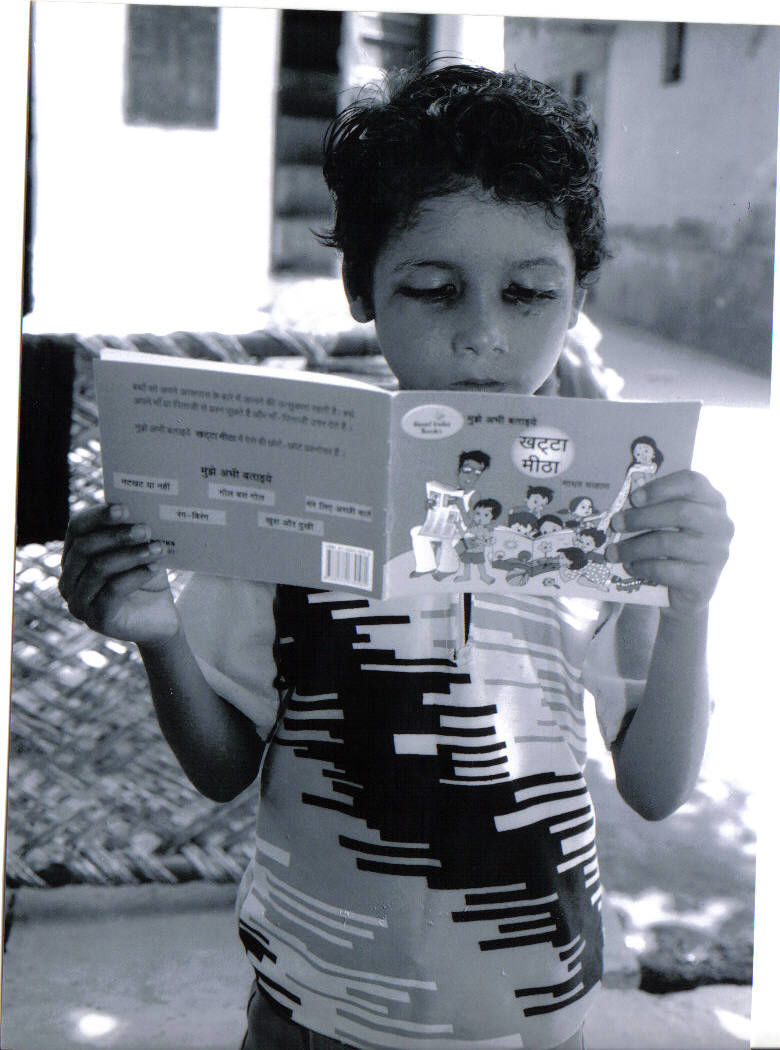
A child and an adult sharing a picture book together. Photograph: the subject
Image Credits: Wikimedia Commons
A toddler who hands you the same book for the twentieth time is not being unimaginative. Repetition is how young children learn, because their brains need many exposures before a word, a sequence or an idea sticks.
Adults seek novelty, but toddlers seek mastery. A known story lets a child predict what happens next, join in with the words, and feel competent, all at once.
This article explains why toddlers love repeating the same story again, including what repetition does for language, why predictability calms them, how repetition builds memory, what to do when you are bored, and when to offer something new.
What repetition does for language
Young children need to hear words many times before they understand them, and many more times before they try saying them. A single reading introduces a word, but repeated readings give it meaning.
On the first readings, a child follows the pictures and the main character. On later readings, attention shifts to new details: a character's feelings, a repeated phrase, a word that was unclear before.
Words a child missed on the third reading can become clear on the seventh. By the twelfth reading, many children say the words slightly before the adult does, which is not cheating but the whole point.
Storybooks are unusually rich in vocabulary. According to the World Economic Forum's summary of the research, storybooks contain 50 percent more rare words than prime-time television and even college students' conversations.
That density is why repetition matters so much. A child cannot absorb dozens of unfamiliar words in one sitting, but across many sittings the rare words become familiar.
Repeated readings also teach sentence structure and narrative shape. Children learn that stories have a beginning, a problem and a resolution, and that knowledge transfers to every new book they meet.
Why predictability calms them
A toddler's world is full of things they cannot control: where they go, what they eat, when they sleep. A familiar story is one thing that always behaves the same way.
A story with a known ending can be trusted. The problem will be solved, the characters will be okay, and the ending will arrive exactly on time.
That predictability is genuinely regulating for a young nervous system. Knowing what comes next lowers anxiety and lets the child relax into the story instead of bracing for surprise.
Choosing the book is part of the appeal too. Picking the same book is one of the few choices a toddler fully controls, and that control feels good in a day run by adults.
Bedtime strengthens the effect. Activities just before sleep are particularly well remembered by young children, and a calm, familiar ritual helps the day end on a safe note, as our guide to building a bedtime routine explains.
How repetition builds memory
Two principles of memory development explain the toddler's love of repeats. Younger children need longer to encode information than older children, and they forget faster.
The numbers make the point clearly. One-year-olds learn a sequence of new actions twice as fast as six-month-olds, according to the World Economic Forum's summary of developmental research.
Retention grows with age as well. A 1.5-year-old typically remembers a sequence of new actions for two weeks, while a two-year-old remembers for three months.
Repeated exposure closes that gap. Being read the same story four times rather than two times improved 1.5-year-olds' and two-year-olds' accuracy in reproducing the actions needed to make a toy rattle.
Books and videos are also harder to learn from than direct experience, because two-dimensional information is harder to encode. Repeated exposure gives the brain more chances to store it.
The same pattern shows up in television research. Five consecutive days of viewing the same episode of Blue's Clues increased three- to five-year-olds' comprehension of the content and their interaction with the program, compared with viewing it only once.
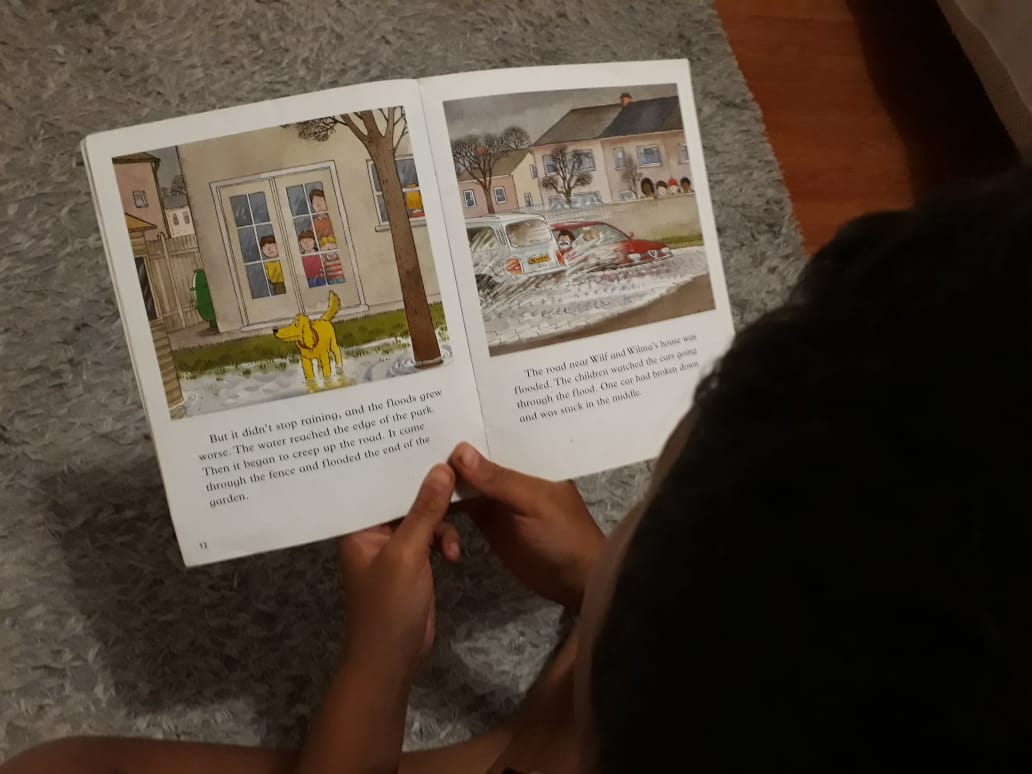
A young child reading a picture book on their own. Photograph: the subject
Image Credits: Wikimedia Commons
What to do when you are bored
Boredom is normal, and it is not a sign that repetition is harming your child. The adult's job is to keep the ritual warm while the child keeps learning from it.
Focus on something new with each retelling. One day look closely at the pictures, the next day focus on the text, and another day have your child fill in missing words.
Relate the story to real events in your child's world. A story about rain becomes richer when you talk about the rain you saw that morning, and that broader context talk further promotes cognitive skills.
Let the child take a bigger role over time. Filling in words, turning pages and correcting your deliberate mistakes all build confidence and show the child their knowledge matters.
Vary your performance, not the book. New voices for characters, slower pacing on a favourite page, or pausing before the funny line can keep the reading fresh for the adult without breaking the child's ritual.
When to offer something new
Repetition has a natural end. Once a child has encoded enough information about a story, interest fades on its own, and the child moves toward novelty without being pushed.
Offer new books alongside the favourite, never instead of it. A good bridge is another book by the same author, or a book on a similar topic, which keeps some familiarity while adding new words.
Information books work well as companions to storybooks. They use quite different structures and more complex words, which stretches vocabulary in a new direction.
Watch for the child starting to retell the story alone, correct your mistakes, or act it out in play. Those are signs the learning from that book is consolidating, and a new favourite may be near.
There is no need to worry if the phase lasts weeks or months. One day there will be a new favourite, and the current one, loved or loathed, will go back on the shelf.
Frequently asked questions
Is it normal for a toddler to want the same book every night?
Yes, it is completely developmentally normal. Repetition builds language, memory and emotional security, and most toddlers pass through intense favourite-book phases.
Does repetition actually teach anything new?
Yes. Each rereading lets the child focus on a different element, from pictures to vocabulary to story structure, and research shows repeated readings improve word learning and action memory.
Should I refuse the same book to encourage variety?
Refusing usually backfires, because it removes a source of comfort and learning. Offer new books alongside the favourite and let the child choose when to move on.
How long does a favourite-book phase last?
It varies from weeks to months, and it ends on its own once the child has learned what the book has to teach. Offering related books can gently widen the range in the meantime.
The bottom line
A toddler's repeated story is a learning strategy, not a lack of imagination. Each rereading adds vocabulary, strengthens memory and gives the child the confidence of knowing what comes next.
Read it again, and use each retelling to notice something new together. The phase will pass on its own, and the love of books it builds will last far longer than the book itself.
Tags: Toddlers, Reading, Child development, Bedtime
Rive News is a research desk covering home, health, money and everyday science topics, writing explainers from public sources rather than personal experience.
Related
- Why Babies Love Peekaboo at a Certain Age: The Brain Science
- What Age Should a Child Start Reading on Their Own
- How to Build a Bedtime Routine Kids Actually Follow
Subscribe for one practical parenting explainer each week.
Rive News publishes general information only. Corrections are welcome through the research desk.
Related stories
Why babies cry more in the evening: the witching hour explained
The witching hour is the fussy evening stretch most newborns hit daily. Why overtiredness, cluster feeding, and overstimulation stack up
When Do Babies Start Sleeping Through the Night by Month?
Most babies sleep through the night between 3 and 6 months, with regressions at 4 and 8 to 10 months. See the month-by-month table

Why Your Baby Wakes Up the Second You Put Them Down
Newborns wake when put down as the startle reflex, light sleep, and lost warmth hit at once. It is normal and peaks early, fading