
What age should a child start reading on their own
By Rive News / Research desk | Rive News / Published October 20, 2026 at 9:00 AM PKT
Key takeaways
- Most children read simple books on their own between ages 5 and 7, and read independently by the end of second grade.
- Reading builds in layers: letter knowledge, then sounds, then blending, then fluency, and each layer has its own window.
- Daily read-aloud time matters more than any program, and steady progress matters more than the exact starting age.
Reading on their own means a child can pick up a book and read it without an adult decoding every word. It does not happen in one leap. It builds in layers over several years, from recognizing letters to sounding out words to reading fluently with understanding.
There is no single magic age. Most children read simple books independently between ages 5 and 7, and most read with real independence by the end of second grade. This article covers reading timelines, including the typical ages for each stage, the skills that build a reader, how parents can support each stage, and when to ask for help.
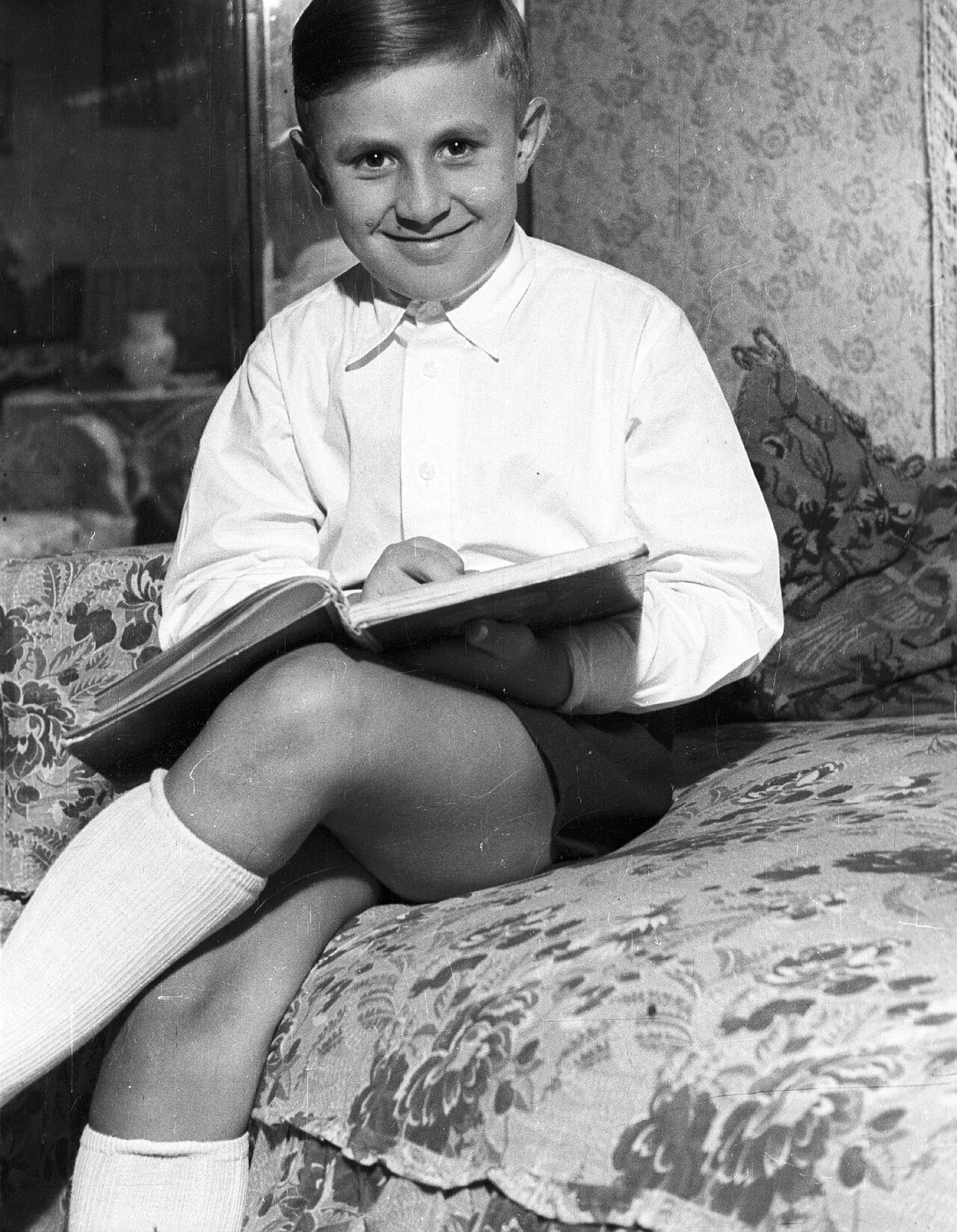
A boy reading a book on his own; most children reach this stage between ages 5 and 7.
Image Credits: Wikimedia Commons
The typical reading timeline
Reading starts long before a child decodes a single word. Babies build the foundation by listening to voices, songs, and stories.
Toddlers learn that print carries meaning, point at pictures, and memorize favorite books. None of this looks like reading, but all of it is reading preparation.
Between ages 3 and 5, the pre-reading skills arrive. According to Reading Rockets, typical preschoolers can identify 10 or more alphabet letters, especially the letters in their own name.
They begin to recognize beginning sounds in spoken words and play with rhyming. Many start "reading" familiar books from memory, which builds confidence with print.
Ages 4 to 5 bring early phonics. Children connect letters to sounds, blend simple three-letter words like "cat" and "dog," and recognize common sight words such as "the" and "is.
" Some children read simple words at this stage while others are still building the groundwork. Both are completely normal.
In the United States, formal reading instruction typically begins in kindergarten, around age 5, with a full reading curriculum in first grade at age 6. By the end of kindergarten, most children read simple decodable books independently. By the end of first grade, they read simple texts with comprehension.
By the end of second grade, most students read independently. EdNavigator notes that second graders build speed and fluency until they can sound out most words on their own. Around age 8, children shift from "learning to read" to "reading to learn," using reading to absorb science, history, and new ideas.
The range is wide at every step. Some children read fluently at 4. Others do not click until 7 or 8. Early or late reading does not predict long-term success. What matters most is consistent support and steady progress in the right direction.
The skills that build a reader
Reading rests on a stack of smaller skills, and each one has its own developmental window. Print awareness comes first: understanding that text runs left to right and top to bottom, and that those marks carry a message. Toddlers pick this up from being read to.
Phonological awareness follows. This is the ability to hear and play with the sounds inside spoken words: rhyming, clapping syllables, and eventually isolating individual sounds.
Research links strong phonological awareness in the preschool years to later reading success. It is an ears-only skill, no letters required.
Phonics connects those sounds to letters. Children learn that the letter "b" makes the "buh" sound, then blend sounds into words. This is the engine of early decoding, and it is why systematic phonics instruction sits at the heart of most kindergarten and first-grade curricula.
Fluency is what turns decoding into reading. A fluent reader recognizes most words instantly and reads with expression, which frees up mental energy for comprehension. Fluency grows through practice, which is why the volume of reading matters so much in the early grades.
Comprehension is the point of the whole enterprise. Understanding vocabulary, following a story's sequence, and later making inferences are what turn word-calling into actual reading. Children build comprehension through conversation and being read rich, complex stories, even before they can decode them.
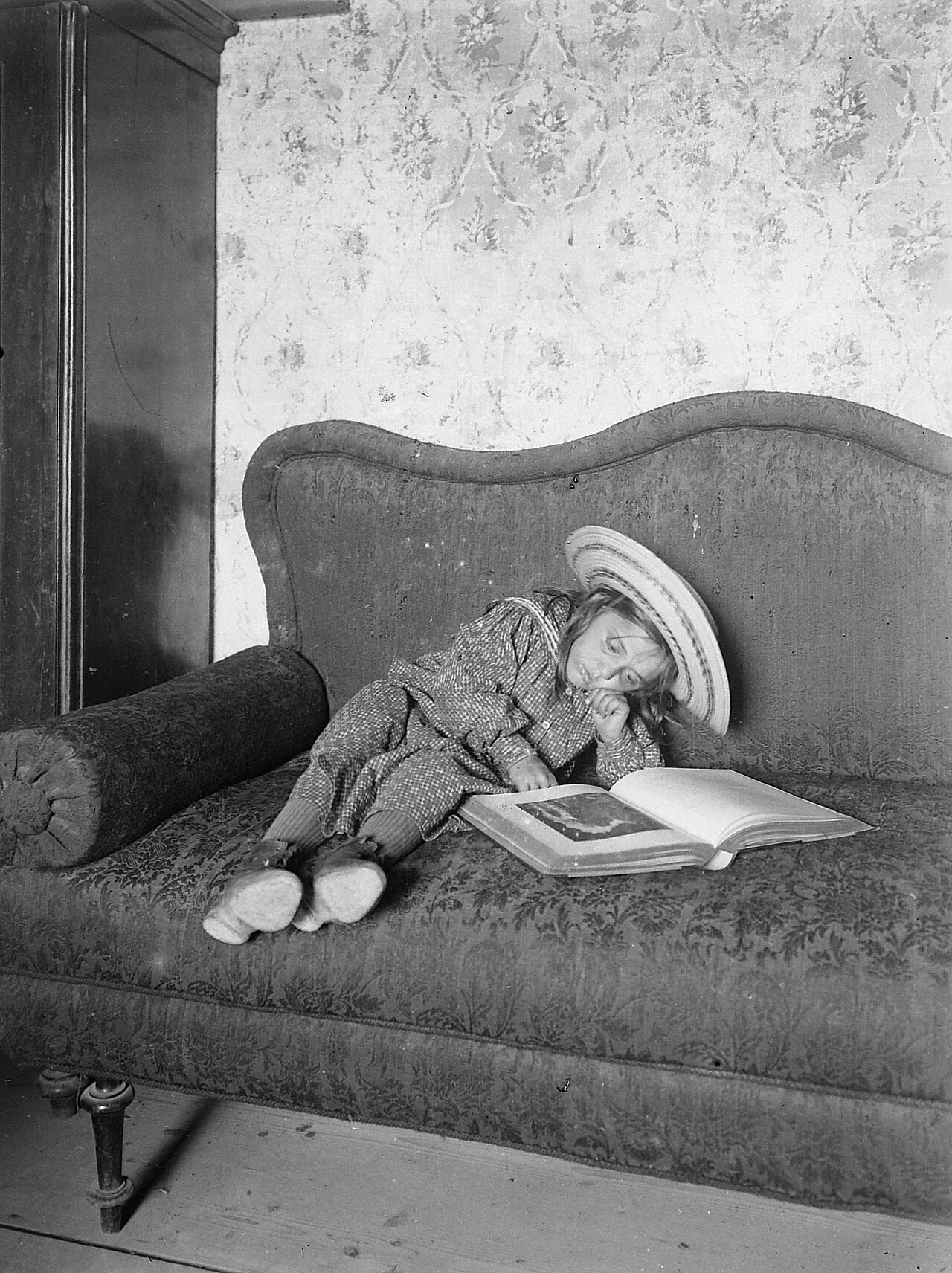
A child in a hat reading a large book on a sofa; daily read-aloud time builds the vocabulary that later reading depends on.
Image Credits: Wikimedia Commons
How parents can support each stage
Read aloud every day, from infancy onward. This single habit does more for literacy than any app or program.
It builds vocabulary, models fluent reading, and teaches children that books are pleasurable. Keep reading to your child even after they can read alone, since your read-alouds expose them to richer language than they can decode themselves.
Talk, sing, and rhyme with babies and toddlers. Nursery rhymes, silly songs, and back-and-forth chatter build the sound awareness that phonics later depends on. Point to words as you read them aloud so children connect spoken and printed language.
Play with letters in the preschool years. Magnetic letters, alphabet puzzles, and games like "I spy something that starts with B" make letter-sound connections fun. Let your child "write" messages in scribbles and letter-like shapes, and celebrate the attempts.
Let your child choose their own books. A trip to the library where the child picks is worth more than a shelf of parent-chosen classics they ignore.
Interest drives practice, and practice drives fluency. Comics, joke books, and nonfiction about dinosaurs all count as real reading.
Keep practice sessions short and positive. Ten happy minutes beat thirty miserable ones. Praise effort over accuracy, and let your child lead during shared reading: point to words, sound out new ones together, and self-correct gently when errors do not make sense.
Model reading yourself. Children who see their parents reading for pleasure learn that reading is something people do, not just something school demands. A house with books lying around sends a louder message than any lecture about literacy.
Children develop at different rates in every domain, and reading is no exception. If your child seems to learn at a different pace than peers, that difference alone is not a verdict on their ability.
When to ask for help
Steady progress is the key signal. If your child is consistently missing multiple milestones for their age group, talk to their teacher or pediatrician. Early support is much more effective than waiting, and many reading difficulties respond very well to targeted intervention when identified early.
Specific warning signs include no interest in books or rhyming by age 4, inability to recognize letters by the end of kindergarten, and no progress in sounding out words during first grade. A family history of dyslexia or other reading difficulties is another reason to check in sooner.
Ask the teacher what they are seeing. Teachers can tell you whether your child is on a normal-but-slow curve or genuinely stuck, and schools can evaluate for learning differences when concerns persist. You always have the right to request an evaluation if you feel concerns are not being addressed.
Struggling readers sometimes develop avoidance behaviors around school. If reading frustration is turning into school refusal, address both the reading and the anxiety together rather than treating either one alone.
For older children, reading speed and strategy matter too. The same patient, stepwise approach in how to read a textbook faster without missing the point applies once the basics are solid.
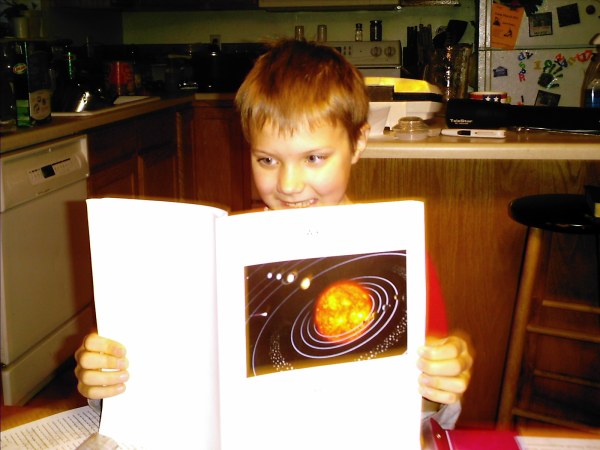
A boy reading a book about the solar system on his own; independent reading usually arrives between ages 5 and 7 for simple books.
Image Credits: Wikimedia Commons
The bottom line
Most children start reading simple books on their own between ages 5 and 7, and read with real independence by the end of second grade. The path runs through letter knowledge, sound play, phonics, and fluency, and every child walks it at their own pace. Your job is simpler than the milestone charts make it look: read aloud daily, talk and rhyme plenty, let them choose their books, and keep practice short and happy.
If progress stalls across several milestones, ask the teacher early. Direction matters more than speed, and a supported reader almost always gets there.
Frequently asked questions
What is the normal age to start reading?
Most children read simple books independently between ages 5 and 6, typically during kindergarten. By the end of second grade, around age 7 to 8, most read independently with basic comprehension. Both earlier and later starts fall within the normal range.
Should I teach my 3-year-old to read?
You do not need formal lessons at 3. Focus on the foundations: read aloud daily, play rhyming games, sing songs, and let your child explore letters through play. Formal phonics instruction can wait for kindergarten without costing your child anything.
My 7-year-old still struggles with reading. Should I worry?
Not necessarily, but do act. Talk to the teacher about whether your child is progressing, even slowly.
If multiple milestones are being missed or progress has stalled, request an evaluation. Early, targeted support works far better than waiting.
Does reading to my baby really make a difference?
Yes. Being read to builds vocabulary, sound awareness, and print awareness from the first months of life. Children who are read to daily arrive at school with a measurable head start in the skills that reading instruction builds on.
Rive News is the research desk behind this explainer series, writing plain-language parenting guides from public sources.
Latest in Parenting
- What to do when your child refuses to go to school
- Why does your baby fight sleep even when tired
- What to do when your teenager stops talking to you
- How to teach a child to share without forcing it
Subscribe for weekly parenting research summaries in your inbox.
© 2026 Rive News. All rights reserved.
Related stories
Why babies cry more in the evening: the witching hour explained
The witching hour is the fussy evening stretch most newborns hit daily. Why overtiredness, cluster feeding, and overstimulation stack up
When Do Babies Start Sleeping Through the Night by Month?
Most babies sleep through the night between 3 and 6 months, with regressions at 4 and 8 to 10 months. See the month-by-month table

Why Your Baby Wakes Up the Second You Put Them Down
Newborns wake when put down as the startle reflex, light sleep, and lost warmth hit at once. It is normal and peaks early, fading