
Why does your baby fight sleep even when tired
By Rive News / Research desk | Rive News / Published October 20, 2026 at 9:00 AM PKT
Key takeaways
- Overtired babies release cortisol and adrenaline, creating a wired second wind that makes sleep harder, not easier.
- Newborns manage only 45 to 90 minutes awake; windows stretch to 3 to 5 hours by 12 to 18 months.
- Catching early tired cues and moving bedtime earlier by 10 to 20 minutes usually breaks the cycle within days.
A baby fighting sleep is a baby resisting rest even though they clearly need it. They arch their back, cry harder when rocked, and seem to get more wired the more tired they become. It looks like defiance, but it is biology.
The main culprit is overtiredness. When a baby stays awake past their comfort window, the body releases stress hormones that block sleep instead of inviting it. This article explains why babies fight sleep, including the overtiredness trap, wake windows by age, other hidden causes, and gentle ways to reset the pattern.

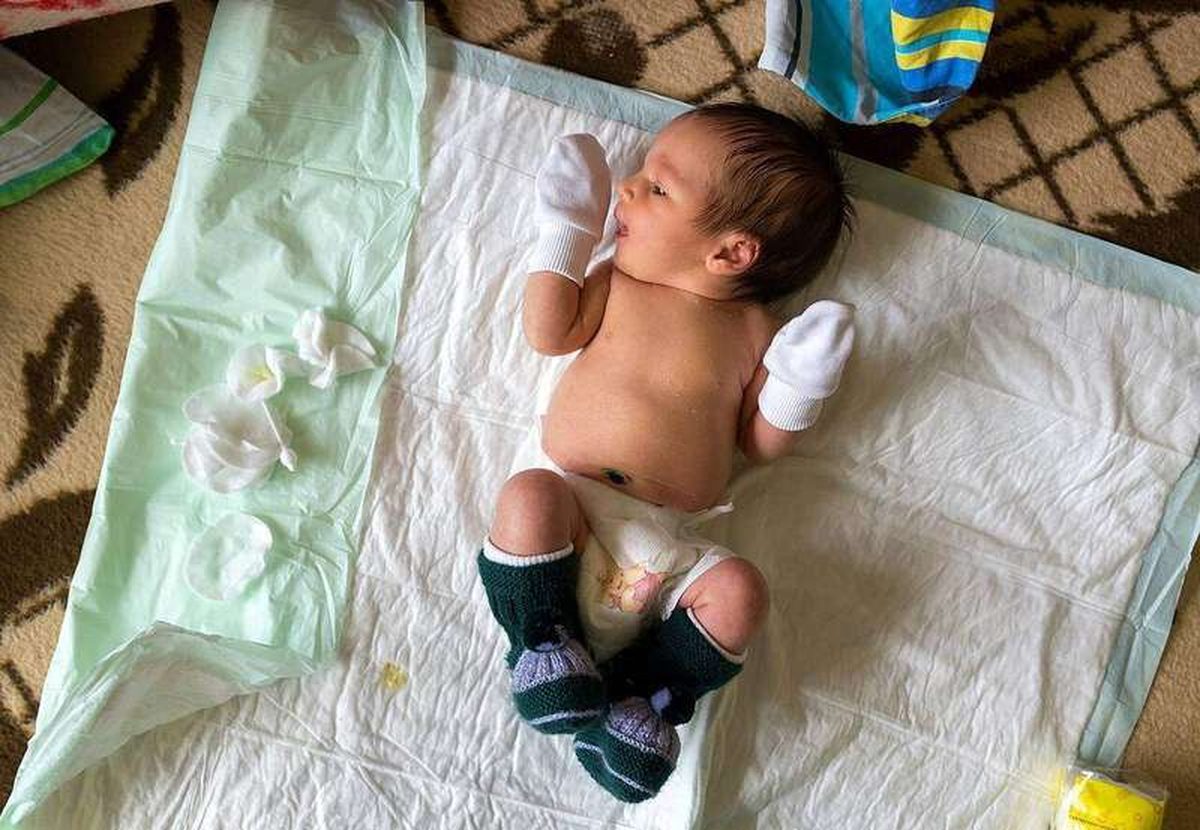
A baby lying on soft bedding; catching the sleep window before overtiredness sets in makes settling far easier.
Image Credits: Wikimedia Commons
The overtiredness trap
It seems logical that a very tired baby would fall asleep easily. The opposite is often true.
When babies stay awake too long, their bodies release cortisol and adrenaline as a stress response. These hormones create a "second wind" that makes falling asleep much harder, even though the baby desperately needs rest.
Cortisol does more than keep the brain alert. It actively interferes with melatonin, the hormone the body needs to fall and stay asleep. So the overtired baby is fighting a chemical headwind: the very hormones that should be winding down are switched off, and the stress hormones are switched on.
Watch for the signs that you have missed the sleep window. Early tired cues include zoning out, slower blinking, turning away from lights or toys, and the first yawn. Once the window closes, the signs flip: sudden loud crying with no clear cause, back arching, clenched fists, and a hyper, giggly wiredness that looks like energy but is not.
This is also why an overtired baby can look almost manic before crashing. The hyperactivity is the stress response doing its job, the same fight-or-flight system adults feel in emergencies.
Your baby is not being difficult. Their nervous system has tipped into stress mode.
Wake windows by age
Every baby has a limit on how long they can stay awake before their nervous system tips into stress mode. These "wake windows" expand as babies mature. Missing the window by even 15 minutes can unravel the next nap or bedtime.
Published guidance from infant sleep sources gives these rough ranges. Newborns from birth to 12 weeks manage about 45 to 90 minutes awake. Babies aged 3 to 6 months handle 1.5 to 2.5 hours.
From 6 to 12 months, the window stretches to 2 to 3.5 hours. Toddlers from 12 to 18 months manage 3 to 5 hours.
Treat these as starting points, not rules. Some babies run shorter, some longer.
The useful move is to watch your own baby's cues against the clock for a few days and find their personal window. A short sleep log, even just nap times scribbled on paper, reveals the pattern fast.
Note the tricky middle case: a baby can be undertired for one nap and overtired by bedtime. Short naps that do not reset sleep pressure build a sleep debt across the day. When that happens, focus on the whole 24-hour picture rather than fixing a single nap.
Other reasons babies fight sleep
Overtiredness is the headline cause, but it is not the only one. Undertiredness sits at the other end: a baby who has not built up enough sleep pressure will also toss, babble, and resist. If your baby takes forever to fall asleep but wakes up happy, undertiredness is the likelier culprit.
Overstimulation is a quiet saboteur. Bright lights, background television, being passed from person to person, or a busy outing can push a tired baby past their limit fast. An overstimulated baby fights sleep more aggressively, because every new input is another thing for a tired brain to process.
Discomfort and environment matter too. Temperature swings, scratchy clothing, background noise, and light exposure can all keep a baby from settling. Around 3 to 4 months, sleep cycles mature and babies wake more between cycles, which can look like new sleep fighting but is really a developmental shift.
Separation anxiety joins the mix later in the first year. A baby who previously settled fine may start protesting at bedtime because being apart now feels different, and a fear of the dark often arrives with it. New motor skills like rolling, crawling, and standing can also disrupt sleep temporarily, as babies practice in the crib instead of sleeping.
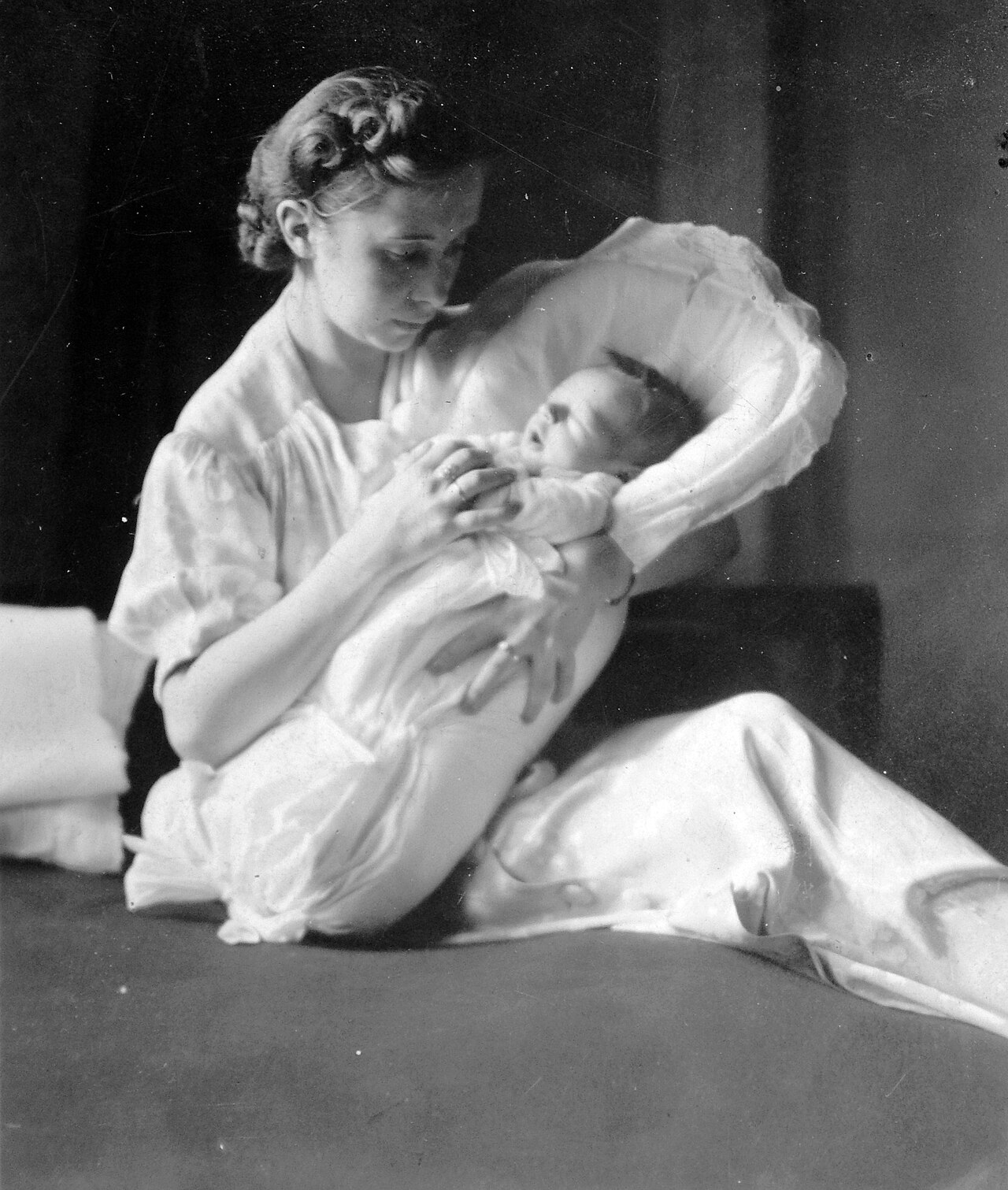
A mother holding her newborn; in the early weeks, awake windows can be as short as 45 minutes.
Image Credits: Wikimedia Commons
Gentle ways to break the cycle
Start with a calm, dark, low-stimulation reset. Dim the lights, turn on white noise, and hold your baby close with gentle rocking.
Skin-to-skin contact can be especially calming. Avoid trying to entertain your baby to sleep, since that adds stimulation to an already overwhelmed system.
Move bedtime earlier, not later. It feels counterintuitive, but an earlier bedtime is the standard fix for overtiredness.
Shifting the next nap or bedtime earlier by just 10 to 20 minutes for a few days often smooths evenings noticeably. For babies under 6 months, bedtimes after 8 PM often lead to fragmented night sleep and very early waking.
Tighten the wake windows for a few days. With consistent early bedtimes and age-appropriate windows, most babies recover from overtiredness within 1 to 3 days.
Severe sleep debt can take up to a week. Let recovery naps run long rather than waking the baby to protect bedtime, with one exception: avoid naps within 3 hours of bedtime.
Simplify the sleep cues. Darkness, a comfortable temperature, a safe sleep setup, and the same short routine every time. Predictability teaches the baby's body what comes next, which lowers the stress response before it starts.
Know when to call the pediatrician. If sleep fighting comes with feeding distress, repeated vomiting, poor weight gain, fever with a behavior change, or breathing difficulty, get medical advice.
Also check in if you have kept stable timing and a sleep-supportive routine for a few weeks with no improvement. Bringing a short sleep log helps the doctor see the pattern.
Older children fight sleep too, for different reasons. If bedtime battles continue into the school years, anxiety is often underneath, and the same principles from what to do when your child refuses to go to school apply: calm routines, validated feelings, and early help when the pattern sticks.
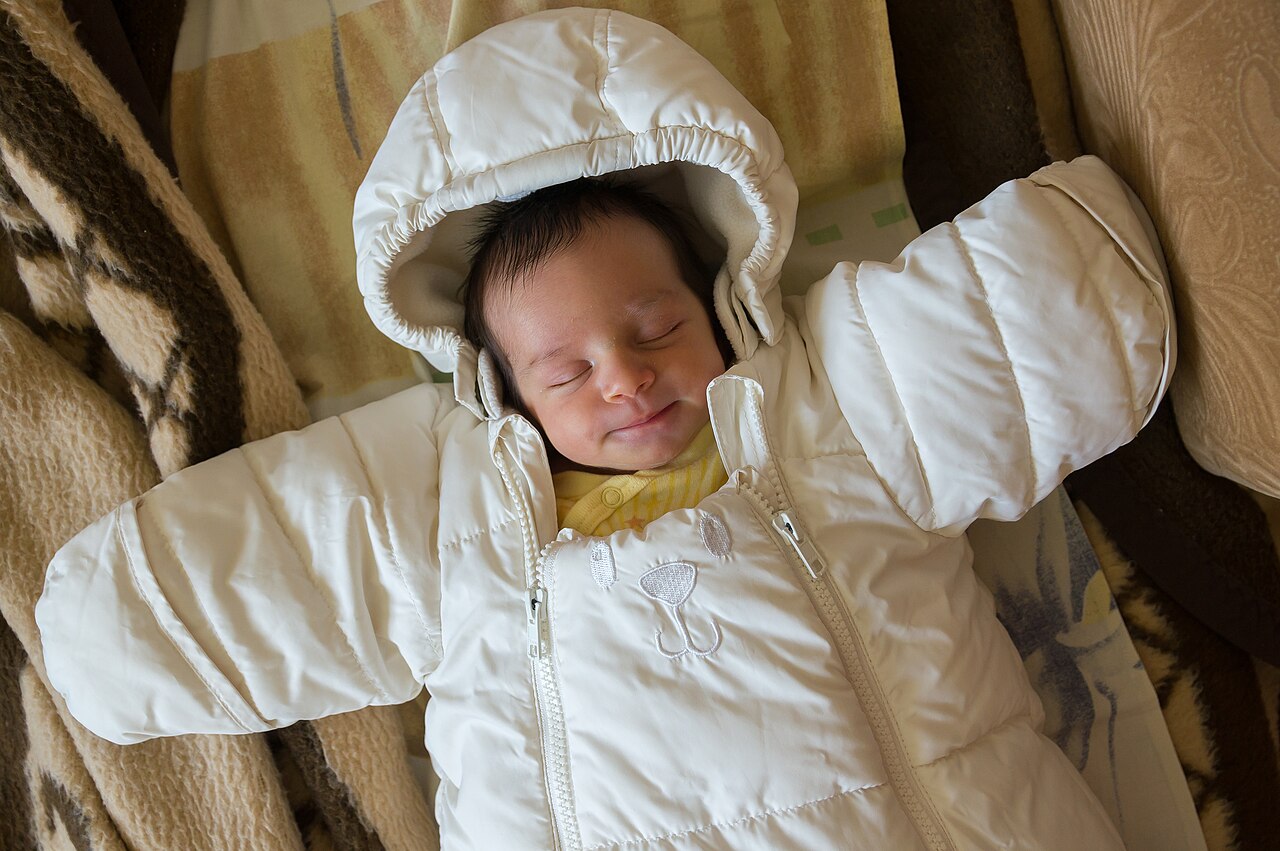
A sleeping baby in a warm hooded outfit; consistent routines and the right wake windows keep sleep from becoming a nightly battle.
Image Credits: Wikimedia Commons
The bottom line
Babies fight sleep because their bodies work against them once they pass their limit. Cortisol and adrenaline create a wired second wind, block melatonin, and turn settling into a struggle. The fix is usually simple: learn your baby's wake window, catch the early tired cues, and move bedtime a little earlier for a few days.
Most families see improvement within a week. And if evenings also bring long crying spells at the same time each day, that may be a different pattern worth reading about in why babies cry at the same time every evening.
Frequently asked questions
Why does my baby get hyper when overtired instead of sleepy?
The hyperactivity is a stress response. When a baby stays awake too long, the body releases cortisol and adrenaline, which evolved to help humans push through fatigue in emergencies. The result looks like energy, but it is the opposite: a wired nervous system that cannot wind down.
How long do wake windows last at each age?
As a rough guide: newborns 45 to 90 minutes, 3 to 6 months 1.5 to 2.5 hours, 6 to 12 months 2 to 3.5 hours, and 12 to 18 months 3 to 5 hours. Individual babies vary, so use your baby's tired cues to fine-tune.
Should I wake my baby from a nap to protect bedtime?
Generally no, while you are breaking an overtired cycle. Let recovery naps run so the sleep debt clears, then return to normal nap lengths after a few days. The one exception is avoiding naps within about 3 hours of bedtime.
Can a baby be overtired and undertired at the same time?
Yes. Short naps that do not reset sleep pressure can leave a baby undertired for one nap but overtired by evening, as sleep debt accumulates. Look at the full 24-hour pattern instead of judging a single nap.
Rive News is the research desk behind this explainer series, writing plain-language parenting guides from public sources.
Latest in Parenting
- What to do when your child refuses to go to school
- What to do when your teenager stops talking to you
- How to teach a child to share without forcing it
- What age should a child start reading on their own
Subscribe for weekly parenting research summaries in your inbox.
© 2026 Rive News. All rights reserved.
Related stories
Why babies cry more in the evening: the witching hour explained
The witching hour is the fussy evening stretch most newborns hit daily. Why overtiredness, cluster feeding, and overstimulation stack up
When Do Babies Start Sleeping Through the Night by Month?
Most babies sleep through the night between 3 and 6 months, with regressions at 4 and 8 to 10 months. See the month-by-month table

Why Your Baby Wakes Up the Second You Put Them Down
Newborns wake when put down as the startle reflex, light sleep, and lost warmth hit at once. It is normal and peaks early, fading