
How to teach a child to share without forcing it
By Rive News / Research desk | Rive News / Published October 20, 2026 at 9:00 AM PKT
Key takeaways
- Forcing a handover teaches children that the biggest or loudest grabber wins, the opposite of generosity.
- Teach turn-taking instead: each child's turn lasts as long as they want, and the toy always comes back.
- Name feelings first, model sharing out loud daily, and let kids keep one or two special toys private.
Sharing does not come naturally to small children. To a toddler, a toy feels like part of themselves, so being told to hand it over feels like a loss. Forcing the handover might buy quiet in the moment, but it teaches the wrong lesson.
The goal is not a child who surrenders toys on command. It is a child who discovers, through experience, that sharing feels good. This article explains how to teach sharing without force, including why forcing backfires, how turn-taking works, the exact words to use, and how to handle the child who waits.

Two children playing together outdoors; turn-taking during play teaches sharing better than forced handovers.
Image Credits: Wikimedia Commons
Why forcing backfires
When an adult pries a toy from one child and hands it to another, the lesson the child learns is about power, not kindness. The child learns that whoever is bigger or louder wins. That is the opposite of what sharing is supposed to teach.
Snatching also makes children more anxious about their things. Dr. Laura Markham, clinical psychologist and founder of Aha!
Parenting, puts it bluntly: "I would not force a child to share toys. Instead, introduce the concept of taking turns. " She warns that always taking things away when adults decide a child has had enough teaches children to grab, and makes them less likely to share on their own.
Shaming does similar damage. Calling a child "selfish" labels the child instead of guiding the behavior, and labels stick. A child who hears they are selfish starts to believe it, which makes generous behavior less likely, not more.
There is also a simple developmental truth: young children are egocentric by design. Children under about 4 often cannot yet take another child's perspective.
Expecting a 2-year-old to share like a 6-year-old sets everyone up for frustration. Sharing is a years-long build, not a single lesson.
Turn-taking that actually works
Replace "share" with "take turns." The word "share" is abstract, but "your turn, then Sam's turn" is concrete and fair. Children understand turns long before they understand generosity.
Let each turn last as long as the child wants. This is Markham's unusual but powerful rule. Instead of timing turns with an arbitrary number of minutes, let the child use the toy until they feel done, then guide the handover: "When you're done with that, will you give it to Isabella?
Great, thanks! "
The logic is simple. When children can use something to their heart's content without fear of losing it, they stop guarding it so fiercely.
They get the experience of giving the toy away once they genuinely feel finished. Over time, that experience turns into real generosity rather than performed compliance.
Make sure the toy comes back. This is the trust loop that makes the whole system work.
A child who learns that sharing means losing will never share willingly. A child who learns that the toy always returns discovers that sharing is safe.
Use a timer for older toddlers who need visible fairness. A sand timer or phone timer makes waiting concrete: "You have it now, and when the timer beeps it's Sam's turn." Just be sure the timer marks a turn, not a seizure, and that the toy returns afterward.
Try parallel play for very young children. Two toddlers can play side by side with similar toys without using the same object. "You build the road while your friend drives the truck" creates cooperation without unnecessary competition.
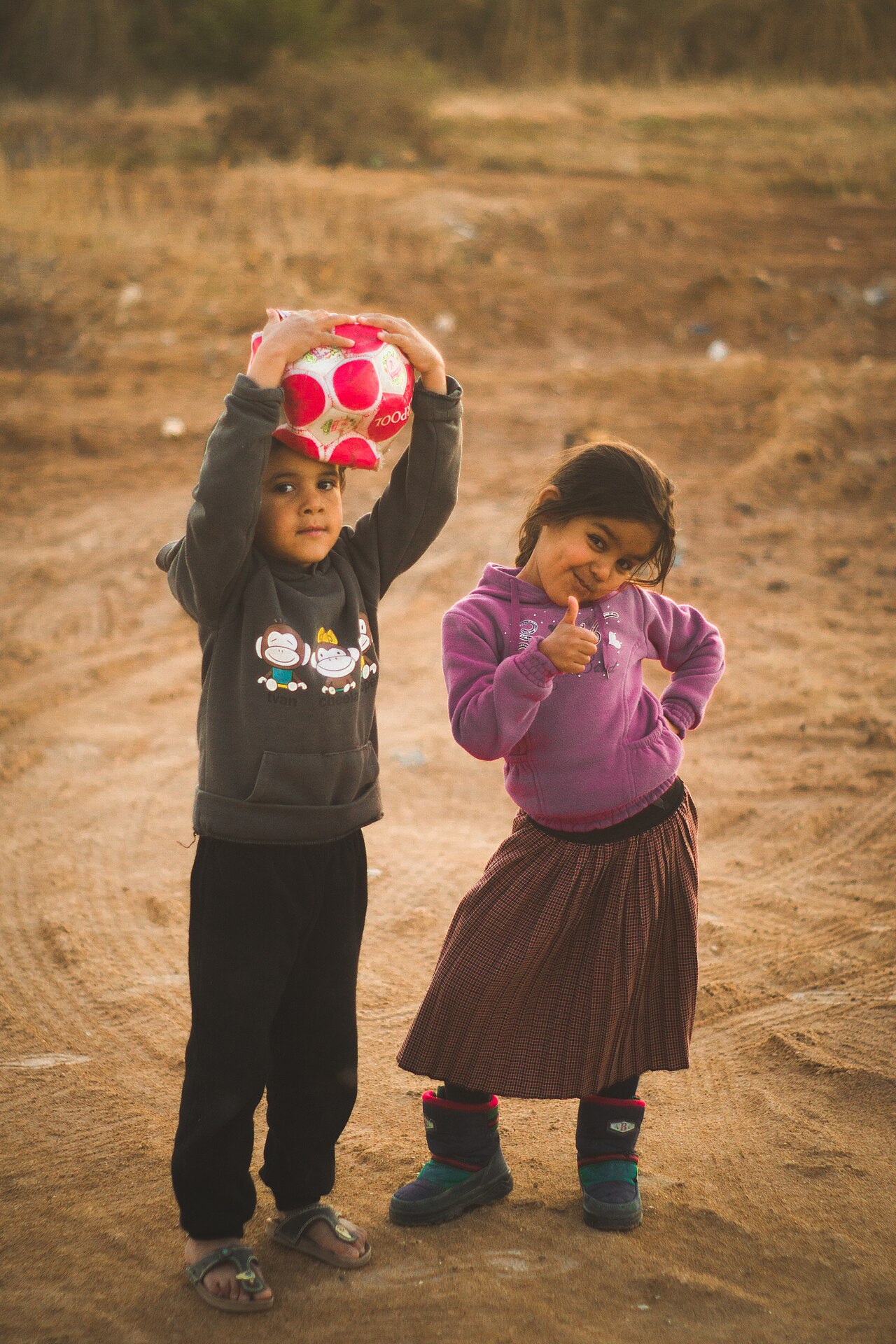
Two children playing with a ball outdoors; shared play works best when turns feel fair and predictable.
Image Credits: Wikimedia Commons
The words to use
Name the feeling before you move the toy. "You really want to keep that right now" shows your child you understand.
A child who feels understood finds it far easier to let go. A child who feels overruled digs in.
Teach short scripts children can actually remember. ChildCareEd recommends phrases like "Can I have a turn when you're done?
", "You go next," and "I'm still using it. " Practice these at calm moments, not mid-meltdown, so the words are ready when they are needed.
Offer limited choices that preserve the child's agency. "Would you like to use the timer or trade for the blue car?
" keeps the interaction structured without forcing a surrender. Choices turn a power struggle into a decision.
Model sharing out loud, all day long. "I'm going to share my apple with you. " "Thank you for letting me have a turn.
" Toddlers copy what they see far more than what they are told. Let them watch generosity happen around them constantly.
Praise specifically, not vaguely. "You gave Sam a turn. Look how happy he is!
" tells the child exactly what to repeat. A generic "good boy" or "good girl" carries no information about what was good.
Keep some toys private. Before a friend comes over, let your child choose one or two precious toys to put away.
Asking a small child to share everything is a big ask, and a couple of exceptions make sharing the rest feel possible. Security first, generosity second.
Helping the child who waits
Waiting is the hard part of turn-taking, and it needs its own coaching. Do not just tell the waiting child to be patient. Help them wait actively by finding something engaging to do in the meantime, or by narrating the wait: "Sam is still playing.
Your turn is coming. "
Acknowledge that waiting feels bad. "It's hard to wait for the truck, isn't it? " validates the frustration without fixing it prematurely.
Sometimes the waiting child needs to cry about how much they want the toy, and that is okay. Markham notes that once a child works through that longing, the intense need often passes on its own.
Keep playdates short while the skill is new. An hour of successful turn-taking beats three hours that end in tears. Step in early when you see tension building rather than waiting for the explosion.
Watch the clock and the child, not just the child. A tired toddler has no patience for turn-taking, so schedule playdates after naps and snacks, not before. The same overtired meltdown cycle described in why babies fight sleep even when tired applies to toddlers: exhaustion shortens every fuse.
If your child struggles with turn-taking at preschool or daycare, treat it as information, not failure. A child who clings rigidly to things may have big feelings about whether they have "enough.
" Extra connection, playful practice with sharing games at home, and patience usually move the needle. Persistent struggles are worth mentioning to the teacher, just as you would with school refusal or other behavioral patterns.
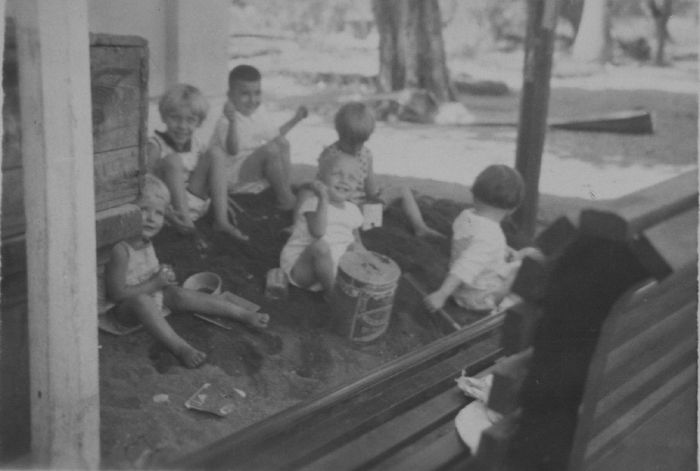
Children playing together in a sandbox; low-pressure group play gives turn-taking plenty of practice.
Image Credits: Wikimedia Commons
The bottom line
Forced sharing teaches power. Chosen sharing teaches kindness. Drop the demand to hand things over on command and build the skill instead: teach turn-taking, let turns run their natural length, guarantee the toy comes back, name feelings first, and model generosity out loud every day.
Progress will be slow and uneven, and that is normal. One day, later than you would like but surely, you will watch your child offer a toy to a friend all on their own. Reading together also builds the habit early, since learning to read is full of natural turn-taking moments like trading pages and taking turns with the pictures.
Frequently asked questions
At what age should a child share?
There is no single age. Most children begin to grasp turn-taking between 3 and 4, but genuine voluntary sharing develops gradually over the preschool years. Expect progress through repetition, not perfection, and adjust your expectations to your child's age.
Should I make my child share their favorite toy?
No. Let your child keep one or two special toys private, especially before playdates. Forcing a child to share what they treasure most breeds resentment, while protecting a few precious items makes sharing everything else feel possible.
What if my child never gives the toy back?
If turns run very long, use a visible timer so the wait feels fair, and coach the waiting child with an engaging alternative. But avoid snatching the toy mid-turn. Trust builds when children learn the handover happens as promised.
Is it okay if my child cries while waiting?
Yes. Crying about wanting the toy is the child processing frustration, not a sign your approach failed.
Comfort them, name the feeling, and help them find something to do while they wait. The ability to wait grows with practice.
Rive News is the research desk behind this explainer series, writing plain-language parenting guides from public sources.
Latest in Parenting
- What to do when your child refuses to go to school
- Why does your baby fight sleep even when tired
- What to do when your teenager stops talking to you
- What age should a child start reading on their own
Subscribe for weekly parenting research summaries in your inbox.
© 2026 Rive News. All rights reserved.
Related stories
Why babies cry more in the evening: the witching hour explained
The witching hour is the fussy evening stretch most newborns hit daily. Why overtiredness, cluster feeding, and overstimulation stack up
When Do Babies Start Sleeping Through the Night by Month?
Most babies sleep through the night between 3 and 6 months, with regressions at 4 and 8 to 10 months. See the month-by-month table

Why Your Baby Wakes Up the Second You Put Them Down
Newborns wake when put down as the startle reflex, light sleep, and lost warmth hit at once. It is normal and peaks early, fading