
What to do when your child refuses to go to school
By Rive News / Research desk | Rive News / Published October 20, 2026 at 9:00 AM PKT
Key takeaways
- School refusal affects 1 to 5 percent of school-age children, peaking at ages 5 to 7 and 11 to 14, and it usually stems from anxiety, not defiance.
- Cognitive behavioral therapy has the strongest research support, using small, supported steps to get the child back into class.
- Keep your child in school if at all possible, build a return plan with teachers, and seek professional help when the fear persists.
School refusal is when a child repeatedly refuses to attend school or stays home because of emotional distress. It is not an official diagnosis on its own. It is a pattern of avoidance, most often driven by anxiety.
A child who refuses school may cry, complain of stomachaches, or simply say no when it is time to leave. The American Academy of Child and Adolescent Psychiatry notes that studies estimate 1 to 5 percent of school-age children struggle with this at some point. This article explains what school refusal is, including why children refuse school, how to respond on a school morning, how to work with the school, and when to seek professional help.

Two children with umbrellas and rolling schoolbags walking to school in the rain, a daily routine that can feel overwhelming for an anxious child.
Image Credits: Wikimedia Commons
Why children refuse to go to school
The most common driver is anxiety, especially separation anxiety in younger children. The AACAP explains that the fear is often about leaving home rather than about school itself. Many of these children calm down once they are actually in the classroom.
Refusal peaks at two points: around ages 5 to 7, when children start school, and again at 11 to 14, around the move to middle school. Both are major transitions, and transitions are when school refusal tends to appear.
Other causes include bullying, academic struggles, and conflict with a teacher or classmates. The Merck Manual lists emotional problems, learning difficulties, fear of a teacher's scolding, and feeling rejected by other children as common triggers. An older child who refuses school for the first time may be dealing with depression, social anxiety, or an undiagnosed learning difficulty.
Watch for the classic pattern: a headache, sore throat, or upset stomach that appears right before school, vanishes when the child stays home, and returns the next school morning. Clinginess, nightmares about separation, and trouble falling asleep alone can also signal separation anxiety. If your child also shows a fear of the dark, the two often travel together.
It helps to know what school refusal is not. Truancy is skipping school on purpose without a parent knowing, often without distress.
School refusal comes with visible upset, and the child usually wants the parent to know. The two need different responses.
How to respond on a school morning
Mornings are where the battle happens, so mornings are where the plan matters. Stay calm and matter-of-fact, even when your child is crying. Children take emotional cues from their parents, and a frantic parent makes an anxious child more anxious.
Keep the routine predictable. Wake up at the same time, follow the same steps, and leave at the same time every day. Predictability lowers anxiety because the child knows exactly what comes next.
Validate the feeling without validating the avoidance. "I can see you feel sick with worry" works better than "There is nothing to be scared of.
" The first tells your child you believe them. The second tells them their feelings are wrong.
Avoid long negotiations. State the plan once, warmly and firmly: "I know mornings feel hard, and we are going to school today.
" Then move through the routine. Long debates give anxiety more time to grow.
Do not let a distressed child stay home unless they are genuinely ill. The Merck Manual is direct on this point: allowing children to stay home usually makes school avoidance worse and risks them falling behind. Each day home teaches the brain that avoidance works.
That said, rule out real illness first. If the stomachache is new, severe, or comes with fever or vomiting, treat it as medical. A quick check with your pediatrician can separate physical causes from anxiety-driven complaints.

Two children sharing an umbrella in heavy rain; keeping the morning routine predictable helps anxious children feel safe.
Image Credits: Wikimedia Commons
Working with your child's school
You cannot fix school refusal alone, and you should not try. The AACAP stresses that treatment works best when the family, the school, and the therapist work together. Start by telling the teacher what is happening.
Ask the school what they are seeing. A child who melts down at home but settles in class points to separation anxiety.
A child who stays distressed all day points to something happening at school, like bullying or academic struggle. The teacher's view completes the picture.
Build a gradual return plan together. For a child who has been home for a while, this can mean a shorter school day at first, then building back up.
It can also mean check-ins with a trusted adult at school, like a counselor or a favorite teacher. Small, supported steps beat one giant leap.
Address the underlying problem directly. If bullying is involved, the school needs a concrete plan to stop it.
If learning struggles are the trigger, ask about an evaluation and extra support. In the United States, schools can formalize support through a 504 Plan or an Individualized Education Program if the child qualifies.
Keep communication steady but brief. A short weekly check-in with the teacher is enough. Daily crisis emails keep everyone, including your child, in emergency mode.
Older children bring different challenges. A teenager who stops talking may be dealing with the same avoidance in a quieter form, and the approach shifts from morning routines to rebuilding conversation.
When to seek professional help
Get help early rather than late. The AACAP states plainly that the sooner families get help, the better things tend to go. Untreated childhood anxiety is linked to a higher chance of struggling with anxiety as an adult.
See a qualified mental health professional if the fear persists for weeks, if your child cannot attend school at all, or if avoidance is spreading into other areas of life. A good evaluation includes talking with the child, the parents, and the teachers, plus a doctor's visit to rule out physical causes.
Cognitive behavioral therapy has the strongest research support for school refusal. CBT teaches coping skills and builds a step-by-step plan to return to school in small, supported steps.
When anxiety or depression is also present, a doctor may recommend medication alongside therapy. In the largest study of its kind, combining therapy and medication worked better than either alone.
Do not wait for a crisis. Missing a lot of school over a long stretch is linked to falling behind academically and becoming isolated from friends. Early treatment protects both learning and friendships.
Sleep problems often ride along with school anxiety. If bedtime has become its own battle, the same calm-routine principles in why babies fight sleep even when tired apply in age-adjusted form: consistent timing, low stimulation, and a predictable wind-down.
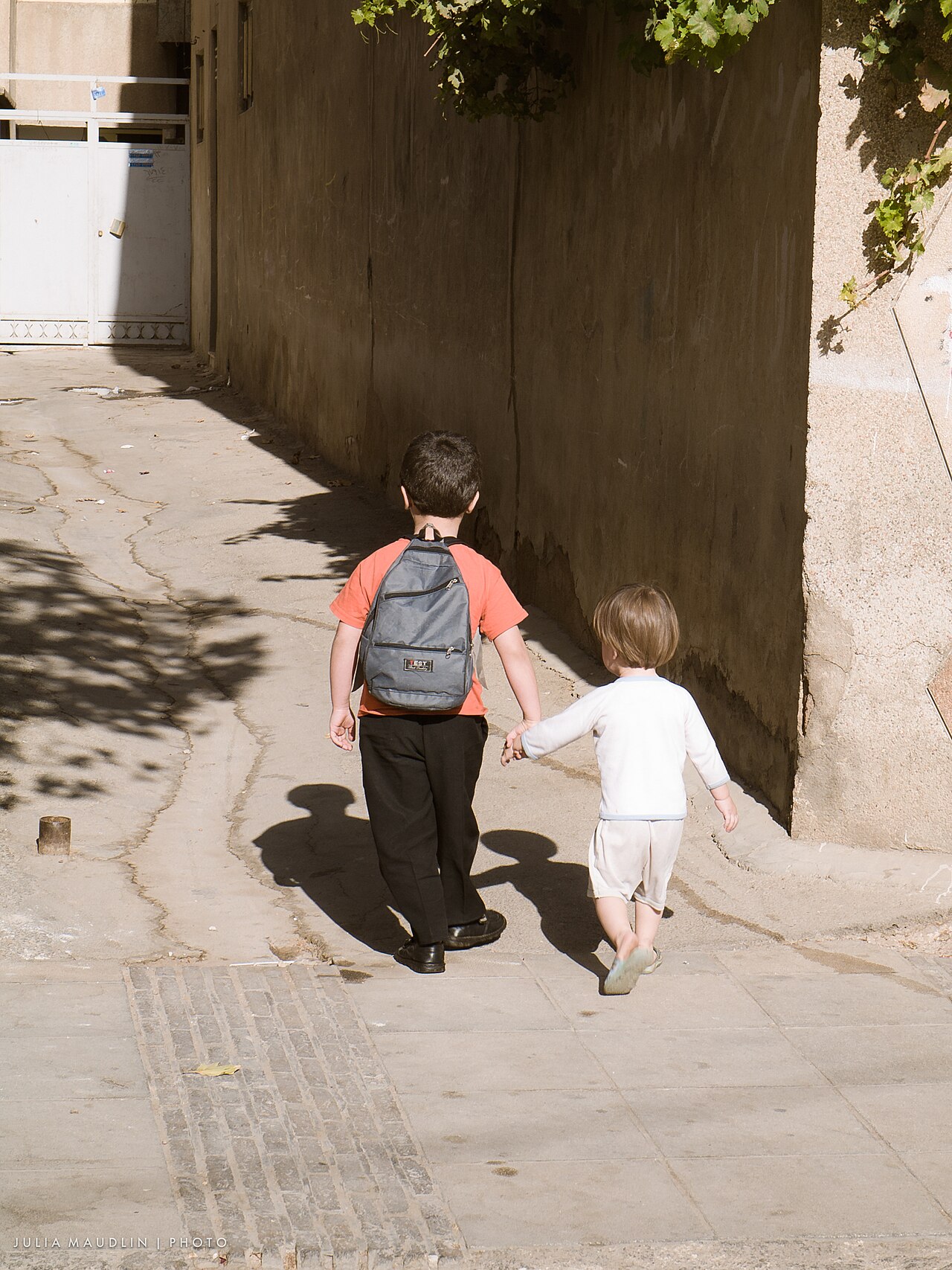
An older brother holding his younger brother's hand on the way home from school; steady routines and trusted relationships make school feel safer.
Image Credits: Wikimedia Commons
The bottom line
School refusal is common, treatable, and rarely about defiance. It affects 1 to 5 percent of school-age children, peaks around school transitions, and most often grows out of anxiety. The formula that works is simple to state and hard to do: stay calm, keep the child in school, work with teachers on a gradual plan, and bring in professional help early.
Most children return to school successfully when the adults around them stay consistent. If your child is also struggling with exam stress, academic pressure may be part of the same picture, and it deserves the same calm, structured response.
Frequently asked questions
Is school refusal the same as truancy?
No. Truancy means skipping school on purpose without a parent knowing, usually without distress.
School refusal involves visible upset, and the child typically wants the parent to allow the absence. The AACAP notes the two call for different kinds of help.
How long does school refusal last?
It varies widely. With early treatment and a consistent plan, most children return to school successfully, and the sooner families get help, the better the outcome tends to be. Refusal that drags on for months without intervention is harder to reverse.
Should I let my child stay home if they are crying?
Unless your child is genuinely ill, keep them in school if at all possible. Both the Merck Manual and the AACAP warn that staying home reinforces avoidance and makes the problem worse. A shorter school day or a check-in plan is a better middle ground.
What if my child only refuses after holidays or breaks?
That is a classic pattern. School refusal often begins after a period at home, such as summer break, a holiday, or a brief illness. Restart the normal routine promptly and avoid extending the break, since each extra day home strengthens the avoidance.
Rive News is the research desk behind this explainer series, writing plain-language parenting guides from public sources.
Latest in Parenting
- What to do when your teenager stops talking to you
- Why does your baby fight sleep even when tired
- How to teach a child to share without forcing it
- What age should a child start reading on their own
Subscribe for weekly parenting research summaries in your inbox.
© 2026 Rive News. All rights reserved.
Related stories
Why babies cry more in the evening: the witching hour explained
The witching hour is the fussy evening stretch most newborns hit daily. Why overtiredness, cluster feeding, and overstimulation stack up
When Do Babies Start Sleeping Through the Night by Month?
Most babies sleep through the night between 3 and 6 months, with regressions at 4 and 8 to 10 months. See the month-by-month table

Why Your Baby Wakes Up the Second You Put Them Down
Newborns wake when put down as the startle reflex, light sleep, and lost warmth hit at once. It is normal and peaks early, fading