
Why do toddlers call every animal 'dog'? What overextension means
By Rive News / Research desk | Rive News / Published October 31, 2026 at 9:00 AM PKT
Key takeaways
- Toddlers who call every animal "dog" are using overextension, a normal language stage where one early word stretches to cover similar-looking things.
- Researcher Leslie Rescorla found only one-third of a child's first 75 words were ever overextended, usually high-frequency early words like "dog."
- The habit generally fades between ages 2 and 3 as vocabulary grows; calmly naming the right animal is the most useful response.
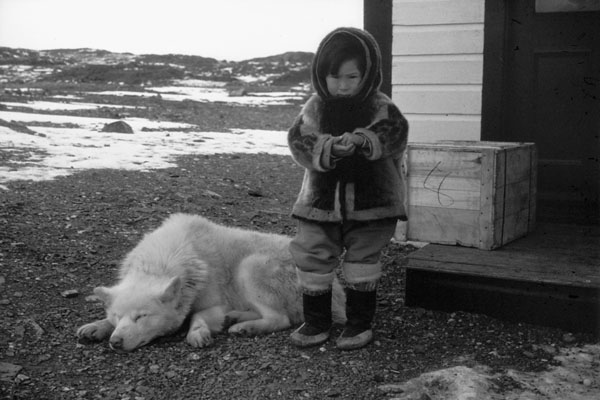
[A young child stands with a dog outdoors in Nunavut. Photograph: Arthur H. Tweedle]
Image Credits: Wikimedia Commons
Overextension is the term speech therapists use for a toddler habit that puzzles many parents: stretching one word so it covers many different things. A child who has learned "dog" for the family pet may point at a cat, a cow, or a horse and say "dog" with complete confidence.
This is not a mistake in the way adults mean the word. The child is working with a small vocabulary and a growing brain, applying the closest label available to things that share obvious features like four legs and fur.
This article explains why toddlers call every animal a dog, including why "dog" wins the word race, the three types of overextension, how long the phase lasts, how parents can respond, and when to mention it to a pediatrician.
Why "dog" wins the word race
Toddlers do not stretch every word they know. In a landmark 1980 study, researcher Leslie Rescorla followed six children in an eight-month language diary study starting at age one, and found that only one-third of each child's first 75 words were ever overextended.
The overextensions clustered around a small set of high-frequency, early-acquired words. "Dog" is often one of them.
Dogs are everywhere in a young child's life. Real dogs, picture books, stuffed animals, the neighbors' pets. A word a child hears and uses constantly is the one most likely to get recruited when a new animal appears.
The child also has a real basis for the match. Rescorla identified four bases for early word use: perceptual, action-functional, affective, and contextual. A cow shares the perceptual features of the dog (four legs, fur, a tail) even though an adult sees the difference instantly.
Rescorla's paper put it plainly: "The use of words to denote associative complexes of a well-organized, systematic character is discussed as a characteristic form of early word usage." In other words, the child's "dog" is doing deliberate work, grouping the world by features the child can see. That systematic thinking is exactly why toddlers insist on doing everything themselves at this age too: both behaviors come from a mind testing how the world works.
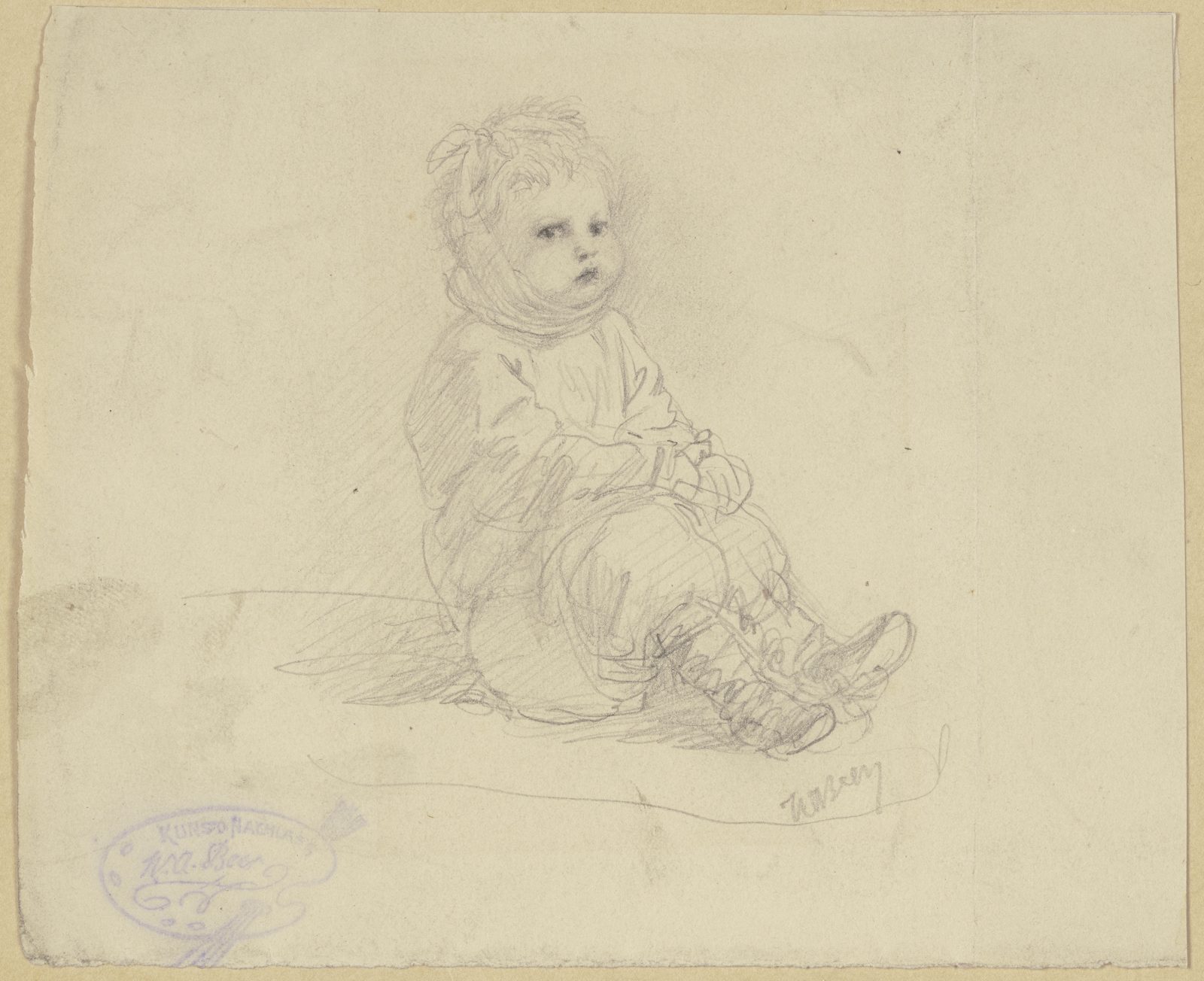
[A toddler sits on the floor, an age when overextension is most common. Photograph: the subject]
Image Credits: Wikimedia Commons
The three types of overextension
Rescorla classified overextensions into three types, and they show up in toddler speech in recognizable ways. The most common is the categorical overinclusion: one word extended to other members of the same category. "Dog" for cats, cows, and horses is the textbook case.
The second type is the analogical overextension. Here the child stretches a word across categories based on a perceived similarity. A child might call the moon a "ball" because both are round, or use "tick tock" for the sound of dripping water because the sounds match.
The third type is the predicate statement, where the child comments on a relationship between things. Saying "mummy" while looking at the mother's coat is an example: the word is not a label for the coat but a remark about whose it is.
What ties all three together is that the child is solving a communication problem with limited tools. The vocabulary is small, but the urge to name things is large.
How long it lasts and what ends it
The phase typically runs from around the first birthday to about age two and a half, according to the speech therapy site Lessons in Speech. The site Toddler Talk, run by speech-language professionals, puts the end of the phase between ages two and three, as vocabularies expand rapidly and children start making finer distinctions.
What ends it is exactly what you would expect: new words. Once the child learns "cat," "cow," and "horse" as separate labels, "dog" stops doing triple duty.
Corrective feedback from adults speeds this along. A summary of the research literature notes that overextensions diminish as children receive corrective feedback, most often from parents and teachers, who help the child revise word boundaries.
There is one more subtlety worth knowing. Children tend to overextend words in production more often than in comprehension.
A 2018 study by S. Banlı at Gaziantep University tested 10 children aged two years and two months to four years with picture-naming and picture-pointing tasks, and found that children overextend more when saying words than when understanding them.
Your toddler may point to the correct animal when you ask for the cow, then call it "dog" a moment later. That gap is a sign the concept is forming before the word is.
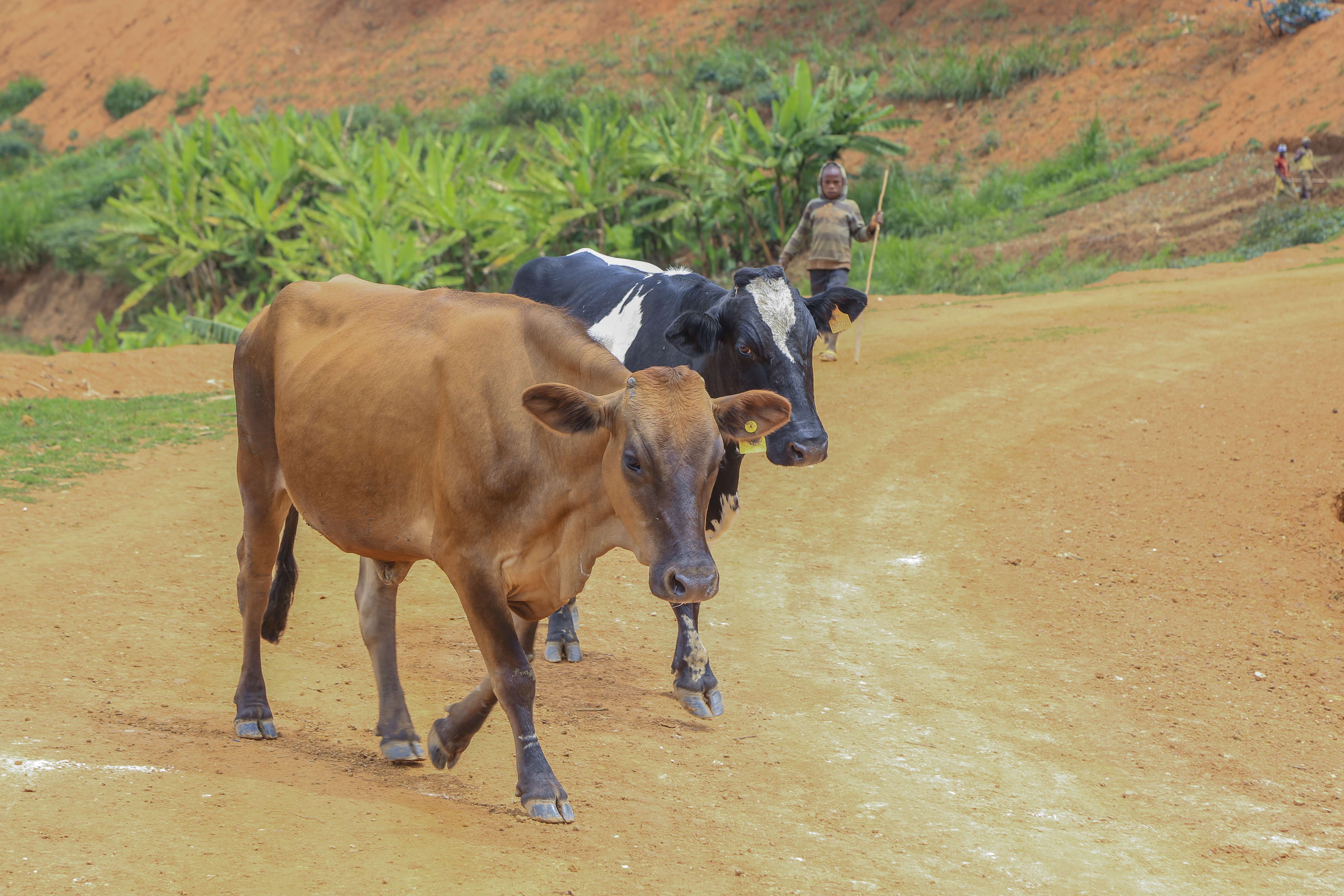
[A child with cows, one of the animals toddlers often lump under "dog." Photograph: the subject]
Image Credits: Wikimedia Commons
How parents can respond
The single most useful response is simple: accept the effort, then supply the right word. When your child points at a cow and says "dog," answer with the animal's real name. You validate the observation while adding the new label.
The research literature notes that parents often respond to overextensions with acceptance, which is healthy, but also that joint labeling (treating wolves and dogs as one thing called "puppies") can reinforce the stretched word. The practical takeaway is to keep the correct label in your reply without turning it into a lesson.
Reading and play do most of the quiet work. Animal books, farm toys, and zoo trips give the child repeated chances to hear "cow," "cat," and "horse" in context. Naming the animal as you play is the approach speech therapists recommend most.
What does not help is scolding or over-quizzing. The child is categorizing, not lying, and pressure around a normal phase only makes talking feel tense. Like toddlers who refuse to wear a coat in winter, a toddler insisting everything is "dog" is exercising an opinion with the tools they have.
When to mention it to a pediatrician
Overextension on its own is a normal stage, not a sign of a language disorder, according to speech-language professionals. It does not need treatment or worry.
Still, mention language development at your child's regular checkups. If a toddler has very few words, is losing words they once used, or seems unable to understand simple instructions, a pediatrician can arrange a hearing or language screening. Those are separate concerns from calling every animal a dog, but the checkup is the right place to raise them.
Frequently asked questions
Is it normal for a toddler to call every animal a dog?
Yes. This is overextension, a standard stage in early language development where a child stretches a known word to similar things. Speech-language professionals describe it as expected and normal, seen in most young children at some point.
At what age do toddlers stop overextending words?
The phase generally runs from around age one to age two and a half, and usually fades between ages two and three as vocabulary expands. Every child varies, so a few months on either side is not cause for alarm.
Should I correct my child when they call a cat a dog?
Gently, yes. Acknowledge what they noticed, then give the correct label. This gives the child's growing vocabulary the new word without punishing the attempt.
What is underextension?
It is the opposite pattern. A child might use "cat" only for the family cat and not for other cats. Like overextension, it is a normal part of learning word boundaries and it fades during toddlerhood.
Can overextension delay language development?
No evidence suggests it does. Rescorla's research frames it as a characteristic form of early word use, a sign the child is actively building categories rather than just repeating sounds.
The bottom line
Calling every animal "dog" is overextension, a normal stage where a toddler's small vocabulary gets stretched across similar things. Research shows it clusters around early, high-frequency words, follows three recognizable types, and fades as new words arrive, usually between ages two and three. The practical next step is low-effort: when your toddler says "dog," agree that it is an animal and name the right one.
Tags: toddler language development, overextension, child vocabulary
Rive News's research desk compiles evergreen explainers from peer-reviewed studies and clinical sources; it does not provide medical advice.
Related
- Toddlers insist on doing everything themselves
- Toddlers refuse to wear a coat in winter
- Toddlers hide when they are upset
Subscribe to the Rive News newsletter for one evidence-backed parenting explainer each week.
Rive News follows an editorial standards policy on every article; report errors through our corrections page.
Related stories
Why babies cry more in the evening: the witching hour explained
The witching hour is the fussy evening stretch most newborns hit daily. Why overtiredness, cluster feeding, and overstimulation stack up
When Do Babies Start Sleeping Through the Night by Month?
Most babies sleep through the night between 3 and 6 months, with regressions at 4 and 8 to 10 months. See the month-by-month table

Why Your Baby Wakes Up the Second You Put Them Down
Newborns wake when put down as the startle reflex, light sleep, and lost warmth hit at once. It is normal and peaks early, fading