
Why toddlers hide when they are upset and overwhelmed
By Rive News / Research desk | Rive News / Published October 29, 2026 at 9:00 AM PKT
Key takeaways
- Hiding is usually an attempt to regulate overwhelming feelings, not defiance or a trick.
- Toddlers lack the words for complex feelings, so behaviour becomes their way of communicating distress.
- The right response is calm and nearby, not pursuit or punishment, because the child is seeking safety, not a contest.
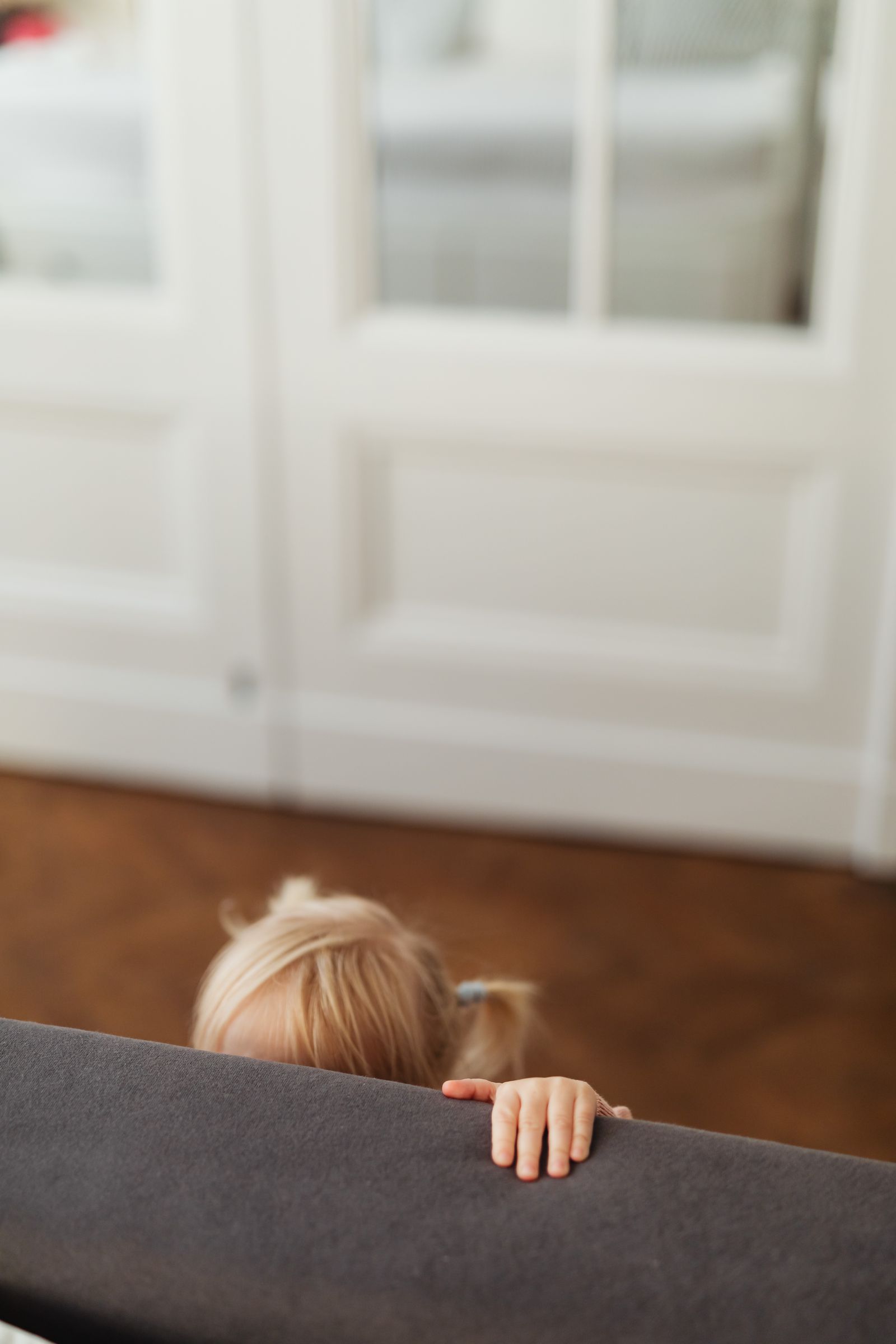
[A young child hides behind a sofa and peeks out, using a small space to feel safe.] Photograph: a child hiding behind a sofa
Image Credits: Pexels
A toddler who has just been told off, or who is overwhelmed by a noisy room, may turn and run for a corner, a curtain, or the space behind the sofa. To an adult, it can look like defiance, or like a game.
Usually it is neither. A toddler's feelings arrive faster than their words, and their body does the talking instead. Hiding is one of the few tools a small child has for turning the volume down.
Hiding is a way to regulate big feelings
When a child is overwhelmed by fear, guilt, or anxiety, hiding provides a physical space that can feel calming. The Games Learning Society's summary of hiding behaviour puts it directly: hiding offers a moment to decompress and escape from the perceived source of distress.
That links to a broader idea, self-preservation. Hiding becomes an instinctive response to what the child sees as a threatening situation, even when the threat is emotional rather than physical.
A dark, quiet space also reduces sensory input. For a child whose nervous system is already overloaded by noise, crowds, or bright lights, a small enclosed place is not just a hiding spot. It is a quieter world, sized to fit them.
That is why the same child may hide after a scolding, at a busy family gathering, or when a day has simply held too much. The trigger differs, but the need is the same: less input, more safety, time to settle.
Toddlers hide because they cannot explain yet
Children who struggle to express themselves verbally may resort to hiding as a way of communicating distress. When they lack the language or emotional awareness to explain how they feel, their behaviour becomes a form of communication.
A toddler cannot say, "I am overwhelmed by this room," or "I feel ashamed and I am afraid you will be angry." Those sentences need vocabulary, self-awareness, and the ability to hold a feeling still long enough to describe it. A two-year-old has almost none of those tools.
So the feeling comes out as movement instead. The child runs, crouches, covers their face, or disappears behind furniture. The message is real even though the words are missing, and it needs decoding with patience rather than correction.
SmartParenting's decoding of toddler behaviour gives a related example. Psychologist Kristin Lagattuta of the University of California notes that when a young child refuses to look at you, it can mean the child realises their actions may have disappointed you.
Hiding works the same way. It can be a child's wordless way of saying that something has gone wrong and they do not yet know how to face it.
Fear of a scolding is a separate motive
Not all hiding is about overload. Sometimes a child hides because they have done something wrong, or think they have, and they expect a negative reaction.
The Games Learning Society lists fear of reprimand as a distinct reason: if a child feels they have done something wrong or anticipates negative reactions from parents, they may hide to avoid potential punishment or scolding.
This matters because the response that helps an overloaded child can differ from the response that helps a frightened one, even though both look like hiding. An overloaded child needs quiet and time. A frightened child needs reassurance that coming out will not make things worse.
In both cases, reacting with anger or further punishment tends to backfire. The child learns that hiding was the right call, because emerging brought exactly the reaction they feared.
Hiding can also be play, and that is different
Toddlers also hide for reasons that have nothing to do with distress. Covering up and hiding, for themselves and for objects, can be a form of schema play known as enveloping, a developmental interest many toddlers experience.
Enveloping is fascination with what can and cannot be seen: wrapping things, covering faces, climbing into boxes, disappearing behind curtains. It is exploration, not escape, and it often comes with giggles rather than tears.
The difference is usually visible in the child's body. Playful hiding is relaxed, noisy, and repeated for fun, with the child checking that you are watching. Distress hiding is tense, quiet, and aimed at genuine disappearance, with the child going still when found.
Treating playful hiding as a problem spoils a learning game. Treating distress hiding as a game misses a child who needs help. Watching the body, not just the act, tells you which one you are seeing.
Where toddlers hide, and what it reveals
The places children choose often reveal what they need. A child hiding from a scolding may pick a spot that is hard to reach or easy to defend, such as behind furniture or inside a wardrobe.
A child escaping overwhelming stimuli may pick a dark, quiet corner, a blanket fort, or a familiar room. The choice is about the sensory quality of the place, not about winning a game.
A child who hides near water, train tracks, or other places of special interest may be drawn by comfort or fascination rather than fear. That pattern is worth noting, because a child who runs toward a place of interest when upset may need closer supervision outdoors.
None of these choices is random. Each is the child's best available answer to a feeling they cannot yet name.
What to do when your toddler hides
Stay calm and stay nearby. The child is seeking safety, and your calm presence is part of that safety. Do not chase, drag the child out, or turn the moment into a contest about who controls the hiding place.
Speak softly and name what you see, without demanding an explanation the child cannot give. A sentence like "You look upset, and I am here" gives the child language for the feeling, without requiring them to produce it.
Wait. A nervous system that is settling needs time, and a child who is ready to emerge will usually do so once the pressure drops. Offering a hand, a drink, or a familiar toy can help, but only as an invitation, not as a condition.
Once the child is calm, deal with whatever caused the upset separately and briefly. If there was a rule broken, state the limit plainly. If the trigger was overload, note it for next time: shorter visits, quieter rooms, earlier exits.
If hiding is frequent, intense, or paired with other signs of distress, such as withdrawal, sleep changes, or aggression that does not settle, raise it with a paediatrician. Hiding alone is ordinary. Hiding as part of a larger pattern deserves a professional look.
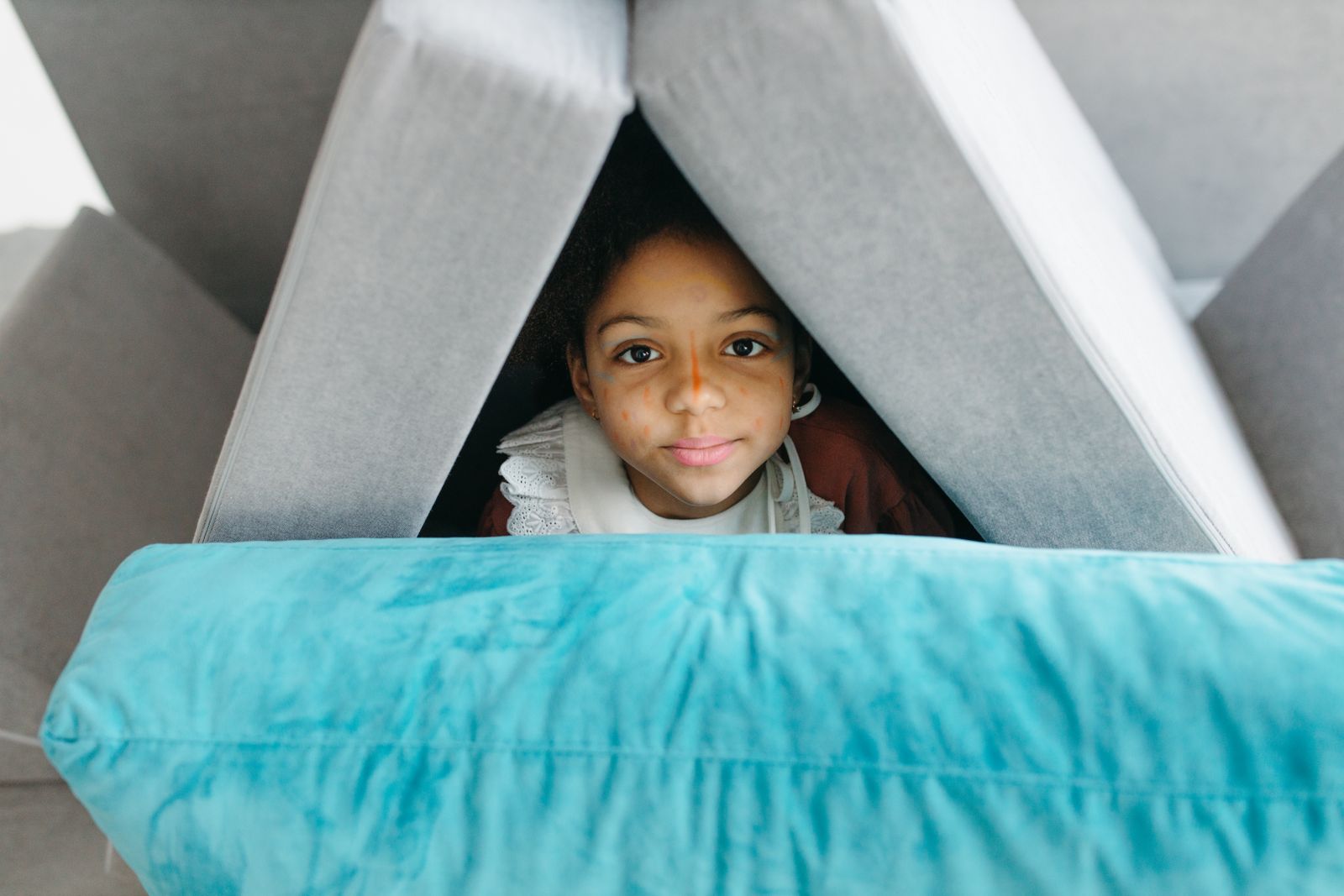
[A young girl hides inside a cozy pillow fort, peeking out with curiosity.] Photograph: a child hiding in a pillow fort
Image Credits: Pexels
Frequently asked questions
Is it normal for a toddler to hide when upset?
Yes. Hiding is a common way for young children to regulate overwhelming feelings, escape noise, or avoid a scolding they expect, especially before they have the words to explain themselves.
Should I punish my toddler for hiding?
No, not for the hiding itself. Punishing a child for seeking safety teaches them that emerging is dangerous, which makes hiding more likely next time. Address any broken rule separately, once the child is calm.
How can I tell playful hiding from distress hiding?
Playful hiding is relaxed and noisy, with the child checking that you are watching. Distress hiding is tense and quiet, with the child going still when found. The body, not the act, is the clue.
When should I worry about hiding behaviour?
Raise it with a paediatrician if hiding is very frequent, if the child runs to unsafe places, or if it comes with withdrawal, sleep changes, or aggression that does not settle.
The bottom line
Toddlers hide when they are upset because their feelings outrun their words, and their bodies do the communicating instead. A small, quiet space gives an overloaded nervous system somewhere to settle, and distance gives a frightened child a buffer from a scolding they expect.
Meet the hiding with calm and closeness, not pursuit or punishment. The child who learns that emerging is safe will need to hide less often, and will find the words sooner.
Tags: toddlers, child development, emotions
The Rive News research desk covers everyday science and parenting questions, checking claims against published sources before writing.
Related
- Why toddlers hide by covering their own eyes
- Why toddlers throw tantrums in public
- Why toddlers prefer one parent in phases
- Why babies cry when you leave the room
Subscribe for one clear, sourced answer to an everyday question in your inbox each morning.
Rive News publishes explainers checked against public sources; corrections are welcomed and noted on the article.
Related stories
Why babies cry more in the evening: the witching hour explained
The witching hour is the fussy evening stretch most newborns hit daily. Why overtiredness, cluster feeding, and overstimulation stack up
When Do Babies Start Sleeping Through the Night by Month?
Most babies sleep through the night between 3 and 6 months, with regressions at 4 and 8 to 10 months. See the month-by-month table

Why Your Baby Wakes Up the Second You Put Them Down
Newborns wake when put down as the startle reflex, light sleep, and lost warmth hit at once. It is normal and peaks early, fading