
Why Does the Word Mine Explode Around Age Two: Toddler Brain Science
Key takeaways
- Mine usually erupts between 18 and 24 months, the same window when toddlers recognize themselves in a mirror.
- Researchers found that the most possessive two-year-olds often became the most cooperative players, not the least.
- Children need three ideas before real sharing: ownership, object permanence, and empathy, which develops around age 6.
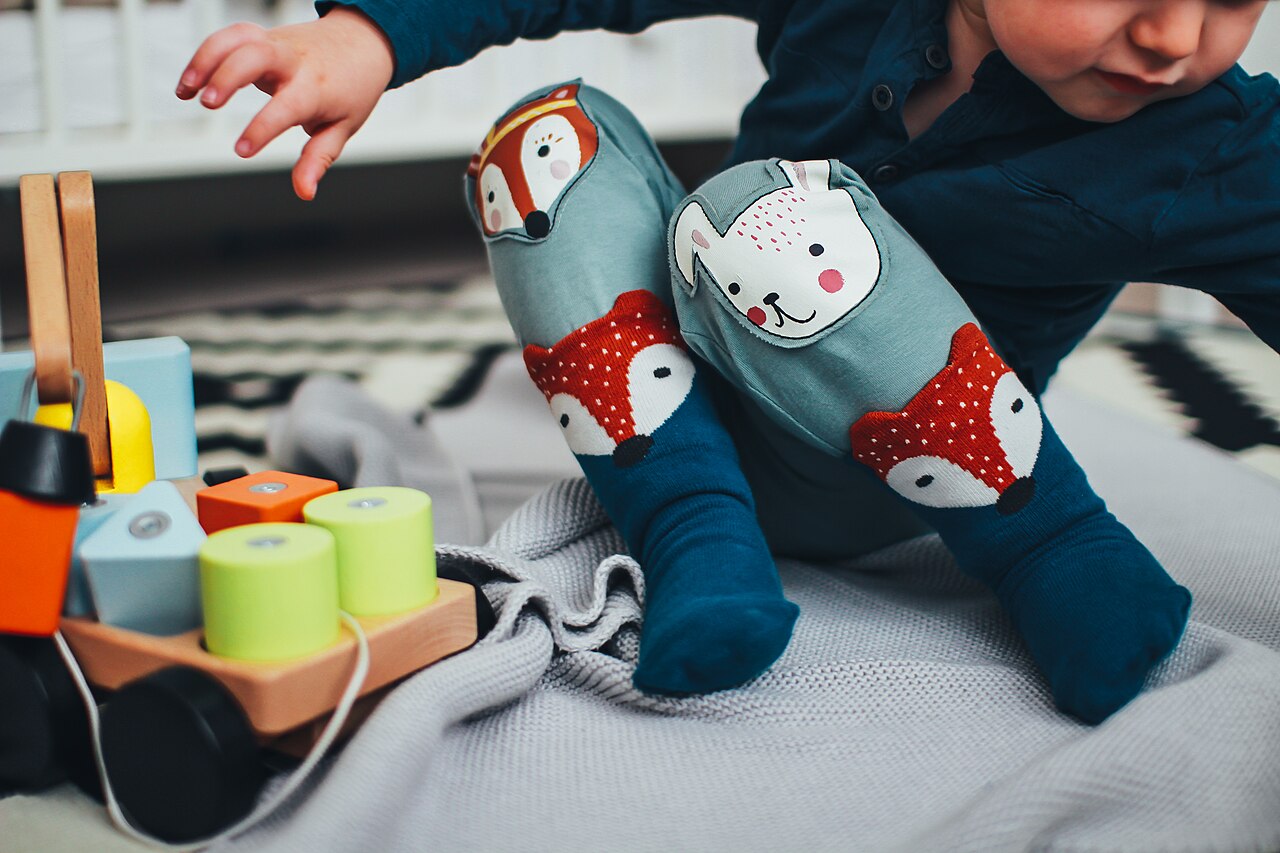
One morning your generous baby is happily handing you her cracker. By afternoon she is shrieking "MINE!" at a library book that belongs to nobody in your house.
Parents hear greed. Developmental psychologists hear something else entirely: the sound of a person being born.
This article explains why the word mine explodes around age two, including what researchers discovered about its timing, why possessive toddlers often turn out to be the social ones, and what to actually do when the word flies forty times a day.
Mine is the self, spoken out loud
The timing of the mine explosion is not random. Between 18 and 24 months, most toddlers pass a famous experiment: a researcher dabs rouge on the child's nose and seats them before a mirror.
Younger babies reach for the baby in the glass. Toddlers who have crossed the line reach for their own nose. They have understood that the face in the mirror is theirs, as StoryForge's science explainer describes.
This mirror self-recognition is the clearest early marker of a child grasping that they are a separate, particular person. And possessive words arrive in exactly the same window.
Following children across their second year, researchers Michael Lewis and Douglas Ramsay found that mirror self-recognition, the use of personal pronouns like my and mine, and the arrival of pretend play tended to show up together. The children who had figured out the mirror were the ones who had started claiming things.
You cannot say something is yours until there is a you for it to belong to.
Horizon Education Centers puts the start of the possessive phase even earlier, around 18 months, when toddlers begin learning that a person can have what one expert called an "invisible tie to a thing." That tie is the entire concept of ownership, and the toddler is building it from scratch.
What the possessive toddlers did next
The intuitive fear is that a child who says mine constantly is heading toward selfishness. The research points the other way.
In an often-cited study from the early 1980s, psychologist Laura Levine watched two-year-old boys playing with a peer and measured how firmly each child claimed objects as his own. The toddlers who were clearest and most assertive about what was theirs were not the loners or the grabbers.
They were the children with the strongest self-recognition, and they went on to engage in more mutual, cooperative play, not less, StoryForge reports.
Psychologist Dale Hay found something similar about two decades later while observing toddlers with familiar playmates. Talking about possession, saying mine and yours, went along with sharing rather than against it.
A child who can name what belongs to whom has a map of the social world. A child without that map just has a pile of stuff and a vague sense of threat.
In toddlerland, the rules of ownership are different
Pediatric psychologist Roger Harrison, a division chief of child and adolescent psychiatry at Children's Hospital of Philadelphia, told Montana Public Radio that fast-changing feelings and defiant behavior at ages one to three are developmentally appropriate ways of building a child's sense of self.
On ownership specifically, his summary of toddler logic is worth quoting in full: "If it's mine, it's mine. If it's yours and I want it, it's also mine."
That is not moral failure. It is a boundary experiment.
Harrison explains that as children start building their identity and independence, they exert control over their environment through possession, and each claim helps them test where they end and the world begins. A toddler who declares every book in the library hers is not being selfish, he says. She is stretching a brand-new sense of self.
There is also a simpler mechanism at work. Parents, via Highlights, notes that toddlers do not yet trust that a possession given away comes back.
In a toddler's mind, if something leaves their hands, even temporarily, it is probably gone forever. Add a fear of loss to a fresh sense of self and you get forty mines before lunch.

The three ideas a child needs before real sharing
According to the Highlights piece, children must grasp three distinct ideas before they can share on a regular basis.
First, they need attachments and feelings of ownership, which is exactly what the mine phase builds. Second, they need to understand that things exist even when they cannot see them, which is object permanence. Third, they need empathy and an awareness of other people's feelings.
That third piece is the long pole in the tent. Children do not develop real empathy until around age 6, so the mine phase can dominate a toddler's frame of mind for years.
Forcing sharing before the machinery exists does not teach generosity. It teaches that bigger people take your stuff.
What to do when mine flies forty times a day
Start by not treating it as a crime. Narrate ownership out loud in simple words, naming which toy belongs to which child.
Research cited by Horizon Education Centers found that toddlers who are explicitly told which identical toys belong to them can keep track of their own items even after the toys are shuffled.
Labels help the map get drawn.
Protect a few sacred objects. A comfort blanket or beloved stuffie is not a sharing lesson waiting to happen.
Let the child have things that are unambiguously theirs, and they become more willing to negotiate over everything else. When a conflict erupts over a shared toy, try timers and turns rather than forced handover.
And when your toddler claims your phone, your keys, and the neighbor's dog, remember what the word is actually doing. It is a two-year-old saying "I exist" with the only vocabulary they have. If you are navigating the defiance that comes with the same developmental window, our piece on why toddlers say no to everything covers the sibling behavior, and how to handle toddler tantrums without yelling has the de-escalation side.
At what age does the mine phase start?
Usually around 18 months, peaking near age two. It is one of the earliest signs that a child understands ownership as a concept.
Does saying mine mean my child is selfish?
No. Researchers consistently describe it as a healthy, normal phase of identity development. The most possessive two-year-olds in one classic study became the most cooperative players.
When do children actually learn to share?
True voluntary sharing develops gradually through the preschool years. Empathy, the engine of real sharing, typically arrives around age 6.
How should I respond when my toddler screams mine?
Stay calm, name who owns what, and avoid forcing the handover. Offer turns, timers, or trades, and protect a few comfort objects as permanently theirs.
The bottom line
The word mine explodes around age two because the self explodes around age two. Mirror studies show the timing lines up with self-recognition, and the research on possessive toddlers says the loudest claimers often become the best sharers.
The phase is not a character flaw to punish out of a child. It is the first draft of identity, shouted at full volume.
Image Credits: Wikimedia Commons / Daiga Ellaby, Markus Spiske
Latest in Parenting
- Why toddlers say no to everything
- How to handle toddler tantrums without yelling
- The developmental reason kids ask why constantly
Subscribe to Rive News for one clear explainer like this every day.
Related stories
Why babies cry more in the evening: the witching hour explained
The witching hour is the fussy evening stretch most newborns hit daily. Why overtiredness, cluster feeding, and overstimulation stack up
When Do Babies Start Sleeping Through the Night by Month?
Most babies sleep through the night between 3 and 6 months, with regressions at 4 and 8 to 10 months. See the month-by-month table

Why Your Baby Wakes Up the Second You Put Them Down
Newborns wake when put down as the startle reflex, light sleep, and lost warmth hit at once. It is normal and peaks early, fading