
Why does my cat knead with its paws?
Key takeaways
- Kneading most likely starts as a kittenhood behavior: kittens tread their paws on their mother to get milk flowing.
- Scent glands in the paw pads mean kneading also doubles as quiet chemical communication.
- Researchers agree on the origin story but not the full picture, so no single explanation is proven.
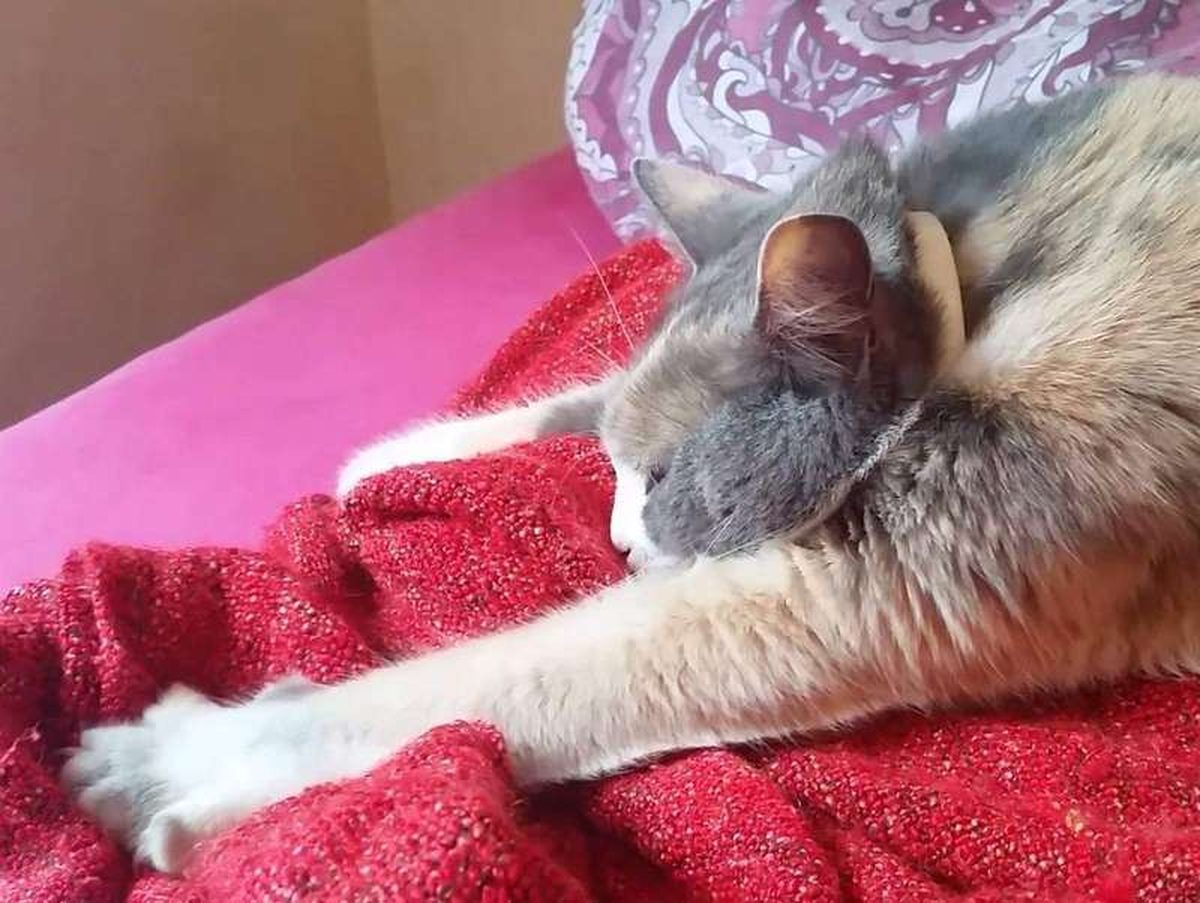
A cat rhythmically kneads a soft blanket with its front paws. Photograph: T. Piesk/Wikimedia Commons
Image Credits: Wikimedia Commons
Kneading is the rhythmic push and pull cats perform with their front paws, one paw at a time. They usually do it on something soft like a blanket, a cushion, or your lap. It looks exactly like a baker working dough, which is where the nickname "making biscuits" comes from.
The most likely explanation starts at birth: kittens knead their mother's belly to get milk flowing. The motion survives into adulthood as a comfort ritual. This article explains why cats knead with their paws. It covers where the behavior comes from, the leading theories researchers propose, what we still don't know, and how to handle the claws.
Where kneading comes from
Cats begin kneading as tiny kittens, still nursing. The kneading action is linked with suckling and helps stimulate the mother cat's milk supply, likely through the release of oxytocin. The behavior probably evolved for this reason, according to an article by Susan Hazel, senior lecturer in animal and veterinary science at the University of Adelaide, published in The Conversation.
The evidence for the nursing link goes beyond the motion itself. "The behavior of kneading is very similar to that kittens use when suckling," Hazel told Live Science. There she is identified as an associate professor of animal behavior, welfare and ethics. She added that the suckling process, plus the pheromones released around the mammary glands, probably makes it a very pleasurable activity.
That pleasure seems to stick around. Many cats drool while kneading, and some even suckle the blanket or sweater they are working on. That supports the idea that adult kneading is tangled up with the comfort of nursing. As zoologist Desmond Morris noted when he coined the term "milk treading," the whole package of purring, kneading, and settling down to sleep mirrors a kitten's feeding routine.
Why your cat kneads with its paws: the leading theories
The nursing origin is the leading explanation, but researchers have proposed several others. More than one may be true at once.
Pheromone marking. Cats have scent glands in their soft paw pads, and kneading presses those glands into the surface. Hazel's Conversation article explains that the released pheromones can carry messages about bonding, identification, and health status. When your cat kneads your lap, part of what is happening is quiet chemical communication: you are being marked as safe and familiar.
Nesting instinct. According to the veterinarian-run site PetMD, summarized by ScienceAlert, the wild ancestors of domestic cats used their paws and claws to tread down tall grass or leaves. They fashioned a soft spot to sleep or give birth, and possibly checked the ground for unwelcome visitors lurking under the foliage. Your cat kneading the couch before a nap may be running very old software.
Contentment and security. Laura Watson, a registered veterinary nurse and cat welfare assistant at International Cat Care, told Live Science that cats often continue kneading into adulthood when they are with someone they feel safe with. It also happens on a particularly fluffy surface, because they associate treading their paws with the comfort they felt while nursing. This fits the observation that kneading usually arrives alongside purring and is followed by a nap.
There is a charming parallel here. According to the ASPCA, as reported by ScienceAlert, adult cats do not meow at each other, only at humans. That is much like kittens meowing at adult cats. Kneading may be another kittenhood behavior that humans have inherited by standing in for the mother cat.
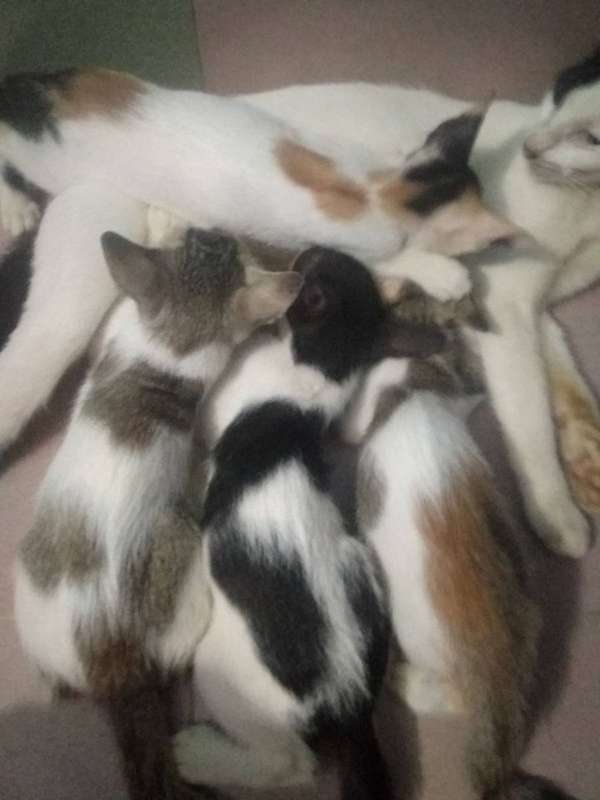
A mother cat nurses her kittens, the behavior kneading most likely traces back to. Photograph: Xkalponik/Wikimedia Commons
Image Credits: Wikimedia Commons
What researchers still don't know
For all these theories, the honest answer is that no single explanation has been proven. Kneading is a good example of animal behavior where the origin story is strong but the full picture is blurry.
Does kneading mean your cat is happy? Usually, but not always. Some cats knead when they are anxious. Cats that knead constantly or suddenly start kneading far more than usual may be signaling stress or discomfort.
Context matters: a purring cat melting into your lap is telling a different story than a restless cat kneading the same spot all night.
Scientists also cannot fully explain why some cats knead and others never do. Early weaning gets blamed in internet folklore, but the research does not back a simple cause. Breed, personality, and individual history all seem to play a role, and the details remain unmapped.
So the fair summary is this: kneading almost certainly began as a nursing behavior, it likely serves several purposes at once, and anyone who tells you they know exactly why your cat does it is overselling the science.
How to handle the claws
Kneading is a compliment, but claws make it a painful one. A few practical moves keep the ritual pleasant for everyone.
Trim your cat's claws regularly, or ask your vet to show you how. Keep a thick blanket or folded towel on your lap as a designated kneading pad, and gently redirect your cat to it. Never punish kneading: it is an instinctive comfort behavior, and scolding only teaches your cat to distrust the lap.
If your cat kneads obsessively, or the behavior appears suddenly alongside appetite or litter-box changes, mention it at the next vet visit. Most kneading is pure contentment. The exceptions deserve a professional eye.
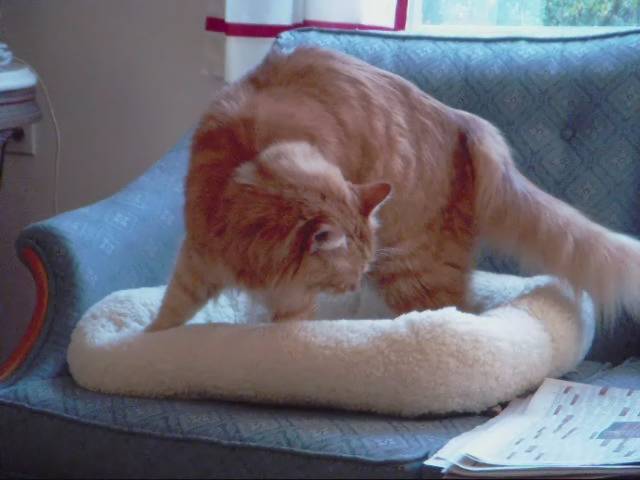
A cat settles into a soft bed, often the finale after a kneading session. Photograph: Dwight Sipler/Wikimedia Commons
Image Credits: Wikimedia Commons
Frequently asked questions
Why does my cat knead me and not the couch?
Because you are warm, you smell familiar, and your cat feels safe with you. Kneading you combines the nursing instinct with pheromone marking, so the person they trust most gets the full treatment.
Why does my cat drool while kneading?
Drooling during kneading is common and usually harmless. It supports the nursing theory: the behavior is so tied to kittenhood feeding that some cats produce saliva as if they were about to nurse. Mention it to your vet only if the drooling is new, heavy, or paired with other symptoms.
Do all cats knead?
No. Many cats knead throughout their lives, but plenty never do, and that is normal too. There is no solid research explaining why some cats are kneaders and others are not.
Should I stop my cat from kneading?
Don't try to stop it, just manage the claws. Kneading is a natural comfort behavior, and punishing it can damage your cat's trust. A blanket on your lap and regularly trimmed claws solve the problem without a fight.
The bottom line
Your cat kneads because it is running one of its oldest programs: the kittenhood rhythm of treading for milk, layered with scent marking, nesting instinct, and plain contentment. Researchers agree on where it starts and argue politely about everything after.
Take it as the compliment it is. Put a blanket on your lap, keep the claws trimmed, and let the biscuits happen.
Rive News's research desk covers pet behavior from published veterinary and scientific sources. This article is for general information only.
Subscribe to the Rive News newsletter for one practical explainer like this every morning.
Related stories

Why Does My Dog Eat Grass and Vomit?
A UC Davis study of 1,571 owners found grass eating is normal dog behavior, not self-medication: only 10% were ill first. What the science

Why Does My Dog Stare at Me While I Eat?
Dogs stare at you while you eat because it has worked before, and mutual gaze raises bonding hormones. Learn the reinforcement science

Foods toxic to dogs: the list, with reasons
Chocolate, xylitol, grapes, onions: common foods can harm dogs. Learn what makes each one toxic, the warning signs, and what to do if your