
Why Do Cats Purr? What the Science Says It Really Means
Key takeaways
- Purring comes from a neural oscillator in the brain driving the larynx muscles. The sound happens on both the in-breath and the out-breath.
- A purr does not always mean happiness. Cats also purr when frightened, stressed, injured, or dying.
- Healing-frequency claims are intriguing but unproven in cats. The communication and self-soothing roles have the strongest evidence.
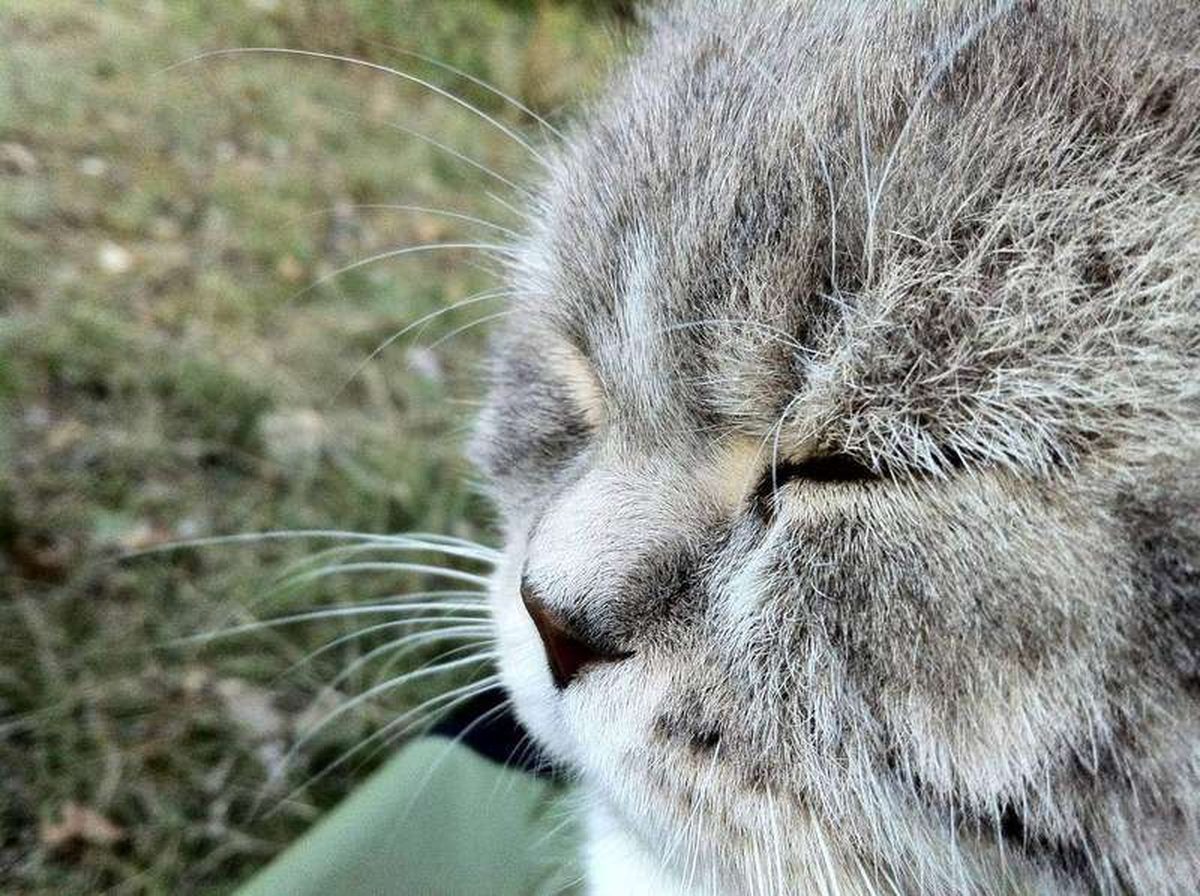
A purring cat on your lap feels like the simplest thing in the world: the animal is happy, and it is telling you so. That reading is often correct, and it is almost certainly incomplete.
Cats purr when they are content, but they also purr when they are frightened, in pain, giving birth, and dying. Scientists are still not fully sure how the sound is made, let alone the full list of reasons for it.
This is one of those topics where the honest answer is more interesting than the tidy one. This article explains how a purr is physically produced, what purring appears to communicate, what researchers claim about healing frequencies, and where the evidence actually stands.
How a purr is made
The best-supported explanation starts in the brain. A neural oscillator, a cluster of neurons firing in a rhythmic pattern, sends repeated signals to the laryngeal muscles around the cat's voice box. Those muscles twitch rapidly, about 20 to 30 times per second in a typical domestic cat. They alternately tense and relax the vocal cords as the cat breathes in and out.
That last detail is what makes purring unusual. Most sounds animals make happen on the exhale only.
Purring continues through both breathing in and breathing out, because the twitching muscles keep the vocal cords vibrating in each direction of airflow. The result is the continuous rumble you can feel as much as hear, with a hand on the cat's throat or chest.
The frequency of the vibration ranges from around 20 hertz up to about 150 hertz depending on the cat and the moment. Researchers who recorded 44 felids for the Journal of the Acoustical Society of America found that all of them produced strong frequencies at 25 and 50 hertz.
Even the basic mechanism is not settled science, though. As IFLScience notes, "we don't even know for sure how the noise is made, let alone why, or what it means."
What purring communicates
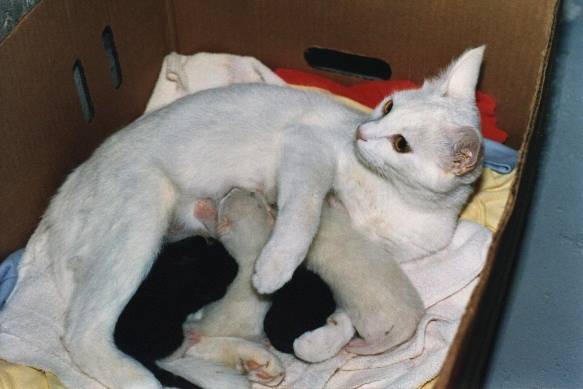
The first purr a kitten makes has nothing to do with happiness. Kittens begin purring within a few days of birth, before they can see or hear. The vibration works as a homing beacon so the mother cat can find them for feeding. The mother purrs back, and the exchange becomes one of the earliest conversations in the cat's life.
In adult cats, context is everything. A relaxed cat kneading your lap is almost certainly expressing contentment.
But cats also purr at the veterinarian's office, in shelters, when injured, and, as cat behaviorist Marjan Debevere told the BBC, when dying: "I've witnessed a lot of cats purring when they're dying, and when they're being put to sleep." The assumption that purring always equals happiness, she said, "is just not always the case."
So what is the through-line? Researchers describe purring as a multi-purpose signal: a request for care or attention, a self-soothing behavior under stress, and possibly a signal of non-threat to other cats. Tony Buffington, a veterinarian and cat behavior researcher at Ohio State University, put it this way: "It's naive to think that cats can only purr for one reason, it's like thinking that people can only laugh for one reason."
People laugh when they are joyful, nervous, or uncomfortable. Cats appear to purr across a similar emotional range.
Cats have even learned to aim the signal at humans specifically. Research by Karen McComb at the University of Sussex found that cats wanting food embed a high-frequency cry, similar in pitch to a human baby's cry, inside the low purr.
Owners reliably respond by getting up to feed the cat, often before feeding themselves. It is communication tuned by thousands of years of living with people.
The healing-frequency claims
Here is where the story gets strange, and where honesty requires care. A 2001 paper pointed out that purr frequencies "correspond to vibrational/electrical frequencies used in treatment for bone growth/fractures, pain, edema, muscle growth/strain, joint flexibility, dyspnea, and wounds."
The domestic cat's 20 to 150 hertz range overlaps the frequencies used in some medical vibration therapies. From that overlap grew a popular claim: that purring heals bones, repairs tendons, and relieves pain.
The surrounding facts are real. Studies have shown that low-intensity vibrations can promote the growth of connective tissue and blood vessels in injured mice. Vibrational therapies at frequencies around 30 hertz can improve bone density in humans.
Cats sleep up to 18 hours a day, which should be terrible for bone and muscle maintenance, yet cats keep remarkably dense bones. Some researchers have proposed that purring acts as a low-energy maintenance system, stimulating the musculoskeletal system during all that rest.
But the crucial experiment has never been done. As IFLScience states plainly, "studies haven't yet confirmed the effect in cats." Nobody has demonstrated that a purring cat heals faster than a non-purring one, or that the vibrations reach therapeutic intensity inside the animal's own tissues.
The overlap in frequencies is suggestive, not proof. Gary Weitzman, veterinarian and CEO of the San Diego Humane Society, offered the careful version: "It's likely that purring has communication, appeasement, and healing properties." Likely, not proven.
Claims that go further, that a purring cat lowers your blood pressure or protects your heart, rest on shakier ground still. Petting a calm cat is relaxing, and relaxed people have lower stress markers. But separating the purr itself from the general comfort of companionship is something the research has not done.
What the evidence actually supports
Strip away the speculation and this is what holds up. Purring is produced by rhythmic neural signals to the laryngeal muscles, sounding on both the inhale and the exhale. It begins in kittenhood as a mother-offspring signal.
In adults it spans contentment, solicitation, stress, pain, and self-soothing, with meaning determined by context. The frequency range overlaps therapeutic vibration frequencies used in medicine. That makes the self-healing hypothesis plausible and worth studying, but it remains a hypothesis. No study has confirmed that purring heals cats.
That uncertainty should not diminish the phenomenon. A behavior that soothes the animal producing it, signals its needs to others, and calms the humans nearby is doing a great deal of work already, with or without a medical miracle attached.
The purr may yet turn out to be therapeutic. Until the studies exist, the honest position is the one the researchers take: intriguing, plausible, unproven.
Do cats only purr when they are happy?
No. Cats purr when content, but also when frightened, stressed, injured, in labor, and near death. Researchers treat purring as a multi-purpose signal covering contentment, solicitation, and self-soothing, with context deciding the meaning.
Can a cat's purr heal bones?
There is no direct evidence that it does. Purr frequencies (20 to 150 hertz) overlap frequencies used in medical vibration therapy, and vibration can aid tissue growth in lab studies, but no study has confirmed a healing effect in cats themselves. It remains an unproven hypothesis.
Why do cats purr when they are in pain or scared?
The leading explanation is self-soothing: rhythmic vibration may calm the cat the way humming or rocking calms a person. It may also signal non-threat to others nearby, asking for care rather than conflict.
Do big cats purr?
Most small and medium cats purr, including cheetahs and cougars. Lions, tigers, leopards, and jaguars generally cannot purr; they roar instead. The difference comes down to the anatomy of the hyoid bone and larynx, which is built for one trick or the other.
The bottom line
Your cat's purr is not a simple happiness meter. It is a sound made by a brain-driven rhythm in the throat, used from the first days of life to call for a mother, and kept for life as a tool for contentment, comfort-seeking, and getting fed. The healing claims are the most exciting part of the story and the least proven part.
Believe the communication science, which is solid. Treat the frequency medicine as what it is: a fascinating idea still waiting for its experiment.
Rive News is the research desk behind this publication's explainers, covering the science of everyday life.
Get one science explainer like this in your inbox every morning. Subscribe to the newsletter.
Related stories

Why Does My Dog Eat Grass and Vomit?
A UC Davis study of 1,571 owners found grass eating is normal dog behavior, not self-medication: only 10% were ill first. What the science

Why Does My Dog Stare at Me While I Eat?
Dogs stare at you while you eat because it has worked before, and mutual gaze raises bonding hormones. Learn the reinforcement science

Foods toxic to dogs: the list, with reasons
Chocolate, xylitol, grapes, onions: common foods can harm dogs. Learn what makes each one toxic, the warning signs, and what to do if your