
How to find your way around an airport you have never used
By Rive News / Research desk | Rive News / Published October 20, 2026 at 9:00 AM PKT
Key takeaways
- Study the airport's terminal map before you leave, noting your terminal, gate area, and how the terminals connect.
- Follow overhead signs toward your gate zone first, then narrow down to your gate number, instead of hunting for the exact gate.
- Arrive 2 to 3 hours before departure and ask uniformed staff for help rather than walking in circles.
Finding your way through an airport you have never used means getting from the entrance to your gate, through check-in and security, inside a building you have never walked through. It feels harder than it is, because almost every large airport uses the same basic layout: terminals, concourses, overhead signs, and maps.
Once you know that layout grammar, a handful of habits make almost any airport manageable. You spend less time panicking and more time reaching your gate with time to spare. If you are also packing for a long flight, sorting out navigation first makes the rest of the trip calmer.
This article explains how to find your way around an airport you have never used, including studying the terminal map in advance, reading signs in the right order, using apps and information points, and asking staff without losing time.
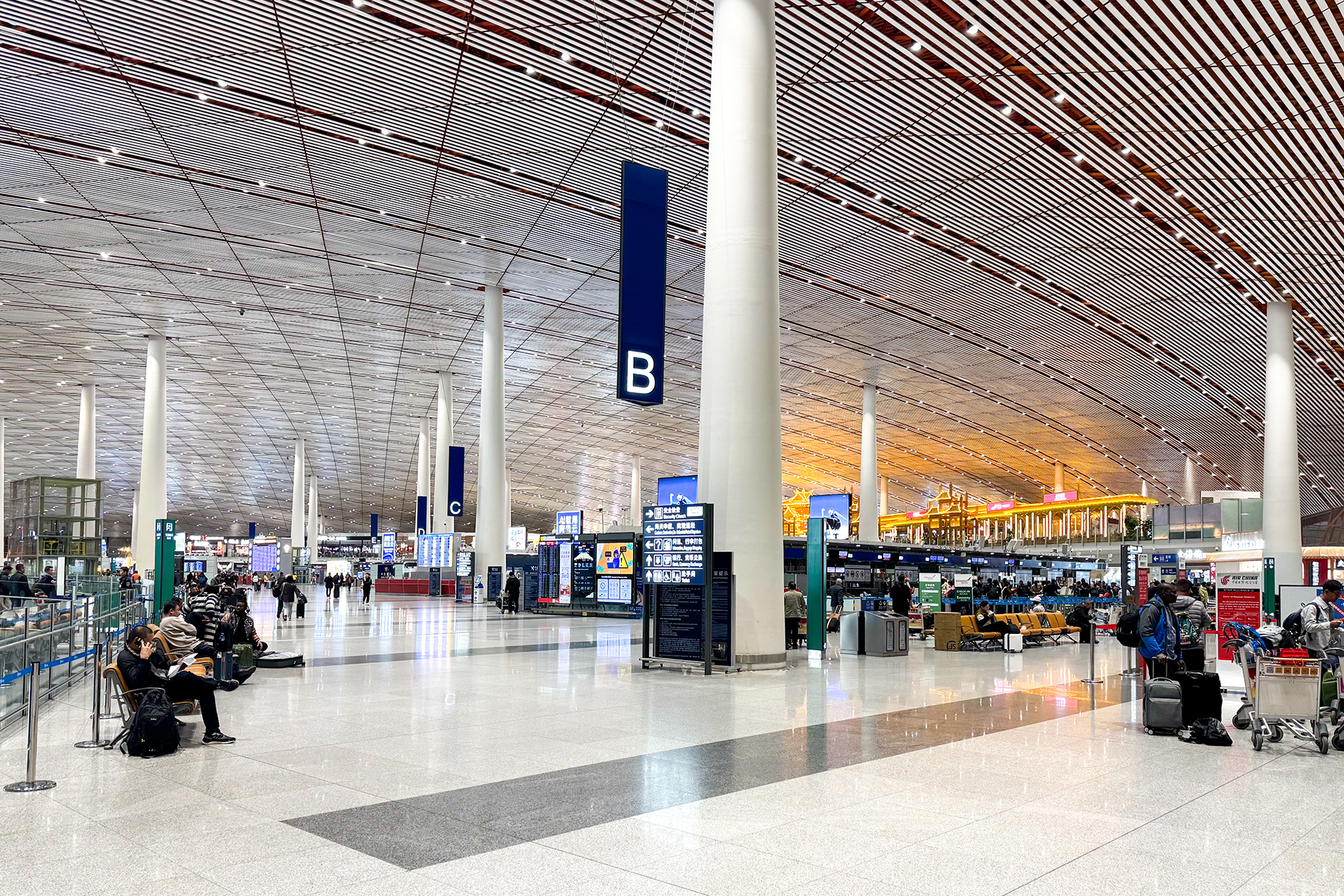
A wide departure hall with clear sightlines makes it easier to spot overhead signs and information screens.
Image Credits: Wikimedia Commons
Study the terminal map before you leave home
The single most useful thing you can do is look at the airport map the night before you fly. Most major airports publish terminal maps on their websites, and spending five minutes on one removes most of the stress of arriving somewhere new.
Before you arrive, check three things: which terminal your flight departs from, which gate area your airline uses, and how long it takes to walk between them. This matters most at large hubs where terminals are joined by trains, buses, or long walkways.
At Istanbul Airport, gates can sit a 25-minute walk apart, and Frankfurt's Terminal 1 to Terminal 2 transfer takes 15 to 20 minutes, according to Hoperfy's airport navigation guide. Atlanta requires a train ride between its concourses.
Your airline's app will show your gate and update it in real time if it changes. Google Maps also carries indoor maps for many major airports, and airport websites publish estimated transfer times between terminals. If you are connecting through an airport you have never used, knowing whether to turn left or right after security is worth the two minutes of study.
Read the overhead signs in the right order
Airport signage is usually excellent. It is color-coded, multilingual, and hung overhead so you can see it above the crowds. The common mistake is ignoring it while staring at a phone or following the herd.
The trick is reading order. Most international airports group gates by letter or color zone, such as Concourse A, Concourse B, or Terminal 2.
Signs for these zones appear at major intersections, walkways, elevators, and escalators. According to Mappedin's airport navigation guide, the efficient approach is to follow directional signs to your gate zone first, then narrow down to your specific gate number. Trying to navigate straight to a gate without reaching the right concourse first is one of the most common ways to get turned around.
Look up often. The boards update in real time, and gates do change, so glance at a departure screen even after you think you know where you are going. Travelers who check the boards at each decision point rarely end up sprinting.
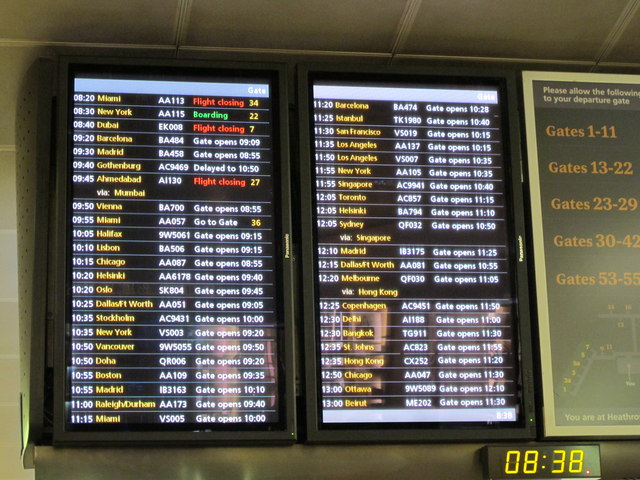
Departure boards update in real time, so recheck yours at each decision point inside the terminal.
Image Credits: Wikimedia Commons
Use airline apps, airport maps, and information points
Flight status changes constantly. Gates get reassigned and delays cascade, and the travelers who cope best are the ones who find out first. Your airline's app sends push notifications for gate changes, delays, and boarding calls, which is the fastest way to hear about them.
Third-party flight trackers such as Flighty or FlightAware follow your flight with live data and sometimes flag delays before the airline announces them. Many airports also run their own apps with interactive maps, walking directions to gates, and flight status updates. If apps are not an option, printed maps are usually available at help desks and information counters.
Inside the terminal, look for digital kiosks. These touchscreen directories let you search for gates and services and show a route to your destination. At the best-equipped airports, the kiosk generates a QR code that transfers your walking route straight to your phone for turn-by-turn directions, according to Mappedin.
Plan for the bottlenecks too. At international airports, the path between arrival and a connecting departure can include passport control and customs, which takes 20 to 60 minutes depending on volume.
Some connections even force you out of security to recheck bags, so build that into your schedule. A delayed flight that leaves you overnight makes an unfamiliar airport much harder, which is another reason to learn the layout early.
Ask people and give yourself enough time
When signs fail or the layout makes no sense, ask a real human. Airport staff, airline employees, and even fellow travelers are usually happy to point you the right way. Airport Pin's navigation guide calls asking staff one of the fastest fixes available, and it beats walking in circles on pride.
Look for information counters and staff wearing badges near security exits and busy intersections. If you are connecting and the signage is confusing, the airline's transfer desk can confirm whether you need to clear customs or recheck luggage before your next flight.
Time is the real safety net. First-time-traveler guidance from the International Students Center recommends arriving 2 to 3 hours before a flight, which leaves room for check-in, security, and wrong turns.
That buffer also helps if you need to rest on the plane later, since a calm start makes sleep easier. Rushing turns a small navigation mistake into a missed flight. Walking calmly turns it into a story.
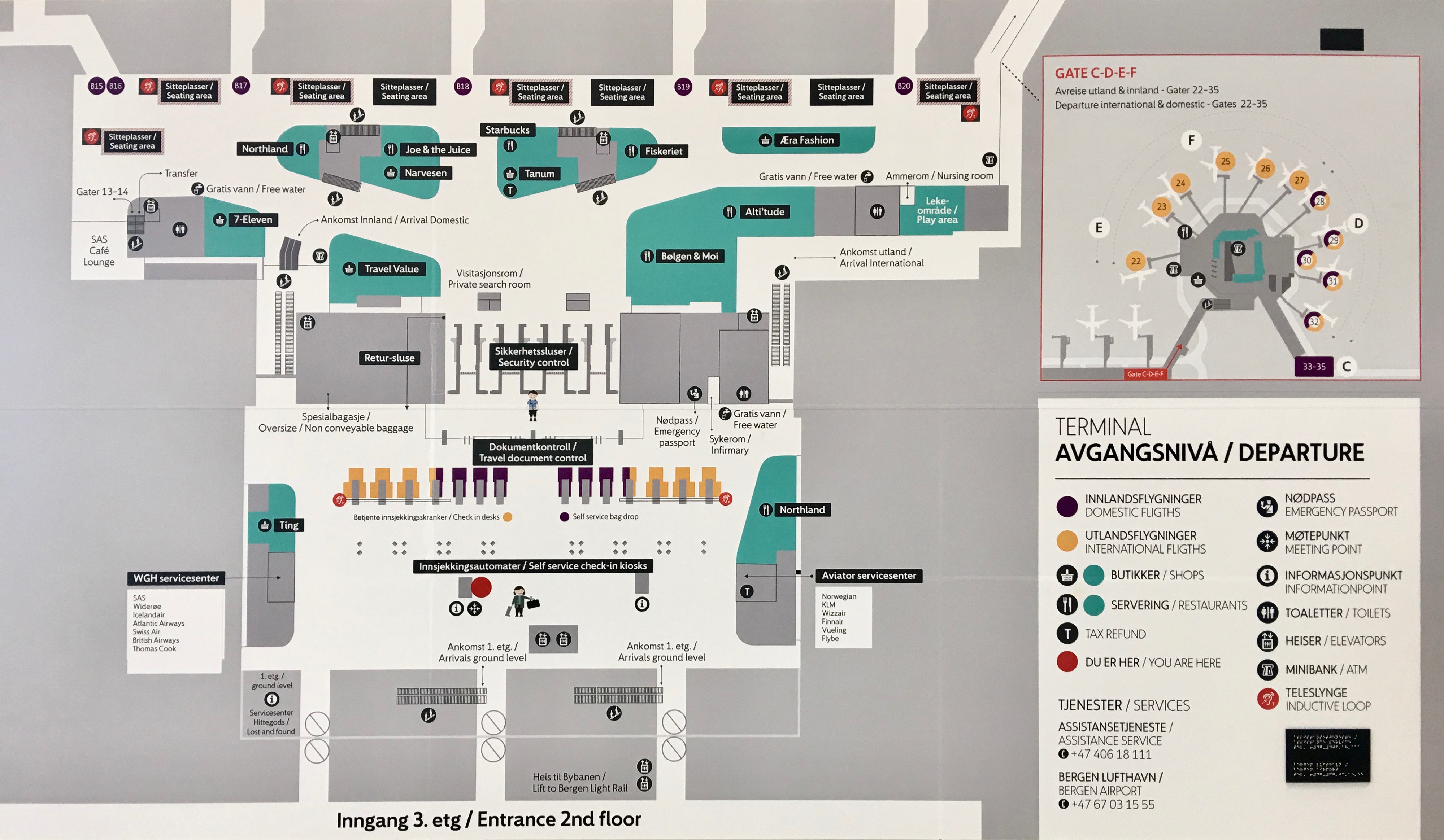
Terminal floor plans and information boards show gate zones, services, and transfer routes at a glance.
Image Credits: Wikimedia Commons
How early should I arrive at an unfamiliar airport?
Arrive 2 to 3 hours before a domestic flight and 3 hours before an international one. The extra time covers check-in, security lines, and the wrong turns that happen in a building you have never used. Tight connections through unknown hubs deserve even more slack.
What should I do if I get lost inside an airport?
Stop, look up at the nearest overhead sign, and confirm your gate zone before moving again. If the signs do not resolve it, ask uniformed staff or head to an information counter. Checking your airline's app for a gate change at the same time often explains the confusion.
How do I find my gate for a connecting flight?
Follow signs marked "Connections" or "Transfer" rather than heading for the exit. Check the departure boards for your onward flight's gate, since it may differ from what your boarding pass says. Allow extra time if the connection involves passport control or a terminal change by train or bus.
Do I need to go through security again when connecting?
Sometimes. International-to-international connections often keep you inside security, but some airports require you to clear passport control and re-enter through a different checkpoint. The airline's transfer desk can confirm your exact route.
The bottom line
An unfamiliar airport is just a building with signs, maps, and people whose job is to help you. Study the terminal map before you go, read signs zone-first, and ask staff the moment you feel unsure. Tonight, pull up the map for your next trip and find your terminal before you pack.
Tags: airports, travel tips, wayfinding, flights
Rive News is the research desk behind Rive News's evergreen library, covering practical travel, food, and everyday topics with sourced, checkable facts.
Latest in Travel
- Packing smart for a long-haul flight
- What to do when your flight is delayed overnight
- How to sleep on a plane when you cannot fall asleep
- The cheapest day of the week to fly
Subscribe to the Rive News newsletter for one practical guide like this every morning.
Published by Rive News. Information is for general purposes only.
Related stories

The 3-1-1 liquids rule for planes: what each number means
TSA's 3-1-1 rule limits carry-on liquids to 3.4-ounce containers in one quart bag. Where the 2006 rule came from, what counts, and how

Why Is Airplane Food So Bland at Altitude?
A 2010 Fraunhofer study found altitude cuts sweet and salty perception by up to 30 percent. Low humidity, cabin pressure, and noise all

Carry-on size limits: why airlines each set their own
Airlines set their own carry-on limits because the FAA only requires each carrier to have a policy, not one global size. Why 22 x 14 x