
How to sleep on a plane when you cannot fall asleep
By Rive News / Research desk | Rive News / Published October 20, 2026 at 9:00 AM PKT
Key takeaways
- Make your seat dark, quiet, and cool with an eye mask, earplugs, and a neck pillow before you try to sleep.
- Time your sleep for a night flight or your normal bedtime window, since your body clock resists naps at the wrong hour.
- Skip caffeine and alcohol, hydrate earlier in the day, and use slow breathing to calm a racing mind.
Lying awake in an upright seat while the cabin hums around you is one of travel's most familiar miseries. Your body knows it is not bedtime, the lights are wrong, and every announcement jolts you back awake. The harder you chase sleep, the further it runs.
Sleeping on a plane is a skill, not a talent. It comes down to controlling the three things your brain needs for sleep: darkness, quiet, and a calm mind.
Get those right and even an economy seat can work. Packing a small sleep kit for a long flight is the easiest first move.
This article explains how to sleep on a plane when you cannot fall asleep, including setting up your seat, timing sleep to your body clock, calming your mind, and what to avoid before trying to sleep.
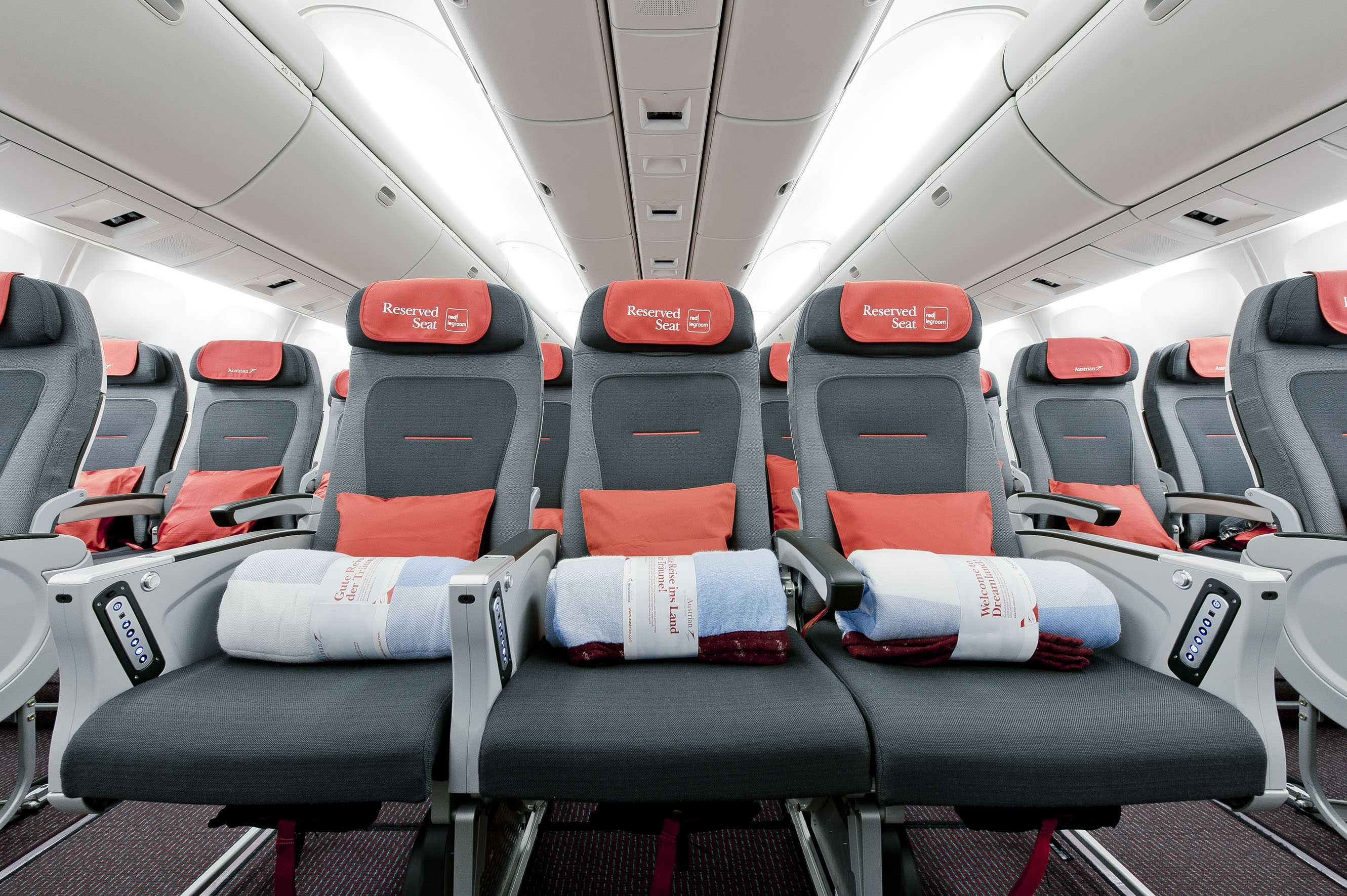
A long-haul cabin is noisy and bright by default, so creating your own dark, quiet bubble is the first step to sleep.
Image Credits: Wikimedia Commons
Set up your seat like a bedroom
Cool, dark, and quiet are the three keys to sleep, according to sleep experts cited by Cathay Pacific. You cannot change the cabin, but you can build a small version of those conditions around your seat.
Start with light. About 10 to 15 percent of light passes through your closed eyelids, and it directly increases wakefulness, according to sleep researcher Dr. Zeitzer in a Well+Good interview.
An eye mask blocks that light and also signals to your chatty seatmate that you are not in the mood to talk. Earplugs or noise-cancelling headphones handle the sound.
A cruising plane generates around 85 decibels, and the American Speech-Language-Hearing Association notes that 85 dBA can damage hearing after eight hours of exposure, so blocking it helps both your ears and your rest.
Add a supportive pillow to keep your neck aligned. Elina Winnel, founder of My Sleep Coach, told Qantas to wear something comfortable that mimics sleeping conditions at home, such as leggings or loose clothing, and to bring socks plus a small blanket to create a cozy bed-like environment. Copying your normal routine helps too: brushing your teeth or changing clothes before trying to sleep tells your brain what comes next.
Time your sleep to your body clock
Your circadian clock makes sleep genuinely difficult at certain hours, especially just before your normal bedtime. Trying to force a nap during the wrong window is a losing fight. If you have any choice in the matter, book a night flight so you feel naturally tired and ready to sleep, Winnel advises.
On multi-leg trips, pick one long leg for real sleep instead of dozing in fragments across short hops. Winnel told Qantas she chooses the longest leg to sleep well rather than the short ones. Being physically tired helps as well: exercising during the day before your flight wears your body out and makes the seat feel more inviting.
Seat choice matters. If you are easily disturbed, take a window seat so nobody climbs over you and you get a wall to lean on.
If you need the bathroom often or want to stretch regularly for circulation, the aisle serves you better. Settle this at booking time, because switching seats mid-flight is rarely possible on a full plane.
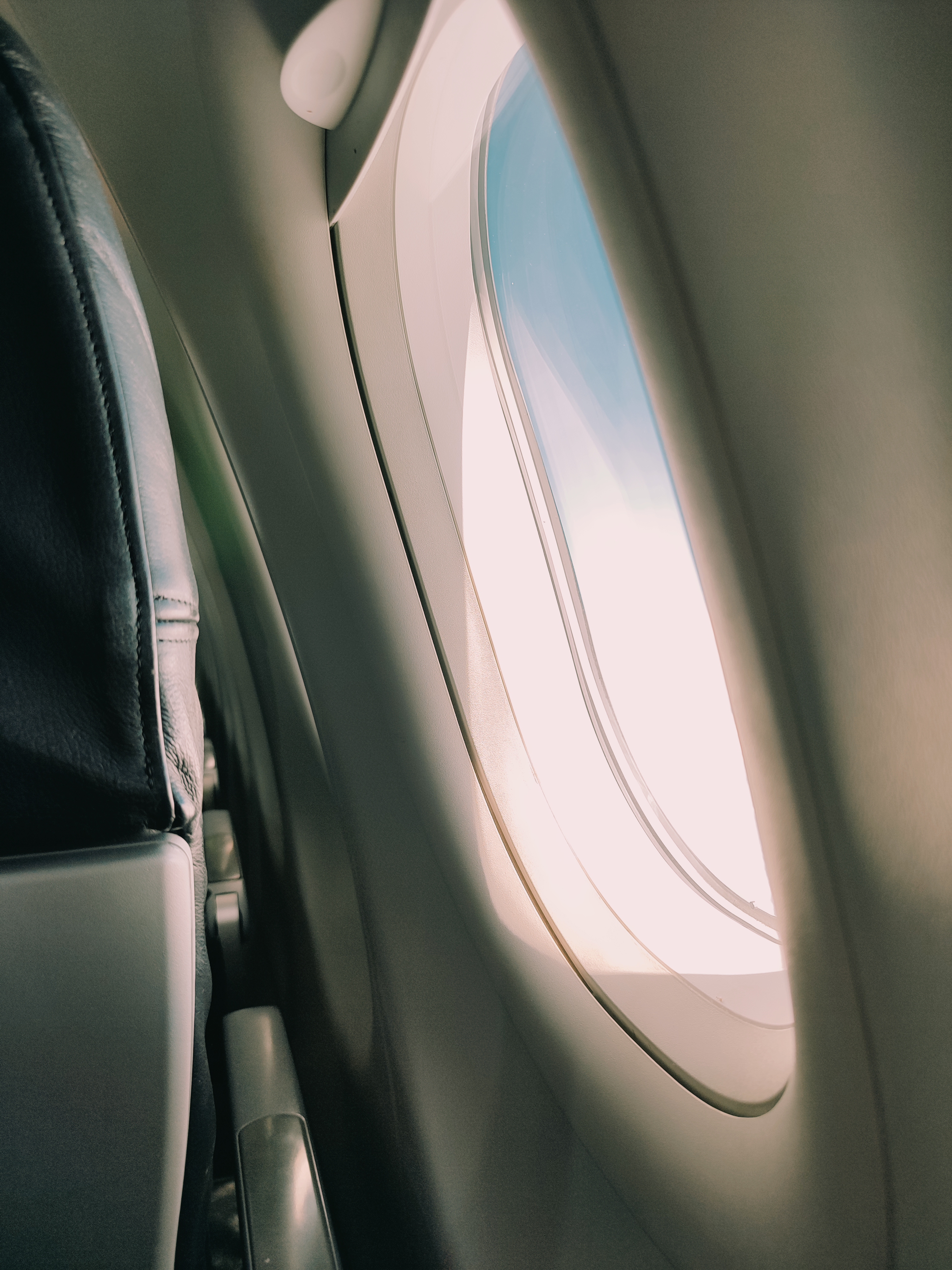
A window seat gives you a wall to lean on and spares you from seatmates climbing over you mid-sleep.
Image Credits: Wikimedia Commons
Calm your mind when sleep will not come
A racing mind is the most common reason people lie awake on planes. One psychologist-approved technique is the "Alpha Bridge" method shared by mental well-being educator Erica Terblanche. Get comfortable, close your eyes, and count to 30. Then open your eyes just barely, into little half moons, and count to five.
Repeat the cycle, then close your eyes and watch your breathing move in and out of your nose. Terblanche says most people fall asleep in the first cycle. The counting gives your brain a dull job instead of letting it replay your itinerary.
Breathing exercises work on the same principle. Try the 4-7-8 method: inhale for four counts, hold for seven, exhale for eight.
The long exhale slows your heart rate and tells your nervous system the emergency is over. Calming music, nature sounds, or a familiar audiobook can fill the silence behind it.
Here is the counterintuitive part: stop trying. Dr. Zeitzer's advice is blunt on this point: no good sleeper ever tries to sleep.
Read a book, do a crossword, or watch something gentle on the in-flight entertainment. As Cathay Pacific's expert Chan puts it, "Sleep will find you one way or another." Relaxation counts as rest even before sleep arrives.
What to avoid before trying to sleep
Caffeine and alcohol are the two biggest sleep thieves on a plane, and Winnel says to avoid them at all costs. Caffeine keeps your brain alert for hours, while alcohol fragments the sleep you do get and dehydrates you further.
Hydration needs timing. Planes are extremely dry, and a dry mouth will wake you up.
Drink plenty of water, but front-load it: Winnel recommends hydrating well before the flight rather than during it, so you are not climbing over neighbors for the bathroom every hour. Asking the crew for refills before your sleep window works better than waking up thirsty.
Skip the heavy meal right before sleep too. A light snack is fine, and packing your own food lets you ask the crew not to wake you for the meal service. Dim your screen or switch it off entirely in the last half hour, since the blue glow keeps your brain alert longer than you expect.
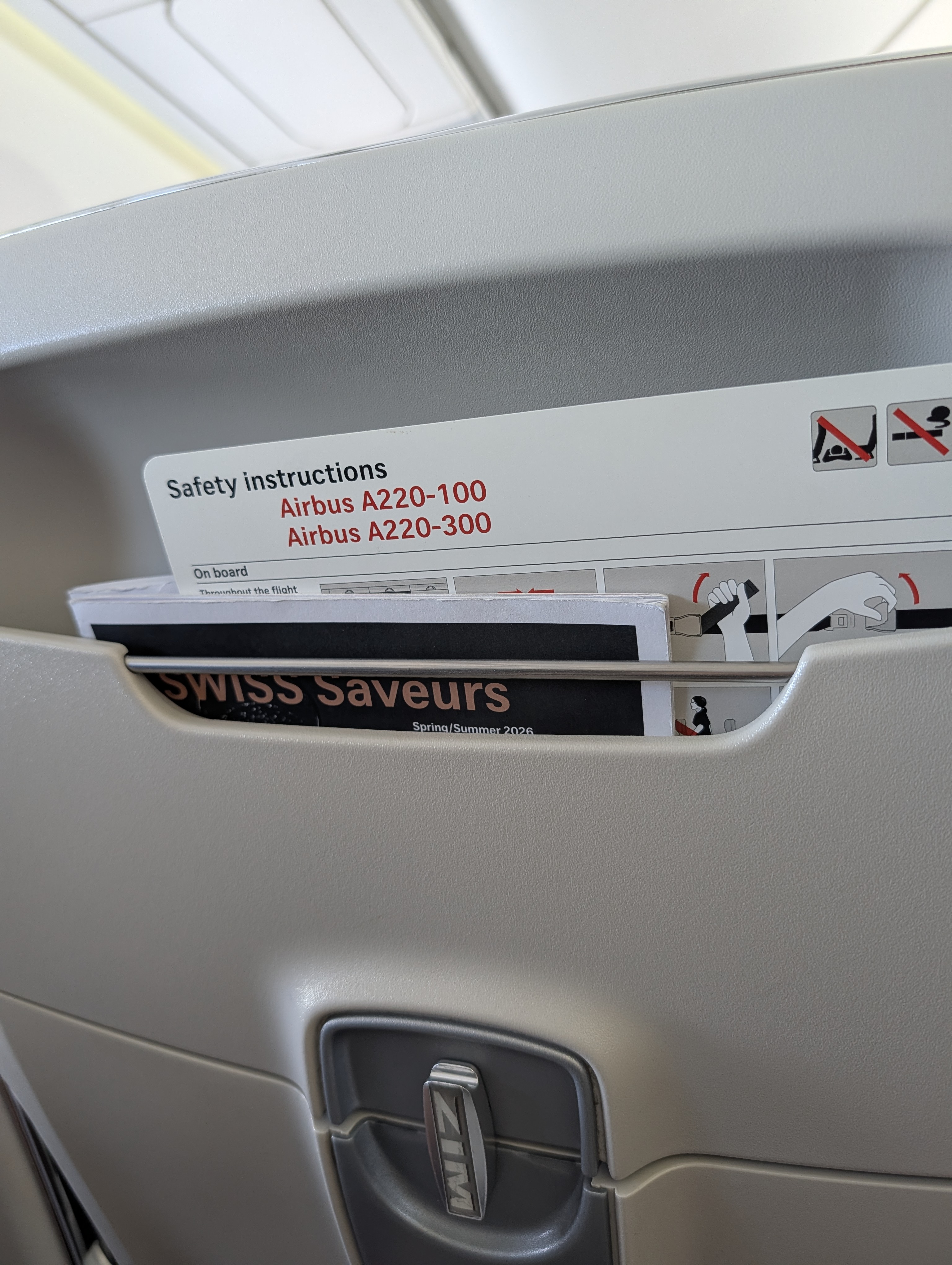
Economy cabins stay bright and busy around every seat, which is why an eye mask and earplugs earn their place in your carry-on.
Image Credits: Wikimedia Commons
Should I take a sleeping pill on a plane?
Talk to your doctor first, especially if you have anxiety about flying. Some travelers use melatonin or prescribed sleep aids, but pills do not fix light, noise, or an upright seat. Try the environmental fixes in this article first, and never mix sleep aids with alcohol.
Which seat is best for sleeping on a plane?
The window seat wins for most people: a wall to lean on, control of the shade, and no climbing over you. Choose the aisle only if you need frequent bathroom trips or want to stretch your legs often. Avoid seats near lavatories and galleys, where noise and foot traffic peak.
Does drinking alcohol help you sleep on a flight?
It may make you drowsy, but it fragments sleep and dehydrates you in already-dry cabin air. Sleep experts consistently advise skipping it if real rest is the goal. Water earlier in the day does more for your sleep than a nightcap.
How do I beat jet lag after sleeping on the plane?
Once you land, get daylight on your face and move gently with a walk or stretch. Light resets your body clock faster than caffeine. Adjust your bedtime by an hour or two per day toward the destination schedule, going later when traveling west and earlier when traveling east.
The bottom line
Sleep on a plane comes from darkness, quiet, and a calm mind, not from willpower. Set up your seat with a mask, earplugs, and a pillow, and use slow breathing instead of forcing it. For your next long flight, pack the sleep kit the night before so the seat feels like a plan instead of a punishment.
Tags: flights, sleep, travel tips, long-haul
Rive News is the research desk behind Rive News's evergreen library, covering practical travel, food, and everyday topics with sourced, checkable facts.
Latest in Travel
- Packing smart for a long-haul flight
- What to do when your flight is delayed overnight
- How to find your way around an airport you have never used
- The cheapest day of the week to fly
Subscribe to the Rive News newsletter for one practical guide like this every morning.
Published by Rive News. Information is for general purposes only.
Related stories
The 3-1-1 liquids rule for planes: what each number means
TSA's 3-1-1 rule limits carry-on liquids to 3.4-ounce containers in one quart bag. Where the 2006 rule came from, what counts, and how
Why Is Airplane Food So Bland at Altitude?
A 2010 Fraunhofer study found altitude cuts sweet and salty perception by up to 30 percent. Low humidity, cabin pressure, and noise all
Carry-on size limits: why airlines each set their own
Airlines set their own carry-on limits because the FAA only requires each carrier to have a policy, not one global size. Why 22 x 14 x