
How to Sleep on a Long Overnight Flight
Key takeaways
- Pick the flight first: an evening departure that matches your normal bedtime beats any gadget.
- Choose a window seat away from toilets, and time sleep around the meal service.
- Run a short wind-down routine in your seat, and skip alcohol and caffeine before sleeping.
Sleeping on a long overnight flight is a planning problem, not a shopping problem. The travelers who rest best usually made three decisions before boarding: which flight to take, which seat to pick, and when to sleep. The eye mask and neck pillow help, but they come last.
A redeye asks your body to sleep upright, in noise, on a schedule set by an airline. That is hard. It gets easier when the flight works with your body clock instead of against it, and when you protect the sleep window from the two things that break it most: meal service and light.
This article explains how to sleep on a long overnight flight, including flight choice, seat selection, sleep timing, a cabin wind-down routine, and the habits that quietly ruin in-flight rest.
Choose the flight before you choose the seat
Departure time is the biggest single lever on your sleep, and most people never pull it because they filter by price. Reward Flight Finder puts it bluntly: book the flight that suits your body clock, not just the cheapest fare of the day.
Overnight beats daytime when you head east and lose hours. An evening departure that lands mid-morning gives you a real shot at sleep and a full first day. A 3 PM departure asks you to fall asleep in the middle of your own afternoon, which most bodies refuse to do.
Watch the arrival time, not just the departure. Landing at 5 AM leaves you hours to fill before any hotel will check you in. A mid-morning arrival lets you drop bags, shower, and start the day on something close to a normal schedule.
Direct beats connecting when rest matters. Two short legs on either side of a 2 AM transfer is not a night of sleep in any meaningful sense. If a connection is unavoidable, pick the longer layover and treat the first leg as a nap, not the main sleep.
Match your natural sleep window. If you normally turn in at 11 PM, a 9 PM departure works with you. If you are a morning person, an 11 PM departure may still leave you wired.
The flight that lines up with your usual bedtime wins.
Pick a seat built for sleeping
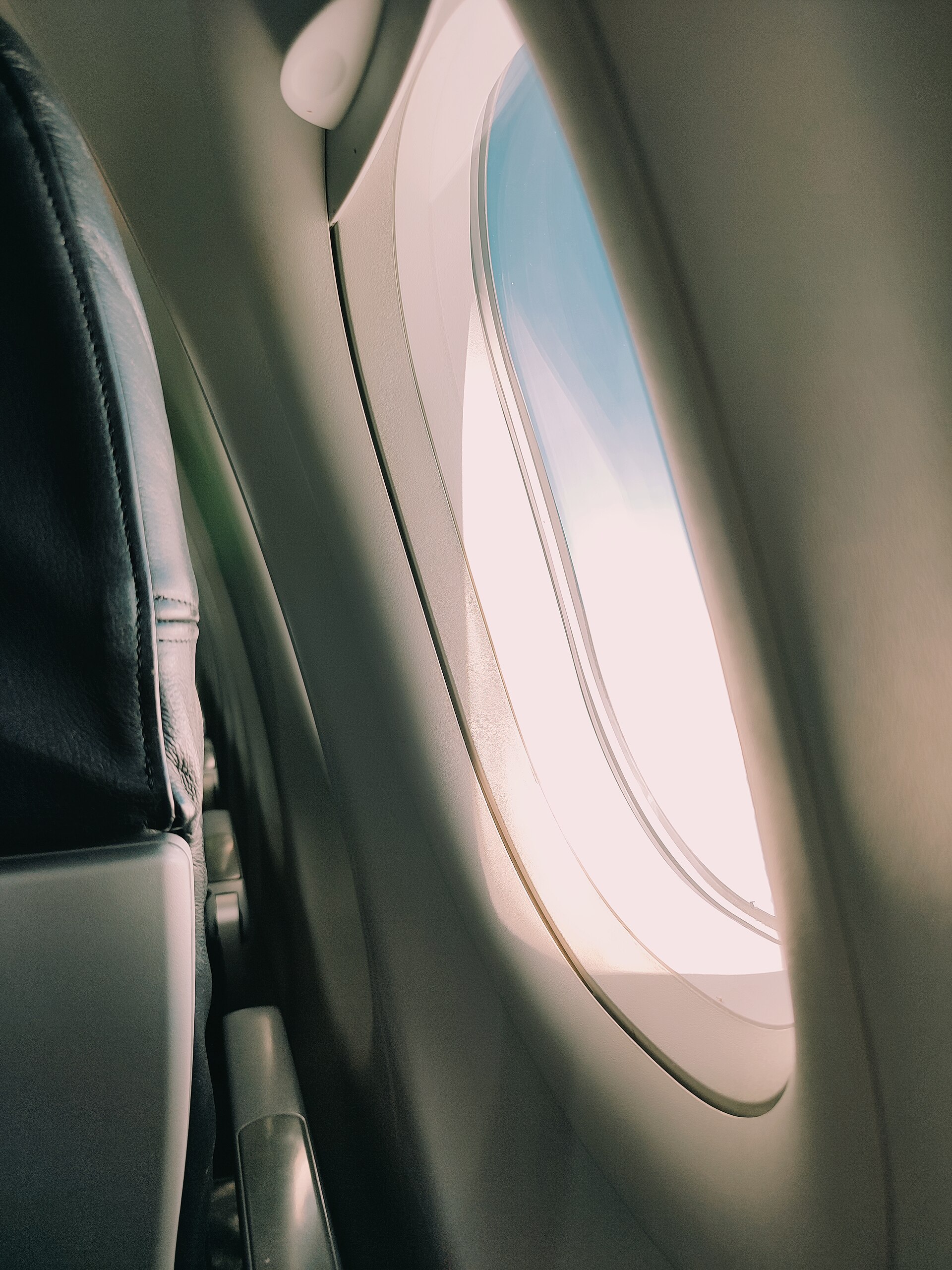
When possible, choose a window seat. You can lean against the fuselage, control the window shade, and avoid being woken when seatmates get up. That last point matters more than it sounds: on a full overnight flight, aisle passengers get disturbed every time a neighbor needs the toilet.
Stay away from the toilets. Seats near them draw queues, noise, and light all night. Seats near the galley suffer the same problem, with crew activity added.
A window seat in a quiet mid-cabin row is the best economy option for most people.
The wing row has a case too. Sleep expert Seeley, quoted by T3, calls the row at the wing the quietest area, and notes it often sits near the emergency exit with more legroom. On long-haul flights, she adds, the front of the plane gets served food first and disembarks first, which is why attendants recommend those seats for people who want to sleep.
If you are short, propping your feet on a carry-on can reduce leg swelling and improve comfort. Taller travelers may benefit from bulkhead or exit-row seats with extra legroom. Either way, recline fully once permitted.
A half-recline for eight hours is a recipe for a stiff neck and a bad morning.
Time your sleep around the cabin, not the clock
Sleep timing matters as much as sleep quality. If your goal is to adjust to your destination's time zone, try to stay awake until it is bedtime in the new location, even if that means powering through the first few hours. Then sleep in a block that helps your body clock reset.
Ask the crew when food will be served. Seeley recommends asking right after takeoff so you can time sleep around the meal service and avoid being woken by trays, lights, and carts. Eat first, then sleep.
Or sleep first and eat at breakfast. The mistake is drifting off ten minutes before the carts roll out.
Set your watch to destination time on boarding. Eat and sleep on the new schedule. Apps such as Timeshifter can build a personalized plan around your route.
The principle is simple: every hour you spend on destination time in the air is an hour less jet lag on the ground.
Skip alcohol and caffeine before sleeping. Caffeine blocks adenosine, a sleep-inducing chemical, and lowers sleep quality. Alcohol may feel relaxing, but it fragments sleep and dehydrates you at altitude.
Water or herbal tea is the better choice in the hours before sleep.
Pack a small sleep kit
A good sleep kit is small, and it lives in your personal item, not the overhead bin. The essentials are a neck pillow, an eye mask, earplugs or noise-canceling headphones, socks, and water.
Katie Storck, a Southwest Airlines flight attendant with more than a decade of experience, told Southern Living that cheap neck pillows are not worth the money. She invests in a quality pillow, and when she flies as a passenger she puts in headphones, straps on the neck pillow, and wakes without her neck hurting from falling at an unnatural angle.
For light, Andrea Davis, a Delta flight attendant based in Atlanta, swears by a weighted eye mask. The weight blocks light and helps calm the mind, and Davis says the beads inside can help you fall asleep faster, especially when adjusting to time zones. A plain blackout mask works too.
The point is total darkness.
For noise, earplugs are the simple option, and noise-canceling headphones with white noise or a sleep playlist build what Southern Living calls an instant sleep cocoon. Keep both in the kit. Earplugs weigh nothing, and headphones cover the nights when the cabin is loud.
Dress in layers. Storck recommends layers because cabin temperature can swing widely. A hoodie or oversized wrap doubles as a blanket or pillow, and comfortable joggers plus socks help you slip into sleep mode.
Slip-on shoes let you kick them off mid-flight without a struggle.
Run a wind-down routine in your seat
A consistent pre-sleep routine cues your body to rest, on the plane just as at home. Keep it short, around 10 to 15 minutes, and run the same steps in the same order every time you fly.
Start by clearing your space. Stow the tray table, dim your personal light, and put the book or screen away. Screens are the enemy here: blue light tells the brain it is daytime.
Power down at least 30 minutes before you plan to sleep.
Next, settle your body. Put on socks, adjust the neck pillow, and buckle your seatbelt over the blanket. Storck recommends the seatbelt-over-blanket trick so flight attendants do not have to wake you to check the belt.
Recline, plant your feet, and uncross your legs.
Then block the senses. Eye mask on, earplugs or headphones in, and a slow breathing pattern or a calming podcast at low volume. Keep the routine identical each flight.
Repetition is what turns a list of steps into a sleep signal.
T3 adds one more pre-flight move: a 30-minute walk around the airport or duty-free before boarding. Light activity helps you fall asleep faster and for longer, and it gives you something useful to do while waiting at the gate.
What ruins sleep on overnight flights
Four habits quietly wreck in-flight rest. The first is heavy food late in the flight. A heavy, spicy, or salty meal before sleep causes discomfort, reflux, or thirst.
Eat light, and save the big meal for arrival.
The second is dehydration. Cabin air is dry, and dehydration can shorten and fragment sleep. Drink water steadily from boarding, but taper intake in the hour before planned sleep so bathroom trips do not break the block.
The third is screen glare. A bright seatback screen at midnight keeps the brain alert. If you watch anything, keep it dim and short, and switch it off well before sleep.
The same rule applies to phones: no scrolling in bed at home, no scrolling in seat 24A.
The fourth is starting the flight exhausted. Get good rest the night before so you are not starting in a deficit. An overnight flight is a bad place to repay a sleep debt, because the cabin never gives you the deep, still sleep a bed does.
Frequently asked questions
Should I take melatonin on an overnight flight?
Some travelers use melatonin or calming teas to fall asleep when their body thinks it is morning. It helps some people and not others. Talk to a doctor first if you take other medication or have a medical condition, and test it at home before trying it at altitude.
Is the window seat always best for sleeping?
For most people, yes, because it gives a wall to lean on and fewer disturbances. Aisle seats suit people who need the toilet often or have long legs and want to stretch. Middle seats are the worst for sleep, and no accessory fully fixes that.
How much sleep can I realistically get on a redeye?
Expect less than at home. A 7-hour flight may offer 4 to 5 hours of real sleep after boarding, meals, and descent. Plan for that, and protect the middle block fiercely.
Does sleeping on the plane prevent jet lag?
It reduces it, but it does not prevent it. Sleeping on destination time, getting daylight on arrival, and staying hydrated all help. One good flight is a head start, not a cure.
The bottom line
Sleep on an overnight flight comes from three decisions: a flight that matches your bedtime, a quiet window seat away from the toilets, and a sleep block timed around the meal service. Add a small kit, a short wind-down, and no alcohol or caffeine before sleep, and you have the best setup economy allows. Pack smart so the kit is in reach, set your watch to destination time, and treat the flight as the first night of the trip, not a lost one.
Tags: flights, sleep, long-haul travel, jet lag
Latest in Travel
- How to beat jet lag faster
- How to pack a carry bag for a week without checking luggage
- How to find cheap flights with flexible dates
- What to do if your flight is cancelled at the airport
Subscribe for one practical travel explainer each week.
Related stories

The 3-1-1 liquids rule for planes: what each number means
TSA's 3-1-1 rule limits carry-on liquids to 3.4-ounce containers in one quart bag. Where the 2006 rule came from, what counts, and how

Why Is Airplane Food So Bland at Altitude?
A 2010 Fraunhofer study found altitude cuts sweet and salty perception by up to 30 percent. Low humidity, cabin pressure, and noise all

Carry-on size limits: why airlines each set their own
Airlines set their own carry-on limits because the FAA only requires each carrier to have a policy, not one global size. Why 22 x 14 x