
Western Sydney airport opens with first Jetstar flight to Gold Coast
Web StoryWatch this story in 15 seconds →Key takeaways
- Western Sydney International Airport opens to passengers on Sunday, October 25, 2026.
- The first passenger flight is a Jetstar service to the Gold Coast at 11 am.
- The airport has no night curfew, unlike Sydney Kingsford Smith Airport.
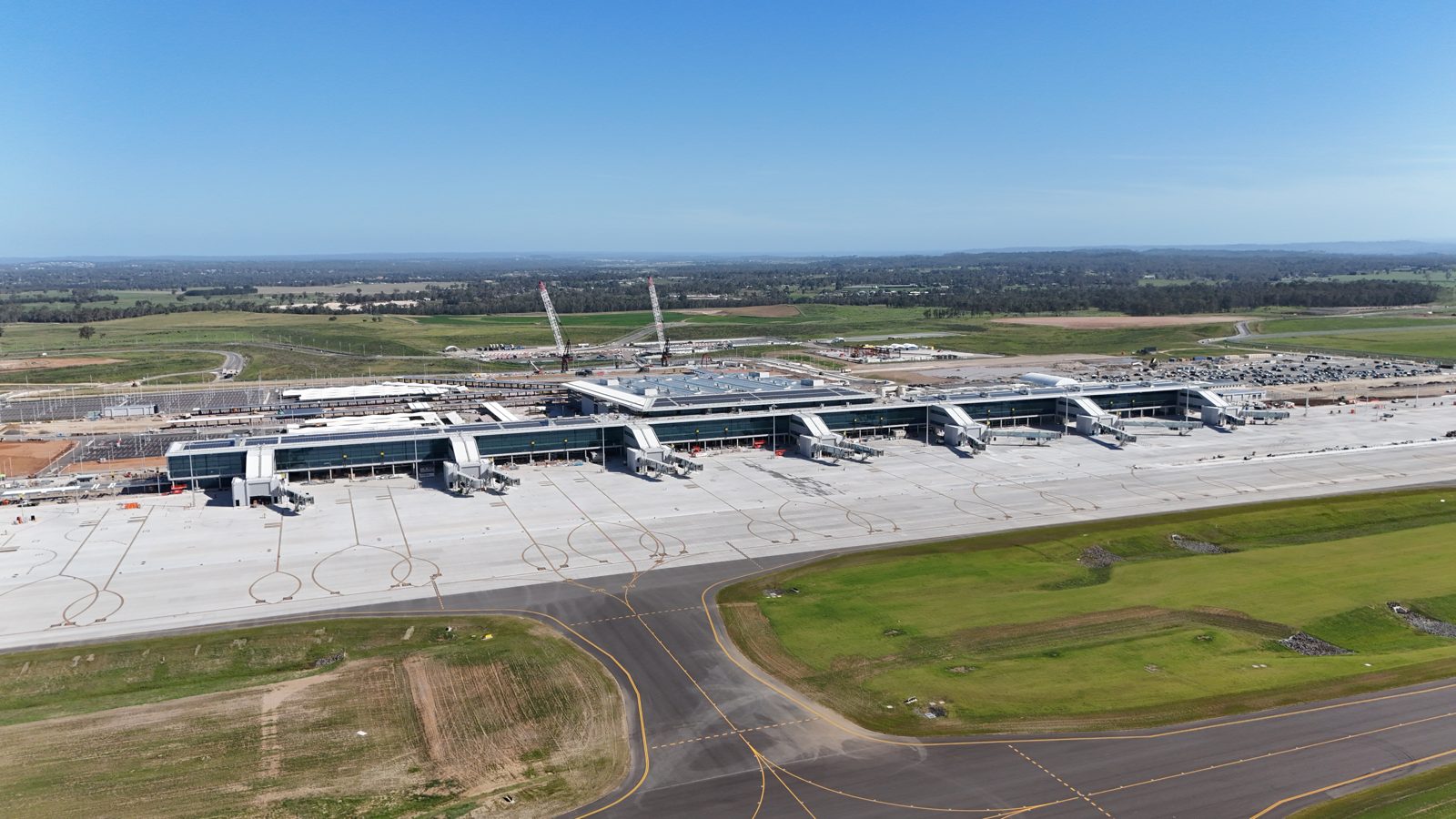
Sydney is about to get a second major airport. Western Sydney International Airport opens to passengers on Sunday, October 25, 2026. Its first passenger flight is a Jetstar service to the Gold Coast. The flight leaves at 11 am local time.
This is why so many people are searching for the airport this weekend.
The airport sits at Badgerys Creek, about 44 km west of Sydney city centre. Its full name is Western Sydney International (Nancy-Bird Walton) Airport. Its airport code is WSI.
Most people just call it WSI. It is named after Nancy Bird Walton, an Australian aviator. The airport is run by WSA Co Limited, a company owned by the Australian Government.
What happened
Passenger flights start on October 25, 2026. Cargo flights started earlier, on July 27, 2026. That means the airport already handles freight. Now it opens its doors to regular travellers too.
The first passenger flight is a Jetstar service to the Gold Coast, south of Brisbane. It uses an Airbus A320 plane.
Jetstar is the low-cost arm of Qantas. It will serve three cities from day one. Those cities are the Gold Coast, Melbourne, and Brisbane.
From launch, Jetstar plans up to 14 flights a week to Melbourne. It plans four flights a week to the Gold Coast. It plans three flights a week to Brisbane.
These are the day-one Jetstar routes reported by Simple Flying. Times and frequencies can change, so travellers should check with the airline before they book.
The first international airline follows one day later. Air New Zealand starts flights from Auckland on October 26, 2026. It will fly three times a week to Auckland. Singapore Airlines plans a daily service to Singapore from November 23, 2026. Its flight leaves late at night, at about 11:55 pm.
That late departure is only possible because WSI has no curfew.
QantasLink will add its own passenger flights later. It plans flights to Melbourne and Brisbane from March 28, 2027. It will fly four times a week to each city. Other airlines are also in the first-year list.
Vietjet and Fiji Airways are among the confirmed names. Fiji Airways plans to start in March 2027. Qatar Airways is listed for December 2027 in some guides, but travellers should treat later dates as plans, not promises.
Why it matters
The big change is the clock. Sydney Kingsford Smith Airport has a night curfew. Since 1996, large passenger planes cannot take off or land there from 11 pm to 6 am.
That rule shapes how airlines plan flights. It also limits how Sydney recovers from late delays. A late plane can miss the curfew and cause chaos the next day.
WSI has no curfew at all. Planes can take off and land at any hour. That gives airlines more freedom.
It also gives Sydney a backup when flights run late. If a plane will miss the curfew at Kingsford Smith, it can use WSI instead. This is a simple idea with a big effect on schedules.
Capacity is the second reason. Kingsford Smith handles about 42.5 million passengers a year, according to Simple Flying. It is close to its limit.
It also has a cap on flights per hour. WSI starts small, but it adds room to grow. Its first stage can handle up to 10 million passengers a year.
Long-term plans raise that to about 82 million passengers a year. That growth will take many years and more building.
The airport is also a jobs and growth story for Western Sydney. The federal government said the first building phase would create about 4,000 jobs. It said the airport area could create 35,000 jobs by 2035. Those are government claims, not guarantees.
Still, they show why the project matters to the region. Three million people live in Western Sydney, and many of them had to travel east to fly.
The design is unusual in one more way. WSI is the first major airport in Australia with no control tower on site. Instead, it uses a remote digital tower.
The tower uses 20 cameras on a 45-metre mast. Controllers watch the video from a data centre 20 km away at Eastern Creek. This is a new way to run an airport.
It has drawn some criticism in the press, and travellers may hear more about it as flights grow.
What the airport looks like
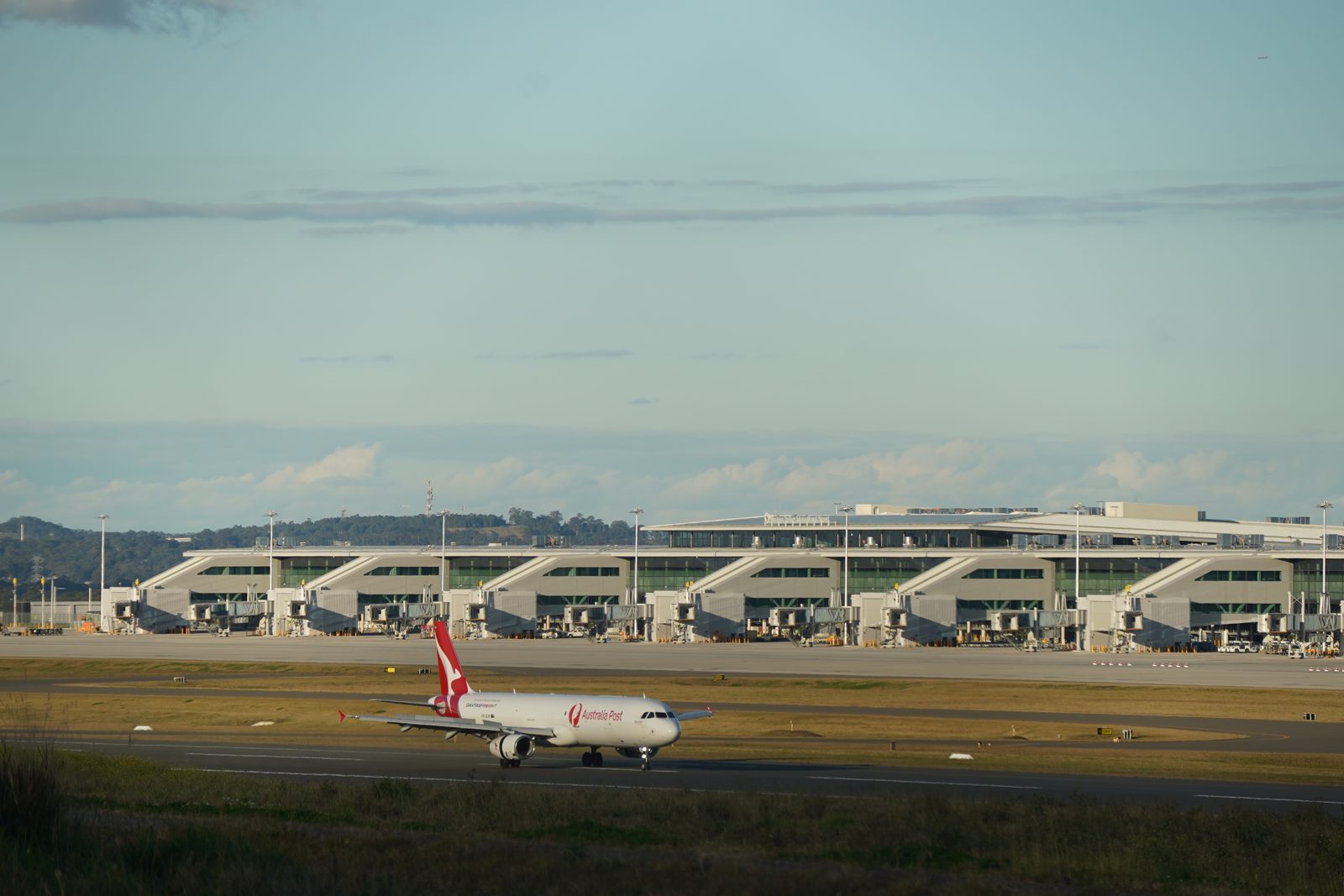
Stage 1 has one runway and one terminal. The runway is 3.7 km long. The terminal puts domestic and international gates under one roof.
It has 14 gates, with 13 air bridges and six remote stands. Some gates can switch between domestic and international use. The gates can handle large planes, including the Airbus A380.
Inside, the terminal has 40 self-service check-in kiosks. It has 34 bag-drop kiosks. Its baggage system is 5 km long and can process 2,000 bags per hour.
The design uses sandstone and draws on the local bush landscape. It also draws on Dharug country, the land of the local First Nations people.
For travellers, the basics matter most. The terminal offers free Wi-Fi across the building. It has drinking water stations and flight screens.
It has play areas for children and multi-faith prayer rooms. It has accessible parking, lifts, hearing loops, and family changing rooms. Shops and food outlets in the terminal can trade around the clock.
Security and boarding rules still apply at WSI, just as they do everywhere else. If you want a refresher before you fly, read how airport security scanners work. Liquids rules also still apply, so check the 3-1-1 rule for liquids on planes before you pack.
Here is why airlines dim cabin lights at takeoff and landing.
What happens next
Getting to WSI will rely on roads at first. The M12 Motorway links the airport to the M7, and it is toll-free. The airport has more than 6,000 parking spaces.
Buses run every 30 minutes to Penrith, Liverpool, and Campbelltown. A free shuttle links St Marys station to the terminal. These are the transport links reported for opening day.
The rail link is not ready yet. The Sydney Metro Western Sydney Airport line is due in 2027. Until then, travellers should allow extra time. Western Sydney traffic can be heavy, and the airport is far from the city centre.
Plan the trip like you would plan a flight from a new airport: early, with a backup plan.
More routes will follow through 2027. Air New Zealand starts first, then Singapore Airlines. QantasLink, Vietjet, and Fiji Airways join later in the year. Each new route adds choice for Western Sydney travellers.
Each new route also tests whether airlines can fill planes from a new airport. Early demand will shape what comes next.
Kingsford Smith will stay Sydney's main airport for now. WSI starts as a complement, not a replacement. Its first stage is small next to a 42.5 million passenger hub.
But its no-curfew model is the point. If late-night flights work well, more airlines may follow. If they do not, WSI will still serve Western Sydney's local demand.
For now, the story is simple. A new airport opens on October 25, 2026. A Jetstar plane leaves for the Gold Coast at 11 am. Sydney gains a second gateway, and that gateway never closes for the night.
Related stories
The 3-1-1 liquids rule for planes: what each number means
TSA's 3-1-1 rule limits carry-on liquids to 3.4-ounce containers in one quart bag. Where the 2006 rule came from, what counts, and how
Why Is Airplane Food So Bland at Altitude?
A 2010 Fraunhofer study found altitude cuts sweet and salty perception by up to 30 percent. Low humidity, cabin pressure, and noise all
Carry-on size limits: why airlines each set their own
Airlines set their own carry-on limits because the FAA only requires each carrier to have a policy, not one global size. Why 22 x 14 x