
How to Drive Safely in Heavy Rain Without Losing Control
Key takeaways
- Cut your speed by one-third in heavy rain. Wet roads cut tire grip by about a third, so slower is safer.
- Turn off cruise control and add seconds to your gap. Rain needs 4 to 5 seconds, and rain plus dark needs 5 to 6.
- Never drive through standing water. If your car hydroplanes, ease off the gas and steer gently where you want to go.

Heavy rain driving means handling a car with less grip, less visibility, and longer stopping distances at the same time. The road surface changes, spray from other vehicles cuts your view, and standing water can hide deep hazards.
The stakes are high. AAA notes that one in five motor vehicle crashes nationwide occurs in adverse weather or on slick pavement, and US Department of Transportation data cited by AAA shows 47 percent of weather-related vehicle crashes occur during rainfall.
This article explains what to check before you drive, how to slow down and open a gap, how to see and be seen, what to do if your car hydroplanes, and when to pull over and wait.
Before you drive
Check the forecast and the radar before you leave. If severe storms or flash flooding are expected, delaying the trip may be the safest option, and very few trips are so urgent that you cannot modify or postpone them.
Check your tires first. Bald or under-inflated tires cut traction sharply, which matters most on wet roads, and AAA advises making sure tires have good tread depth and correct inflation before driving in a downpour.
Check tread depth with the wear bars or a penny test. The National Highway Traffic Safety Administration advises replacing tires when tread wears down to 2/32 of an inch, which is where the built-in wear bars sit.
Check your wipers, headlights, taillights, and turn signals. You need all of them to see and be seen, and wipers that streak or skip should be replaced before the next storm, not during it.
Top off your windshield washer fluid. Rain kicks up grime and road spray, so you may need to wash the windshield more than usual, and an empty washer bottle leaves you blind at the worst moment.
Clear fog from windows before you drive. Use the defroster or air conditioning to improve visibility, since fogged glass plus rain leaves you guessing at the road ahead.
Allow extra travel time. Heavy rain demands slower speeds, so building in extra minutes keeps you from rushing, and rushing in rain is how small mistakes turn into crashes.
If you plan a longer journey, run the full checks in our guide on what to check before a long road trip by car. Rain makes every small car problem worse, so a sound car matters more in a storm.
Slow down and open a gap
Speed is the first thing to fix. On wet roads, tires lose about a third of their traction, according to AAA, and William Van Tassel, AAA manager of Driver Training Programs, advises reducing speed by one-third below your normal safe driving speed.
AAA Club Alliance gives a clear example: if the speed limit is 30 miles per hour, consider driving closer to 20 miles per hour in heavy rain. That one-third cut keeps the car in contact with the road and buys time to react.
The first minutes of rain are the most treacherous. Oil and dust on dry pavement mix with the first rainfall and make the surface slick, so slow down early rather than waiting for the road to look wet.
Turn off cruise control on wet roads. Cruise control tries to hold a constant speed, which can make hydroplaning and skidding worse, and it delays your response when tires lose grip.
Open a bigger gap to the car ahead. In dry conditions, AAA recommends staying 3 to 4 seconds behind the car ahead, and in poor conditions you add one second for every negative factor.
Van Tassel explains the rule plainly: "So, if it is rainy, add one second. If it is rainy and dark, add two seconds." That gives 4 to 5 seconds in rain and 5 to 6 seconds in rain plus dark.
Measure the gap with a landmark. When the car ahead passes a sign or pole, start counting, and if you reach the same landmark in less than your target seconds, you are following too closely.
Brake earlier and more gently than usual. In heavy rain, it takes longer to slow down, so early gentle pressure beats late hard braking, which can trigger a skid.
Avoid sudden steering and sharp lane changes. Smooth inputs keep the tires gripping, while jerky moves break traction on a wet surface. If you must change lanes, signal, check mirrors, and move over with care.
Drive in the tracks of the vehicle ahead when you can. Those tires displace water and leave better traction behind, yet keep your full following gap and never tailgate to stay in the tracks.
See and be seen
Turn your headlights on in rain, even during the day. Low beams help you see and help other drivers see you, and many states require headlights whenever wipers run continuously.
Use low beams, not high beams, in rain and fog. High beams bounce off beads of moisture and produce glare that cuts your own visibility, while low beams light the road without the bounce-back.
Run the defroster or air conditioning to keep windows clear. Humid air fogs glass fast in rain, and a clear windshield is worth more than any gadget when visibility drops.
Give large vehicles extra space. Trucks and buses throw up heavy spray that can wipe out your view for seconds at a time, so hang back until the spray clears or pass with care.
Watch for standing water and avoid it. Puddles and flooded sections are often deeper than they appear, and they can hide potholes, debris, or washed-out pavement.
If you drive a single-lane road, stick to the driest part of the lane. Van Tassel notes that lanes are generally 12 feet wide and all of that width is yours to use safely, while watching for cyclists and pedestrians near the right edge.
Keep your tires in shape between storms. If you are unsure whether yours are worn, learn how to tell if car tyres need replacing before the next downpour, since tread is your main defence against hydroplaning.
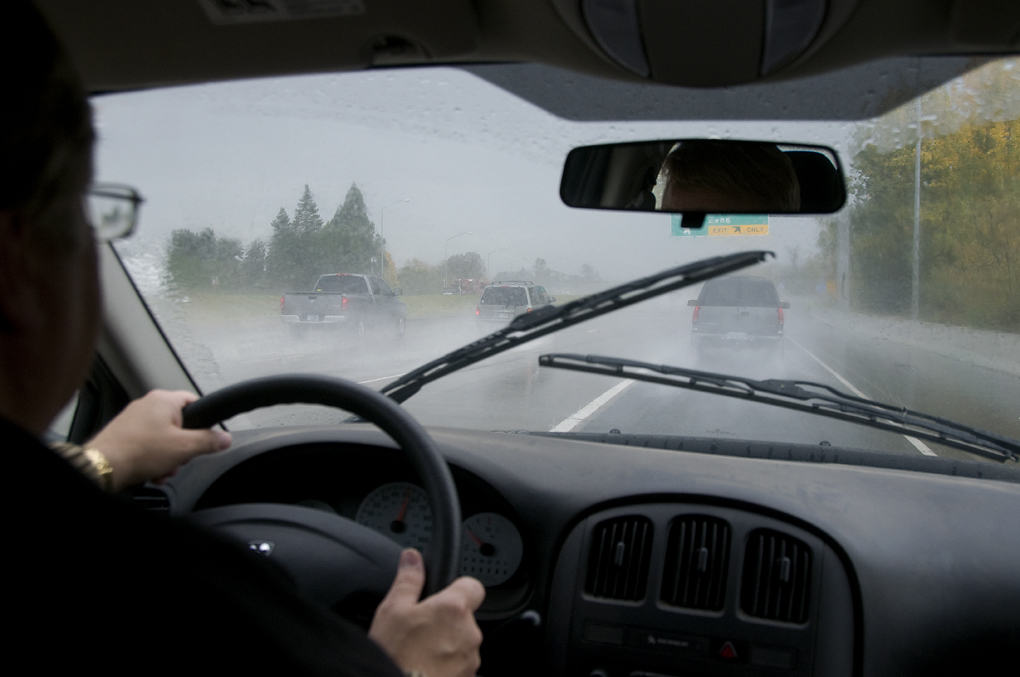
If your car hydroplanes
Hydroplaning happens when a layer of water builds up between your tires and the road, so the tires lose contact and the car slides. AAA notes this can happen with as little as 1/12-inch of water on the road.
Stay calm and look where you want to go. Panic braking is the most common mistake, and it makes the slide worse instead of stopping it.
Ease off the accelerator and let the car slow naturally. Do not slam the brakes, since hard braking can lock the wheels and cost you even more traction.
Steer gently in the direction you want the car to travel. Sudden steering makes the skid worse, while a steady wheel lets the tires regain contact as speed falls.
Hold the wheel with both hands at the 9 o'clock and 3 o'clock positions. AAA recommends this fixed-hand grip for emergency moves, since it lets you turn up to 180 degrees without moving your hands on the wheel.
If your car has anti-lock brakes, press firmly and steer at the same time. Anti-lock brakes are designed to let you brake and control the vehicle together, not to make you stop faster.
If your car lacks anti-lock brakes, avoid slamming the brakes, which can lock the wheels. Pump the brakes lightly to slow down instead, and keep steering gentle throughout.
Once the tires grip again, you will feel the car respond normally. Ease back to a slower speed, widen your gap, and keep driving with extra care for the rest of the trip.
When to pull over
Sometimes the weather wins, and the safest move is to stop. If rain is so heavy that you cannot see the road, other cars, or the edges of the roadway, pull over and wait for the storm to pass.
Choose a safe spot away from traffic, such as a rest area or parking lot. Turn on your hazard lights so other drivers can see you in the rain.
If you must stop on the shoulder, stay in the vehicle with your seatbelt on until it is safe to move. A stopped car on a wet shoulder is at risk from passing traffic, so a parking lot beats a shoulder every time.
Do not drive with hazard lights on while moving. Hazard lights signal a disabled vehicle, and using them while driving can confuse other motorists about what you are doing.
Never drive through floodwater to reach a better stopping place. Turn around and find another route, since even shallow water can stall an engine or hide a washed-out road.
If your car stalls in rising water, leave the vehicle and move to higher ground at once. Do not try to restart a flooded engine, since water inside the engine can cause severe damage.
If the car will not start after the storm, the fix may be simple. A flat battery is common after lights and wipers run hard, and our guide on how to jump start a car with another car walks through it step by step.
How fast should I drive in heavy rain?
Slow down by about one-third from your normal safe speed. For example, drive closer to 20 miles per hour in a 30 mph zone, and slower still if visibility is poor.
What should I do if my car starts hydroplaning?
Ease off the accelerator, avoid hard braking, and steer gently in the direction you want to go. Wait for the tires to regain contact before you brake or steer normally.
Can I drive through standing water?
No. Standing water can hide potholes, debris, and washed-out pavement, and it can stall your engine. Turn around and find another route.
Should I use cruise control in the rain?
No. Turn cruise control off in wet conditions, since it can delay your response when tires lose traction and it tries to hold speed through a skid.
The bottom line
Safe driving in heavy rain comes down to a few firm habits: check the car, cut speed by one-third, turn off cruise control, open a 4 to 6 second gap, keep headlights on low beam, and never drive through standing water. If the storm beats your visibility or your grip, pull over somewhere safe and wait it out.
Tags: driving, rain, road safety, cars
Latest in Auto
- Check Before a Long Road Trip by Car
- Tell If Car Tyres Need Replacing
- Jump Start a Car With Another Car
- What Does It Mean If Your Car Leaks Fluid
Subscribe for one practical driving guide in your inbox each week.
Related stories

Why Does Tire Pressure Drop in Cold Weather?
Cold weather can cut tire pressure by 1 psi for every 10°F drop, thanks to the ideal gas law. Here is what happens inside the tire and what

Why Do Brake Rotors Warp, or Do They Actually?
Mechanics rarely see a truly warped rotor. The shudder usually comes from uneven pad deposits a few thousandths of an inch thick. Here

How to Buy a Used Car Without Getting Scammed: The Checklist
Over 450,000 cars a year have rolled-back odometers, NHTSA says. This checklist covers VIN checks, title washing, and the inspection that