
Berkeley professor stops grading homework as AI writes top answers
Web StoryWatch this story in 15 seconds →Key takeaways
- UC Berkeley math professor Richard Borcherds no longer grades homework for correctness.
- He now gives credit for handing work in, because AI tools produce top-scoring answers.
- His main grades now come from in-person exams, where students cannot use devices.
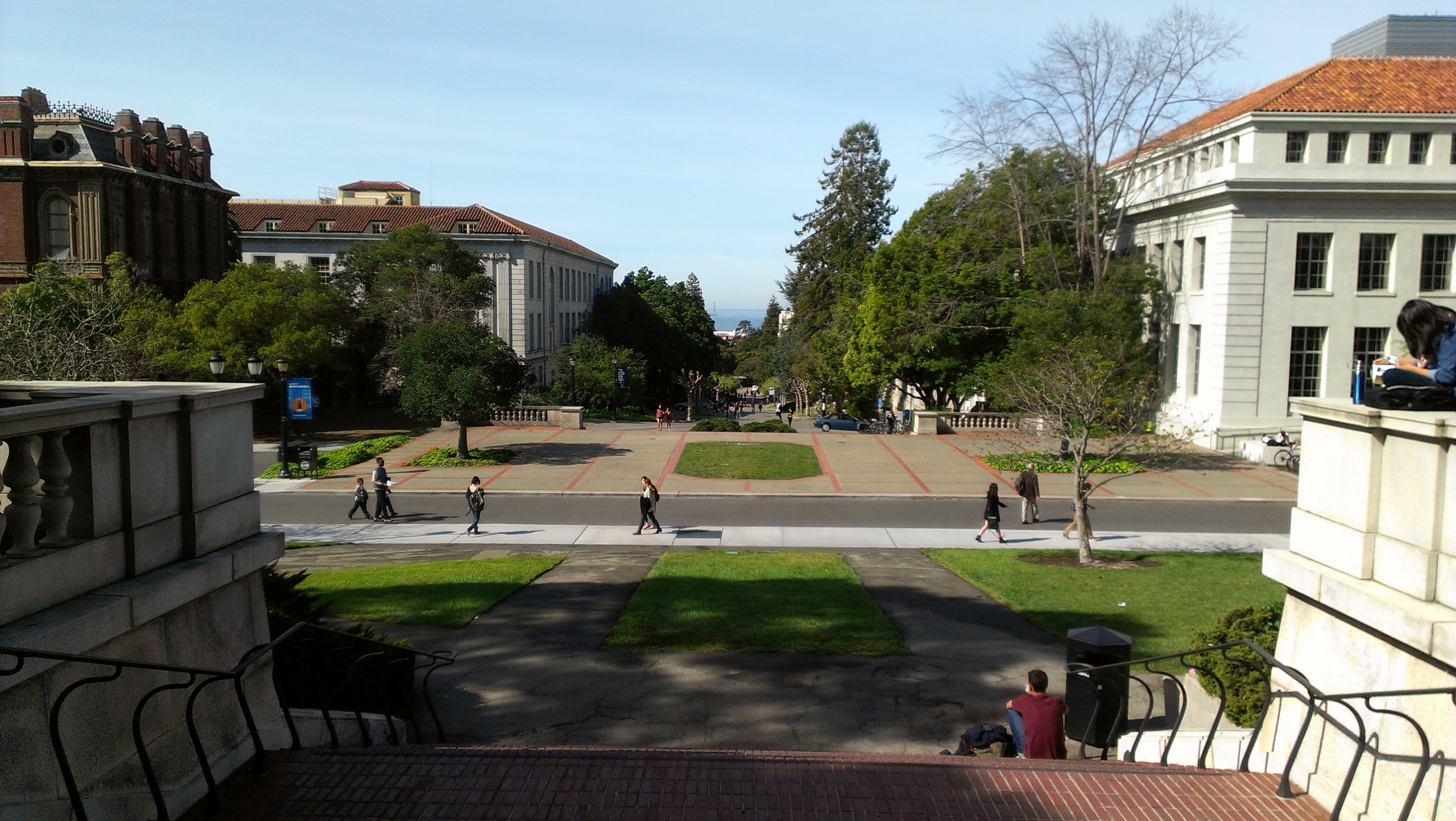
A top math professor at UC Berkeley has stopped marking homework for correct answers. Richard Borcherds says AI tools now do the work so well that grading it has lost its point. He gives credit instead for simply handing the work in on time.
Borcherds is a math professor at the University of California, Berkeley. He won the Fields Medal in 1998, according to Inc. Inc calls that medal the Nobel Prize of mathematics.
His change of policy has drawn wide attention this week.
What happened
Borcherds told the Daily Californian, the campus student paper, that he sees no point in paying readers to grade homework for correctness. Readers are the paid staff who mark student work. He said AI use by students is now so common that top scores no longer show what a student learned.
He now grades on completion, according to the Daily Californian. That means a student gets credit for handing in the homework. It does not matter, for this mark, whether every answer is right.
Borcherds himself called it "not a very good system," according to Inc.
He also told the California Post that grading for correctness now backfires. "Student use of AI for homework is now widespread," he said, according to the New York Post. Grading for correctness, he said, pushes students to use AI instead of doing the work.
It also punishes honest students, he said.
The timing matters. Borcherds spoke out after OpenAI said its AI agents had apparently solved a famous hard math problem. The problem is called the Navier-Stokes existence and smoothness problem.
It deals with the math used to predict how fluids and gases move.
Inc describes it in plain terms. Think of air flowing over an airplane wing. The problem asks whether that math can break down in extreme cases.
OpenAI said its agents had apparently solved it, according to Inc. The Daily Californian links the interview to that announcement.
Borcherds also changed how he handles exams. He now bases grades mainly on in-person exams, according to the New York Post. Students cannot use electronic devices in those exams.
Online exams, he said, have become "a waste of time."
Some students use AI to answer online exam questions, he said. He also said average scores rise a lot on online exams. He cannot tell which students use AI, according to the New York Post.
That gap is the core of his problem.
Why it matters
Homework has a simple job. It shows a teacher what a student can do alone. AI breaks that link when it writes the answers.
A top score may then show skill with a tool, not skill with math.
That creates an unfair split. An honest student who struggles may score lower than a classmate who lets AI write polished answers. Borcherds raised this point himself, according to the New York Post.
Grades then reward the final answer, not the learning behind it.
The problem goes beyond one class. AI tools are now good at hard math, not just simple sums. Borcherds warned about the wider trend in blunt terms.
"If AI continues to improve at present rate, then, in a few years, there'll be nothing human mathematicians can do that AI can't do better," he told the Daily Californian.
Five years ago, he saw math as a safe career, according to Inc. He thought math was one of the fields least likely to be shaken by AI. Now he says he does not know what to tell students who want to study math.
He even asked ChatGPT for advice, according to the Daily Californian. ChatGPT is an AI chatbot made by OpenAI. Borcherds said even ChatGPT did not know what will happen next.
"I have no idea what to advise," he said.
Detection tools do not fix the problem yet. UC Berkeley has tried tools such as Turnitin and Rumi, according to the Daily Californian. Campus leaders found those tools are not good enough to use as a standard.
AI text is now hard to tell apart from human work.
Borcherds told the California Post that AI rarely makes obvious mistakes now. "There is no easy way to tell the difference between human and AI generated work," he said, according to the New York Post. In the past, odd AI errors gave it away.
That clue has mostly gone.
The campus has no single strict AI rule. The Berkeley Division of the Academic Senate asks teachers to state AI rules in their course plans. Those plans are called syllabi.
But exact rules can differ a lot by course, according to the Daily Californian.
There is also a campus AI Hub, according to Inc. It holds sample AI-use statements that teachers can copy into their plans. Anne Marie Richard is the campus official who spoke about this policy.
She is assistant vice provost for undergraduate education and chief academic technology officer.
Students who want stronger maths skills face a new question. Should they still do homework by hand when AI can do it fast? Borcherds has no clean answer.
His completion system keeps homework in place, but it no longer tests answers.
What happens next
Other teachers will watch this case closely. Borcherds is not a minor figure. He holds one of the highest honors in math.
When he says grading has lost its point, other departments listen.
One likely shift is more in-person testing. In-person tests are harder to game with AI. Students sit in a room with no devices.
That is why Borcherds leans on them now. Other teachers may do the same.
Another shift is new kinds of homework. Teachers may ask students to explain their steps in person. They may set work that AI cannot simply finish in one pass.
Or they may grade the process, not just the final answer. None of these fixes is simple, and Borcherds admits he has no better system yet.
Campus rules may also tighten over time. Berkeley may settle on a standard tool if detection improves. Or it may accept that homework must change form.
For now, each teacher keeps control of their own class policy.
Borcherds himself expects slow change. He said academic systems have a lot of inertia, according to the Daily Californian. Inertia means things keep moving the same way out of habit.
He would not be surprised if math departments stay much the same for a couple of years.
He put the change in a long view of history.
"There have been plenty of technical breakthroughs in the past, hand weaving was put out of business by looms, and horses were put out of business by motor cars, and so on," he said. "This is the first time anything like this has happened in mathematics, though."
That last line is why the story spread. Loom machines replaced hand weavers long ago. Cars replaced horses for travel.
Borcherds says math now faces its own version of that shift. The question is what human mathematicians do next.
For students, the short-term picture is clear. Homework at Berkeley in this class now earns credit for completion. Real proof of learning comes from in-person exams.
Honest work still matters there, because no AI tool is allowed in the room.
Borcherds ended on a calm note, according to the New York Post. "If the worst effect of AI on society is that it is harder to assess homework then I will be very relieved," he said. Assess means to judge or grade.
For now, that harder job is the one teachers face every week.
Related stories
Why Do I Blank Out During Tests Despite Studying: Test Anxiety and Retrieval Failure
Blanking out in exams is retrieval failure, not missing knowledge. Anxiety drains working memory; rereading builds false confidence. Here
How to Study for Exams Without Burning Out
Sleep 7-8 hours, study in 25-50 minute blocks, and exercise daily. The science-backed way to study for exams without burning out, and what
Why Do I Forget What I Just Read? Science Has an Answer
You forget what you just read because of the forgetting curve, mapped by Ebbinghaus in 1885. Science explains why memory fades fast and how