
How to Learn Maths as an Adult From Scratch
Key takeaways
- Take a skills check first so you study the gaps you actually have, not the whole school syllabus.
- Follow a foundations-first sequence: number sense, fractions and decimals, percentages, then algebra.
- Short daily sessions with real-life practice beat long weekend cramming sessions.
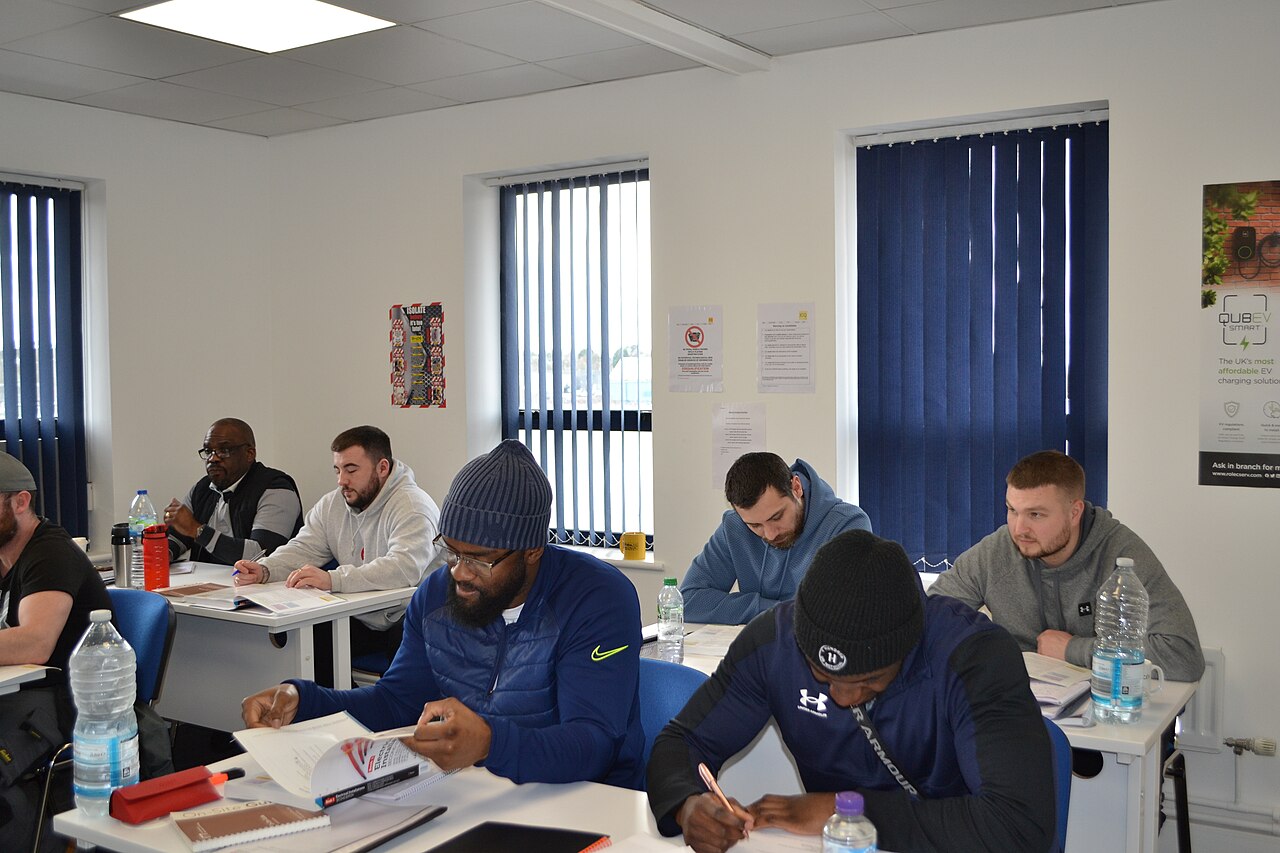
Learning maths as an adult from scratch means rebuilding number skills in the right order, with enough practice for each step to feel solid before the next one arrives.
Many adults return to maths after years away from it. Some left school without a pass, some changed careers into work that needs numbers, and some want to help their children with homework.
This article explains how to learn maths as an adult from scratch, including the skills check to take first, the foundations-first sequence, the daily habit that keeps progress steady, and the free courses that support each stage.
Start with a skills check, not a textbook
The biggest mistake adult learners make is starting at page one of a thick textbook. That wastes weeks on topics they already know and hides the gaps that actually hold them back.
A short skills check fixes that. It tests everyday maths and shows which areas need work, so study time goes where it helps most.
The National Numeracy Challenge is a free online learning tool built for exactly this purpose. It describes itself as a way to improve everyday maths skills in manageable steps while building number confidence.
Over 500,000 adults have registered to check their numeracy level and start improving, according to National Numeracy. The tool adapts to the learner's level, uses more than 300 questions, and starts with a quick check that takes about 10 minutes.
The Challenge covers maths in the real world: at home, at work, and when supporting children. That framing matters, because adult learners keep going when the practice connects to bills, shopping, timetables, and wages.
Take the check before buying anything or joining any course. Write down the three weakest areas it reports, and make those the first three topics in your plan.
The foundations-first sequence
Maths builds in layers, and skipping a layer causes trouble later. The sequence below works for most adult learners, and each stage should feel comfortable before the next one starts.
Stage one is number sense. This means reading, writing, and comparing whole numbers, adding and subtracting without a calculator, and estimating answers before trusting a screen.
Estimation deserves attention of its own. If you can tell that 48 times 6 should land near 300, you can spot a wrong calculator entry in seconds.
Stage two is multiplication and division fluency. Learn times tables to 12, practise long division with whole numbers, and learn to spot factors. These skills turn up again in fractions, algebra, and percentages.
Stage three is fractions, decimals, and percentages. These three are one idea in three costumes, and adults who learn them together progress faster than adults who treat them as separate topics.
The Open University's free Everyday Maths 1 course covers this ground directly. It covers basic arithmetic, fractions, percentages, and measurements, all aimed at daily tasks such as budgeting at home, managing money at work, and supporting children with schoolwork.
Stage four is ratio, proportion, and measurement. This covers reading scales, converting units, working out a recipe for six people instead of four, and comparing prices per kilo.
Stage five is algebra. Start with letters as placeholders for unknown numbers, then solve one-step and two-step equations, then read simple graphs. Algebra feels far easier once fractions and negative numbers are solid.
Stage six is geometry and statistics. Learn area and perimeter, read bar charts and averages, and judge what a headline number really means. This stage supports work decisions more than exam scores do.
Do not rush the order. An adult who spends three weeks on fractions and then sails through algebra has not wasted time. That adult has built the base that algebra stands on.
Choose free courses that match your stage
Free courses work best when they match the stage you are on. A course pitched too high causes frustration, and a course pitched too low causes boredom.
For the early stages, the National Numeracy Challenge gives a skills check plus learning resources matched to your level. It is free to use, works on a phone or a computer, and lets you learn at your own pace.
For a structured course, the Open University offers Everyday Maths 1 on its OpenLearn platform. The course takes about 48 hours, is free and online, and ends with a statement of participation and a digital badge.
The Open University in Northern Ireland received 145,000 pounds from the UK government through the UK Shared Prosperity Fund to develop two online maths courses, Everyday Maths 1 and 2. The funding came from a 5.9 million pound Multiply fund aimed at adult numeracy skills.
Everyday Maths 2 builds on the first course. OpenLearn describes it as a free course that helps learners feel more confident tackling the maths they meet in everyday situations, and it also takes about 48 hours.
Use courses as the spine of your plan, not as the whole plan. Watch or read one section, then close the tab and solve ten problems on paper. The problems, not the videos, are where learning happens.

Build a daily habit that survives real life
Adult learners fail on schedules built for teenagers. A plan that needs two free hours a day will collapse in the first busy week.
A better plan uses one short session a day. Twenty to thirty minutes of focused practice, five or six days a week, beats a three-hour weekend session that leaves you tired and behind.
Pick a fixed slot and protect it. Early morning before work, a lunch break, or the half hour after the children go to bed all work. The slot matters less than its regularity.
Each session should follow the same shape. Spend five minutes reviewing yesterday's topic, fifteen minutes on the new topic, and five minutes writing down what still feels shaky.
Keep a notebook for mistakes. When you get a question wrong, copy the correct working into the notebook and note what went wrong. Reviewing that notebook once a week prevents the same error from returning.
Tie practice to real life. Work out the true cost of a phone contract, compare two supermarket deals per unit, or check a payslip against your hours and rate. Real numbers stick better than abstract drills.
Handle maths anxiety directly
Many adults carry bad memories of school maths. Timed tests, public board work, and a single harsh teacher can leave a lasting fear of numbers.
That fear is common, and it is not evidence of low ability. Adults learn maths at every age, and a slow start says nothing about where you can finish.
Three habits reduce the anxiety. First, practise alone or with one trusted person until the basics feel safe. Second, drop timed drills until accuracy is solid, since speed pressure punishes learners who are still building understanding.
Third, measure progress against your own past scores, not against other people.
A useful test is the "explain it" test. If you can explain a method to a friend in plain words, you understand it. If you can only repeat the steps from a worked example, you need more practice on that topic.
If a topic stays stuck for more than a week, change the explanation, not the goal. A second video, a different workbook, or a tutor session on one topic can unlock what ten repeats of the same lesson could not.
Use past papers to revise for exams effectively once you reach exam-style questions, and learn from the mistakes of a failed exam rather than treating a low score as a verdict on your ability.
Frequently asked questions
How long does it take to learn maths from scratch?
It depends on the starting point and the goal. A daily habit of 20 to 30 minutes can rebuild everyday numeracy in a few months, while exam-level algebra takes longer. The Open University's Everyday Maths 1 alone takes about 48 hours.
Do I need a calculator?
A calculator helps with long arithmetic, but it should not replace understanding. Work through problems by hand first, then use the calculator to check. Estimation before calculating catches most errors.
What if I failed maths at school?
School failure usually means the teaching or the timing did not fit, not that maths is closed to you. A skills check finds the real gaps, and adult courses let you rebuild at your own pace.
Should I study alone or with a tutor?
Self-study with free courses works for most everyday maths. A tutor helps when one topic stays stuck, or when you need to pass an exam by a set date.
The bottom line
Start with a skills check, then follow the foundations-first sequence from number sense through fractions to algebra. Practise a little every day, use free courses that match your stage, and judge progress by what you can explain.
Maths rewards steady rebuilding. A few months of short daily sessions can turn numbers from a source of dread into a tool you trust.
Tags: adult learning, maths, numeracy, self-study
Latest in Education
- Use past papers to revise for exams effectively
- Study for an exam in one week without cramming badly
- Learn from the mistakes of a failed exam
- Stay focused while studying at home
Subscribe to the Rive News newsletter for one practical study guide each week.
Related stories

Why Do I Blank Out During Tests Despite Studying: Test Anxiety and Retrieval Failure
Blanking out in exams is retrieval failure, not missing knowledge. Anxiety drains working memory; rereading builds false confidence. Here

How to Study for Exams Without Burning Out
Sleep 7-8 hours, study in 25-50 minute blocks, and exercise daily. The science-backed way to study for exams without burning out, and what

Why Do I Forget What I Just Read? Science Has an Answer
You forget what you just read because of the forgetting curve, mapped by Ebbinghaus in 1885. Science explains why memory fades fast and how